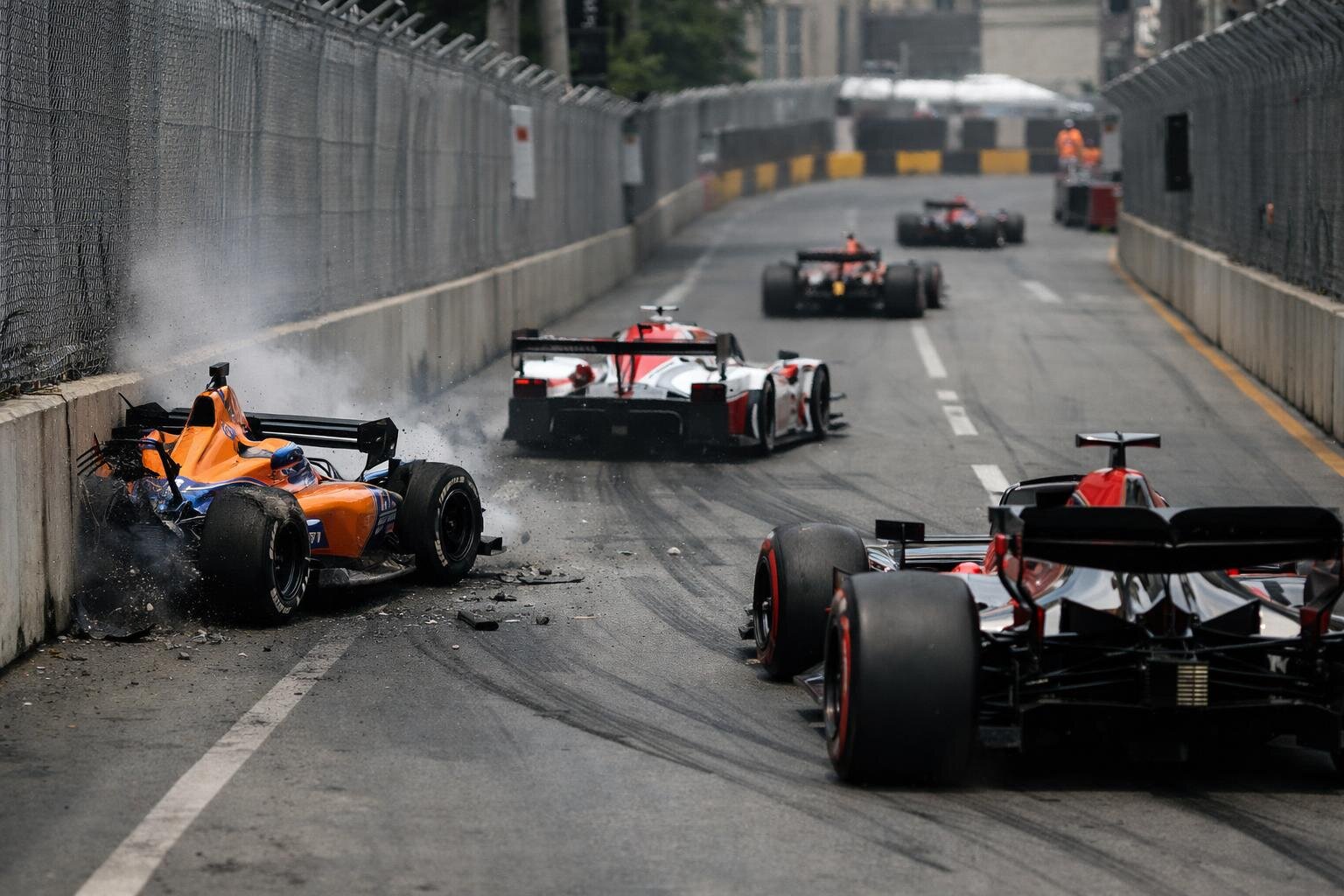
The quick explanation: walls + narrow exits + restarts
Street-course racing feels chaotic for a reason, and it is not just because the cars are inches from concrete. Put simply, street circuits take away the “escape routes” that keep incidents from becoming cautions on permanent road courses. When a driver gets it wrong at Road America or Watkins Glen, there is often runoff, grass, gravel, or at least space to rejoin safely. On a street track, that same mistake usually ends with a stalled car against a wall, debris in the racing line, or a blocked corner that race control cannot ignore.
That is why cautions cluster on street circuits across IndyCar, IMSA, and Formula 1. The ingredients are the same even when the rulebooks differ: tight geometry, close barriers, awkward corner exits that funnel cars into one line, and restarts where cold tires and imperfect sightlines turn small misjudgments into big consequences. It is not that street races are “worse.” They are just less forgiving, so normal racing moments produce official interruptions more often.
Street circuit vs permanent road course: what physically changes
Walls change the math. Concrete barriers sit close enough that a minor slide becomes contact. That contact can cut a tire, bend suspension, break a wing or diffuser strake, or leave carbon fiber scattered where everyone has to drive next. Even if the car limps away, debris alone can trigger a full course yellow (IndyCar), safety car or virtual safety car (F1), or a caution and potentially an FCY procedure in IMSA depending on where it lands and whether marshals need access.
Runoff is not really runoff. Many street courses have short “aprons” and painted areas that look like space on TV but function like a narrow shoulder. If a car stops there, it can still be in harm’s way and it can still be too dangerous for workers to reach without neutralizing the race.
The surface is inconsistent by design. Permanent circuits are built for racing loads. Street tracks are built for buses, delivery trucks, drainage, manholes, utility patches, lane paint, crosswalk thermoplastic, and the occasional crown in the road for water runoff. Those details matter when you are braking from triple digit speeds and asking slick tires to bite into whatever texture happens to be under them. Drivers talk about bumps and grip changes constantly at street venues because they have to.
Rubbering-in behaves differently. On a dedicated track, rubber builds in predictable places over multiple sessions. On streets, dust and grime can linger because the track is literally public roadway most of the year. As cars lay rubber down through practice and qualifying, grip can ramp up quickly but not always evenly. That makes early sessions slippery and late sessions fast, with a moving target for braking points. It also means off-line grip can stay poor longer than you expect.
Sightlines are tighter. Concrete walls and temporary fencing reduce what drivers can see around corners. That matters on restarts and in multi-class traffic (IMSA) because reaction time shrinks. If someone checks up ahead, the warning arrives late.
The physics you can feel from the couch: grip, bumps, braking zones
If you want one physics concept that explains street-circuit cautions, it is this: the margin between available grip and demanded grip gets thinner. Not because drivers suddenly forget how to drive, but because the track asks for more precision while offering fewer recovery options.
Braking zones get spikier. Street tracks often feature heavy braking into slow corners at the end of relatively short straights. That is classic passing territory because drivers can outbrake each other into tight turns. It is also classic contact territory because everyone arrives at similar speeds with different lines and different brake temperatures. Add bumps mid-braking and you get wheel hop or instability that makes a car harder to place accurately.
Traction on corner exit is limited by geometry. Many street corners feed into narrow chutes bordered by walls. If two cars try to exit side-by-side, there may not be pavement for both once the road kinks or narrows. That creates “accordion” effects where one small correction becomes a chain reaction behind it.
Painted surfaces and patches matter more than fans realize. Painted lines can be slicker than asphalt depending on temperature and rubber buildup. Metal covers can have different friction than pavement. Nobody needs telemetry to see this; watch how cars avoid certain shiny rectangles under braking or how they hesitate to put power down over crosswalk paint in damp conditions.
Why qualifying matters more on streets (and why everyone sounds stressed)
On many street circuits, passing is possible but expensive. You might need multiple corners to set up one move because there is only one real braking zone that works. That pushes teams toward a simple priority: start near the front so you do not have to take risks in traffic.
This shows up differently by series:
F1: Qualifying has outsized importance at tight venues because clean air helps tire management and because overtakes can be limited by track width and corner types. Strategy can still shuffle things around with undercuts or well-timed safety cars, but starting position remains a major predictor of who stays out of trouble.
IndyCar: Track position matters too, but cautions are more frequent on many street weekends and full course yellows compress the field hard. That makes qualifying crucial while also making it feel fragile; you can do everything right on Saturday and still get trapped by timing on Sunday if yellows fall wrong.
IMSA: Qualifying matters within each class because traffic management is everything in multi-class racing. Starting ahead reduces time spent negotiating slower classes (or being negotiated by faster ones). But endurance format variables like stint length and caution timing can still override pure starting order over hours of racing.
Restarts: why they are riskier than green-flag laps
If street races had a soundtrack, it would be the crowd volume rising as the field bunches up behind a safety car or pace car. Everyone knows something might happen before Turn 1 even arrives.
Tires and brakes are cooler than ideal. Under caution, tires lose temperature and pressure drops slightly compared with peak conditions (the exact numbers vary by tire and series). Brakes cool too. When the green comes out again, drivers ask for maximum grip immediately even though the system is not fully back in its sweet spot. That increases lockups into tight corners and increases wheelspin on exit. Either one can cause contact when lanes are tight.
The pack effect amplifies small mistakes. On restarts you have more cars close together than at almost any other time. One driver lifting early ripples backward through the field until someone runs out of room or visibility. On wide road courses there is often space to dodge onto runoff or grass without immediate wall contact. On streets there usually is not.
Narrow exits punish optimism. A common street-circuit storyline looks like this: someone gets a better launch, tries to hang around the outside into a tight corner, then finds there is no pavement left on exit once the road pinches in. The outside car either yields or touches the wall. The inside car might get tagged too if wheels interlock or if both drivers correct at once.
Pit strategy under yellows: why timing windows swing wildly
Cautions do not just slow things down; they rewrite strategy in real time.
Bunching changes fuel math and tire life expectations. Under caution or safety car conditions, cars use less fuel than they do at full pace. That can extend stints or open up alternative pit windows depending on series rules about when pits open and how wave-arounds work (procedures vary). In endurance racing especially, saving fuel under FCY can turn what looked like an extra stop into something manageable later.
Pit lane itself can be part of the drama on street tracks. Temporary pit lanes may have tight entries and exits relative to permanent facilities (layout depends on venue). Under yellow you often see big stacks of cars diving in together because everyone wants track position when the race restarts bunched up again. Congestion raises the chance of penalties for unsafe release or speeding infractions (again depending on series enforcement), plus simple time loss if you get boxed in behind another car’s stop.
The gamble is not always “pit now.” Sometimes staying out is smarter if passing will be hard after the restart. Other times pitting for fresh tires is worth it because cold restarts create opportunities for drivers with better traction to make places quickly before everyone settles back into rhythm. The point for viewers: yellow flags turn races into decision trees where teams pick which risk they prefer: track position now versus tire life later versus being protected from another caution cycle.
A tactical viewer’s guide: 7 cues to watch (no data feed required)
1) Who owns Turn 1 after restarts? Watch which drivers consistently survive Lap 1 cleanly while gaining spots. That usually indicates confidence in brake release timing and an ability to place the car without needing runoff as insurance.
2) How early do leaders go back to throttle? On street exits bordered by walls, leaders often prioritize clean traction over maximum aggression for one lap because one twitch ends your day quickly. If you see a leader short-shifting (where applicable) or being gentle over bumps compared with rivals behind them sliding around more, that is usually intentional risk management.
3) Look for “setup passes,” not dive bombs. The best moves on streets often start two corners earlier: forcing someone offline onto dusty pavement so they cannot brake as late next time; getting a better exit from a slow hairpin; pressuring them into defending so hard they compromise their own launch down the next straight.
4) Watch where cars avoid placing wheels. Drivers telegraph low-grip zones by avoiding paint stripes under braking or by leaving extra margin near certain patched sections mid-corner. When you see multiple cars take identical odd-looking lines through one corner, there is usually a surface reason.
5) Notice who uses curbs versus who refuses them. On some street circuits curbs are usable; on others they are tall enough or awkward enough that hitting them unsettles the car toward a wall. If one driver keeps two wheels on curbing while another stays off it entirely, their risk tolerance or setup balance may be different even if lap times look similar on TV graphics.
6) During cautions, watch gaps before pit entry opens (or before teams commit). You will often see leaders backing up the pack slightly to control restart timing within rules. Behind them, teams decide whether they want clean air after pitting or whether they will accept rejoining in traffic with warmer tires but less track position.
7) In IMSA specifically: follow class interactions at corner exits. Multi-class incidents frequently happen when different classes accelerate differently off slow corners into narrow chutes with walls close by. The faster class wants an immediate run; the slower class wants stability and space to unwind steering before committing to throttle. When those needs collide at street-track exits, cautions happen fast without anyone doing something outrageous.
What differs by series (F1 vs IndyCar vs IMSA), high level
Caution tools differ: F1 uses Safety Car and Virtual Safety Car procedures; IndyCar uses full course yellows (and local yellows); IMSA uses FCY procedures with class structures that influence how restarts play out over long distances. The common thread is that neutralizations compress gaps more aggressively than green-flag racing does; compression raises contact risk at tight venues when action resumes.
Aero sensitivity changes how close cars can follow: Modern open-wheel cars generate significant downforce; following closely can reduce front-end grip depending on regulations and aero wake characteristics in each era/series context (details evolve). On narrow streets where only one line has real grip, losing front bite while tucked behind someone makes lunges harder to control. In IMSA prototypes also produce substantial downforce; traffic adds another layer because dirty air plus mixed closing speeds equals compromised braking zones.
Tire behavior shapes aggression: F1 tire compounds are designed with performance tradeoffs that make warm-up versus longevity part of strategy; IndyCar’s Firestone tires also have distinct behaviors between primary/alternate compounds depending on event rules; IMSA classes vary by tire supplier/regulations across categories over time (and specifics depend on season). You do not need compound charts to understand this: if tires take longer to come alive after cautions at a given venue or temperature range, restart chaos tends to rise because grip arrives unevenly across cars and drivers.
The crowd emotion makes sense because chaos is often rational
The funniest part about street-course “madness” is how logical it looks once you know what to watch for. A driver sends it late into a concrete canyon because passing chances are rare; another defends hard because giving up one spot might mean getting stuck behind traffic for ten laps; teams pit early under yellow because clean air matters more than perfect tire life when overtaking lanes are limited; everyone takes deep breaths behind safety vehicles knowing cold tires plus narrow exits equals roulette if you guess wrong by six inches.
If you want to understand strategy live without extra screens: focus on track position before restarts, who has warm tires after pit cycles, where the surface looks sketchy off-line, and which corners have no forgiveness on exit. Street races seem chaotic compared with road courses because they compress consequences into smaller spaces. The walls do not create drama by themselves; they just make every decision louder when it goes wrong.
A quick road-car tie-in (especially if you drive an EV)
No forced tech-transfer claims here; race cars are race cars. But street circuits do highlight driving fundamentals that translate cleanly to American roads in an EV or anything else: smooth braking over uneven pavement matters; visibility around barriers changes reaction time; traction varies wildly across paint stripes and patches; cold conditions reduce available grip right when you want confidence most.
If you drive an EV day-to-day, you already know how instantly torque arrives off a stoplight when conditions are good (and how easily traction control steps in when they are not). Street-course restarts are basically that lesson turned up to eleven: lots of torque demand at low speed on imperfect surfaces with little room for error. Smooth inputs win races and keep fenders attached in real life too.
0 comments
Join the discussion around this article.
Please login to comment.