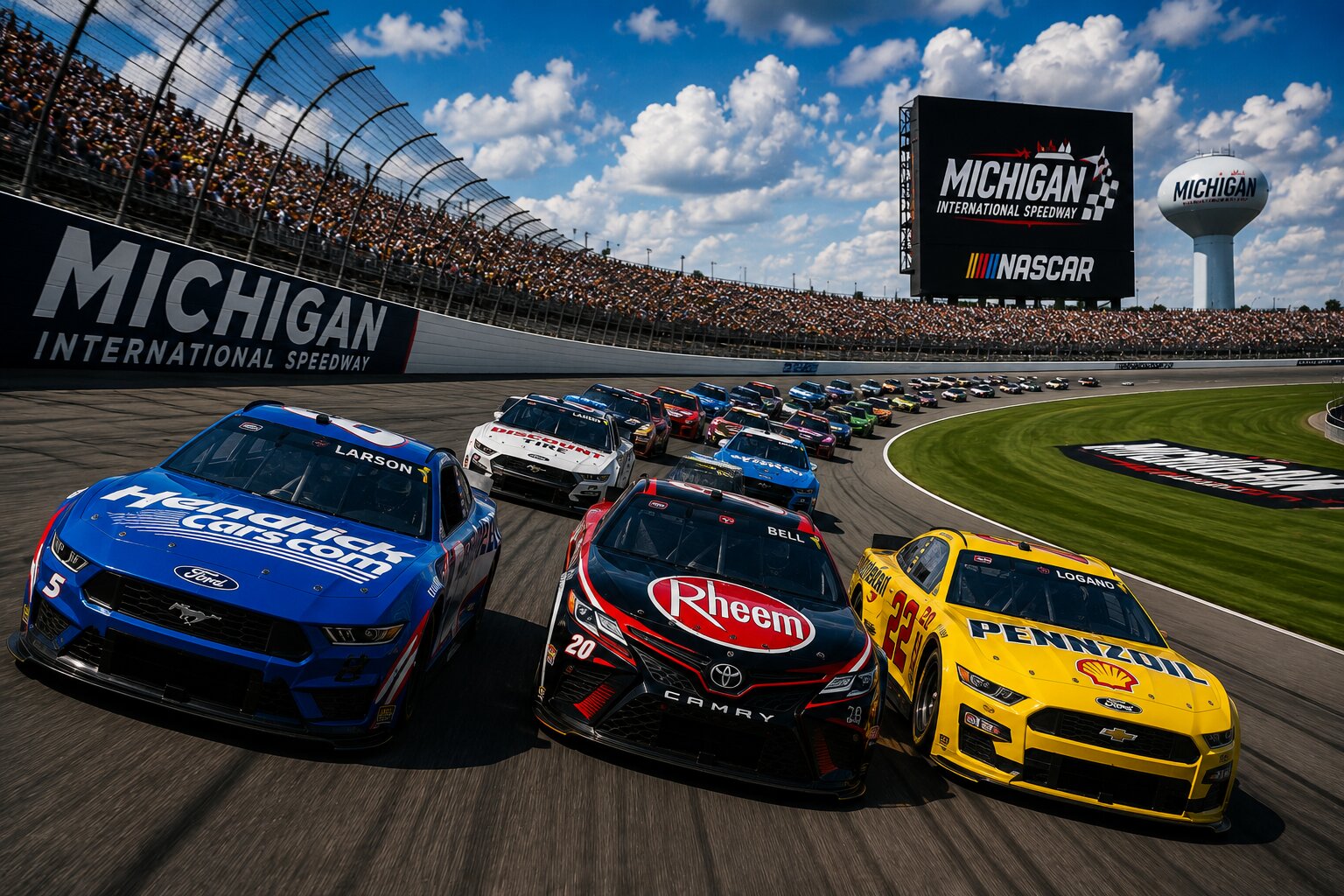
NASCAR at Michigan: the 2-mile truth serum
Michigan International Speedway looks simple on a track map. It is a wide, 2-mile D-shaped oval with long straights and big, sweeping corners. In a NASCAR Cup car, that “simple” layout turns into a full-body exam for aero efficiency, momentum management, and the kind of manufacturer pride that still matters in American stock car racing.
This is a preview, not a post-race report. NASCAR’s official schedule page lists the Cup Series stop at Michigan, along with the weekend’s session times and broadcast info (always double-check closer to race week because TV windows and start times can shift). The point is not just when the green flag drops, it is why this place reliably produces a certain kind of race. Michigan rewards teams that can keep speed up without cooking tires or losing the clean air chess match.
Verified basics: what Michigan is, and why it races the way it does
Let’s pin down the facts we can say cleanly. Michigan International Speedway is a 2-mile oval in Brooklyn, Michigan. It is known for high speeds and long green-flag runs when the race settles into a rhythm. The track’s width gives drivers options, but those options are not always equal because aerodynamics and tire behavior can make one lane come alive while another feels like it is covered in marbles.
The current NASCAR Cup Series car is the Next Gen model (introduced in 2022). It uses an independent rear suspension, a single center-lock wheel, and a symmetrical body with spec aero components. Those are widely reported series-level facts. Exactly how each team tunes its package within the rules is where Michigan gets spicy, because small differences in drag and stability show up over long straights.
If you want a quick mental comparison, Michigan sits in the same general conversation as other big, fast ovals like Auto Club Speedway used to be before its reconfiguration plans and schedule changes, and it shares some “carry momentum forever” DNA with places like Kansas or Las Vegas, even though those are 1.5-mile tracks with different corner shapes and pacing. Michigan is its own animal because of the length and the way the corners let drivers commit hard if the car stays planted.
Why aero matters more here than almost anywhere
On short tracks you can lean on mechanical grip and brute-force braking zones. At Michigan, you are often asking for sustained stability at very high speed. That means aero balance becomes your steering wheel’s best friend or your worst enemy.
In clean air, a well-balanced Cup car can look effortless. The driver turns in, holds it on that thin edge of slip angle, and lets momentum do the work. In traffic, it changes fast. When you tuck up behind another car on corner entry, the front end can go light as airflow gets disturbed. That “aero push” is not just a buzzword here; it can decide whether a driver can complete a pass or has to lift early and live to fight next lap.
Michigan also highlights drag in a way fans can feel even if they do not talk in engineering terms. If one car can pull half a car length on the straight without a huge run, that usually says something about efficiency and how well they are keeping speed through the corner. It becomes visible racing math: exit speed plus low drag equals passing opportunity.
Momentum racing: lift too much once and you pay for it for laps
The best Michigan laps look like they were drawn with a ruler. Smooth entry, patient hands, no wasted steering angle. That is not just style; it is survival. Any extra scrub means you lose speed that takes forever to get back on such a long track.
This is why Michigan often produces those tense sequences where two cars run side by side for multiple corners without either clearing the other immediately. The outside lane can work if it carries more speed, but it also asks for commitment because you are exposed to dirty air longer while trying to keep momentum up top. Meanwhile, the inside lane can be safer for corner entry but might pinch exit if the car does not rotate.
For casual viewers: watch how early drivers lift going into Turn 1 compared with later in a run. When tires are fresh and fuel load is heavier or lighter depending on pit cycle timing (teams vary), you will see different levels of commitment. As tires wear, that lift point creeps earlier if the balance goes away.
Manufacturer pride: why Michigan still feels like home turf racing
Michigan has long carried an extra layer of meaning because of Detroit’s proximity and the region’s deep ties to American car culture. Even though today’s Cup cars are silhouette racers built to NASCAR’s rulebook rather than showroom twins, brand identity still matters to teams, sponsors, and fans.
Ford has historically treated Michigan as an important stop given its home-state connections; General Motors brands (Chevrolet) have their own deep roots nearby; Toyota has invested heavily in U.S. motorsports infrastructure over decades even if its corporate home base is elsewhere. The result is that manufacturer storylines tend to get louder here than at some other tracks.
You feel it in the grandstands when one make starts rolling off fast laps in practice or qualifying. You see it in how quickly social feeds fill with “our camp has something” chatter after one strong run. None of that guarantees race-day dominance, but Michigan encourages those narratives because speed differences can look dramatic on such long straights.
The schedule piece: official timing matters more than you think
NASCAR’s official Cup Series schedule page is the right place to confirm start times and broadcast windows for Michigan weekend (plus any companion events). Those details matter for more than planning your Sunday.
Michigan races often swing on temperature and track evolution. A hotter track can reduce grip and make tire management more important; cooler conditions can increase speed but sometimes tighten up handling depending on setup direction. If the race starts earlier or later than expected due to TV windows or weather adjustments (always possible in motorsport), teams may find themselves chasing balance as conditions change across stages.
If you are a casual viewer who usually flips it on at green flag time: try tuning in earlier for pre-race so you catch any notes about wind direction and ambient temps. Wind especially can change how Turn 1 feels at speed; it sounds minor until you watch cars suddenly struggle to hold their line in traffic.
What to watch during the race (even if you do not know setups)
1) The first big draft train forming. Michigan’s length encourages pack-like behavior at times even though it is not Daytona or Talladega style drafting with superspeedway rules packages. Cars will still find each other for mutual benefit down the straights. When that line forms, pay attention to who can lead without burning up their stuff versus who looks better pushing from second or third.
2) Green-flag pit cycles. On big ovals, pit strategy can be as decisive as raw pace. Under green, teams gamble on short-pitting for fresh tires or stretching fuel depending on caution expectations and stage timing (NASCAR uses stage breaks at most points-paying events). The moment leaders peel off pit road while others stay out is when momentum swings happen quietly.
3) Tire falloff tells you who guessed right. NASCAR does not publish every team’s tire wear data publicly in real time; what you see is lap time trends and driver comments on radio if broadcasts share them. When someone who looked average early suddenly comes alive 15 laps into a run, that usually means their long-run balance is strong.
4) Restarts are chaos with physics attached. Restarts at Michigan are fast enough that small mistakes become huge quickly. Watch how drivers choose lanes and how quickly third lane moves form behind them if grip allows. If one lane stalls even slightly, it creates accordion effects that swallow positions.
The human part: crowd energy at a high-speed oval hits different
A place like Michigan has its own soundtrack: sustained wide-open throttle sounds punctuated by quick lifts into Turn 1, then back into it as cars unwind onto the straight. In person, speed reads differently than on TV because your eyes track cars longer across those big sight lines.
The crowd reaction tends to build in waves rather than spikes. A big slide off Turn 4 gets noise immediately, sure. But the loudest sustained moments often come when two contenders run door-to-door for multiple laps and neither gives an inch because lifting means losing three spots behind them.
If you are watching from home, listen for changes in booth tone when they start talking about “handling going away” or “struggling in dirty air.” That is usually when Michigan shifts from pure horsepower-and-aero showcase into driver management mode.
Aero versus bravery: why passes look hard until they suddenly are not
One of Michigan’s quirks is how passing difficulty comes in phases. Early runs can look like everyone is stuck because dirty air makes following tough through corner entry and mid-corner rotation matters more than raw straight-line speed.
Then conditions shift or rubber lays down differently and suddenly multiple grooves work better. A driver finds clean air by moving half a lane higher through Turn 3 and now they can carry enough speed to complete passes on exit instead of stalling out alongside someone’s quarter panel.
This also ties into how drivers set up passes here. Many moves start half a lap earlier than they finish: get close off Turn 4, show nose into Turn 1 just enough to disrupt line choice, then use exit speed down the backstretch to actually clear before Turn 3 entry tightens up again.
Track-day implications: what Michigan teaches about fast ovals and fast road cars
No one should confuse a NASCAR Cup car with something you buy off a dealer lot; they are purpose-built race machines with very specific aero behavior at high speed. Still, Michigan highlights lessons that translate to performance driving culture more broadly.
Smooth inputs win at speed. Whether you are driving an HPDE day in a track-prepped Mustang or Camaro at a road course (with proper safety prep), or just hustling an everyday performance sedan down an on-ramp responsibly, abrupt steering creates scrub. Scrub creates heat and instability. At Michigan scale speeds amplify everything; you can see why smoothness matters because mistakes have long consequences.
Aero stability feels like confidence. Most street cars do not generate meaningful downforce unless they have real aero parts designed for it (and even then it depends). But stability at speed still matters through suspension tuning, tire choice, alignment settings within safe limits, and overall chassis balance. Watching Cup cars fight aero push in traffic gives casual fans an intuitive sense of why “it felt light” is such an important driver comment anywhere fast driving happens.
The competitive context: why this race matters inside the season
NASCAR’s modern Cup season puts pressure on teams all year with stage points during races and playoff qualification based on wins plus points standings under current rules (details live on NASCAR’s official rules pages). That means no one treats Michigan as “just another intermediate.” A strong run here can stabilize a team’s points day even if they do not win; a bad day can put pressure on future weeks where their package might not be as strong.
Michigan also acts like a reality check for organizations chasing top-end speed without sacrificing drivability over long runs. If your car looks great for five laps but fades badly by lap 20 of a green-flag run, this place exposes it quickly.
The bottom line: tune in for speed first, then stay for strategy
If you only watch one thing at Michigan, make it this: how quickly leaders pull away once they get clean air after restarts or pit cycles. That gap tells you who has aero efficiency plus balance when everyone else is fighting turbulence.
Then watch pit road decisions stack up across stages and late-race cautions if they come out naturally through incidents or debris (never guaranteed). Two tires versus four tires calls show up here like anywhere else; what changes at Michigan is how punishing lost momentum can be if you restart mid-pack with dirty air everywhere.
Check NASCAR’s official schedule page for exact start time and broadcast details before race day so you catch the full rhythm from early adjustments through late-race intensity. Michigan rarely needs artificial drama; give it time to breathe and it usually delivers its own kind of tension: fast cars searching for clean air while three manufacturers quietly keep score in their own heads.

0 comments
Join the discussion around this article.
Please login to comment.