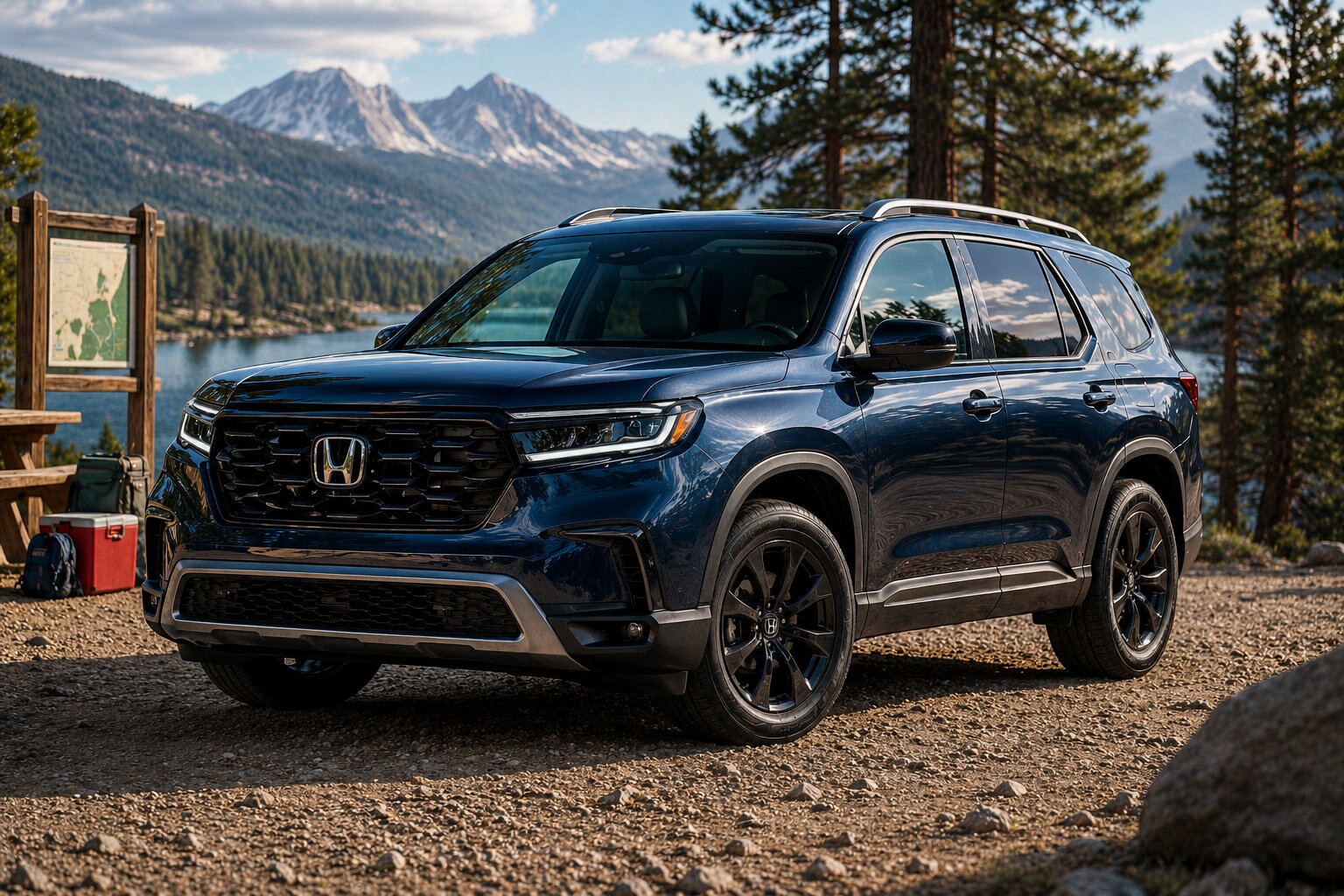
What’s verified for the 2026 Pilot, and what isn’t (yet)
Honda’s Pilot is in its current generation that debuted for the 2023 model year, and it has settled into a familiar role in the U.S. market: a three row family SUV that prioritizes everyday usability over flash. For 2026 specifically, the challenge is separating what is broadly confirmed about the Pilot line from what may change with annual updates. As of widely available, manufacturer-published specifications for the current-generation Pilot, several key facts are stable and can be treated as reliable for a 2026 shopping conversation if Honda carries them forward without major mechanical revisions.
Here is what is widely known and consistently published for the current-generation Honda Pilot sold in the U.S., and therefore reasonable to use as the backbone of a 2026 review unless Honda announces meaningful changes:
Verified, widely published Pilot fundamentals (current generation):
- A 3.5-liter V6 is the only engine in the lineup, paired with a 10-speed automatic transmission.
- Output is commonly listed at 285 horsepower and 262 lb-ft of torque.
- Front-wheel drive is standard on most trims, with Honda’s i-VTM4 all-wheel drive available or standard depending on trim.
- Seating is up to eight passengers on most trims with a second-row bench, while some trims offer second-row captain’s chairs (reducing capacity to seven).
- Towing capacity depends on drivetrain; AWD versions are commonly rated up to 5,000 pounds, while FWD versions are typically lower. The exact figure varies by equipment and configuration, so buyers should confirm the door-jamb and spec sheet for the specific vehicle they are considering.
- The current generation uses a more truck-like platform approach than its predecessor, including a stiffer body structure and an available off-road oriented TrailSport trim with additional hardware and tuning aimed at rough roads.
Not safely “verified” for 2026 without Honda’s final release:
- Exact trim walk, feature packaging, and pricing for the 2026 model year.
- Any mid-cycle updates to infotainment hardware or driver-assistance calibration.
- EPA fuel economy ratings for each specific 2026 trim and drivetrain combination (these can shift slightly year to year even when powertrains remain unchanged).
This review treats the 2026 Pilot as a continuation of the current-generation formula because that is what publicly available information supports today. If Honda introduces major changes for 2026, buyers should treat those updates as decisive.
2026 Honda Pilot at a glance
The Pilot’s appeal is not mystery. It is space you can actually use, doors that open wide enough for child seats without yoga poses, and road manners that do not punish you for choosing three rows. In a segment filled with aggressively styled crossovers and increasingly complex powertrains, Honda’s approach reads as quietly conservative.
That restraint has an upside in real life. A naturally aspirated V6 paired with a conventional automatic transmission remains an easy ownership proposition for many households. There is no turbocharger heat management to fret over during summer road trips, no hybrid battery packaging tradeoffs to learn around. You still need to maintain it properly, but the basic layout is familiar to any shop that has worked on mainstream Hondas in the last decade.
Design: square shoulders, family-first proportions
The current Pilot looks more upright and substantial than older Pilots. The hood sits higher, the grille reads wider, and the profile has less minivan-adjacent softness than earlier generations. It does not chase luxury-brand drama; it aims for honest utility.
That matters when you are loading kids at a curb or squeezing into a school pickup lane. A more upright greenhouse generally helps sightlines. The Pilot also feels like it was drawn with people climbing in and out all day rather than posed for night photography outside a restaurant.
If you are cross-shopping something like a Kia Telluride or Hyundai Palisade, you will notice those rivals lean harder into premium cues and visual theater. The Honda’s styling lands closer to “tool that happens to be nice” than “nice thing that happens to be useful.” Depending on your taste, that can be either calming or slightly plain.
Powertrain: a V6 and a 10-speed that favor predictability
Based on available specifications for the current-generation Pilot, every 2026 Pilot you see on a dealer lot should use Honda’s 3.5-liter V6 making about 285 horsepower and 262 lb-ft of torque, paired with a 10-speed automatic transmission. In daily driving terms, this combination tends to deliver smooth, linear response rather than turbocharged punch.
That linearity becomes valuable in situations owners repeat constantly: easing into traffic with a full cabin, merging onto an interstate with two adults chatting in row three, or rolling through a parking garage without lurchy low-speed behavior. A naturally aspirated engine typically builds power with revs; it does not always feel dramatic at part throttle, but it is usually easier to modulate.
The 10-speed transmission gives Honda room to balance responsiveness with highway calm. More gears can sometimes mean more shifting in hilly areas; calibration matters more than gear count. Without claiming any specific test impressions here, it is fair to say this pairing has become mainstream across Honda and Acura products because it supports both efficiency targets and towing needs without resorting to exotic solutions.
AWD, traction systems, and what TrailSport really means
Most Pilots start life as front-wheel drive unless you choose AWD or move up trims where AWD may be standard. Honda’s i-VTM4 all-wheel-drive system has long been one of the brand’s strengths in this category because it can actively send torque side-to-side at the rear axle rather than simply reacting after wheelspin starts.
For families who see real winter weather or who routinely travel on wet highways with a loaded cabin, AWD can be less about off-roading bravado and more about reducing stress. It will not change braking distances on ice, but it can help you pull away from slick intersections smoothly and reduce front-tire scrabble when accelerating uphill.
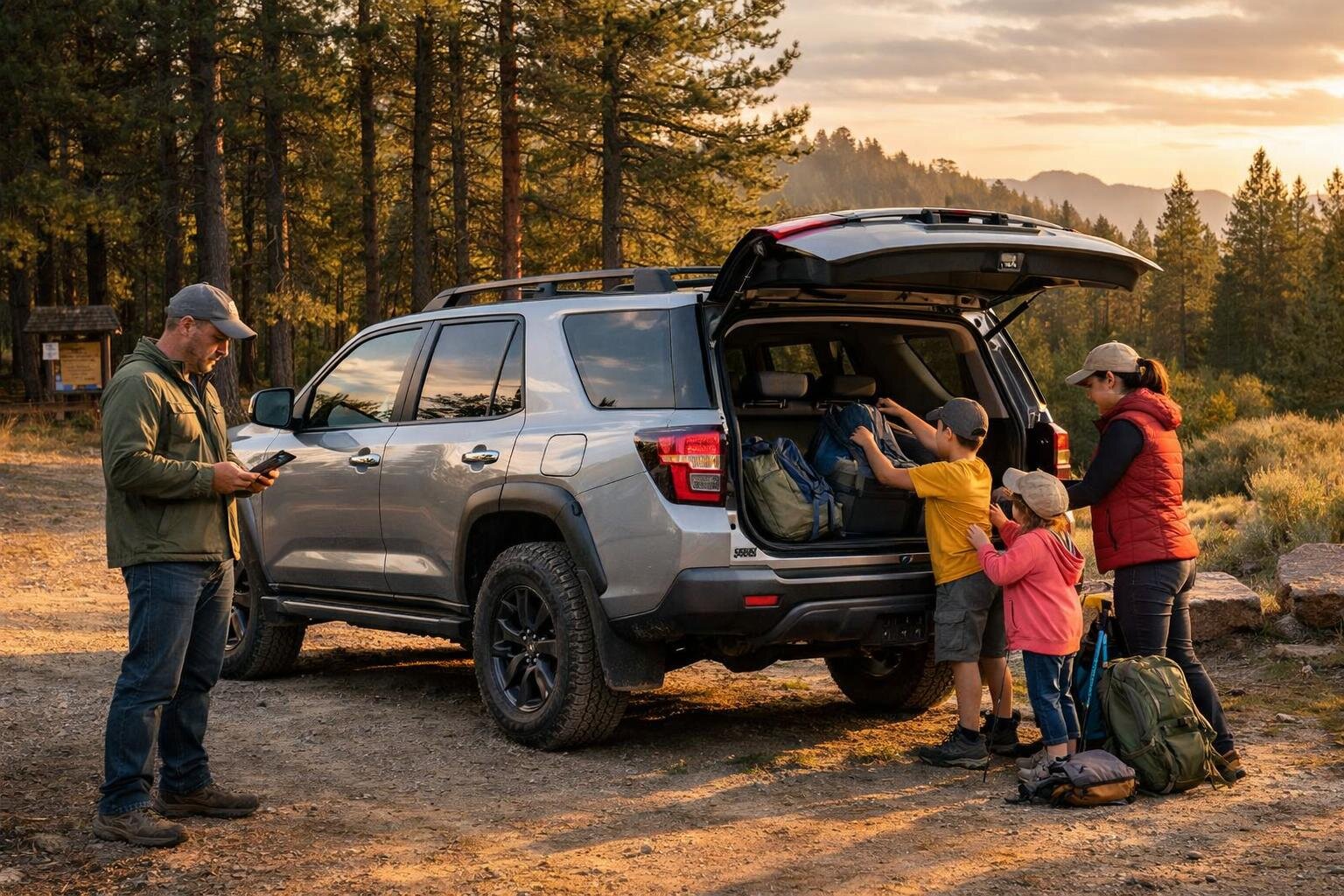
The TrailSport trim deserves clear expectations. It exists because buyers want something that looks ready for dirt roads and campsite approaches without stepping up to body-on-frame SUVs. TrailSport models in this generation have included off-road oriented tuning and hardware changes intended to improve capability on rough surfaces compared with standard trims. That said, it remains a unibody family SUV at heart. If your idea of off-road involves rock crawling rather than washboard roads leading to trailheads, you are shopping in another aisle.
Driving manners: calm competence beats drama
A three-row crossover lives or dies by how it behaves when you are not thinking about it. Most of your time will be spent at suburban speeds behind someone who brakes early or on highways where wind noise becomes the soundtrack of family life.
The Pilot’s core mission is stability and composure with real passenger weight aboard. The current generation was engineered to feel more substantial than older models; that typically shows up as fewer shudders over broken pavement and less busy body motion when you hit expansion joints mid-corner.
Compared with sportier-feeling two-row SUVs, any three-row will feel larger in quick transitions. The question is whether it stays tidy enough that you do not have to slow down excessively just because there are people in row three who did not sign up for nausea. The Pilot’s reputation in this area has been generally favorable among mainstream three-row crossovers: controlled enough for adults to tolerate longer stints in back without feeling tossed around.
If you want sharper steering feel or more overt athleticism, some rivals can scratch that itch depending on trim and suspension tuning. If you want relaxed tracking at highway speeds with minimal correction effort during long drives across open states, Honda tends to tune toward that steady-state comfort.
Cabin layout: built around actual people
The best compliment you can give a family SUV interior is that it disappears into routine. You stop thinking about where phones go because there is an obvious spot. You stop negotiating elbow room because cupholders are not placed like afterthoughts.
The Pilot’s cabin design follows Honda’s modern approach: clean lines, straightforward controls where they matter most (volume knobs still matter), and storage solutions aimed at families who carry too much stuff by default.
A key shopping point is seating configuration. Most Pilots can be configured for eight passengers via a second-row bench; captain’s chairs typically drop capacity to seven but make third-row access easier because kids can walk between chairs rather than folding seats every time. Some versions also offer a removable middle section in the second row (when equipped), letting owners toggle between an eight-seat bench feel and captain-chair pass-through flexibility depending on how their week looks. Availability depends on trim and options; verify before buying because dealers often stock what sells fastest locally rather than what fits your exact household plan.
The third row: usable enough for adults when life demands it
This is where many three-row crossovers reveal their true priorities. Plenty of vehicles advertise “seating for seven or eight,” then punish anyone over five-foot-six who actually tries row three.
The Pilot generally competes among the better options for occasional adult use in the third row within mainstream midsize three-row crossovers. That does not mean limousine comfort; it means knees are less likely to be jammed into seatbacks if the second row is adjusted thoughtfully and if passengers cooperate on legroom sharing.
A realistic ownership scene: two grandparents fly in for a weekend soccer tournament out of state. You do not want to take two vehicles because parking at hotels gets old fast. In many midsize three-rows this becomes an argument before you leave the driveway. In the Pilot’s case, adults can fit back there for moderate stints depending on height and second-row position; it will still be better if one of them claims shotgun after lunch.
If third-row adult comfort is your top priority every day rather than occasionally, you may end up looking at larger SUVs (full-size) or minivans instead of any midsize crossover competitor.
School run reality: car seats, doors, cupholders
A good school-run vehicle does two things well: it makes loading easy even when you are rushed, and it keeps everyone calm once they are strapped in.
The Pilot’s wide-opening rear doors help when installing child seats or leaning in to buckle toddlers without twisting your back awkwardly. Second-row flexibility matters too: captain’s chairs simplify access when older kids want to climb into row three on their own; benches make sense if you regularly carry three across in row two or if carpools demand maximum seat count.
Cupholders sound trivial until they are not. Families tend to judge interiors based on whether spills become weekly events. Mainstream Hondas typically prioritize practical cupholder placement over clever design statements; that aligns well with real usage even if it does not photograph as luxuriously as some rivals’ interiors.
Cargo space: stroller plus groceries without negotiation
Cargo capacity numbers matter on paper, but what owners feel is whether daily objects fit without rearranging your life.
With all three rows up, most midsize three-row crossovers offer enough room for smaller grocery runs but not always enough depth for bulky strollers or large suitcases without creative stacking. With the third row folded flat, they become genuinely useful family haulers again.
The Pilot plays this game like its peers: plan around using all three rows only when needed; live most days with two rows active so cargo space stays generous enough for strollers, sports gear bins, backpacks that never get emptied fully, and whatever big box store item seemed like a good idea at the time.
If your household regularly needs both full passenger load and serious cargo volume simultaneously (think seven people plus airport luggage), no midsize crossover solves physics cleanly. This is where minivans quietly win despite their image problem.
Infotainment and controls: what matters at mile 200
Infotainment quality becomes obvious halfway through a road trip when someone wants to change audio sources quickly while navigation stays visible and nobody wants to dig through menus.
Pilot trims have varied screen sizes across recent model years within this generation; higher trims typically get larger displays while lower trims may use smaller units. Because exact 2026 packaging may change by trim level and option groups, shoppers should verify screen size and feature support (including smartphone integration) on the exact vehicle they plan to buy rather than assuming all Pilots are identical inside.
Honda generally favors straightforward control logic over experimental interfaces. That tends to age well because family vehicles are shared among drivers who do not want a learning curve each time they borrow keys.
Safety tech: expect strong baseline features but confirm details
Mainstream three-row SUVs live under constant safety scrutiny because they carry precious cargo daily. Honda equips its vehicles broadly with driver-assistance features under its Honda Sensing umbrella across much of the lineup in recent years.
The precise list of standard versus optional safety features can vary by trim level and model year update cycle; buyers should read window stickers carefully rather than relying solely on brand reputation or dealership shorthand like “it has all the safety stuff.” Features such as adaptive cruise control, lane keeping assistance systems, automatic emergency braking functionality (often framed as collision mitigation), blind spot monitoring (often optional or standard depending on trim), parking sensors (trim dependent), and surround-view cameras (typically higher trims) should be confirmed per vehicle.
If crash-test ratings are part of your decision process (they should be), consult IIHS and NHTSA results tied to the specific model year once published for 2026 vehicles rather than assuming continuity from prior years.
Towing: enough muscle for normal family toys
A midsize three-row SUV often ends up towing even if owners did not buy it primarily for that purpose: small campers rented once a summer, utility trailers during home projects, jet skis borrowed from friends who swear it will be easy.
Pilot towing capacity depends on drivetrain configuration; AWD versions are commonly rated up to 5,000 pounds based on published specs for this generation, while FWD versions typically carry lower ratings. Equipment packages can also matter because cooling capacity and hitch wiring provisions sometimes vary by configuration.
The practical takeaway is simple: if towing matters even occasionally beyond very light loads, prioritize confirming tow rating on your chosen trim/drivetrain combo before purchase rather than assuming every Pilot equals “5,000 pounds.” Also plan realistically around payload limits once passengers fill all rows; towing capability exists alongside weight limits that families can reach sooner than expected when coolers, bikes racks (and bikes), pets, and luggage pile up.
Fuel economy: competitive but check EPA labels per trim
Midsize V6 crossovers tend to land in similar EPA territory when similarly equipped; differences come down to weight, gearing strategy within multi-speed automatics, AWD drag losses versus FWD efficiency advantages, wheel/tire choices by trim level, and aero details that add up over long highway miles.
Because EPA ratings can vary by model year even without obvious mechanical changes (and because some trims run different wheels/tires), treat any fuel economy claim as trim-specific until you see official EPA labels for the exact 2026 configuration at your dealer or online from official sources once released.
How it stacks up against key rivals
The Honda Pilot sits in one of America’s busiest segments; comparisons come naturally because many buyers will test-drive multiple vehicles back-to-back on the same Saturday afternoon.
Toyota Grand Highlander: Toyota offers hybrid options that appeal strongly to fuel-conscious families who rack up miles quickly. If hybrid efficiency is central to your budget math or if you want maximum interior volume within Toyota’s lineup approach (depending on configuration), Toyota becomes compelling. The tradeoff can be availability constraints in some markets and potentially higher transaction prices depending on demand.
Kia Telluride / Hyundai Palisade: These cousins often impress shoppers with upscale-looking interiors at mainstream prices when comparably equipped (pricing varies by year). They also lean into bold styling choices more than Honda does. Many buyers love that sense of occasion; others worry about long-term simplicity versus complexity depending on features chosen.
Ford Explorer / Chevrolet Traverse: Domestic entries tend to emphasize powertrain variety or different driving character depending on generation year and configuration. They can offer strong towing-focused versions or different packaging priorities across trims; however interior execution varies significantly by model year updates.
Mazda CX-90: Mazda aims more premium in driving feel and cabin ambiance; powertrain options include electrified variants depending on trim strategy by year. For families who care about steering response as much as cupholders per capita, Mazda can feel special. But third-row space perceptions vary by shopper priorities because Mazda emphasizes design proportions differently than Honda.
Minivans (Honda Odyssey / Toyota Sienna / Kia Carnival): Any honest three-row SUV review should mention them because they remain unbeatable at sliding-door access in tight parking lots plus cargo volume behind three rows plus low step-in height. If your life includes daily car-seat loading next to other cars at daycare pickup lines, sliding doors feel like cheating in the best way possible.
Ownership considerations: tires, trims, dealer reality
A practical buying decision often hinges less on brochure highlights than on how easily you can get exactly what you want without compromise fatigue setting in after weeks of searching dealer websites.
Pilot inventory tends to skew toward popular configurations regionally: AWD-heavy mixes where winters are harsh; more FWD where fuel cost sensitivity dominates; certain color palettes repeated endlessly because dealers know what moves quickly with families who do not want attention-grabbing paint colors near school parking lots.
Trim choice affects running costs subtly too. Larger wheels look sharp but can bring pricier tire replacement costs over time compared with smaller sizes common on lower trims (tire pricing varies widely). Off-road-oriented tires fitted to TrailSport-style packages can trade some efficiency or road noise behavior depending on tread design compared with touring-focused rubber found elsewhere in the range (again dependent on exact equipment).
If long-term maintenance budgeting matters most (it usually does), ask straightforward questions early: What tire size? What spare tire type? Is there an included maintenance plan? What driver-assistance sensors live behind expensive bumper covers? None of these questions are exciting during purchase negotiations; all become relevant later when life happens in parking lots.
Pros
- Proven mainstream formula centered around a naturally aspirated V6 and conventional automatic transmission (based on current-generation specs).
- Strong everyday usability with flexible seating configurations that suit real family routines.
- Third row generally competitive for occasional adult use compared with many midsize three-row crossovers.
- Available AWD system with active torque management suited to bad weather confidence.
- Towing capability can reach competitive levels when properly configured (confirm rating per drivetrain/trim).
Cons
- No hybrid option announced as standard fare within this model line based on current-generation offerings; fuel economy shoppers may gravitate toward hybrid rivals depending on priorities.
- Feature availability varies significantly by trim level across recent years; buyers need to verify infotainment size/features rather than assuming uniformity.
- Like most midsize three-row SUVs, cargo space behind an upright third row requires realistic expectations if you travel with seven people plus luggage.
- Styling may read conservative next to bolder rivals such as Telluride/Palisade depending on taste.
Verdict: quietly smart because it sweats real details
The appeal of the 2026 Honda Pilot is not built around novelty; it rests on decisions that make sense after month six of ownership when routines harden into muscle memory. You notice how easily kids climb past captain’s chairs without asking you to fold anything down again. You appreciate that adults can ride in row three without immediate complaints if everyone shares space reasonably. You value predictable power delivery from a V6 when merging onto fast highways fully loaded instead of chasing turbo boost behavior through traffic gaps.
Rivals may dazzle harder at first glance or win specific spec-sheet battles depending on powertrain choices (especially hybrids). Some competitors deliver flashier interiors per dollar or different driving character tuned toward sportiness or luxury cues. Still, many American families shop this segment looking for competence more than charisma.
If your priority list starts with real passenger comfort across three rows plus straightforward daily usability plus an ownership story that feels familiar rather than experimental, the Pilot remains one of the safer bets in the class based on currently published specifications for this generation. Before signing anything for a 2026 model specifically, confirm final EPA ratings and trim equipment lists once officially released so your expectations match exactly what arrives in your driveway.
0 comments
Join the discussion around this article.
Please login to comment.