Verified facts up front (so we stay honest)
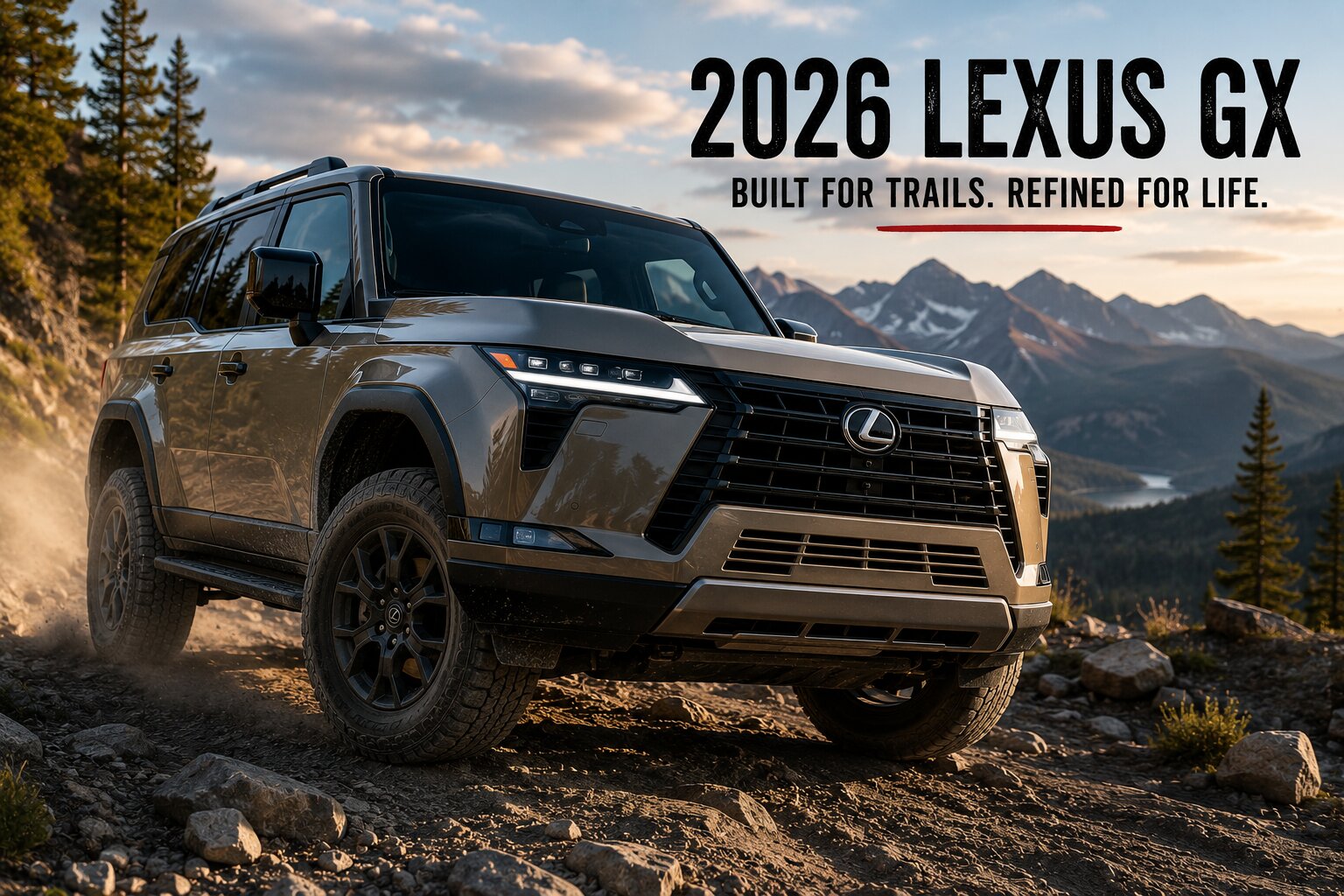
The 2026 Lexus GX is part of the current generation GX that debuted for the 2024 model year in the U.S. It rides on Toyota’s body on frame GA F platform shared with the Toyota Land Cruiser (250 series) and related to the Toyota Tundra, Sequoia, and the global Land Cruiser family. In America, GX is sold in two core mechanical flavors: GX 550 with a twin turbo 3.4 liter V6 (Lexus calls it a 3.4 liter twin turbo V6), and GX 550h with a hybrid version of that same 3.4 liter twin turbo V6 paired to an electric motor and battery. Both are four wheel drive only.
Key hardware that’s widely published and consistent across Lexus’ official materials: a 10 speed automatic transmission for the non hybrid GX 550, a full time four wheel drive system with a two speed transfer case, and a towing rating that tops out at 9,096 pounds for properly equipped GX 550 models. Ground clearance is trim dependent; Lexus publishes up to about 8.9 inches on Overtrail models. A rear locking differential is available on Overtrail and Overtrail+, and those trims also bring off road focused tires and underbody protection. The hybrid GX 550h uses a different transmission arrangement (a hybrid specific automatic), but Lexus has not always presented every mechanical detail in the same consumer friendly way as the standard GX. Where something is not officially confirmed for 2026 specifically, I call it out.
Competitors are straightforward: Land Rover Defender, Jeep Wrangler and Grand Cherokee (especially Trailhawk variants), Ford Bronco (more off road than luxury), Toyota Land Cruiser (less power, lower price ceiling depending on market conditions), Toyota Sequoia (bigger family hauler), Infiniti QX80 (more road luxury, less trail focus), Mercedes Benz G Class (price stratosphere), and to some extent the BMW X5 and Audi Q7 if your “off road” is gravel roads to a cabin but you still want premium badges.
What the GX is trying to be in 2026
The old GX was lovable in a stubborn way. It was durable, comfortable enough, and unapologetically body on frame, but it also felt like it was stuck in an earlier decade. The new generation flips that script. The shape is still big and square, visibility is still one of its best party tricks, and it still looks like it would rather be dirty than detailed. Yet inside and under the skin it’s much more modern where it counts: powertrain output, towing confidence on paper, driver assistance tech, and a cabin layout that finally feels designed around normal people using normal stuff.
If you’re shopping this class in the U.S., you’re usually balancing three things: real off road capability, daily comfort, and ownership sanity. The GX leans hard into capability first without fully giving up on comfort. That’s what makes it interesting.
Trims and what they actually mean for real use
Lexus has offered the current GX in trims that matter because they change hardware, not just stitching. The names you’ll see most often are Premium, Premium+, Luxury, Luxury+, Overtrail, and Overtrail+. Availability can vary by model year and region, and Lexus sometimes adjusts packaging mid cycle. For 2026 specifics, always verify the exact equipment list on Lexus’ site or the window sticker because small changes happen.
Here’s the practical breakdown based on widely published specs for this generation:
GX 550 Premium / Premium+: These are the “normal” versions that most families will end up cross shopping against a Defender 110 or a nicely equipped Grand Cherokee. You get the core powertrain and four wheel drive system, plus more comfort features as you move up to Premium+. If your life is mostly pavement with occasional snowstorms, boat ramps, or forest roads, these trims make sense.
GX 550 Luxury / Luxury+: More comfort content, more upscale cabin details depending on options, and generally a more road biased vibe while keeping body on frame bones. If you want something that feels closer to an Infiniti QX80 in day to day mood but still has a low range transfer case, this is where Lexus tries to meet you.
GX 550 Overtrail / Overtrail+: This is the one for people who actually read tire sidewalls and care about approach angles. Overtrail trims bring higher ground clearance (Lexus quotes up to about 8.9 inches), available rear locking differential (it’s part of what makes Overtrail special), off road oriented tires on smaller wheels compared with street focused trims, added underbody protection, and Lexus’ off road drive modes suite depending on equipment. If you’re building an overland rig that still needs to do school pickup duty without feeling like a farm tool, Overtrail is the headline act.
Third row note: The third row situation depends on configuration. Overtrail models have been positioned as two row only in many published materials for this generation because of packaging choices tied to off road hardware and cargo layout. Other trims can be configured with three rows. For buyers who truly need seven seats regularly, verify the exact configuration at purchase because this can be a deal breaker.
Powertrains: strong numbers where Americans care
Lexus’ messaging around this GX generation has been refreshingly direct: torque matters when you’re towing or climbing grades at altitude. The standard GX 550 uses a twin turbocharged 3.4 liter V6 rated at 349 horsepower and 479 lb ft of torque (these are Lexus published figures for this generation). It’s paired with a 10 speed automatic transmission.
The hybrid GX 550h adds electrification to improve low speed response and efficiency in typical use cases; Lexus quotes higher combined output than the non hybrid version for this drivetrain family. For the related Toyota i FORCE MAX system used in other GA F trucks and SUVs, output has been published at 437 horsepower and 583 lb ft of torque in some applications like Tundra and Sequoia. Lexus has indicated similar headline numbers for GX 550h in early communications about this model line; however, because packaging details can differ by vehicle application and because model year updates happen quietly, treat any exact combined output figure as “verify for your specific VIN” until you see official 2026 spec sheets or the Monroney label.
If you stick with what’s firmly established: the non hybrid GX already makes serious torque by midsize luxury SUV standards. It’s also a meaningful step up from the current U.S. market Toyota Land Cruiser’s turbocharged four cylinder hybrid setup in raw output terms. That matters if your weekends involve towing toys or climbing long grades with a full load of people plus gear.
Towing and hauling: where the GX earns its keep
Lexus rates properly equipped GX 550 models to tow up to 9,096 pounds. That oddly specific number is straight from Lexus’ published specs for this generation. It puts the GX into legitimate travel trailer territory rather than just “small utility trailer” duty.
A few real world notes that matter more than bragging rights:
Wheelbase and stability: The GX sits in that sweet spot where it’s not as long as full size SUVs like a Chevy Tahoe or Ford Expedition, but it’s substantial enough to feel stable when hitched correctly. You still need proper tongue weight management and trailer brakes when appropriate because physics does not care about badges.
Torque delivery: With 479 lb ft on tap in the standard engine, you have room to merge without wringing it out every time. Twin turbos also tend to hold power better at altitude than naturally aspirated engines from older generations.
Payload reality check: Lexus publishes payload figures by configuration; they vary with trim, options, wheels/tires, third row seating, and accessories like rock rails or roof racks. I’m not going to invent a payload number here because it’s one of those specs buyers assume is “about the same” across trims when it often isn’t. If you plan to tow near max while carrying a family plus gear inside the SUV, check payload on your exact build sheet before signing anything.
Off road hardware: not cosplay
This GX is not pretending. Underneath you have body on frame construction, full time four wheel drive with low range (a two speed transfer case), skid protection depending on trim, and available traction tools that actually change what you can drive over.
Rear locker availability: The rear locking differential offered on Overtrail trims is one of those features that sounds niche until you’re cross axled on an uneven climb or trying to crawl through rutted mud without spinning one rear tire into oblivion. A locker can turn a “maybe” obstacle into an easy crawl when used correctly.
Crawl control style systems: Lexus offers off road assist tech similar in concept to Toyota’s Multi Terrain Select and Crawl Control on related vehicles (exact naming can vary). These systems help manage throttle and braking at very low speeds so you can focus on steering placement instead of pedal finesse.
Ground clearance: Lexus lists up to roughly 8.9 inches of ground clearance for Overtrail models depending on equipment. That number does not make it an extreme rock crawler out of the box like some high clearance Wrangler builds can be, but it’s plenty for typical overland trails, snowed in access roads, washouts after storms, desert two tracks, and rocky forest service routes if you pick lines sensibly.
Tires matter more than marketing: Overtrail trims come with more off road oriented rubber than street focused Luxury variants; that alone changes grip on loose dirt or slick rock far more than most buyers expect. A Defender can be extremely capable too, but its tire choice often depends heavily on how it was optioned by its first owner.
On road driving impressions (based on layout and known character)
I’m not going to pretend I ran instrumented tests or did back to back laps because I don’t have verified test data for your exact trim or tire setup here. What we can say confidently from engineering fundamentals and from what owners typically notice moving from older body on frame SUVs into modern GA F based trucks is this: you feel mass and structure first; refinement comes second; confidence comes from stability rather than agility.
The GX’s twin turbo V6 should feel strong in everyday acceleration because torque arrives early compared with old naturally aspirated V8s from prior generations of Lexus SUVs. The 10 speed automatic also gives it flexibility: short gearing for quick response around town and taller gears for highway cruising.
You will still notice body motions over uneven pavement because body on frame vehicles isolate impacts differently than unibody crossovers like an Acura MDX or BMW X5. Depending on wheel size and tire sidewall height (Overtrail versus Luxury), ride comfort can swing from pleasantly controlled to slightly busy over broken city streets.
If you’re coming from a Wrangler or Bronco set up for trails first, the GX should feel calmer at speed and quieter inside based purely on its luxury mission and insulation priorities. If you’re coming from something like an Audi Q7 or BMW X5, expect more truck feel through the steering wheel over rough surfaces but also more confidence when pavement ends abruptly.
Visibility: boxy is good actually
The squared off design isn’t just style nostalgia; it pays off every day in sightlines. Upright glass helps when judging corners in parking lots or placing tires near trail edges without leaning forward like you’re trying to read fine print through binoculars.
The hood looks big from behind the wheel because it is big; that can be reassuring off road since you can better judge where your front end sits relative to dips or crests. In tight urban parking situations it can feel like piloting something larger than its footprint until you get used to it.
Cabin layout: built for gloves more than Instagram
Lexus finally leaned into usability instead of burying everything in glossy trim pieces that look great until they’re covered in fingerprints after one weekend camping trip.
You get modern screens and connectivity expectations for this price class while still having physical controls where they matter most for quick adjustments during bumpy driving or cold weather use when touchscreens get annoying fast.
The seating position tends toward upright truck posture rather than low slung crossover style. That helps long distance comfort for many drivers because your legs sit more naturally bent rather than stretched out.
Third row reality: If you choose a three row configuration (where available), keep expectations realistic: midsize three row SUVs almost always have “kid sized” third rows unless they are stretched into full size territory like Tahoe or Expedition class vehicles. The GX prioritizes structure and capability; packaging will reflect that tradeoff.
Cargo space and storage: how it works when you actually pack gear
Lexus publishes cargo volume figures by configuration; those numbers vary based on whether your vehicle has two rows or three rows installed. Rather than throw out a number that might be wrong for your trim mix, here’s what matters functionally:
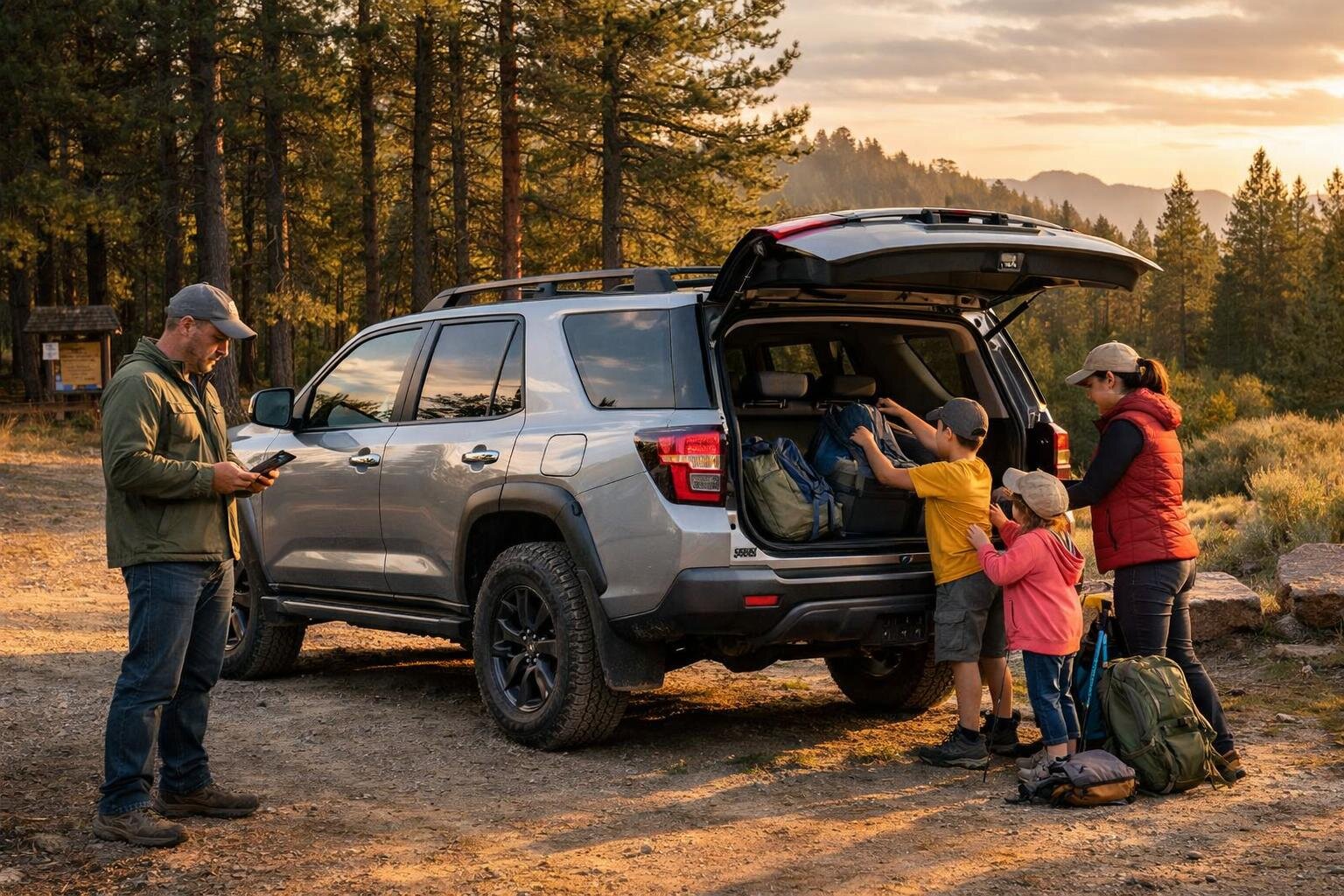
A tall cargo opening: Boxy SUVs tend to swallow coolers, recovery bins, tool bags, dog crates, and awkward camping gear better than sloped roof crossovers even when official cubic feet numbers look similar.
Load floor height: Body on frame SUVs typically sit higher off the ground; lifting heavy items like generators or loaded totes takes more effort than loading them into something like a Honda Pilot or Subaru Ascent.
Roof rack practicality: A flat roofline makes rooftop tents or cargo boxes easier to mount squarely than curvy designs do; just keep track of total weight up top because rooftop loads affect handling more than most people admit until crosswinds hit at highway speeds.
Trail settings in plain English
If you buy an Overtrail with its extra traction tools, here’s how they translate outside brochure language:
Low range: Use it when crawling slowly over rocks or descending steep grades so you’re not riding brakes constantly.
Crawl type assist: Think of it as slow speed cruise control for ugly terrain; it meters throttle and braking so you can focus on steering around obstacles without stabbing pedals.
Locking rear diff: Use it when traction is uneven left to right such as deep ruts or diagonal articulation situations; disengage when you’re back on higher traction surfaces so driveline stress stays reasonable.
Tire choice: If your Overtrail comes with all terrain tires from the factory (as expected), keep them if your life includes mud season or rocky access roads; switching immediately to street tires defeats much of what makes this trim worth buying.
Mileage expectations: don’t buy this thinking it’s an economy play
Official EPA fuel economy ratings depend on exact trim and drivetrain choice (GX 550 versus GX 550h) plus wheels/tires; ratings can also change slightly year to year due to certification updates even if hardware stays similar. For this reason I’m not going to quote mpg figures without pulling an official EPA listing tied specifically to the 2026 model year configuration you’re shopping.
The safe guidance is simple: if fuel cost anxiety is high on your list, cross shop unibody hybrids like a Highlander Hybrid or even plug ins if your driving pattern supports charging at home. The GX exists because some buyers want genuine towing strength plus low range plus luxury touches in one package; efficiency comes after those priorities.
Safety tech: modern basics are finally part of the deal
Lexus equips its current lineup broadly with active safety features under its Lexus Safety System umbrella such as automatic emergency braking with pedestrian detection (feature naming varies by year), adaptive cruise control, lane departure alert type functions, and related driver assistance tools depending on trim level and options packages.
I’m intentionally not citing crash test scores here because ratings depend on exact model year testing status by IIHS/NHTSA; availability can lag new generations or vary by configuration tested. If safety ratings are central to your purchase decision, check IIHS.org and NHTSA.gov for current results specific to the model year listed on the report rather than assuming carryover performance from older designs.
The rivals: quick reality checks
Toyota Land Cruiser (U.S.): Shares GA F roots but targets value differently with different powertrain strategy (a turbo four cylinder hybrid) and generally less power than GX 550’s twin turbo V6 output figures suggest. Land Cruiser tends to feel like a simpler tool; GX adds luxury polish plus stronger torque claims depending on drivetrain choice.
Land Rover Defender: A legitimate competitor if your budget allows repairs risk tolerance along with capability bragging rights. Defender offers serious off road geometry potential depending on spec plus modern tech flair inside; ownership costs can be less predictable than Lexus for many buyers based on brand reputation even though individual experiences vary widely.
Jeep Grand Cherokee Trailhawk: More crossover like manners because it’s unibody based while still offering real trail capability when properly optioned (air suspension height settings help). It usually cannot match GX towing max ratings at similar sizes depending on engine choice but may feel easier day to day if most miles are commuting.
Jeep Wrangler / Ford Bronco: More extreme trail bias possible out of the box depending on trim (Rubicon style packages). They give up quietness, towing stability at higher weights compared with longer wheelbase SUVs depending on configuration choices, and luxury polish unless heavily optioned.
Toyota Sequoia / Chevy Tahoe / Ford Expedition: These are bigger family haulers with greater third row usefulness in typical daily life plus more cargo behind row three (especially Tahoe/Expedition). They also take up more space everywhere else including garages and tight trailheads; many forest roads simply punish wide full size rigs with pinstriping whether you care about paint or not.
The stuff buyers ask about at dealerships
Can I daily drive it? Yes for many people who already accept truck sized parking habits. The boxy shape helps visibility; ride quality depends heavily on wheels/tires chosen; fuel costs will be higher than unibody crossovers regardless of badge discipline at checkout time.
Is it too nice to take off road? That depends more on your personality than the vehicle’s hardware capability. The whole point of an Overtrail trim is letting you use expensive things without feeling guilty about dirt under fingernails afterward.
Will dealers mark them up? Dealer pricing behavior varies by region and market demand; I cannot promise what your local store will do in any given month. If pricing pressure matters most, widen your search radius and be willing to order or wait rather than pay emotional money today.
0 comments
Join the discussion around this article.
Please login to comment.