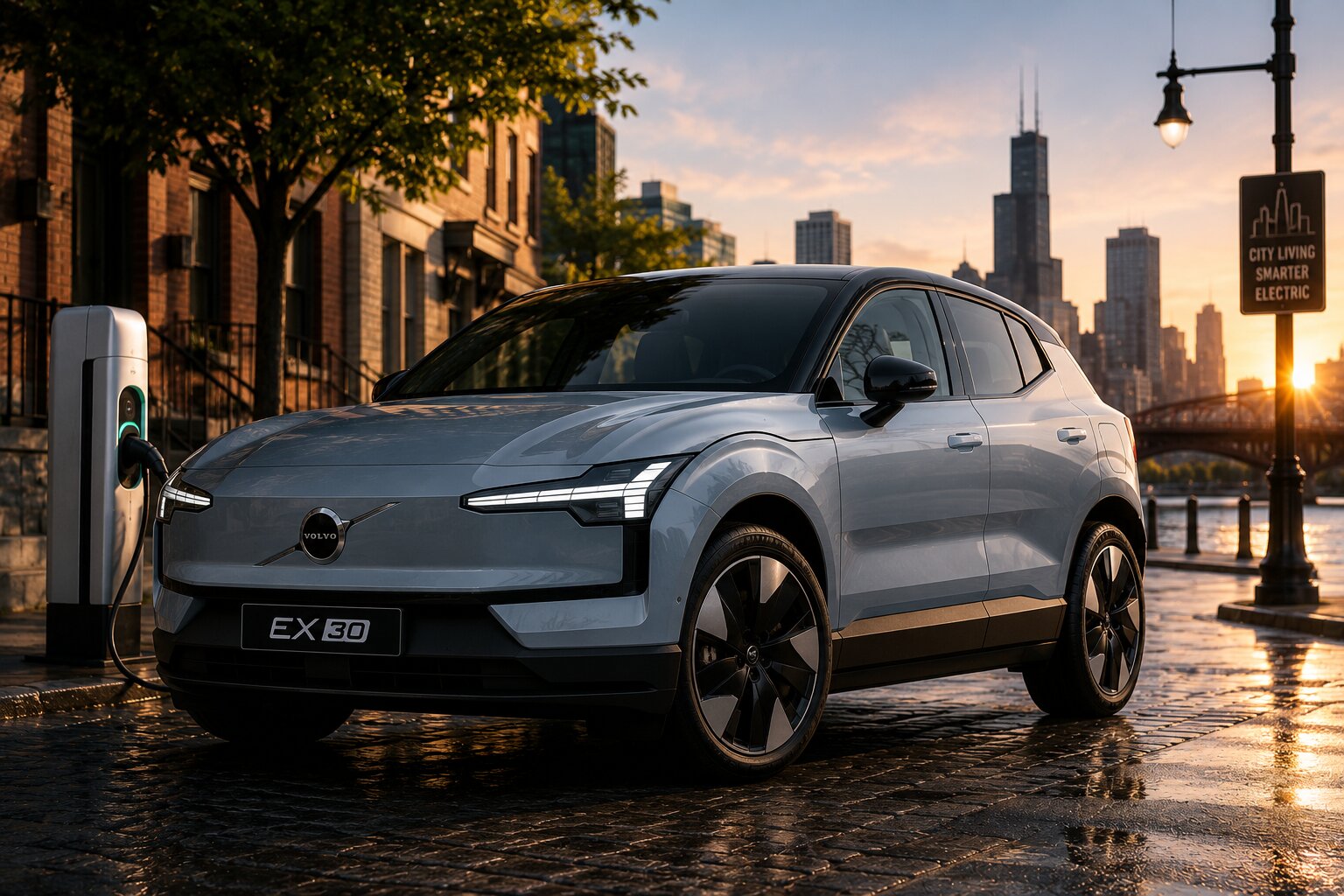
Verified facts first: what we actually know about the EX30 (and what we do not)
The Volvo EX30 is Volvo’s smallest battery electric SUV, built on the Geely SEA platform (the same basic architecture used by vehicles like the Smart #1). It debuted globally for the 2024 model year, and Volvo has positioned it as a new entry point to the brand’s EV lineup in both price and footprint. For U.S. shoppers, the story has been more complicated than “small Volvo EV shows up at dealers.” Timing, sourcing, and evolving trade policy have been part of the conversation, and availability has shifted versus early expectations.
Here is the cleanest way to frame a “2026 Volvo EX30” review using widely published information: the EX30’s core design, powertrain lineup, and feature philosophy are known; U.S. market specifics like final 2026 trims, pricing, and EPA range can vary depending on what Volvo ultimately certifies and sells here for that model year. If you are reading this before EPA certification for a given configuration is posted, treat any range talk as “official estimates where available” rather than assumed numbers. I will call out gaps directly.
Verified and widely reported highlights: The EX30 is offered globally with two battery strategies: a single motor rear wheel drive setup paired with an LFP (lithium iron phosphate) battery in some markets, and a longer range single motor version using an NMC (nickel manganese cobalt) battery. There is also a dual motor all wheel drive “Performance” variant that prioritizes acceleration. The EX30 uses CCS fast charging in markets like Europe; U.S. connector strategy has been in flux across the industry as brands adopt NACS (Tesla’s plug). If Volvo confirms NACS or an adapter plan for U.S. 2026 vehicles, that becomes a major ownership factor. If not, assume CCS with adapter access depending on network rules.
Competitors you will cross shop in the U.S.: Hyundai Kona Electric, Kia Niro EV, Chevrolet Equinox EV (bigger but often price adjacent), Tesla Model Y (bigger but unavoidable in EV shopping), and to a degree the MINI Countryman Electric and BMW iX1 class of small premium EVs (availability varies). The EX30 also brushes up against “tall hatch” alternatives like the Kia EV3 globally, though U.S. availability is not guaranteed.
What is not safe to invent: 2026 U.S. MSRP, exact trim packaging, EPA range for each configuration if not yet published for that model year, charging curve behavior in kW over time, insurance costs, and any claims of reliability trends. Those are all real world critical items, but they need either official certification data or broad owner history to be stated as fact.
The pitch: small on purpose, not small by accident
The EX30’s whole vibe makes more sense if you start from city life rather than road trip fantasy. It is short enough to feel like it belongs in dense neighborhoods where parallel parking is normal, curb cuts are tight, and your garage was designed when cars had bumpers you could actually touch without crying.
Volvo leaned into that reality with a design that reads clean and modern without trying too hard to look “techy.” The upright stance gives you SUV sightlines without carrying around the mass of a three row family hauler. If your daily driving looks like school drop offs plus a downtown office garage plus a grocery run with one questionable left turn across traffic, this size can feel like relief.
That said, small also means you notice compromises sooner. The back seat matters if you routinely carry adults. Cargo space matters if you do Costco runs instead of corner store runs. And on American highways where speeds are high and pavement can be rough, wheelbase and suspension tuning matter more than they do on smooth urban streets.
Powertrains and batteries: LFP vs NMC is not just nerd trivia
One of the most interesting parts of the EX30 story is that it brings battery chemistry choice into a segment where many shoppers are still learning what those acronyms mean.
LFP (lithium iron phosphate) tends to be cheaper to build and more tolerant of frequent 100 percent charging in daily use. That can be appealing if you want to keep things simple at home: plug in when convenient, charge full often, do not overthink it. The tradeoff is typically lower energy density than NMC, which often means less range for a given pack size or weight.
NMC (nickel manganese cobalt) typically supports higher energy density and therefore longer range potential in similar packaging. Many brands recommend keeping daily charging lower than 100 percent for long term battery health (often around 80 to 90 percent), then charging to full only when needed for longer drives. That adds a little behavioral friction for owners who just want their car ready every morning without thinking about it.
Volvo has offered both strategies globally on the EX30 lineup depending on version and market. For U.S. buyers looking at a 2026 EX30 specifically, the key question is which battery versions are actually certified and sold here for that model year. If both chemistries are offered in the U.S., it becomes one of the most practical decisions you can make: do you want maximum day to day convenience (LFP) or maximum road trip buffer (NMC), assuming pricing aligns?
On performance: Volvo has promoted quick acceleration on the dual motor variant in global materials. Exact horsepower figures have been widely reported internationally for certain trims (including outputs in the 200s hp range for single motor versions and higher for dual motor), but because outputs can be market specific and change by model year certification, I am not going to pin down U.S. 2026 horsepower numbers unless Volvo publishes them for that exact configuration.
Range expectations in American conditions: what matters more than the headline
If there is one place EV coverage goes off the rails fast, it is range talk. People want one number; reality gives you a bundle of conditions: speed, temperature, tire choice, elevation change, HVAC use, passenger load.
For a small SUV like the EX30, typical strengths include lower mass than larger crossovers and potentially decent efficiency around town. Typical weaknesses include highway consumption at 75 mph plus headwind plus winter temperatures. That combo can humble almost any EV.
EPA range: For any 2026 EX30 sold in the U.S., EPA range ratings should be published by configuration once certified (battery size, drivetrain, wheel choice can all matter). If those ratings are not yet available when you are shopping or reading this review early in the model year cycle, use official Volvo communications cautiously and treat non EPA numbers as directional only.
The practical question: Do you have home charging? If yes, daily range becomes less stressful because you start each morning with whatever charge target you set. If no home charging exists (apartment life), range becomes more important because public charging habits become your fuel routine rather than an occasional road trip tool.
Charging reality: fast charging speed matters less than people think until it suddenly matters a lot
The EX30 supports DC fast charging; global specs have cited peak rates that sound competitive for its class depending on battery version. But peak kW is only one part of how long you sit there staring at your phone while your coffee gets cold.
Charging time depends on battery chemistry, pack temperature management, charger reliability, how busy the site is, and where you arrive on the state of charge curve. Most owners do not roll into a charger at 5 percent every time; they arrive at whatever number life hands them.
Real habits: In typical daily use with home charging available, most people rarely DC fast charge at all. They plug in overnight on Level 2 and treat public fast chargers as occasional tools for road trips or unexpected long days.
The American road trip test: Here’s where it gets real: road trips require dependable networks more than theoretical charging speed. Tesla’s Supercharger network has set expectations for uptime and ease of use; CCS networks have improved but still vary by region and operator.
NACS vs CCS: Connector strategy matters because it determines how many high quality chargers are realistically convenient along your routes. If Volvo sells a 2026 EX30 with NACS built in or provides robust Supercharger access via adapter agreements where allowed, that meaningfully improves ownership confidence for many buyers who do not want to plan around charger quirks. If access remains primarily CCS without seamless Supercharger support, your experience will depend more heavily on Electrify America locations near you plus local regional providers.
The cabin: minimalist design with real consequences for daily usability
The EX30 interior has been widely described as minimalist even by modern EV standards. There’s an obvious upside: clean design can feel calming; fewer physical controls can make the cabin look expensive even when materials are cost constrained; software updates can improve features over time.
The downside shows up every time you need to do something quickly while driving in traffic or while wearing gloves in winter.
User interface quirks: Volvo has leaned into touchscreen based control backed by Google built in infotainment on several recent models (availability depends on market). If your climate controls live mostly in software rather than dedicated knobs, expect an adjustment period. Some drivers adapt quickly; others never stop missing physical buttons for fan speed and temperature changes.
A city owner detail people forget: quick defogging matters more than fancy ambient lighting. You want HVAC controls that are easy when visibility drops suddenly due to rain or fogged windows after loading wet gear into the car.
Storage and small item living: Small cars succeed or fail based on places to put your phone(s), keys, sunglasses, water bottle(s), takeout bags that need to stay upright so they do not perfume your cabin forever with spilled curry sauce. The EX30’s cabin packaging aims to be clever with space usage; still, minimalism sometimes reduces easy grab storage right where your hand wants it.
Visibility and maneuvering: this is where small EVs earn their keep
A lot of modern crossovers have gotten so tall beltline heavy that they feel like driving from inside a mailbox slot. The EX30’s upright shape should help outward visibility compared with some sleeker rivals; still modern safety structures mean thick pillars are common everywhere now.
This is also where camera quality matters more than brochure photos suggest. A crisp backup camera with good low light performance reduces stress in tight garages at night. Parking sensors that do not false alarm constantly reduce fatigue when threading into compact spaces between concrete columns.
The big win here is footprint. A smaller turning circle and shorter overall length make daily parking less of an event. If you live somewhere with narrow alleys or older parking lots painted before today’s vehicle bloat era, this alone can be reason enough to choose something like an EX30 over an Equinox EV or Model Y sized option.
Driving feel: quick responses beat raw horsepower in cities
I cannot claim instrumented test results or personal seat time impressions if I have not driven this exact 2026 U.S.-spec vehicle yet; what I can do is describe what typically defines this class based on known characteristics of small EV crossovers and Volvo’s general tuning priorities.
EV torque delivery: Even modest power outputs feel lively around town because electric motors deliver torque immediately from low speeds. That makes merges easier and helps you dart through gaps without drama (within reason).
Single motor vs dual motor: For many city drivers who deal with potholes more often than mountain passes, rear wheel drive single motor versions can feel playful and efficient while keeping cost down. Dual motor all wheel drive adds traction benefits in rain or snow depending on tires but usually costs range due to extra hardware and weight.
Ride comfort: Shorter wheelbase vehicles can get choppy over broken pavement if suspension tuning is too firm or wheels are too large with low profile tires. Wheel size choices matter here more than people expect; bigger wheels often look great but can add harshness over expansion joints.
Cabin noise: Small EVs sometimes allow more road noise into the cabin simply because there’s less physical distance between tire contact patches and your ears compared with larger vehicles with more insulation volume available. Volvo tends to care about refinement; whether this small platform hits “quiet enough” will depend on tire choice and trim level insulation decisions made for cost targets.
Safety tech: Volvo’s brand promise meets entry level reality
Volvo’s reputation in safety engineering is well earned historically; however every model still needs its own ratings from agencies like IIHS and NHTSA once tested in relevant configurations.
If official crash ratings for the specific U.S.-market EX30 model year are available at purchase time, read them rather than assuming anything from brand halo alone. Also pay attention to standard driver assistance features versus optional packages because affordability often pushes buyers into base trims where some features may be limited or packaged differently than expected.
Cargo space and back seat life: honest expectations help
The EX30 is small externally; it will not magically behave like a midsize SUV inside. It should handle normal errands easily: groceries for two adults plus maybe a kid’s sports bag situation should be fine depending on cargo area design.
The tougher scenario is adult passengers behind tall front occupants or bulky rear facing child seats that demand front seat compromises. If this car will be your only vehicle for a family with car seats plus strollers plus weekend trips out of town, it becomes essential to physically test fit your gear rather than trusting internet optimism.
Ownership math: incentives, leasing pressure, insurance questions
This is where U.S.-market EV shopping gets messy fast because incentives shift constantly based on sourcing rules and policy changes.
Federal tax credit eligibility: Eligibility depends on factors including final assembly location and battery sourcing requirements under current rules at time of purchase or lease signing. Because those details can change by model year and supply chain decisions (and because I cannot assume where a hypothetical 2026 EX30 sold here would be built without official confirmation), treat tax credit eligibility as something you verify at deal time using IRS guidance plus VIN specific documentation provided by the manufacturer or dealer.
The lease loophole effect: Many brands have used leasing structures to pass through commercial clean vehicle credits even when retail purchase credits were unavailable under consumer rules (subject to program specifics). This has made leasing disproportionately attractive for some imported EVs depending on how manufacturers structure deals month to month.
Insurance: Small premium branded EVs sometimes carry higher premiums than buyers expect due to repair costs and parts availability realities rather than crash rates alone. Get quotes before committing if budget predictability matters.
The rivals: where the EX30 fits when cross shopping gets real
Tesla Model Y: Usually offers strong charging ecosystem advantages if Supercharger access is seamless and pricing stays aggressive relative to competitors. It is larger inside than an EX30 class vehicle; that can be either benefit or burden depending on your parking life. Tesla’s UI approach is also minimalist but executed differently; some people love it immediately while others miss traditional ergonomics forever.
Hyundai Kona Electric: A logical alternative if you want compact size but prefer more conventional controls depending on model year updates (Hyundai has moved toward larger screens but still tends to keep some physical interface). Charging network experience depends on connector strategy too; Hyundai has been moving toward NACS adoption announcements across its lineup but timing varies by model year.
Kia Niro EV: Practical packaging with friendly ergonomics; not as premium branded as Volvo but often strong value if pricing aligns locally. It tends to prioritize usability over flashiness which matters after month three of ownership when novelty wears off.
Chevrolet Equinox EV: Typically bigger inside with competitive pricing targets; however availability by trim can vary widely early in product cycles and some buyers end up waiting or settling for higher trims than planned due to inventory realities.
The EX30’s differentiator is that it aims at premium design sensibility in an actually city sized package rather than doing “small crossover” as an afterthought compliance play.
The stuff you will care about after two weeks: phone keys apps updates
A modern EV lives or dies by its software experience because so much runs through screens now: route planning including chargers (if integrated well), preconditioning scheduling so winter mornings do not punish efficiency as much as they could, remote locking/unlocking when someone inevitably forgets something inside during dinner out.
If the EX30 uses Google built in services in your market configuration (as several Volvos do), Google Maps integration can be genuinely helpful because it tends to be familiar and functional for navigation basics; still charger routing quality depends on data freshness and network integration details which vary widely across brands.
This is also where UI quirks become emotional quickly: laggy menus make people irrationally angry because they happen during stressful moments like backing out of tight spaces or trying to adjust defrost while merging onto an interstate ramp.
Maintenance expectations: simpler powertrain does not mean zero headaches
An EV generally reduces routine maintenance compared with internal combustion vehicles since there are no oil changes or exhaust systems; however tires wear faster if torque delivery encourages enthusiastic starts or if vehicle weight is high relative to tire size (common across EVs). Brake service intervals can be long thanks to regenerative braking but brakes still need periodic inspection especially in salty winter climates where corrosion can become an issue if friction brakes are rarely used hard enough to clean themselves off regularly.
If parts supply becomes constrained due to low initial volumes or import logistics issues (a risk any new model faces), repair lead times can frustrate owners even when reliability itself is fine day-to-day. That risk tends to be higher early in product cycles before dealer networks build familiarity with repairs beyond basic service tasks.
The pros that genuinely matter
A footprint that fits actual cities: This sounds obvious until you try living with today’s average crossover size every day in older neighborhoods with tight parking spots.
A premium flavored interior concept at entry level scale: Minimalist design can feel upscale when executed well.
A smart battery strategy possibility: If both LFP oriented affordability models and longer range NMC versions exist in your market lineup, buyers get meaningful choice rather than one forced compromise.
Zippy around town behavior typical of small EVs: Immediate torque makes daily driving easy even without chasing maximum horsepower figures.
A different kind of Volvo appeal: It looks like Volvo took urban life seriously instead of just shrinking an SUV shape until it technically qualifies as “small.”
The cons worth being honest about
If controls lean heavily touchscreen-based: Some drivers will miss physical buttons every single day.
Cargo space and rear seat limits are real: It will not replace a midsize SUV lifestyle without compromises.
Road trip confidence depends heavily on charging access strategy: Connector choice plus network agreements matter as much as advertised peak charging speed.
Total cost hinges on incentives availability: Federal credit eligibility may vary by configuration and sourcing rules; leasing may change value math dramatically month-to-month.
A new model always carries unknowns: Long term reliability patterns take time; early adopters sometimes deal with software updates that feel like public beta testing even from reputable brands.
The verdict: who should wait for it, who should skip it
The idea behind the EX30 lands squarely where American EV ownership needs more options: smaller vehicles that do not feel cheap just because they are compact. For many buyers who live near dense downtowns or older suburbs built around smaller cars, this kind of footprint could make daily life easier while still delivering modern safety tech expectations and EV smoothness.
I would put the EX30 high on the list if your priorities are easy parking plus premium design sensibility plus mostly local driving supported by home Level 2 charging or reliable workplace charging access. In that scenario range anxiety fades quickly because your “gas station” lives where you sleep or work most days anyway.
I would hesitate if your life includes frequent interstate road trips through charger sparse regions or if you hate touchscreen heavy interfaces enough that climate control menus feel like betrayal rather than progress. In those cases a slightly larger rival with proven road trip infrastructure advantages might simply fit better even if it feels bulkier around town.
The smartest move before signing anything is simple: verify EPA range ratings for the exact trim you want once posted, confirm connector type plus Supercharger access details if relevant for your routes, then sit inside one long enough to decide whether minimalist controls feel elegant or irritating under pressure. The EX30 looks like it could be one of those rare new EVs that genuinely suits city living rather than merely tolerating it; whether it becomes your perfect urban companion depends less on hype numbers and more on how it handles Tuesday night errands when rain starts falling sideways right as you pull into a cramped garage spot.

0 comments
Join the discussion around this article.
Please login to comment.