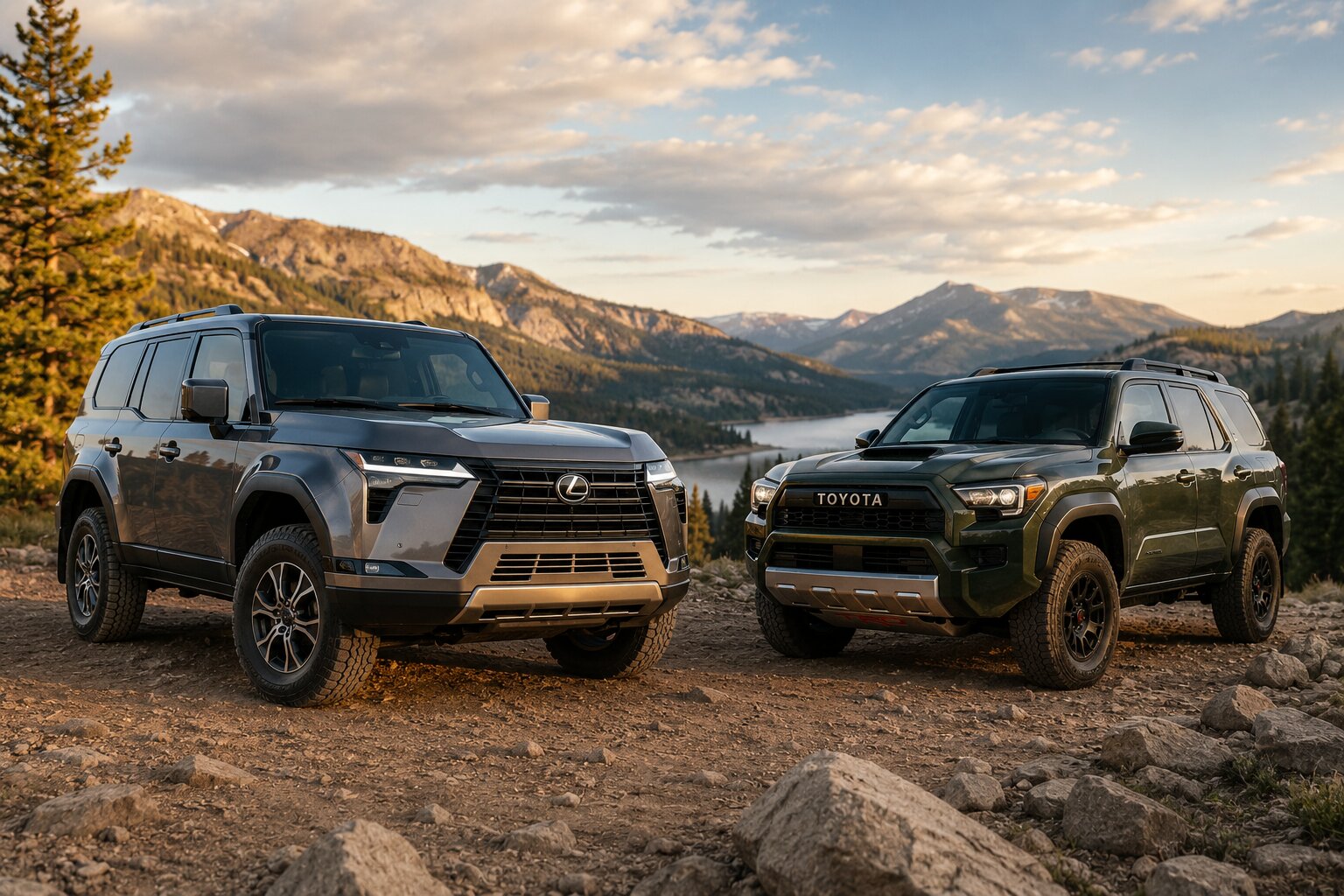
Rugged Luxury vs Everyday Trail Confidence, the quick read on what you are really cross shopping
If you are looking at a 2026 Lexus GX and a 2026 Toyota 4Runner, you are probably not shopping “SUVs” in the abstract. You are shopping a specific lifestyle math problem: daily commute comfort plus weekend trail access plus family packing, with towing somewhere in the background. Both rigs come from the same corporate family and both have real off road credibility, but they aim at different kinds of owners.
The GX is the one you buy when you want your off road hardware wrapped in quiet, polished luxury. The 4Runner is the one you buy when you want trail confidence and durability vibes without paying for the Lexus badge and without feeling precious about pinstripes from brush.
One important honesty note up front: as of this writing, not every 2026 specific detail is fully published in a single, final EPA and pricing sheet for every trim. The good news is that both vehicles are already known quantities in their current generation form, and many of the key mechanical facts are widely reported from manufacturer information for these platforms. Where 2026 numbers are not officially posted or are expected to vary by trim, I will say so plainly.
Platform and mission: these two are related, but not twins
The current Lexus GX is the GX 550 generation that arrived for the 2024 model year. It moved to Toyota’s TNGA F body on frame architecture, the same basic family used by the Land Cruiser (U.S.), Tundra, Sequoia, and the latest Tacoma. That matters because it frames what the GX feels like: modern structural stiffness, modern driver assists, and a more contemporary interior layout than the old GX 460.
The redesigned Toyota 4Runner debuted for the 2025 model year and also rides on TNGA F. So yes, they share some bones. But Toyota positions them differently. The 4Runner is meant to be a high volume adventure SUV with trims that range from commuter friendly to serious off road focused. The GX is deliberately premium and more tightly curated around luxury plus capability.
Competitors tend to split accordingly. A GX shopper cross shops Land Rover Defender, Jeep Grand Cherokee (especially Overland or Summit), and sometimes a well optioned Ford Bronco if luxury is not the priority. A 4Runner shopper compares Jeep Wrangler Unlimited, Ford Bronco, Honda Passport TrailSport, Subaru Outback Wilderness (different category but common buyer overlap), and sometimes the Chevrolet Colorado ZR2 or Ford Ranger Tremor if towing and gear hauling starts to lean pickup.
Powertrains: turbo V6 muscle in the GX, turbo four variety in the 4Runner
This is where the split gets real quickly.
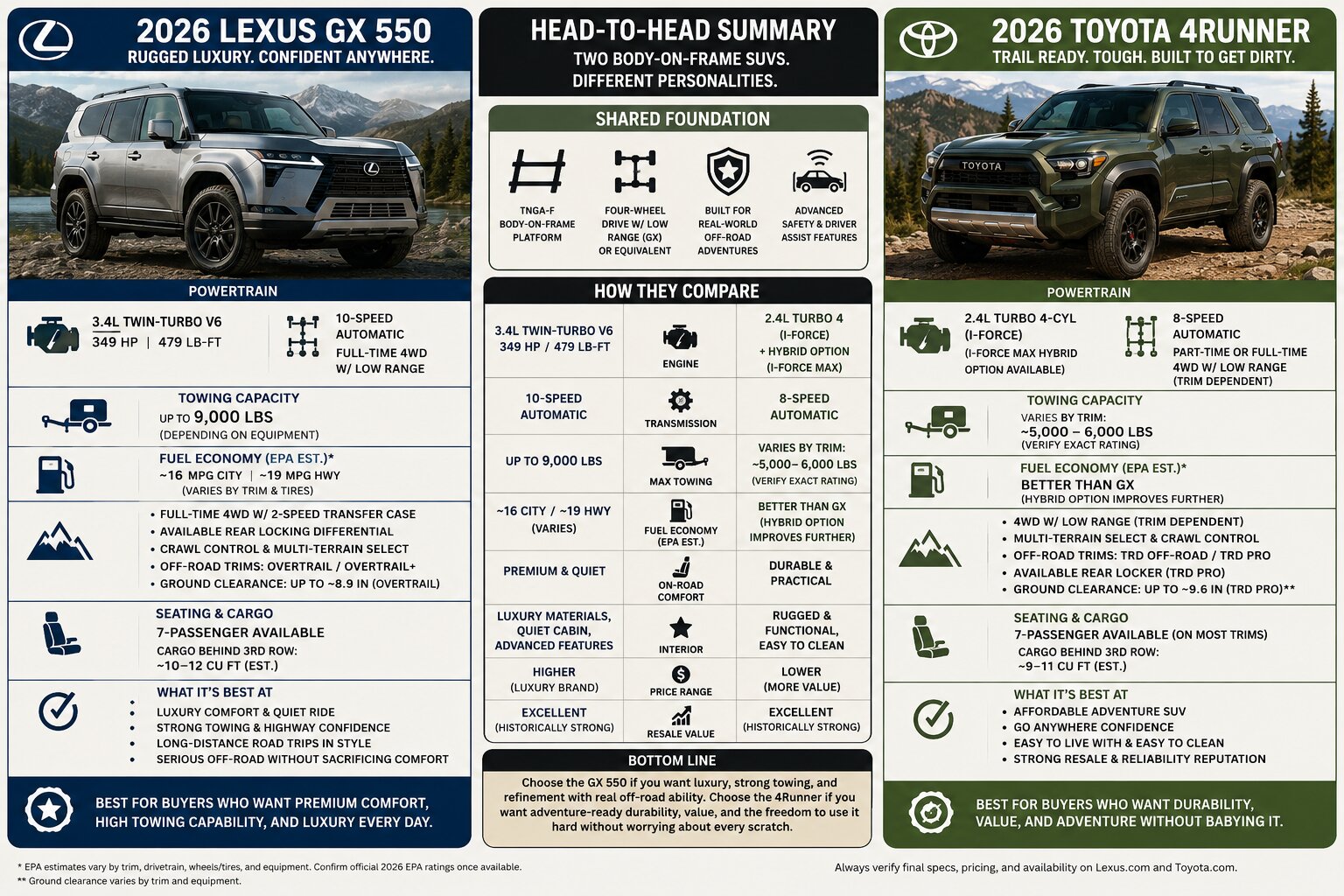
The Lexus GX 550 uses a twin turbocharged 3.4 liter V6 (Lexus calls it a 3.4 liter twin turbo V6; it is closely related to Toyota’s i FORCE V6 family). Lexus rates it at 349 horsepower and 479 lb ft of torque in U.S. spec GX models. It is paired with a 10 speed automatic transmission and full time four wheel drive with a low range transfer case.
The redesigned Toyota 4Runner uses Toyota’s i FORCE 2.4 liter turbocharged four cylinder as its base engine in this generation. Toyota has also announced an i FORCE MAX hybrid powertrain for the new 4Runner lineup (a turbo four paired with an electric motor). Exact output depends on configuration; Toyota has published figures for these powertrains across TNGA F products, but because trim availability and final certification can vary by model year and application, you should confirm the exact horsepower and torque for the specific 2026 4Runner trim you are considering on Toyota’s spec sheet when ordering opens or when dealer inventory is posted.
What you can take to the bank from a buyer perspective is this: the GX’s twin turbo V6 brings effortless torque at low rpm that suits towing, steep grades, and that heavy SUV feeling where you want power without drama. The new 4Runner’s turbo four focuses on efficiency and packaging while still delivering strong midrange pull compared with older naturally aspirated V6s many people associate with “classic” SUVs.
In typical daily use, that difference shows up in how hard each vehicle has to work. The GX usually feels like it has reserve power even with passengers and cargo aboard. The turbo four in the 4Runner should feel responsive when boost comes on, but it may sound busier under load than a larger displacement six, especially if you are climbing long grades or pulling a trailer near its limits.
Towing: both can do real work, but one feels built around it
Lexus rates the GX 550 for up to about 9,000 pounds of towing capacity depending on equipment (this figure has been widely published since launch). That number alone does not tell the whole story, but it signals intent: Lexus engineered this thing to tow boats, campers, and car trailers with confidence.
The new generation Toyota 4Runner’s maximum tow rating varies by trim and powertrain. Toyota has positioned it as capable enough for typical recreational towing needs, but if you are shopping specifically around a heavy travel trailer or a large boat, you need to verify the exact rating for your chosen trim because tow ratings can change with drivetrain, wheelbase configuration if applicable, tires, cooling packages, and other equipment. For many buyers towing in the mid range is plenty: small campers, utility trailers loaded with dirt bikes or ATVs, or a pair of jet skis.
Here is how I would frame it in practical terms. If towing is occasional and moderate, either can fit your life depending on trim. If towing is frequent or heavy enough that you watch tongue weight numbers closely and care about stability on windy highways, the GX’s higher published ceiling and big torque number make it easier to justify.
Fuel economy: reality check for body on frame SUVs
Fuel economy is often where people talk themselves out of these trucks right before they talk themselves back into them.
For the GX 550, EPA fuel economy figures depend on trim and wheel and tire choices (and whether you are looking at more off road oriented equipment). Official EPA ratings exist for current GX trims in recent model years, but if you are shopping specifically for a 2026 model year window, you should confirm the exact EPA label once Lexus posts final figures for each trim because small changes can happen year to year.
For the new generation 4Runner, EPA figures also depend heavily on whether you choose the standard turbo four or the hybrid i FORCE MAX setup. As with any all new model line rolling into subsequent years, final EPA numbers for every single 2026 trim may not be published at once early in the cycle. If EPA figures are not yet released for your exact configuration at time of purchase research, treat any unofficial mpg talk as speculation and move on.
What we can say without making things up: in most comparable driving conditions, a smaller displacement turbo four typically has an efficiency advantage over a twin turbo V6 when both are moving similarly sized body on frame SUVs around town. The hybrid option should improve efficiency further in stop and go driving where regeneration helps. But driving style matters more than people admit; big tires, roof racks loaded with gear, headwinds across open plains, and mountain grades can erase paper advantages fast.
On road behavior: steering feel and ride comfort on your commute
You do not buy either of these because you love carving cloverleaf ramps like they are apexes at Laguna Seca. Still, daily commute manners matter because most of us spend far more time on asphalt than we do crawling rocks.
The GX leans into refinement. It is quieter by design with more sound insulation focus than a mainstream SUV typically gets. The steering tuning tends to prioritize stability over quickness; it is meant to feel planted at highway speeds rather than chatty through your palms. With its strong torque output and a 10 speed automatic keeping revs reasonable when cruising, it gives off that relaxed “big vehicle” confidence that makes long interstate runs less tiring.
The tradeoff is weight and presence. In tight parking lots or older urban garages with narrow lanes and concrete pillars that look like they were designed before SUVs got tall again, the GX can feel like something you manage rather than toss around casually. That is not a flaw so much as part of its character.
The new 4Runner aims for approachability day to day while still being tough underneath. Depending on trim level and tire choice (street oriented versus aggressive all terrain), ride quality can swing from pleasantly compliant to noticeably busy over broken pavement. Off road focused tires often add some hum at speed; that is normal truck stuff.
If your commute includes rough roads or pothole season that never seems to end, pay attention to wheel size choices on both vehicles. Larger wheels with shorter sidewalls tend to look great on dealer lots but can add harshness when reality hits.
Off road hardware: traction systems matter more than marketing names
Both SUVs are built around real off road fundamentals: body on frame construction, available low range gearing depending on configuration (GX includes low range as part of its full time four wheel drive system), good approach angles relative to crossovers, and suspension travel tuned for uneven terrain rather than just mall speed bumps.
The Lexus GX lineup includes trims aimed directly at off road use such as Overtrail variants (availability depends on model year packaging). These versions focus on trail ready equipment rather than chrome flash: more protective exterior pieces and off road oriented features that prioritize traction management over appearance.
The Toyota 4Runner traditionally offers TRD oriented trims that emphasize off road capability (TRD Off Road type trims) along with more extreme packages in some generations (TRD Pro style positioning). For this new generation TNGA F based model line, Toyota continues that philosophy with dedicated off road trims that add traction aids and underbody protection depending on configuration.
If your weekends involve sand washes out West or muddy forest roads back East where ruts appear out of nowhere after rainstorms, what matters most is not whether one badge sounds tougher than another. It is whether your trim includes features like a locking rear differential where offered, appropriate traction control calibration for loose surfaces (Toyota’s multi terrain style systems), decent recovery points or safe recovery options (not every “hook” looking piece is actually rated), underbody skid protection where needed (oil pan area matters), and tires suited to your terrain.
One more practical point: ground clearance varies by trim because tires and suspension tuning vary by trim. Manufacturers publish these numbers per configuration; if clearance matters for your trails, check your exact build sheet rather than relying on general statements online.
Cabin comfort: Lexus does calm better; Toyota does durable better
This is where most buyers make their decision without admitting it out loud.
The GX cabin prioritizes comfort materials and isolation from noise vibration harshness. Seats tend to be plush without feeling like couches that let you slide around; Lexus usually gets this balance right. Controls feel more deliberate too: switchgear weightier than mainstream Toyotas with nicer tactile feedback. If you spend hours behind the wheel each week doing school drop offs plus freeway miles plus late night grocery runs after practice ends late again, those little touches add up.
The flip side is psychological: luxury interiors can make owners hesitant about using them hard at first. Muddy boots after hiking; wet dogs; sandy towels; sharp edged camping gear sliding around in cargo areas; all of it feels more stressful when surfaces look expensive.
The new 4Runner cabin should feel more utilitarian even when well equipped. That can be a feature rather than a bug if your family life involves sports bags leaking Gatorade smell into carpet or kids stepping on door sills like they are rock sliders even when they are not rock sliders. Many buyers like knowing they can live with their SUV instead of constantly protecting it from life.
Seating and family packing: third row questions come up fast
Family packing stress tests any SUV quickly: stroller plus cooler plus folding chairs plus backpacks plus dog crate plus someone insisting they need their own pillow from home.
Lexus offers three row seating configurations in certain GX trims (availability depends on trim selection). If your household truly needs three rows regularly rather than occasionally as an emergency solution for cousins visiting town once every few months, study how those seats fold and how much cargo space remains behind them in real life dealer lot checks. Third rows in mid size body on frame SUVs often trade cargo room when deployed; there is no magic trick here.
The new generation Toyota 4Runner has historically offered optional third row seating in some past generations depending on drivetrain choices; for this redesigned model line you will want to verify which trims offer third row seating because availability can change significantly with platform redesigns and off road packaging choices.
If your “family packing” scenario includes adults riding in any third row more than short hops across town, set expectations realistically before signing papers. Many third rows in this class are best described as kid sized or short trip friendly unless you step up into larger SUVs like Sequoia or Tahoe territory.
Tech and usability: screens matter less than how fast they do what you want
Lexus tech tends to feel polished once you live with it day after day: clear graphics, good camera quality depending on package selection, strong driver assistance integration across highway miles. That said, modern infotainment experiences live or die by responsiveness and shortcut logic rather than screen size bragging rights alone.
Toyota’s latest infotainment system across newer products has improved dramatically versus older systems people tolerated rather than liked. In daily use that means easier phone pairing through Apple CarPlay or Android Auto where available (typically standard now across many trims), clearer menus for vehicle settings like traction modes depending on trim features included, and fewer moments of stabbing at icons while stopped at red lights wondering why nothing happened.
Both brands tend to offer robust safety tech suites such as automatic emergency braking capability and adaptive cruise control features depending on trim level and package selection; confirm exact standard versus optional content because even within one model line there can be meaningful differences between base trims intended for price points versus premium trims intended for comfort shoppers.
Trim strategy: picking versions that actually match your life
A common mistake is shopping “GX versus 4Runner” as if each were one vehicle instead of a lineup of personalities wearing similar sheetmetal proportions.
If your week is mostly commuting plus school runs plus highway miles with occasional dirt roads leading to campsites rather than hardcore trails full of ledges and rocks waiting to peel sidewalls open like cans of soup, many buyers will be happier choosing comfort oriented trims with sensible tire sizes rather than going straight into extreme off road packages they rarely use.
If your weekends really do involve technical terrain where traction management becomes part of your driving rhythm rather than something you click once out of curiosity then forget about forever, then prioritize off road trims that bring real hardware improvements such as additional skid protection or available lockers where offered over cosmetic add ons.
Lexus makes this choice emotionally harder because even its rugged leaning trims still feel expensive inside; Toyota makes it easier because its identity supports getting dirty without guilt.
Ownership factors: price reality vs long term value
This part gets messy fast because pricing changes every model year and dealer behavior changes month to month based on inventory pressure.
Lexus positions the GX as a premium SUV; historically its MSRP starts well above mainstream midsize SUVs once destination fees are included (exact MSRP depends on model year trimming). For a specific 2026 purchase decision you should look up Lexus’s official MSRP sheet once released because even small increases matter when interest rates are doing what they do lately.
The Toyota 4Runner generally undercuts Lexus pricing by design while still holding strong resale value historically within its segment due to reputation for durability and demand among outdoor buyers (resale varies by region condition mileage trim color). Again confirm actual MSRP once Toyota publishes full pricing for every 2026 trim because early hype cycles can distort expectations until dealers have real inventory sitting outside.
Maintenance costs typically favor Toyota simply because parts pricing labor rates at Toyota dealers often run lower than luxury brand service departments for comparable work; however both vehicles share corporate engineering DNA so reliability expectations tend to be strong relative to many competitors if maintained properly using factory recommended fluids intervals filters etc. I am not going to pretend we have long term reliability data yet for every powertrain combination across these newest generations; we do not have decade long outcomes for brand new configurations until time passes.
Durability thoughts: what happens after five winters or five summers of dust
Body on frame Toyotas have earned reputations over decades among people who keep vehicles long term or use them hard: contractors who need something dependable Monday morning; families who rack up mileage without wanting surprises; outdoors folks who accept scratches as proof of fun had outside rather than flaws needing correction immediately.
The GX shares much of that underlying toughness conceptually but adds complexity through luxury features that can cost more if something fails outside warranty: power running boards if equipped; additional cameras sensors; higher end audio components; more elaborate interior electronics content depending on package selection. Complexity does not automatically mean unreliable; it does mean there are simply more things that could require attention over time compared with a simpler build spec.
Resale value: why these stay expensive used
Toyota 4Runners have historically held resale value extremely well compared with many SUVs because demand stays high among buyers who want proven ruggedness without stepping into full size fuel bills or European maintenance costs. That tends to keep used prices strong which is good if you sell later but frustrating if you hoped buying used would save big money quickly.
Lexus SUVs also tend to hold value well especially models associated with durability reputations like past GX generations have enjoyed among enthusiasts who appreciate body on frame construction plus luxury comfort. Resale depends heavily on condition service history mileage accidents title status region salt exposure options etc., so treat general statements as trends rather than guarantees.
Which one fits daily commute plus weekend trail plus family packing?
If your daily life leans heavily toward commuting comfort quiet cabins easy highway miles and you still want legitimate trail ability without needing another vehicle for towing toys later in life, the Lexus GX makes a strong case. The twin turbo V6 output at 349 horsepower and 479 lb ft gives it effortless shove when loaded down or hitched up; its tow rating up to around 9,000 pounds signals serious capability beyond casual weekend trailers depending on how you equip it.
If your daily life leans toward practicality value durability vibes easy ownership costs relative to luxury brands plus confidence exploring forest roads desert tracks snow covered access roads during ski season or muddy trails after rainstorms without worrying about scuffing expensive interior pieces every weekend then the Toyota 4Runner looks like the smarter tool. It also gives you more flexibility across trims including available hybrid powertrain options depending on how Toyota packages them for your chosen model year which could matter if fuel costs annoy you daily more than once in awhile towing does.
A buyer’s gut check before signing papers
I would do two things before deciding:
First take your typical weekend loadout mentally then physically measure it against cargo realities at a dealer lot if possible: cooler size stroller length dog crate height camp chairs awkward bins everyone insists must come along. A lot of buying regret comes from assuming “midsize SUV” means unlimited space when three rows or bulky gear quickly eat volume.
Second be honest about how often you tow heavy versus how often you just want an SUV that feels calm every day. If towing heavy happens frequently enough that stability matters weekly rather than yearly then lean GX unless tow ratings show an exact match for your preferred 4Runner configuration after official specs post for 2026 builds.
If most days are normal life days with occasional dirt road adventures then pick based on comfort tolerance budget reality service convenience near home work resale expectations in your region and whether luxury actually improves your day enough to justify higher entry price. Either way both are among the few remaining SUVs built around true truck fundamentals which is exactly why people keep circling back even after flirting with crossovers that get better mpg but do not scratch that same itch when pavement ends early Saturday morning.
0 comments
Join the discussion around this article.
Please login to comment.