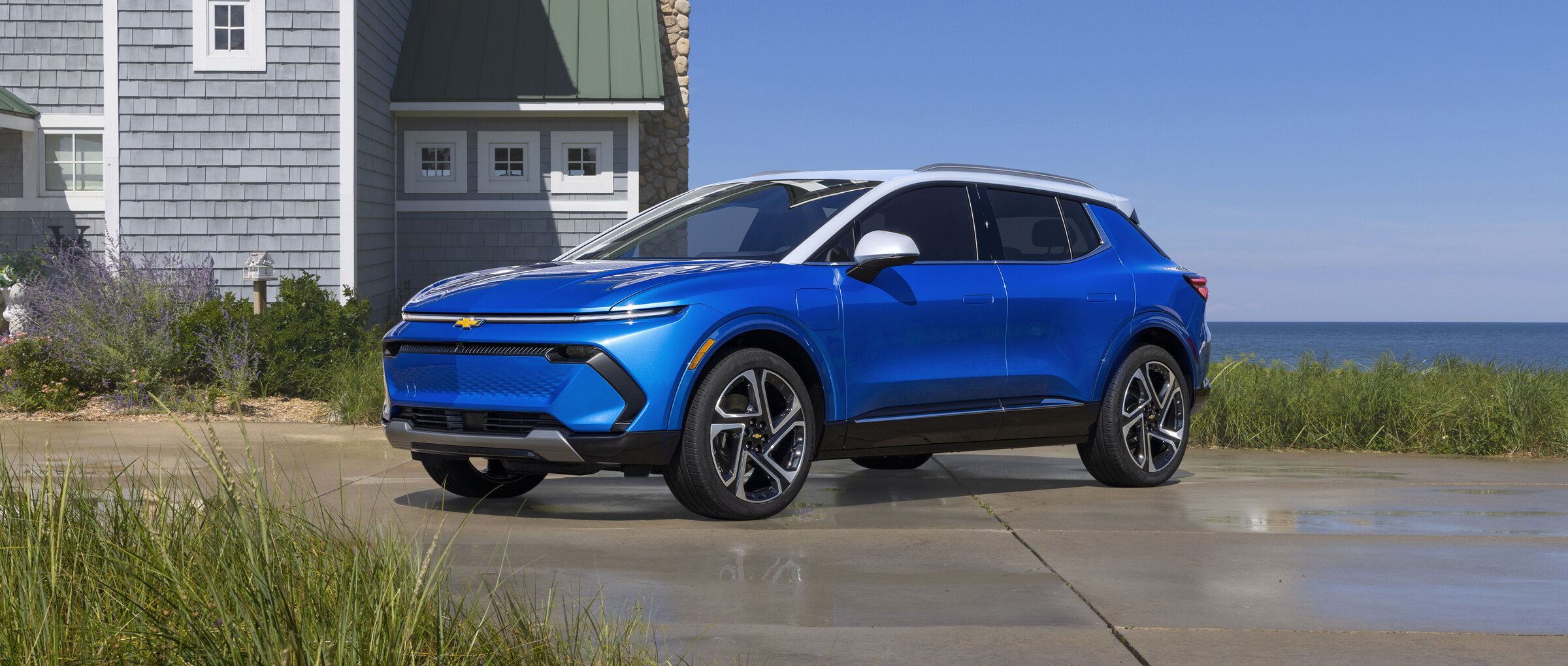
First Impressions: Familiar Face, Electric Heart
The Chevrolet Equinox EV marks a pivotal turn for General Motors, translating one of its most popular crossovers into an all-electric format. As someone who’s spent years reviewing both combustion and electric vehicles across the Bay Area, I approached the Equinox EV with a blend of curiosity and skepticism. The original gas-powered Equinox has always been a solid, if somewhat forgettable, staple of the American suburban landscape. Now, with the 2024 Equinox EV, Chevy aims to shake up the mainstream market promising affordability, practical range, and the sort of everyday usability that could finally tip fence-sitters toward electrification.
Specs That Matter: What You Get Under the Skin
The 2024 Chevrolet Equinox EV rides on GM’s Ultium platform a scalable architecture underpinning everything from the Silverado EV to the Cadillac Lyriq. In its base front-wheel-drive configuration, you get a single motor delivering 210 horsepower and 242 lb-ft of torque. Opt for all-wheel drive and those numbers rise to 290 hp and 346 lb-ft. Official EPA range estimates reach up to 319 miles for FWD trims; AWD models drop slightly to about 285 miles. These numbers place it squarely against rivals like the Volkswagen ID.4 (up to 291 miles) and Ford Mustang Mach-E (up to 312 miles), but behind the Hyundai Ioniq 5’s 303-mile RWD claim. Chevy hasn’t published precise battery capacity figures for all trims, but reliable sources suggest a pack in the mid-80 kWh range. DC fast charging maxes out at 150 kW a step above older Bolt models, but shy of Hyundai/Kia’s rapid-charging speeds. On a Level 2 charger at home (11.5 kW), expect a full top-up overnight.
Range in the Cold: The Real-World Question Mark
Bay Area winters don’t exactly test battery thermal management like Chicago or Minneapolis, but recent cold snaps let me probe how the Equinox EV holds up when temperatures dip below 40°F. Like almost every mainstream EV, there’s a clear drop-off in estimated range around 15-20% in my experience, depending on heater use and driving style. On a brisk morning run from Oakland into Marin County, the trip computer readjusted my predicted range from an optimistic 290 miles down to about 235 by midday. The heat pump does its job efficiently enough cabin warmth arrives quietly, if not immediately but rear passengers noted that it took longer for warmth to reach the back seats compared to competitors like the Hyundai Ioniq 5 or Tesla Model Y. It’s not a dealbreaker, but worth considering if you regularly ferry family in colder climates.
Charging Curve: Decent Speed, but Not Class-Leading
Plugging into a 150 kW Electrify America charger in Emeryville, I watched as the Equinox EV ramped up smoothly to its advertised peak rate. From roughly 10% to about 60%, charging speeds hovered between 130–145 kW enough for a quick coffee break to add roughly 70–80 miles of range in under fifteen minutes. After that, as expected, charging rates tapered off more noticeably than some rivals; reaching an 80% charge took closer to forty minutes. In day-to-day use especially with home charging the experience is painless. The Equinox supports plug-and-charge on compatible networks (a big step forward for Chevy), though public infrastructure reliability remains hit-or-miss in parts of California. Compared to Hyundai’s E-GMP cars or Tesla’s Supercharger system (now open to select non-Tesla models), Chevy still trails in overall charging speed and network integration.
Inside the Cabin: Where Buttons Meet Big Screens
Chevrolet has clearly learned from past missteps in interior design. Slip into the driver’s seat and you’re greeted by a broad digital display (up to 17.7 inches diagonal on higher trims), crisp graphics, and just enough tactile controls climate dials have a satisfyingly smooth click that you don’t feel overwhelmed by touchscreens alone. Materials are solid for this price point; soft-touch plastics on major touchpoints mix with some harder surfaces below knee level a reminder that this is still an affordable family crossover at heart. The cabin is airy thanks to a low beltline and panoramic glass roof option (on RS trims). Road noise is impressively muted at highway speeds quieter than either a gas-powered Equinox or even a Silverado EV and wind rush around the mirrors is minimal. Rear-seat space is generous for adults under six feet; taller passengers might wish for more headroom beneath the sloping roofline. Cargo space with seats up is competitive at just over 57 cubic feet (with rear seats folded), though not quite as cavernous as some boxier rivals.
On the Road: Effortless Power Meets Everyday Comfort
Out on Route 1 north of San Francisco, the Equinox EV feels immediately familiar yet quietly futuristic. Power delivery in FWD form is brisk but never startling; AWD versions add more punch off the line but don’t transform this into a performance crossover. Steering weight strikes a pleasing balance not too light at city speeds yet precise enough on winding roads near Muir Woods. Ride quality leans toward comfort rather than sportiness; rough pavement is absorbed with only occasional thumps transmitted through the structure. There’s little body roll in everyday driving, though push hard through corners and you’re reminded this isn’t an athletic machine like a Mustang Mach-E GT. Regenerative braking can be adjusted via settings menu one-pedal driving is available and intuitive once you acclimate. There’s no artificial whirring piped into the cabin; instead, you notice only faint tire noise and that characteristic electric whoosh under heavy acceleration.
Tech Features: Useful Tools or Gimmicks?
Chevy equips even base Equinox EVs with wireless Apple CarPlay/Android Auto a notable plus as GM begins phasing these features out on some future models in favor of native infotainment systems (a controversial move among enthusiasts). The Google-based interface is responsive, though voice commands occasionally misinterpret place names if you mumble or have background chatter. Advanced driver aids like adaptive cruise control and lane-centering are standard on higher trims; in practice they work smoothly but exhibit occasional over-correction during heavy rain or construction zones not uncommon among current systems outside Tesla's Autopilot or Ford's BlueCruise.
Living Electric: Daily Usability & Ownership Costs
Commuting across San Francisco and down to Silicon Valley reveals why crossovers like this matter so much for mainstream adoption. The Equinox EV fits easily into city parking spots a rarity among midsize SUVs and delivers instant torque merging onto crowded freeways. With typical home charging rates (~30 miles per hour on Level 2), most owners will rarely need public fast chargers except for road trips. Scheduled pre-conditioning helps mitigate winter range loss when plugged in overnight a thoughtful touch for early risers. Pricing starts under $35,000 before incentives for base LT trims; well-equipped RS versions nudge closer to $48K before options or tax credits (federal eligibility subject to supply chain requirements). Maintenance should be minimal compared to gas counterparts no oil changes or exhaust repairs but tire wear may be higher due to instant torque output.
The Competition: Where Does It Land?
The closest competitors include Ford Mustang Mach-E (sportier dynamics), Volkswagen ID.4 (softer ride), Hyundai Ioniq 5 (faster charging), Nissan Ariya (more premium interior), and Tesla Model Y (better software/charging network). The Equinox EV stands out primarily for its attainable pricing especially after incentives and ease of use for first-time EV buyers. It doesn’t set new benchmarks for acceleration or tech wizardry but covers all essential bases with confidence and practicality a bit like how Toyota sedans quietly won over America decades ago.
The Takeaway: Not Flashy But Exactly What Most Need
If you’re looking for an electric crossover that blends familiar comfort with modern capability and aren’t chasing outright performance the Chevrolet Equinox EV deserves strong consideration. It won’t turn heads like some rivals nor set records at charging stations, but it proves that electrification can feel both approachable and thoroughly normal. I’d love quicker charging speeds and more transparent battery specs from GM going forward. Still, after several days shuttling around Northern California from foggy coastal highways to gridlocked urban arteries the Equinox EV feels ready for prime time in ways that really matter: ease of use, comfort, affordability. For many American families considering their first leap into electric driving, this Chevy offers precisely what it should: less drama, more drive.

0 comments
Join the discussion around this article.
Please login to comment.