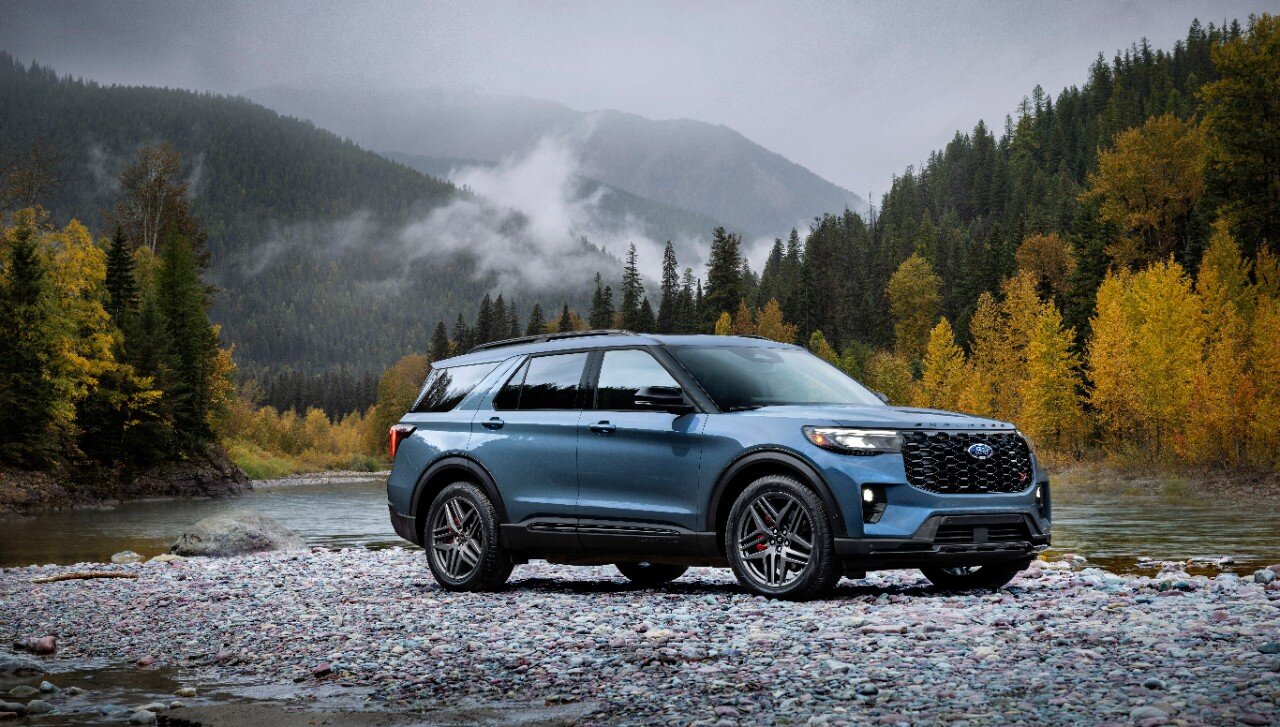
First Impressions: Familiar Face, Sharper Angles
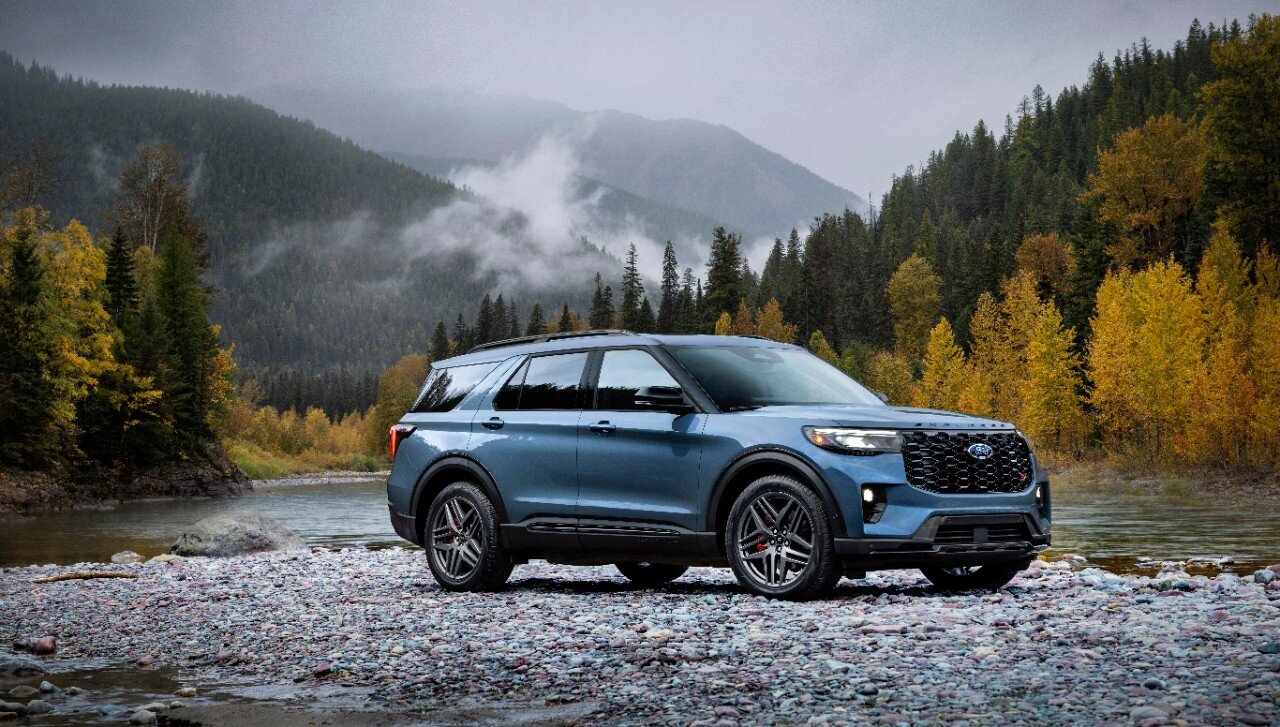
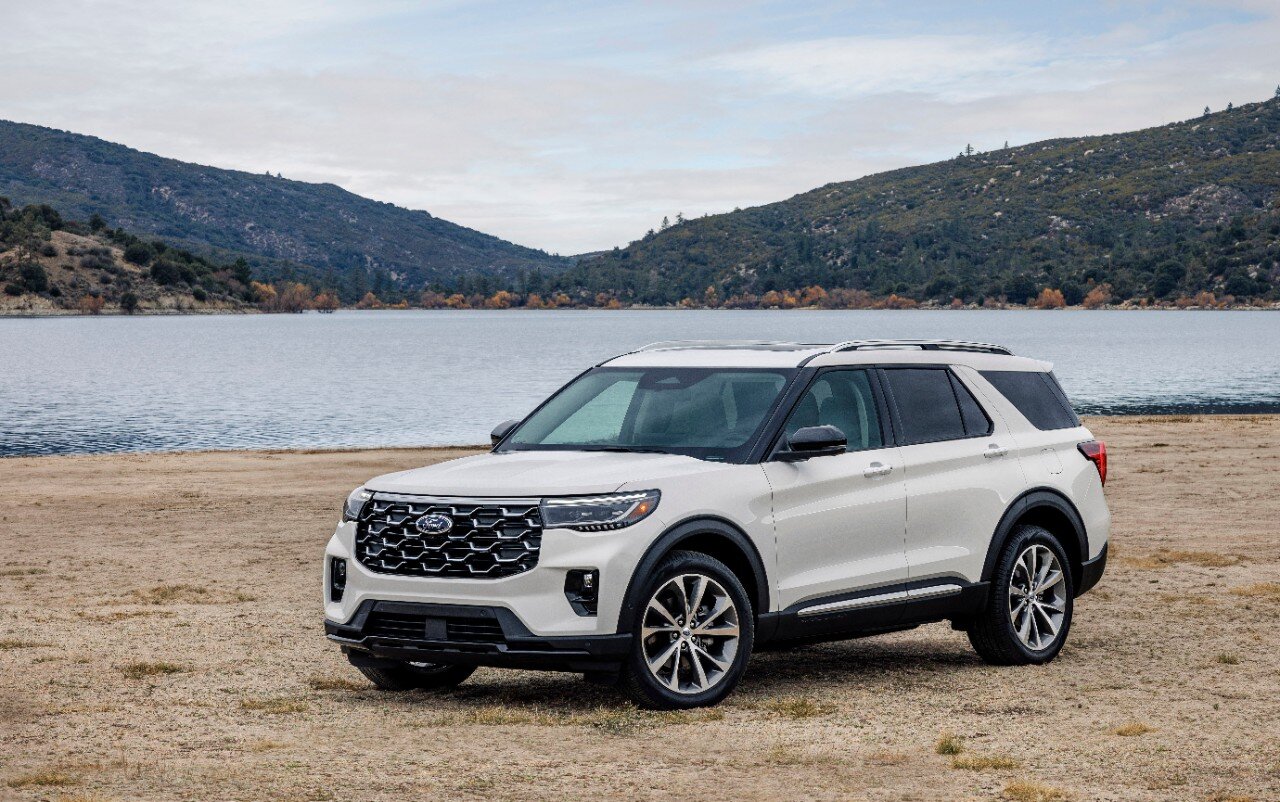
Pulling up to the curb in the 2025 Ford Explorer, it’s hard not to notice how Ford has gently massaged the familiar shape. The grille is a little bolder, and LED lighting signatures give it a more assertive stare though anyone who’s followed Explorers over the last decade will spot the lineage instantly. It’s a safe evolution, not a revolution, and that seems to be Ford’s strategy: don’t mess too much with what still sells. Direct competitors like the Kia Telluride and Honda Pilot have gone bolder with their redesigns, but there’s comfort in the Explorer’s continuity, especially for buyers who value familiarity.
Under the Hood: Powertrains That Get the Job Done
The 2025 Explorer keeps its powertrain lineup largely unchanged no bad thing if you’re after proven tech. The base engine remains a 2.3-liter turbocharged four-cylinder (300 hp, 310 lb-ft), and there’s an available 3.0-liter twin-turbo V6 (400 hp, 415 lb-ft) in the ST and Platinum trims. Both engines are paired with a 10-speed automatic transmission. Rear-wheel drive is standard, with all-wheel drive available across most trims.
The four-cylinder has enough low-end torque to move this three-row SUV with reasonable authority around town. It’s not quick off the line like a hybrid Highlander, but you won’t feel left behind merging onto I-94 either. The V6 transforms the Explorer into something closer to a hot-rod family hauler a niche but entertaining proposition.
EPA fuel economy figures for the 2025 model were not officially released as of this writing (June 2024), but expect numbers similar to last year: around 21 mpg city/28 highway for the base engine and roughly 18/26 for the V6 AWD, putting it mid-pack versus segment leaders.
Behind the Wheel: Polished Ride, Some Rough Edges
Steering feels substantial for a family SUV there’s real weight at lower speeds, which makes parking lots less of a chore than you’d expect for something this size. Road isolation is good, with only a faint hum from the V6 or the occasional thump over Michigan potholes making itself known in the cabin.
If anything stands out, it’s that ride quality is slightly firmer than in something like a Toyota Highlander or Chevrolet Traverse. Ford engineers have tuned the chassis for more athleticism less wallow in corners, but also less pillowy softness over expansion joints. Buyers looking for Buick-level plushness might be mildly annoyed here; those who appreciate some feedback will find satisfaction.
Noise levels are commendably low at highway speeds quieter than both the Traverse and Nissan Pathfinder in back-to-back drives I’ve done recently. Wind noise is kept at bay by clever door seals and double-glazed front glass on upper trims.
Inside the Cabin: Where Buttons Meet Big Screens
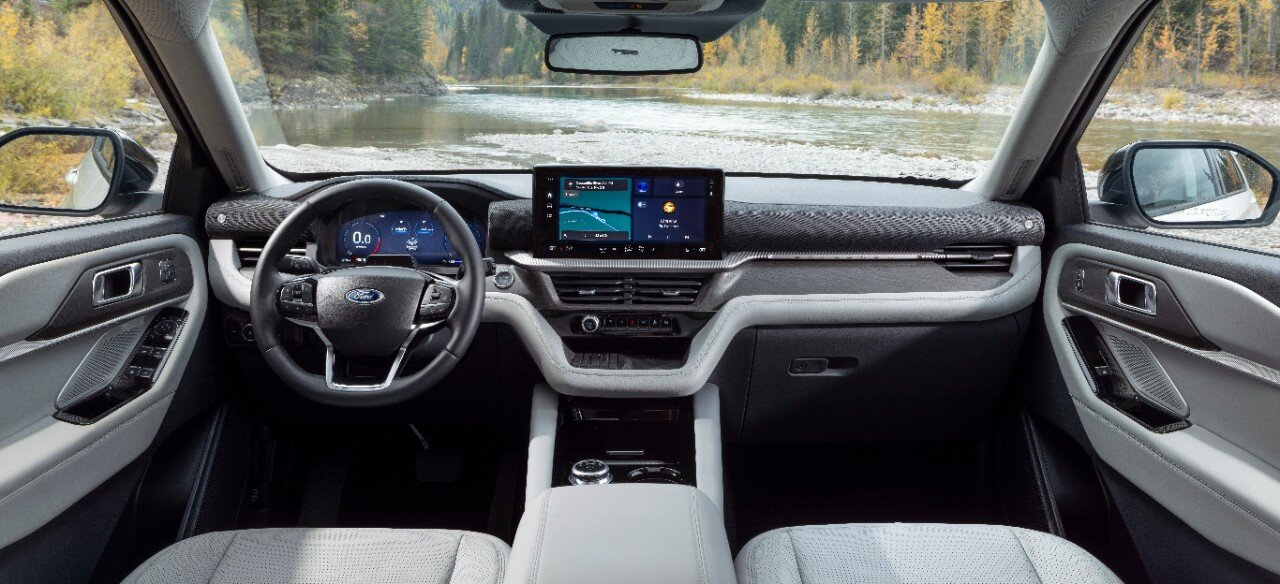
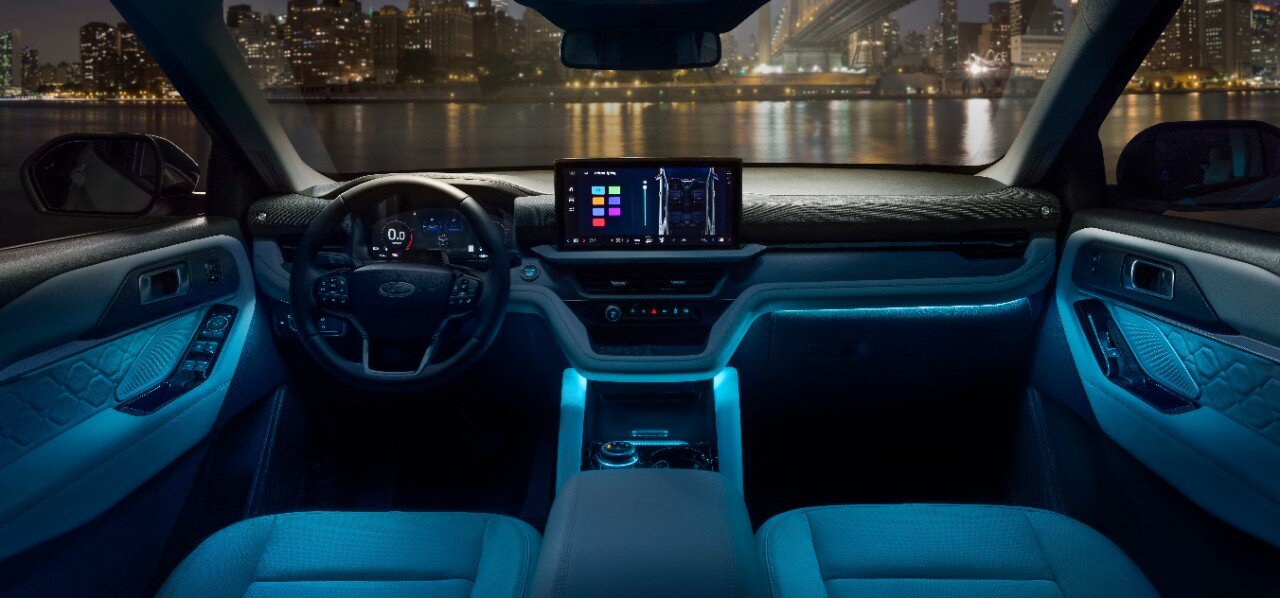
The interior of the refreshed Explorer walks an interesting line between tactile tradition and digital ambition. There’s an available 13.2-inch touchscreen dominating the dash on higher trims crisp graphics, snappy response, but thankfully not at the expense of physical controls for volume and climate.
The gear selector remains Ford’s rotary dial a detail I find practical if lacking in tactile satisfaction compared to old-school levers. Materials quality is competitive in mid-level trims but can’t quite match the near-luxury vibe of top-spec Tellurides or Mazda CX-90s.
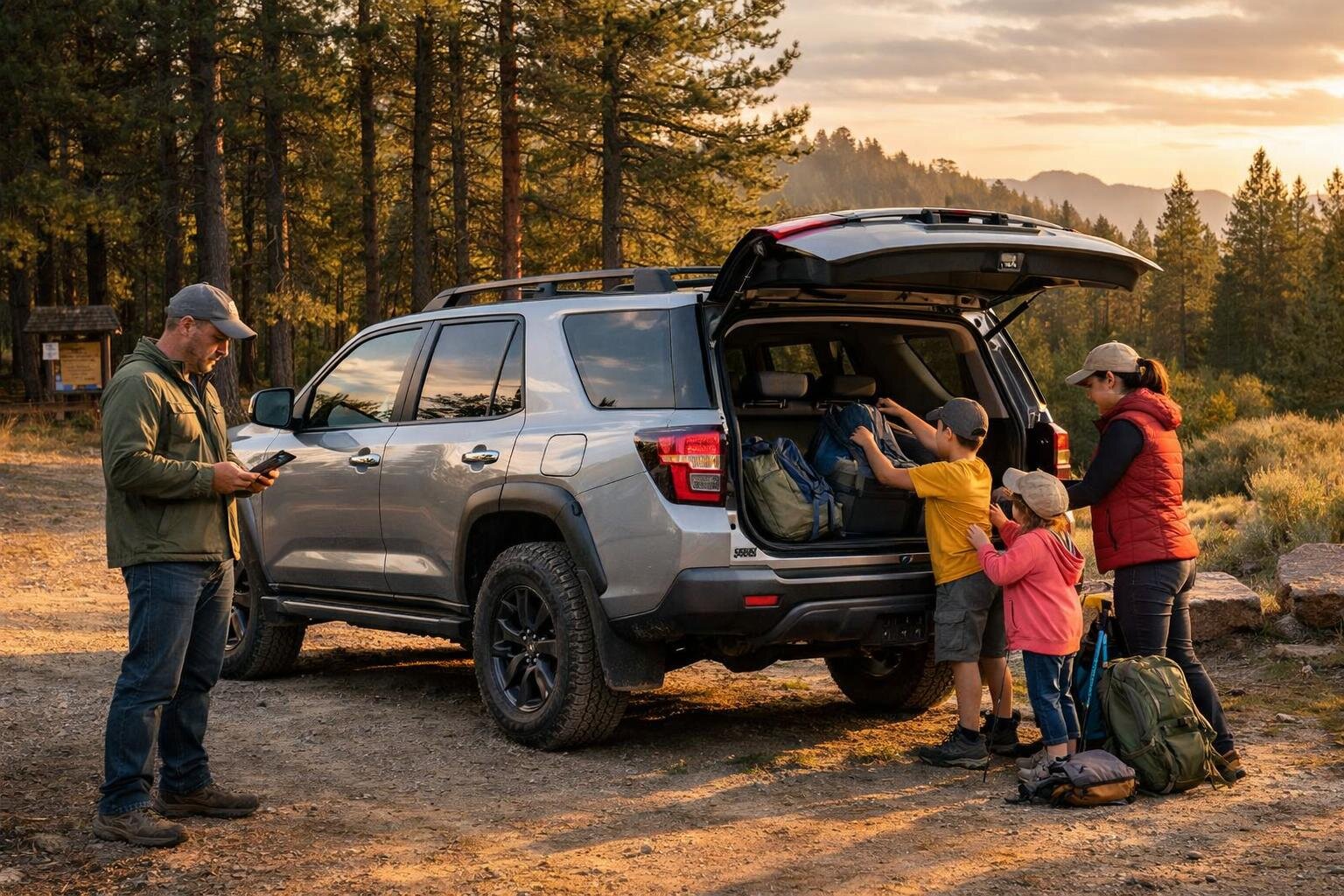
Space-wise, there’s honest room for five adults to ride comfortably. The third row is best reserved for kids or short hops; rivals like the VW Atlas offer more knee room back there. Cargo space behind row three lands around 18 cubic feet not class-leading but sufficient for groceries or sports gear. Fold everything flat and you’ll get over 80 cubic feet of haulage space.
Tech & Safety: Almost Everything You Need
Ford loads up its latest Explorer with plenty of tech wireless Apple CarPlay/Android Auto is standard across all trims, along with multiple USB ports and available wireless charging pads. Higher trims add a digital instrument cluster and head-up display.
Ford Co-Pilot360 driver assistance tech is included from base level: automated emergency braking, blind-spot monitoring, lane keeping assist all present and accounted for. Adaptive cruise control with stop-and-go comes on most versions above XLT.
A note on infotainment: while Ford’s system is easy to use overall, some deeper menu functions still require a few too many taps a minor quibble compared to older SYNC systems but worth mentioning.
Ownership Realities: Costs and Quirks
The Explorer doesn’t stray far from segment norms when it comes to pricing or maintenance expectations. As of June 2024, official pricing hadn’t been released, but anticipate starting points just north of $38,000 (for base) stretching toward $60K-plus for fully loaded Platinum models.
Resale values have held steady stronger than Dodge Durango but trailing Toyota Highlander and insurance premiums are about average for this size class.
A pleasant surprise: tire noise is well managed even on larger wheel options (20-inchers). Annoyance? The second-row seats require more effort than rivals’ to tumble forward when accessing row three a minor ergonomic oversight that adds up if you’re routinely ferrying kids or grandparents.
The Competition: What Else Is Out There?
The midsize three-row SUV segment is crowded and fiercely competitive. The Kia Telluride continues to impress with luxury touches at mainstream prices; Honda Pilot majors on reliability and ease of use; Toyota Highlander offers hybrid efficiency no one else matches (Ford discontinued its own hybrid Explorer variant after previous model years).
The Mazda CX-90 brings premium ambitions and rear-drive handling dynamics that might appeal to enthusiasts disappointed by softer rivals; Chevy Traverse delivers cavernous space if outright capacity trumps style or performance.
The Explorer sits somewhere between the athlete among generalists with just enough style and substance to justify its place on your shopping list.
Final Thoughts: The Real-World Family Test
After several days living with the 2025 Ford Explorer in Detroit traffic, school runs, and highway stretches up I-75, it’s clear Ford hasn’t attempted to reinvent its bestseller and that’s both its strength and its limitation.
You get solid powertrains with proven reliability, an interior that balances comfort and tech without overwhelming you with screens or haptic touch panels, plus ride quality tuned more toward engagement than isolation.
Where does it fall short? The third row could be roomier; interior plastics are hit-and-miss below Platinum trim; fuel economy won’t wow anyone compared to hybrid rivals.
But as a daily companion quiet enough at speed, strong on safety features, roomy enough for five plus gear it earns its keep. There may be flashier or cushier options out there now, but if you want an American SUV that gets most things right without drama or fuss (and occasionally lets you enjoy your morning commute), the new Explorer deserves a test drive.
0 comments
Join the discussion around this article.
Please login to comment.