Small Pickups, Big Decisions: Maverick vs. Santa Cruz in 2026
There’s a quiet revolution underway in American driveways. Not everyone needs or wants a hulking F-150 or Silverado dominating their curb. Enter the compact truck renaissance, led by two contenders with wildly different personalities: the Ford Maverick and Hyundai Santa Cruz. As a Detroiter who grew up around V8s and bench seats, I’ve spent plenty of time behind the wheels of both. For 2026, these urban-friendly pickups are still sparring for your dollars, but which one actually fits real life?
The Power Under the Hood: What Moves These Trucks?
Pop the hood on the Maverick and you’ll find Ford’s well-known 2.5-liter hybrid four-cylinder as standard a rarity in any truck, even in 2026. This powertrain churns out a combined 191 horsepower, which, frankly, feels spry around town but can sound a bit strained merging onto Michigan highways with a full load of mulch in back. The optional 2.0-liter EcoBoost turbo-four brings things up to 250 horsepower (still FWD standard, AWD available), delivering a punchier experience at stoplights and when overtaking semi trucks. No V6 here, but honestly, you won’t miss it unless you’re hauling serious cargo every weekend.
Hyundai’s Santa Cruz counters with a pair of four-cylinders as well a base 2.5-liter naturally aspirated unit (around 191 hp) and an optional turbocharged version kicking out up to 281 horsepower and 311 lb-ft of torque. The turbo Santa Cruz feels genuinely brisk surprisingly so for a vehicle shaped like an overgrown crossover. The eight-speed dual-clutch transmission is snappy and quick-witted most of the time, though it can stumble slightly at low speeds think creeping through Detroit’s Eastern Market traffic on a Saturday morning.
Towing and Payload: Not Just for Looks
Let’s get real: No one’s towing a horse trailer with these trucks. But if your weekend plans involve jet skis or a lightweight camper, numbers matter. The Maverick hybrid maxes out at 2,000 pounds of towing; opt for the EcoBoost and Ford’s optional Tow Package to bump that to a respectable 4,000 pounds.
The Santa Cruz? With its base engine, you’re also limited to about 3,500 pounds upgrade to the turbo AWD model, and it matches the Maverick’s max: 5,000 pounds with Hyundai’s tow package. Payload capacities are similar both hover just under 1,600 pounds depending on configuration.
In practice? Both will handle Home Depot runs without breaking a sweat or sagging in the rear end. Just don’t expect to haul your neighbor’s boat unless it’s inflatable.
Fuel Economy: Who Sips Less at the Pump?
This is where Ford pulls out its trump card the Maverick hybrid is EPA-rated at around 42 mpg city and 33 mpg highway (2024 figures; official 2026 numbers not yet released but likely similar). That’s Prius territory in a pickup body, and it holds up in real-world suburban commutes my test loop averaged an honest 39 mpg in mixed driving.
The EcoBoost version sees more typical compact truck numbers (around 23-26 mpg combined). Hyundai’s naturally aspirated Santa Cruz sits in the same ballpark; opt for the turbo and you’ll see low-to-mid twenties in mixed driving (EPA estimates for previous years were around 19/27/22 mpg city/highway/combined; check for updates as official 2026 figures are pending).
If fuel savings top your list and your commute is mostly urban the Maverick hybrid is hands-down best-in-class.
Steering Feel and Road Manners: City Streets to Dirt Roads
Here’s where personalities really diverge. The Maverick drives like what it is a car-based trucklet sharing DNA with the Escape crossover. Steering is light but accurate; there’s enough feedback to keep you engaged without feeling nervous on rough Detroit pavement. Ride quality strikes a nice balance: firm enough to avoid floatiness but more forgiving than most midsize trucks.
The Santa Cruz goes for a sportier vibe. Its chassis feels stiffer especially with those big wheels on upper trims and the steering has a touch more heft off-center. On winding Michigan backroads, this little Hyundai actually feels eager to play (though road noise can creep up at highway speeds). Around town, the ride can get busy over expansion joints if you want plushness above all else, Ford wins here.
Inside the Cabin: Where Buttons Meet Big Screens
Sit inside both trucks and you’ll notice they target different buyers. The Maverick keeps things simple: hard plastics dominate below arm level, controls are chunky and straightforward a plus when you’re wearing gloves in January. The infotainment system is basic but functional (an eight-inch touchscreen standard), with wireless Apple CarPlay and Android Auto across all trims by now.
The Santa Cruz turns up the style dial think Tucson SUV meets pickup bed. Materials feel richer; upper trims offer digital gauges and bigger touchscreens that look straight out of Silicon Valley. Some real buttons remain for climate control (a relief), though certain functions live behind touchscreen menus a mild annoyance if you’re adjusting fan speed with cold hands.
Both cabins are surprisingly roomy for four adults rear legroom is slightly better in the Santa Cruz but headroom favors the Maverick thanks to its boxier roofline.
Cargo Tricks: Beds That Do More Than Haul Dirt
The Maverick offers a four-and-a-half-foot bed with clever touches like built-in slots for DIY dividers (Ford calls this FLEXBED), plus available household-style power outlets for tailgating or campsite charging. You won’t find RamBox-style lockable storage here, but there are plenty of tie-downs and thoughtful cubbies inside.
The Santa Cruz goes even further it pioneered the lockable under-bed trunk now appearing on other small trucks (think Honda Ridgeline-lite), perfect for groceries or muddy boots. The bed itself is slightly shorter than Ford’s but wider between wheel wells; accessory rails make bike hauling easy if that’s your thing.
Tech Toys & Features: Who Wins Gadget Lovers?
Both brands know their audience wants value and both deliver useful features at reasonable prices by modern standards. Expect push-button start, decent stereo options (neither will rattle your fillings), adaptive cruise control (on higher trims), and wireless charging pads on most models by now.
The Maverick’s ace? Standard safety tech like automatic emergency braking and lane-keeping assist even on base trims Ford learned from hard experience not to skimp here after early customer feedback.
The Santa Cruz counters with available surround-view cameras and remote start via smartphone app on its top models a nod to Hyundai’s focus on urban convenience.
Dollars & Sense: Price Tags, Maintenance, Resale
Sticker shock isn’t what it used to be even compact trucks have climbed from sub-$20K territory just a few years ago. In early 2026, expect base Mavericks to start just north of $25K; hybrids command slight premiums due to demand but remain within reach for first-time buyers or young families.
The Santa Cruz starts higher (around $27K+ for base trims), climbing quickly past $40K when loaded with tech and turbo power. Both brands offer competitive warranties Hyundai edges out Ford here with its famous five-year/60K-mile bumper-to-bumper coverage plus ten-year/100K-mile powertrain warranty (for original owners).
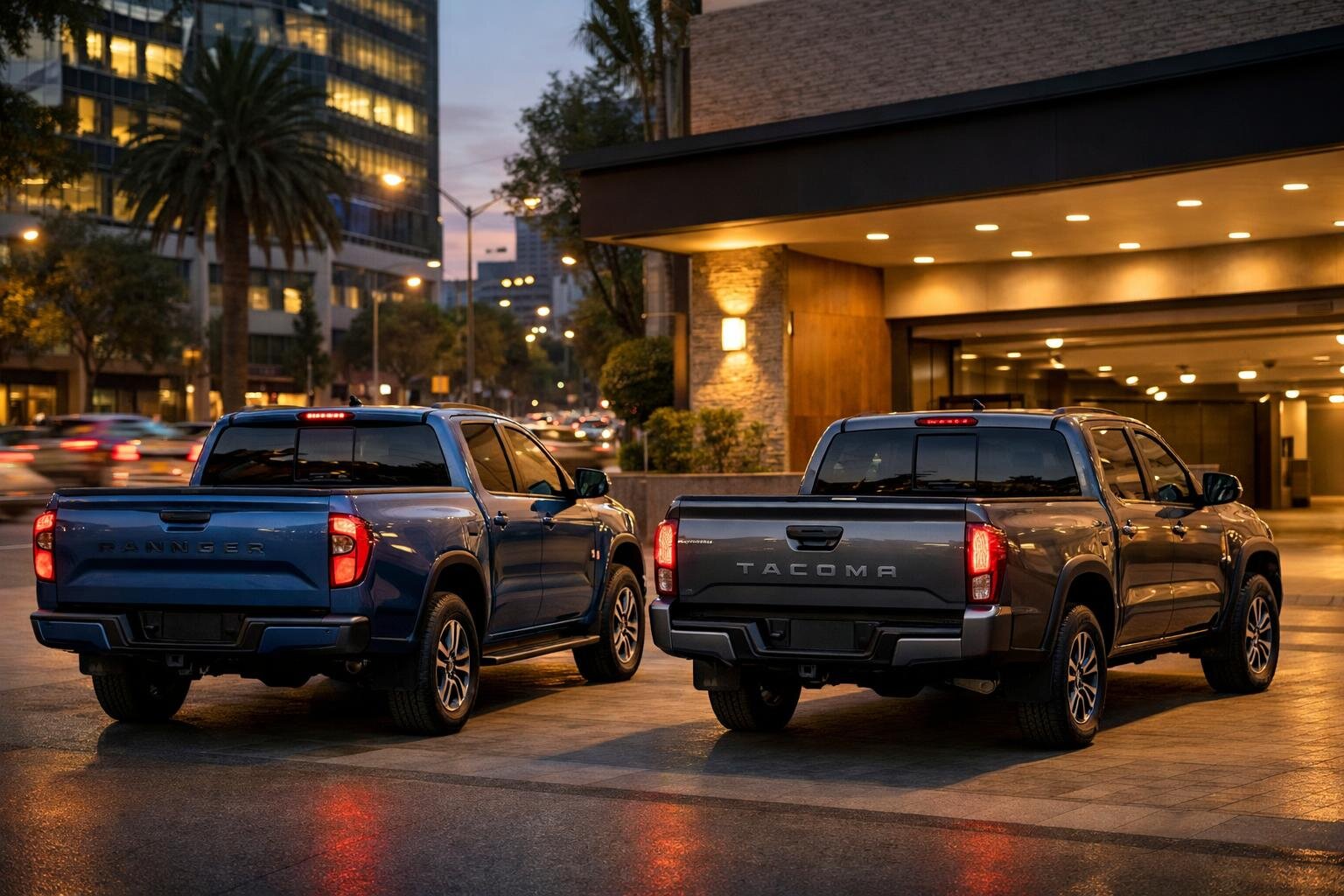
Maintenance costs? Ford parts are everywhere and generally inexpensive but Hyundai has made big strides in nationwide service availability; routine visits shouldn’t break your budget either way. As for resale value, early data suggests both hold their worth better than midsize sedans but not quite as strongly as full-size pickups or iconic nameplates like Tacoma or Ranger.
The Real-World Verdict: Which Truck Fits Your Life?
If you want maximum efficiency without sacrificing utility or just love not stopping at gas stations the Maverick hybrid is tough to beat. It nails basic comfort and practicality while offering enough personality to dodge rental-car blandness.
If style matters more or you crave extra acceleration the Santa Cruz makes a strong case as the segment's sportiest entry (and its lockable trunk is genuinely useful). It feels more like an SUV inside than anything else with a pickup bed attached.
Either way? These aren’t just compromise choices they’re proof that small trucks can be practical without being punishment boxes or penalty rides. Whether it’s loading up lumber outside Ann Arbor or running errands through Midtown Detroit snowdrifts, both deliver far more than their size suggests just pick your flavor.
0 comments
Join the discussion around this article.
Please login to comment.