The 2025 Camry Hybrid: Familiar Name, Fresh Approach
After nearly two decades of writing about sedans from Detroit to LA, I can tell you one thing: the Toyota Camry Hybrid is as close as America gets to a default family car. For 2025, Toyota’s bestseller gets a significant overhaul not a radical departure, but a thoughtful evolution. The new Camry Hybrid is now the only Camry you can buy, with the V6 and standard gas-only four-cylinder gone. If you’re wondering whether this eco-minded sedan still earns its place in driveways from Portland to Peoria, let’s dig in.
Design That Quietly Grows on You
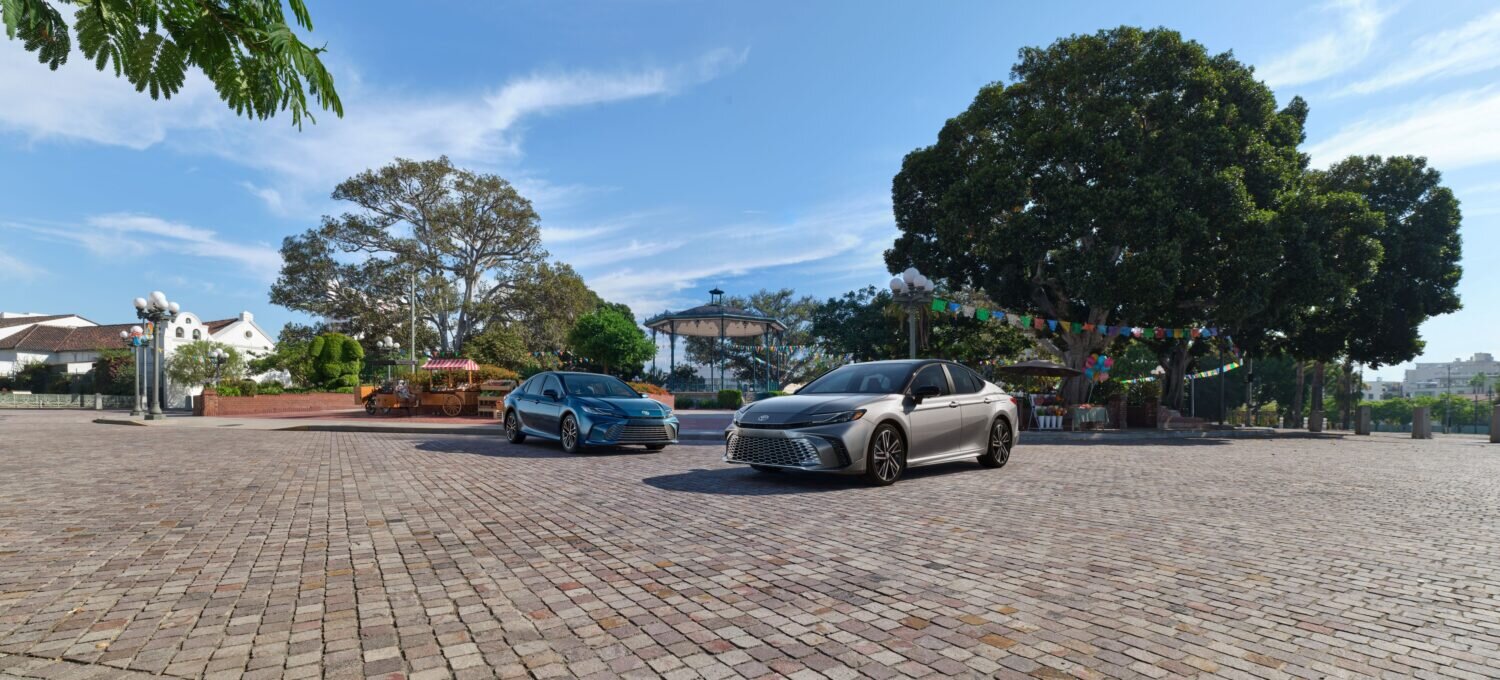
First impressions matter, especially for a car that will likely fill rental lots and suburban garages in equal measure. The 2025 Camry Hybrid doesn’t shout for attention. Instead, it leans into understated confidence. The front fascia borrows a bit from Toyota’s bolder models think Crown or Prius with slim LED headlights and a wide lower grille that’s more assertive than before. My tester wore a reserved shade of silver, and while I’d stop short of calling it exciting, the lines are crisp and modern enough to avoid anonymity. Parked next to a Honda Accord Hybrid, the Camry looks leaner less swoopy but both cars share the same ethos: blend in without disappearing.
Inside the Cabin: Where Buttons Meet Big Screens
Slide into the driver’s seat, and you’re greeted by a cabin that balances tradition with technology. There’s still a physical volume knob (thank you, Toyota), and most climate controls remain satisfyingly tactile. The main event is the available 12.3-inch touchscreen on higher trims responsive and straightforward, with wireless Apple CarPlay and Android Auto standard across the board. The base LE gets an 8-inch unit, which is still well-sized for daily tasks.
Materials are generally sturdy if not luxurious; soft-touch plastics mingle with some harder surfaces around the lower dash. In typical Toyota fashion, panel gaps are tight and switchgear feels built to last a nod to those who keep their Camrys for a decade or more. There are subtle ambient lighting strips that gently illuminate at night (a nice touch for late commutes). The seats themselves strike a Goldilocks balance: firm enough for support, yet just yielding enough after a couple hours on I-75 out of Detroit.
On the Road: Hybrid Heartbeat
Here’s where things get interesting. Every 2025 Camry now uses Toyota’s fifth-generation hybrid system a 2.5-liter Atkinson-cycle inline-four paired with dual electric motors (three on AWD models). Total output comes in at 225 horsepower for FWD and 232 for AWD variants. That’s not far off from last year’s gas-only four-cylinder in terms of grunt but delivers it with less fuss and more smoothness.
Pulling away from a stoplight in downtown Detroit, there’s an immediate surge of torque from the electric motors a gentle whoosh rather than the old four-cylinder growl. It’s quick enough for merging onto the Lodge freeway but never feels urgent or sporty; think briskly competent rather than thrilling. Steering has picked up some welcome heft compared to older Camrys still light at parking lot speeds, but it weights up naturally as you dial in more angle. There’s no artificial sportiness here; just an honest connection that lets you place the car confidently between Michigan potholes or suburban curbs.
The ride is tuned toward comfort, as expected. Even over beat-up city streets or expansion joints on the highway, suspension composure stands out soaking up bumps with a muted thud rather than a sharp jolt. It’s not floaty like an old Buick; instead, there’s controlled compliance that feels perfectly matched to daily driving duties. Noise insulation impresses too: wind and tire roar are well suppressed up to 75 mph (quieter than most compact SUVs), though under hard acceleration the hybrid engine makes itself known with a distant drone.
The Numbers Game: MPG and Value
If you’re looking at hybrids, fuel economy matters and here the Camry continues its reign. EPA estimates land at 51 mpg city/49 highway/50 combined for FWD models; AWD versions dip slightly to 47/47/47 mpg. After nearly 600 miles behind the wheel split between city loops and open highway stretches north of Flint, my real-world average hovered right around 48 mpg impressive considering some heavy-footed sprints onto expressways.
Compared to rivals? The Honda Accord Hybrid is close (rated at 44–48 mpg combined), while Hyundai’s Sonata Hybrid lags slightly behind at around 47 combined mpg depending on trim. None can match Toyota’s reputation for long-term reliability something I’ve heard again and again from owners who routinely crest 200,000 miles without major drama.
Practicality Meets Peace of Mind
Living with the Camry Hybrid is refreshingly easy. The trunk swallows luggage for four without complaint (15.1 cubic feet), and there’s no major penalty from the battery pack intruding into cargo space a trick Toyota has refined over several hybrid generations. Rear seat room is generous even behind tall drivers; my six-foot-two neighbor fit comfortably behind me during a weekend run to Ann Arbor.
If you care about ownership costs (and who doesn’t these days?), Toyota’s hybrid warranty covers components for eight years or 100,000 miles plus two years of complimentary maintenance thrown in up front. Insurance rates tend to be reasonable thanks to strong safety ratings and affordable repair costs; I priced out premiums roughly on par with similar midsize sedans like the Nissan Altima or Subaru Legacy.
Rivals at Arm's Length
The midsize sedan segment isn’t as crowded as it once was crossovers have eaten into this territory but what remains is fiercely competitive. Honda’s Accord Hybrid feels sportier behind the wheel but gives up some efficiency (and its infotainment system isn’t quite as intuitive). Hyundai’s Sonata Hybrid offers unique features like solar roof panels on upper trims but trails slightly in real-world fuel economy. Yet none quite match the Camry for its blend of comfort, value, and reputation a combination that keeps buyers coming back year after year.
The Little Things: Everyday Observations
A few details stick out after spending serious seat time in this car: The steering wheel is wrapped in leather that feels pleasantly thick not too slippery on humid days either (a small blessing during Michigan summers). The door pockets are deep enough for large water bottles yet shaped so items don’t rattle around noisily over rough pavement something that always nags at me in lesser interiors.
I did notice one mild annoyance: lane-keeping assist can feel overeager on winding rural highways, nudging you back toward center even when you’re intentionally hugging an apex to avoid road debris. Otherwise, Toyota’s latest driver-assist tech works quietly in the background a definite improvement over earlier systems that beeped incessantly at minor infractions.
The Verdict: Still America’s Sensible Sedan?
If you asked me fifteen years ago whether I thought hybrid technology would become standard fare for mainstream sedans like the Camry, I’d have been skeptical yet here we are. The 2025 Camry Hybrid isn’t flashy or thrilling; it simply does everything right for buyers who want comfort, efficiency, and hassle-free ownership wrapped in a familiar package.
I’ll admit: part of me misses the option of a creamy V6 or even a row-your-own manual transmission (both long gone). But as an all-arounder one that nails real-world usability while sipping fuel the latest Camry Hybrid sets a high bar not just within its class but across today’s sprawling automotive landscape.
0 comments
Join the discussion around this article.
Please login to comment.