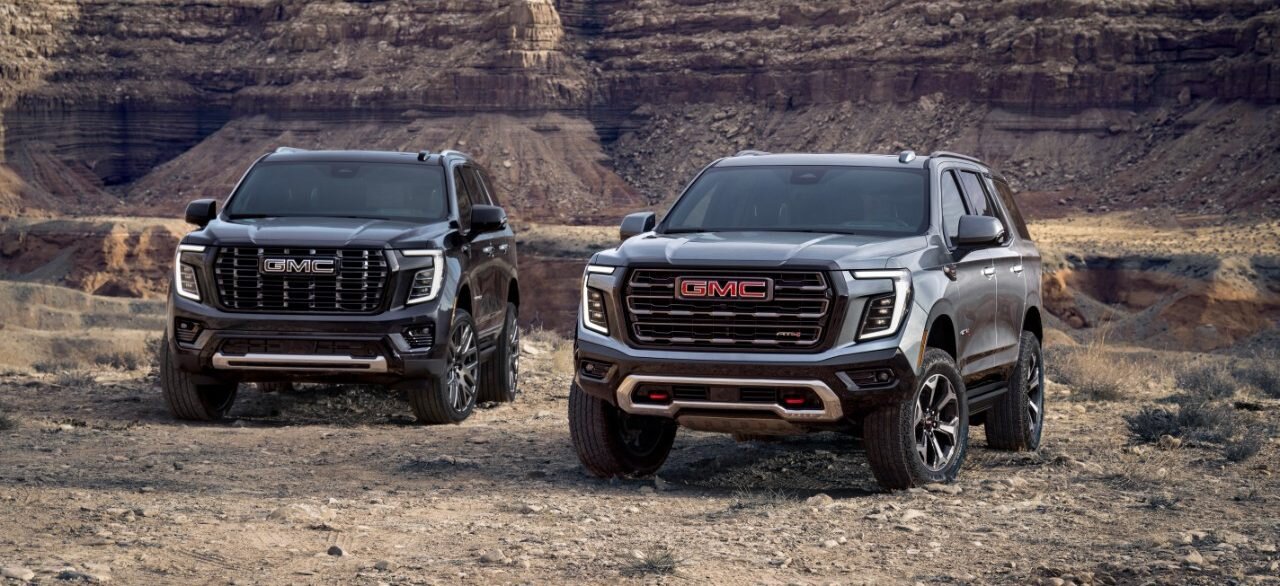
The Big Picture: Where the Yukon Sits in 2025
There’s a certain presence to the GMC Yukon that’s tough to ignore, even here in Detroit, where big SUVs blend into the scenery like brick bungalows. For 2025, GMC continues its tradition of building a full-size SUV that’s unapologetically American big, bold, and brimming with features. The Yukon, now in its fifth generation (launched as a 2021 model), competes directly with the Chevrolet Tahoe/Suburban, Ford Expedition, Toyota Sequoia, and Nissan Armada. It also faces internal competition from its luxury sibling, the Cadillac Escalade.
For 2025, GMC hasn’t reinvented the Yukon but has refined it. While complete specs and pricing for the 2025 model year are not fully released as of this review’s writing (June 2024), changes are expected to be evolutionary rather than revolutionary. The model continues to ride on GM’s T1 platform and comes in standard and XL (long-wheelbase) variants. As before, the Yukon is available in SLE, SLT, AT4 (off-road oriented), and Denali trims. A Denali Ultimate trim has recently joined the roster for those seeking extra opulence.
Engines and Performance: V8 Thunder Remains
The 2025 Yukon sticks with GM’s proven powertrains: a standard 5.3-liter V8 (355 hp/383 lb-ft), an optional 6.2-liter V8 (420 hp/460 lb-ft) for upper trims like Denali and AT4, and a 3.0-liter inline-six Duramax turbodiesel (277 hp/460 lb-ft) available across most of the lineup. All engines pair with a responsive 10-speed automatic transmission. Rear-wheel drive is standard; four-wheel drive is optional or standard depending on trim.
In real-world driving, the 6.2-liter V8 delivers satisfying thrust a deep rumble on startup, a muted but authoritative roar under throttle. It’s easy to forget you’re piloting nearly three tons until you push hard into a corner; then physics gently taps you on the shoulder. The Duramax diesel stands out for long-range cruising and towing efficiency, offering quieter highway manners than I remembered from recent Silverados equipped with the same engine.
Towing remains a Yukon calling card: properly equipped models can tow up to 8,400 pounds (with rear-wheel drive and Max Trailering Package), rivaling the Ford Expedition’s best numbers and easily surpassing Toyota Sequoia’s hybrid-only setup.
On the Road: Size Meets Subtlety
The Yukon’s ride quality continues to impress particularly when fitted with optional air suspension and adaptive dampers on higher trims. Over Detroit’s patchwork pavement, there’s a gentle sway rather than a crash; big bumps elicit little drama from passengers. Steering is light at parking speeds but firms up nicely at highway velocities. There’s no hiding its size narrow city streets are not the Yukon’s natural habitat but visibility is commanding thanks to large mirrors and helpful driver aids.
I did notice some wind noise around the A-pillars above 70 mph less intrusive than older models but still present. The new independent rear suspension (a major update since 2021) means third-row passengers aren’t shortchanged on comfort or legroom an area where older Yukons lagged badly behind Ford’s Expedition.
Inside the Cabin: Where Buttons Meet Big Screens
Step inside and you’re greeted by a cleanly designed dashboard with physical controls for climate and audio a relief for those who dislike diving through touchscreens for basic functions. Materials quality improves as you move up trims; Denali Ultimate models border on Escalade-lite territory with open-pore wood, leather everywhere your elbows land, and real metal accents.
The centerpiece is a digital gauge cluster paired with an available 15-inch head-up display and a large infotainment screen (10.2 inches is standard). Wireless Apple CarPlay/Android Auto come standard, along with multiple USB ports even in all three rows which my teenagers appreciated on longer drives.
Seats are broad and comfortable; I found the driving position upright yet relaxed after a few miles of tweaking adjustments. Second-row captain’s chairs (available or standard depending on trim) make for an easy pass-through to the third row no more awkward contortions required. Cargo space? Even behind the third row, there’s room for several suitcases or a week’s worth of groceries; fold everything flat and you could almost host a tailgate party inside.
Owner Impressions: Living Large Every Day
Having spoken to several recent Yukon owners around Metro Detroit and spent time myself in both city traffic and up north on family trips some clear themes emerge:
- Space: Everyone loves it. Whether hauling hockey gear or packing for college move-in day, there’s seldom an “it won’t fit” moment.
- Ride comfort: Even base models soak up poor roads better than rivals like Nissan Armada or even the current Sequoia.
- Fuel economy: Reality sets in quickly here; expect mid-teens MPG in mixed driving for V8s (EPA estimates hover around 15-20 mpg depending on engine/drive). The diesel can push into low-20s but rarely beyond unless you’re gentle.
- Tech usability: Most owners praise GMC’s infotainment as straightforward compared to Ford’s more complex system or Toyota’s recent touch-heavy approach.
The downside? Parking requires planning these aren’t vehicles you squeeze into compact mall spaces without some sweat. And while reliability has improved over previous generations, GM full-size SUVs still see occasional electronic glitches reported by owners online particularly with early production runs.
The Competition: How Does Yukon Stack Up?
The Yukon walks a fine line between mainstream utility (Chevy Tahoe/Suburban) and luxury aspirations (Cadillac Escalade). Compared to Ford Expedition, the Yukon offers more engine choices including that smooth diesel and feels quieter at speed, though Ford fights back with slightly better third-row space and marginally higher tow ratings when properly configured.
Toyota Sequoia now comes only as a hybrid V6 a boon for fuel economy but less satisfying if you crave V8 power or need maximum towing. Nissan Armada remains value-priced but feels dated by comparison inside and out.
The Dollars and Sense Equation
Pricing for 2025 isn’t official yet, but expect modest increases over current MSRPs ($59K–$100K+ depending on trim/option). The Denali Ultimate can approach Escalade pricing if you pile on options a consideration if badge cachet matters to you.
Ownership costs remain substantial: insurance rates are above average due to size/value; routine maintenance isn’t cheap; real-world fuel costs add up quickly unless you opt for diesel power. On resale value, Yukons traditionally fare well especially Denali trims though they’ve faced some depreciation pressure lately as market supply normalizes post-pandemic.
The Verdict: Big SUV, Big Personality
If you need full-size capability without stepping into luxury-brand pricing or want something more refined than an everyday Tahoe the 2025 GMC Yukon hits a sweet spot. It blends traditional American brawn with modern tech and genuine comfort across all three rows.
No SUV this big is perfect: prepare for thirsty engines unless you choose diesel; tight parking situations; occasional tech quirks. But judged against rivals from Ford or Toyota and even within GM's own stable the Yukon holds its own thanks to its broad appeal, strong towing chops, thoughtful interior upgrades, and surprisingly composed ride quality.
If your life demands space in spades and your driveway can handle it the new Yukon deserves serious consideration as one of America’s best all-around family haulers in 2025.
0 comments
Join the discussion around this article.
Please login to comment.