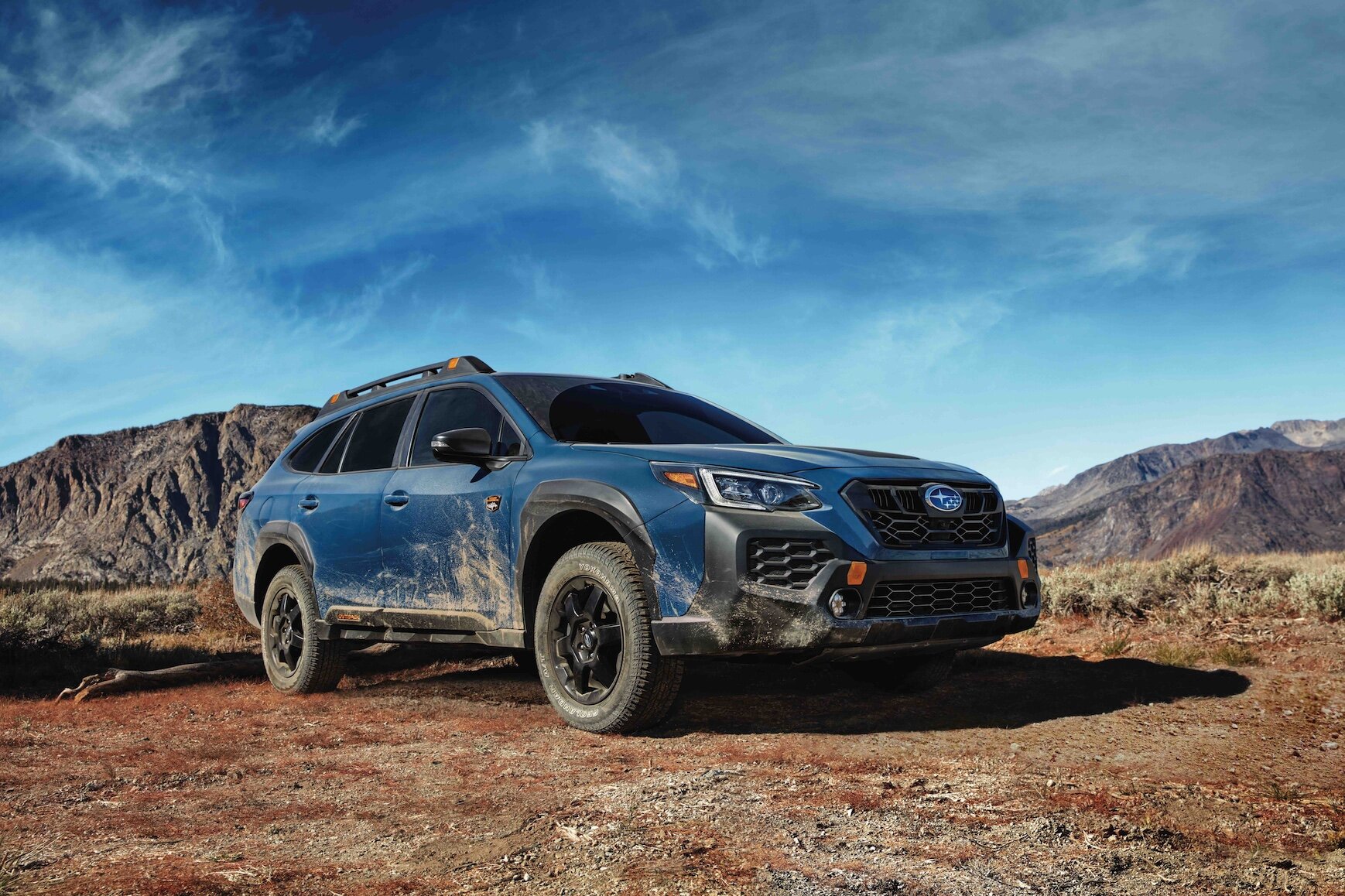
The Familiar Face, Now Sharper: Outback’s Latest Look
Walk up to the 2025 Subaru Outback, and you’ll spot the familiar silhouette long roof, cladding for days, and that upright stance beloved by dog owners and REI loyalists everywhere. Subaru’s designers have gently massaged the front fascia again, with a slightly crisper grille and updated LED lighting. It’s evolutionary, not revolutionary. As someone who’s seen every Outback since Clinton was in office, I appreciate that they haven’t tried to reinvent the wheel (or wagon). But it’s still instantly recognizable even from across a muddy trailhead parking lot.
Specs That Matter: What’s Under the Hood?
The 2025 Outback continues with two boxer engine choices: a naturally aspirated 2.5-liter flat-four (182 hp, 176 lb-ft), and a turbocharged 2.4-liter flat-four (260 hp, 277 lb-ft). Both come bolted to Subaru’s Lineartronic CVT and their standard Symmetrical All-Wheel Drive. There’s no hybrid yet, which feels like a missed opportunity given Toyota’s dominance in this space with the Venza and RAV4 Hybrid.
The turbocharged XT models carry over as the performance pick. The 2.4T has enough punch for merging or overtaking on two-lane highways more than what you’ll get from a Ford Edge or Honda Passport base engine but don’t expect WRX thrills. The NA engine is adequate, though it can sound a bit droney when you really lean into it. EPA estimates remain competitive: around 26 mpg city/32 mpg highway for the base engine; XT models drop by about 3 mpg on both counts. In real-world testing around Detroit suburbs, I averaged just over 28 mpg in mixed driving with a Touring XT.
Where Buttons Meet Big Screens: The Outback Cabin
Subaru’s interiors have always been about function first, but over the years they’ve added more tech and thankfully, more comfort. Slide into the 2025 model and you’re greeted by a clean dash dominated by an 11.6-inch vertical touchscreen (standard on most trims). The display is crisp and responsive; climate controls are still physical toggles below the screen a small but welcome nod to usability.
The seats strike a balance between support and long-distance comfort. After several hours behind the wheel en route to northern Michigan, my lower back had no complaints a rarity in this segment. Materials quality is solid for the price point, though hard plastics linger on lower door panels (Toyota’s RAV4 is similar here). Outward visibility is excellent; the A-pillars aren’t overly thick, and that classic wagon greenhouse lets in plenty of light.
Tech That Helps And Sometimes Annoys
All Outbacks get Subaru’s EyeSight driver assist suite: adaptive cruise control, lane centering, automatic emergency braking the usual suspects. The system works smoothly for the most part; lane-keep interventions are gentle rather than grabby. My only gripe? The DriverFocus distraction mitigation system can be a little sensitive. Take your eyes off the road too long fiddling with navigation and it’ll beep at you useful in theory, occasionally naggy in practice.
Wireless Apple CarPlay and Android Auto are standard across the board now (finally), so connecting your phone is seamless. Touring trims add ventilated leather seats, a Harman Kardon audio system, and a hands-free power tailgate all nice-to-haves if your budget stretches that far.
Hauling People and Stuff: Space Matters
This is where Subaru’s formula shines. With 32.6 cubic feet of cargo space behind the rear seats (expandable to 75.6 cubes with them folded), it out-hauls most crossovers in its class including Toyota Venza (28.8/55.1 cu ft) and Ford Edge (39.2/73.4 cu ft). The load floor is low great for wrangling heavy coolers or awkward mountain bikes and tie-down hooks abound.
Rear seat legroom is generous for adults; headroom is ample even under the panoramic moonroof. One small knock: Outback still doesn’t offer a third row like Hyundai Santa Fe or Kia Sorento so if you need six-plus seating, look elsewhere.
On-Road Impressions: Calm Confidence Over Flash
Outbacks have never been about lap times; they’re about composure when conditions get dicey. On pavement, ride quality remains one of its strongest suits it soaks up Michigan potholes with an easygoing suppleness that reminds me more of larger SUVs than rivals like Honda CR-V or Mazda CX-50 (the latter rides firmer). Steering feel won’t thrill enthusiasts but it’s accurate enough for daily duty; there’s mild body roll if you push it through fast sweepers but nothing alarming.
At highway speeds, wind noise is impressively muted for a vehicle with roof rails and all-terrain tires the cabin is certainly quieter than my last drive in a Chevy Blazer or Ford Edge ST-Line. The CVT transmission hums along unobtrusively unless you demand full throttle; only then does it protest with a familiar drone.
Off Pavement: Why Subaru Loyalists Keep Coming Back
I took the Outback onto some sandy trails north of Ann Arbor during an early spring thaw nothing hardcore by Jeep standards but enough to test traction and ground clearance (8.7 inches on all trims). Subaru's X-Mode system helps manage wheel slip on steep grades or loose surfaces; it’s almost set-and-forget for light off-roading or wintry commutes.
Rivals like Toyota RAV4 Adventure or Ford Bronco Sport offer comparable capability on paper but lack that unique combo of car-like ride comfort with real dirt-road chops one reason why I see so many Outbacks plastered with National Park stickers at trailheads out West.
Living With It: Costs and Ownership Realities
Pricing for 2025 models starts just under $30K for base trims and climbs north of $43K for loaded Touring XT versions squarely aligned with Honda CR-V Hybrid or Toyota Venza Limited territory. Subaru's reliability record has improved over recent years; warranty coverage remains industry standard at 3 years/36k miles basic, 5 years/60k miles powertrain.
Insurance costs are reasonable thanks to strong safety ratings every Outback earns top marks from IIHS and NHTSA year after year. Real-world fuel economy stays close to EPA numbers if you drive moderately; turbo models dip into the low twenties if you're heavy-footed or tow anything near their 3,500-pound max capacity (competitive with Ford Edge AWD).
The Good, The Not-So-Good and What Sticks With You
If I’m picking nits: no hybrid option yet stings in an era where gas prices remain unpredictable; some interior plastics feel below par versus Mazda’s CX-50 or Hyundai Santa Fe Calligraphy trims; DriverFocus beeps can get old fast if you multitask at red lights.
On the flip side? You get unbeatable cargo flexibility, standard AWD without nickel-and-diming trim walk-ups, real confidence when snow hits or when your family road trip veers off onto gravel two-tracks just because “let’s see what’s down there.” And after logging hundreds of miles through urban sprawl and rural backroads alike, I still step out feeling refreshed not something I say about every crossover I test.
Should You Buy One?
The Outback is not flashy never has been but there’s something enduring about its blend of practicality and quiet competence. If you want plug-in powertrains or lavish interiors, look elsewhere (Toyota Venza Hybrid or Hyundai Santa Fe come to mind). But if your life involves hauling gear through tough weather or exploring beyond paved roads without sacrificing comfort or if you’re simply tired of crossovers that pretend to be rugged the 2025 Outback remains one of America’s best all-rounders.
Familiar? Absolutely and that might just be its greatest strength in an era obsessed with reinvention for reinvention’s sake.
0 comments
Join the discussion around this article.
Please login to comment.