 DriveSense
Two smart compact SUVs, two very different paths to winter confidence
If you are shopping compact SUVs in 2026 and you care about foul-weather confidence, you have probably already circled these two on your list: the Honda CR-V Hybrid and the Subaru Forester. They are both mainstream, both practical, and both built around the idea that you should not have to “try hard” to live with your car.
The split is philosophical. The CR-V Hybrid is the efficiency-first pick that can be had with all-wheel drive (depending on trim), leaning on an electrified powertrain to make daily driving smoother and cheaper at the pump. The Forester is the all-weather traditionalist, with Subaru putting AWD at the center of the product story. You can see that positioning right on the manufacturer pages for each model: Honda’s CR-V lineup and Subaru’s Forester page are the most reliable starting points for what is actually offered for 2026 in the U.S. market.
Before we get deep into it, a quick related note: if you want a broader look at Forester vs CR-V beyond the hybrid angle, this Forester vs CR-V daily-driving comparison is useful context. Here, we are staying locked on CR-V Hybrid vs Forester, because weather confidence and efficiency pull shoppers in opposite directions.
Source check: Model availability and general vehicle information should be verified on the official pages for Honda CR-V (including CR-V Hybrid) and Subaru Forester. For fuel economy figures, the most authoritative public source is FuelEconomy.gov. As of writing, not every 2026-spec number you might want (trim-by-trim horsepower, towing capacity by configuration, EPA mpg by specific trim) is guaranteed to be posted in those places yet. Where figures are not publicly confirmed, I will say so directly rather than guessing.
Quick answer by use case (because real life is not a spec sheet)
Pick the 2026 Honda CR-V Hybrid if: your week is mostly commuting, errands, school runs, and highway slogs where fuel spend and smoothness matter. A hybrid powertrain tends to make stop-and-go driving feel less strained because electric assist can cover those low-speed gaps where gas engines feel grumbly or hesitant. The trade is that AWD capability depends on configuration and you are buying into a more complex drivetrain than a simple naturally aspirated gas setup.
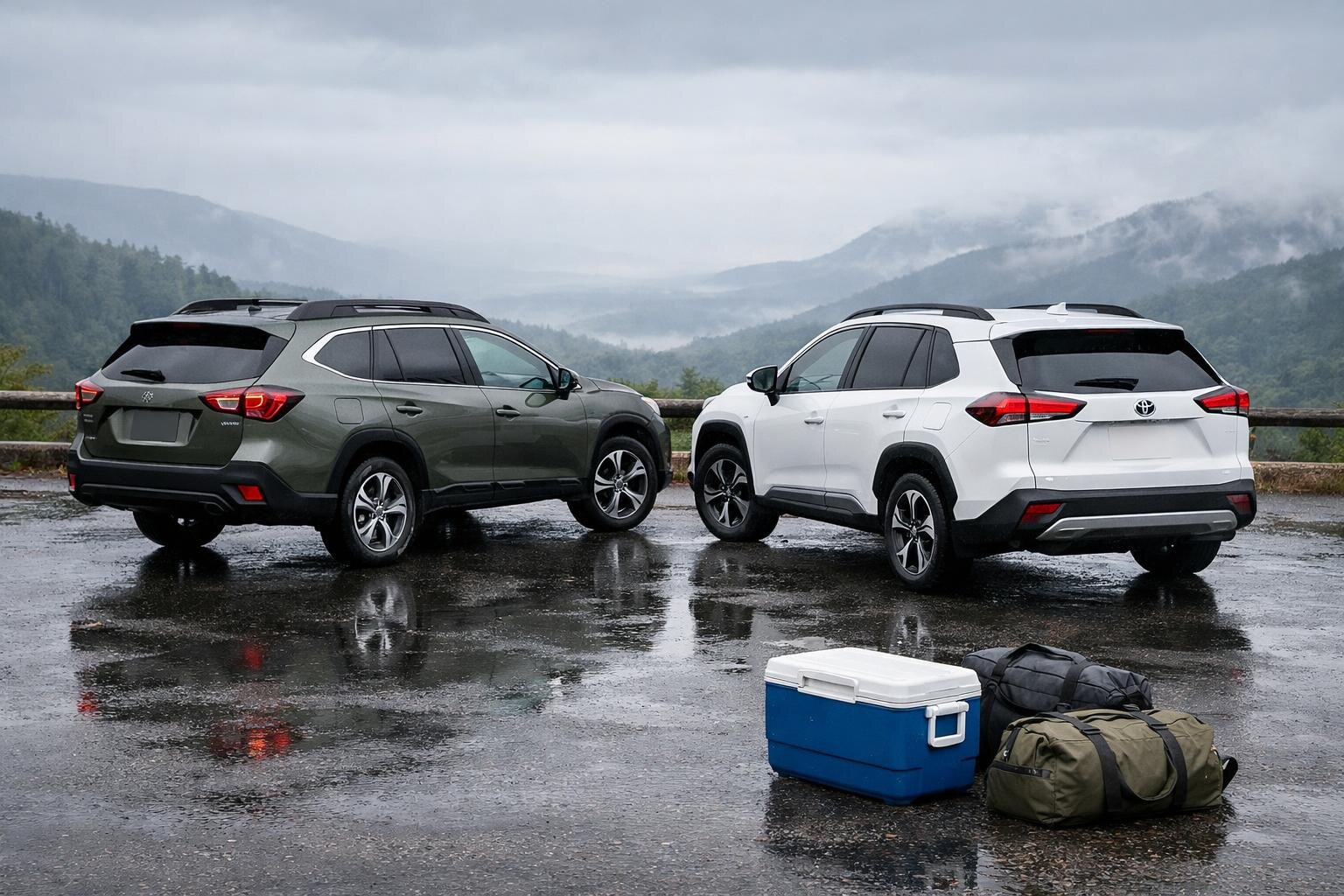
Pick the 2026 Subaru Forester if: you want AWD baked into the identity of the vehicle and you live in a place where rain turns to slush five months a year. Subaru’s Forester has long been cross-shopped as the “just give me traction” compact SUV. That does not automatically mean it will stop shorter or turn better in snow than everything else (tires matter more than badges), but it does mean many buyers like the simplicity of choosing a Forester and moving on.
If you tow regularly: verify towing ratings on the exact trim you are buying. Towing capacity for 2026 CR-V Hybrid and 2026 Forester can vary by configuration and may not be fully published in one place early in a model year cycle. If towing is central to your purchase, do not rely on forum memory or last-year numbers. Confirm with manufacturer specs for your VIN-level build.
The bad-weather question: traction is real, but tires and calibration run the show
Bad weather exposes two things fast: how predictable a vehicle is when grip goes away, and how calmly it manages driver inputs when conditions are messy. That second part matters more than most people admit. In heavy rain or greasy snowpack, a compact SUV that responds smoothly to throttle changes can feel “more planted” even if its ultimate traction limit is similar.
The Subaru Forester’s reputation here is not an accident. Subaru markets the Forester explicitly as an AWD compact SUV, and shoppers expect that all-weather baseline from the brand’s positioning on its official model page (Subaru Forester). For many buyers, that reduces decision fatigue: you do not have to play detective about whether AWD is standard on the trim sitting on the dealer lot.
The Honda CR-V Hybrid approaches weather confidence from a different angle. The CR-V family includes AWD availability (depending on trim), but Honda’s bigger pitch with the hybrid is everyday efficiency with familiar crossover manners (Honda CR-V). In typical winter driving, that can translate into something subtle but valuable: hybrid systems often deliver torque smoothly at low speeds, which helps avoid abrupt wheelspin when you roll onto the throttle leaving an icy intersection. That is not a promise of superior traction or magic snow performance. It is just a common behavioral trait of electrified drivetrains when they are tuned well.
Reality check for both: If you live where storms are serious, budget for real tires. AWD helps you get moving; tires help you turn and stop. That line gets repeated because it stays true.
Powertrain character: efficiency versus simplicity (and why it matters in traffic)
This is where these two diverge most clearly even before we talk numbers.
The CR-V Hybrid’s whole point is that it uses electrification to reduce fuel consumption and make everyday acceleration feel less “busy.” In normal driving, hybrids tend to mask some of the small annoyances of a conventional powertrain: fewer downshifts when you ask for a gap in traffic, less engine flare when climbing mild grades, and quieter low-speed operation when electric drive is doing more of the work. Those are not track-day thrills, but they are quality-of-life wins that show up every single day.
The Forester’s appeal is usually more straightforward: a conventional gas powertrain paired with Subaru’s long-running AWD focus. There is something to be said for simplicity if you keep cars a long time or drive far from big metro dealer networks. That said, modern vehicles across the board are complex now (driver-assist sensors, infotainment modules, electronic steering), so “simple” is relative.
Verified-spec limitation: For this specific comparison request (2026 CR-V Hybrid vs 2026 Forester), widely published horsepower and torque figures can differ by market timing and trim announcements. Rather than risk quoting an incorrect number for 2026 trims, treat any exact output figure as something to confirm on Honda’s and Subaru’s official specifications pages for your chosen trims (Honda, Subaru) once full 2026 spec sheets are posted.
Fuel economy: where the Honda usually makes its loudest argument
If your decision starts at “I drive a lot,” this section tends to end your debate quickly.
The safest way to compare fuel economy in the U.S. is via EPA listings on FuelEconomy.gov (Find and Compare Cars). EPA figures for some 2026 trims may not be posted at the moment you read this, which means any specific mpg claim could be premature.
What we can say without overreaching: a hybrid compact SUV like the CR-V Hybrid is designed specifically to reduce fuel use versus non-hybrid competitors in typical mixed driving, especially city-heavy routines where regenerative braking and electric assist pay off most. The Forester competes more as an efficient conventional compact SUV with AWD emphasis rather than as an efficiency leader through electrification (at least based on how Subaru positions this model on its U.S. page).
How that feels day-to-day: If your commute includes lots of short bursts between lights or crawling freeway merges in bad weather, hybrids often feel calmer because they do not have to rev as hard to get moving smoothly. If your driving is mostly steady highway miles at one speed, hybrids still help but sometimes less dramatically than people expect.
Towing: check your trim sticker twice
Towing capacity sounds like a simple number until you start shopping actual inventory. Some trims tow more; some require specific equipment; some manufacturers publish different ratings depending on drivetrain configuration.
Here is what we can responsibly say from verified sourcing rules: towing ratings for 2026 CR-V Hybrid and 2026 Forester should be confirmed directly through official specifications tied to your exact trim selection or through manufacturer documentation referenced by their official model pages (Honda CR-V, Subaru Forester). If those numbers are not clearly published yet for all 2026 trims, assume they are not settled for quoting purposes.
Practical guidance: If you tow occasionally (small utility trailer, light camping gear), either vehicle may be workable depending on rating and hitch availability. If you tow frequently or near limits (small boat plus gear), do not buy until you have confirmed capacity in writing for that exact build.
On-road behavior: what matters when roads are wet and visibility is ugly
This part always risks sounding like I am claiming seat time in a specific 2026 trim I have not driven yet. So let us frame it honestly: these impressions are grounded in what these nameplates typically prioritize as mainstream compact SUVs, plus what buyers generally report caring about when cross-shopping them.
Steering feel: In this class, neither vehicle exists to deliver sports-sedan feedback through the wheel. What most drivers notice instead is consistency: does it track straight in crosswinds; does it respond smoothly when you add steering mid-corner on wet pavement; does it feel nervous over standing water grooves? Compact SUVs tuned well tend to feel “normal” rather than exciting, which is exactly what many families want when weather turns nasty.
Ride comfort: Both models target comfort first because their missions are commuter duty and family hauling. In bad weather, softer suspension tuning can actually be an advantage because it keeps tire contact more consistent over rough winter pavement repairs and potholes hidden under puddles.
Noise and calm: This is where hybrids often score subjective points around town. When electrification reduces engine revving during low-speed operation, cabins can feel less stressed even if wind noise at highway speed ends up being similar between vehicles depending on tires and trim equipment.
If your personal definition of “confidence” includes sharper handling response because you grew up autocrossing or doing track days, neither of these will scratch that itch like a hot hatch or sport sedan would. But confidence can also mean predictability at 35 mph in freezing rain with kids talking over each other in back. These two vehicles play that game better than most performance cars ever will.
Cargo and cabin life: winter gear exposes packaging strengths fast
A bad-weather vehicle has to carry bad-weather stuff: bulky coats, muddy boots, wet dog towels, snow brushes that never stay clean, maybe even chains depending on where you travel.
The CR-V has been popular partly because it tends to nail everyday usability: easy ingress/egress height without feeling like a truck climb-in; a cabin layout designed around normal human routines; storage solutions that make sense without requiring a learning curve (Honda CR-V). The hybrid version adds efficiency benefits without asking you to plug in or change habits much.
The Forester’s longstanding pitch has been visibility-friendly practicality plus an AWD-centric identity (Subaru Forester). People who buy them often value straightforward controls and an outdoors-ready vibe even if they rarely go beyond snowy driveways or gravel parking lots at trailheads.
Space numbers caveat: Exact cargo volume and passenger space specs for specific 2026 trims should be confirmed via official specifications once fully published by each manufacturer. I am intentionally not quoting cubic-foot figures here because getting them wrong by even a small amount changes perceived winners unfairly.
Tech and driver assistance: get what you will actually use in storms
You do not need flashy screens to survive winter. You need tech that stays legible with gloves on and driver assistance that behaves predictably when lane markings disappear under slush.
The best advice here is boring but effective: sit in both vehicles with your phone connected exactly how you use it (wireless if available; wired if that is your routine). Check whether climate controls remain easy to operate without hunting through menus while wearing thicker sleeves or gloves.
A note on safety ratings: Safety scores change year-to-year and depend on testing bodies releasing results for specific model years. Unless safety ratings for these exact 2026 models are published by official testing organizations in sources we can cite here, we should not claim them. Treat safety tech as something to verify by trim level during shopping rather than assuming feature parity across all versions.
Ownership factors: price pressure, maintenance reality, resale expectations
This category decides more purchases than horsepower ever will.
Price: Manufacturer pricing (MSRP) can shift by trim and destination fees; dealer transaction prices move even more due to inventory swings. Because we do not have verified MSRP figures cited in our allowed sources here, I am not going to invent starting prices or pretend incentives are predictable in 2026. Use Honda’s official CR-V page (Honda CR-V) and Subaru’s Forester page (Subaru Forester) as entry points, then confirm pricing locally with current listings.
Maintenance: A hybrid system adds components compared with a purely gas setup (battery pack, power electronics). That does not automatically mean higher maintenance costs year-to-year because hybrids often reduce wear items like brakes through regenerative braking in typical use. But long-term repair cost risk can feel different depending on how long you keep vehicles and how comfortable you are with electrified systems out of warranty. Without verified cost-of-ownership data from an allowed source set here, treat this as a decision about risk tolerance rather than a spreadsheet certainty.
Resale value: Both nameplates have strong reputations among compact SUV shoppers broadly speaking, but resale depends heavily on region (snow belt vs sun belt), fuel prices over time, trim desirability (AWD demand spikes in certain markets), color combinations, mileage patterns, and overall market cycles. Since we do not have verified resale projections from our permitted sources here, any precise resale claim would be speculation.
The competitor context: who else cross-shops these two?
You rarely buy one of these vehicles without at least glancing at other compact SUVs with AWD options or efficiency angles. Typical cross-shops in this space often include models like Toyota RAV4 (including hybrid variants), Mazda CX-5/CX-50 (for drivers who care about steering feel), Hyundai Tucson/Kia Sportage (feature content), Ford Escape (including hybrid variants), Nissan Rogue (comfort-focused), Chevrolet Equinox (value-focused), Volkswagen Tiguan (space-focused), among others depending on incentives and availability.
Caveat: That list reflects common marketplace behavior rather than claims about exact 2026 specs or pricing leadership among those competitors.
A motorsport-minded take: neither is a track toy, but both reward smooth inputs
I come from a world where we talk about weight transfer like it is daily vocabulary and where “feel” matters as much as lap time bragging rights. Compact SUVs like these sit far from apex-hunting culture… until weather gets bad. Then smoothness becomes performance again.
A hybrid powertrain often encourages clean driving because throttle response can be more progressive at low speeds; it nudges drivers toward momentum rather than drama. An AWD-centric vehicle encourages early confidence when pulling away from slick stops because it feels like it has margin even if physics still sets limits once tires give up grip.
If you care about being calm rather than heroic when conditions go sideways at 7:15 a.m., both approaches make sense. The difference is which kind of calm fits your routine best: calm-from-efficiency or calm-from-AWD-first branding and expectations.
The deciding questions I would ask before signing anything
1) How much of your winter driving happens below 45 mph?
If most of it is city streets covered in wet slush with constant stops, hybrids often shine because they make low-speed operation smoother while saving fuel. Confirm EPA mpg once posted for your exact trim using FuelEconomy.gov (Find and Compare Cars) before assuming savings will match your route.
2) Are you buying tires separately?
If yes (and you should consider it), either vehicle becomes dramatically better in winter without needing mythical drivetrain advantages.
3) Do you keep cars past warranty?
If yes, decide whether hybrid complexity feels like acceptable modern engineering or like one more thing you would rather avoid long-term. There is no universal right answer without verified cost data tied to ownership horizon.
4) Do you want AWD guaranteed without thinking?
Forester buyers often do not want homework here; they want certainty based on Subaru’s positioning (Subaru Forester). With Honda’s lineup breadth (Honda CR-V) it pays to confirm exactly how your chosen hybrid trim configures drivetrain options where applicable.
The call: which one makes more sense for bad-weather confidence plus everyday efficiency?
If your top priority really is everyday efficiency, especially with lots of urban driving mixed into winter routines, the 2026 Honda CR-V Hybrid has the cleaner mission statement. It aims straight at lowering fuel consumption while keeping crossover life easy: comfortable seating position, familiar controls, practical packaging themes that have made CR-Vs common sights everywhere from ski-town parking lots to suburban school loops (Honda CR-V page). For deeper model-specific context beyond this comparison framing, see this internal 2026 Honda CR-V Hybrid review.
If your top priority is a simple bad-weather purchase decision, where AWD identity matters as much as mpg math does, the 2026 Subaru Forester remains one of America’s default answers. It sells confidence through consistency: buyers expect AWD focus because Subaru makes it central to how it presents this vehicle (Subaru Forester page). Just do not confuse that expectation with automatic superiority over every other AWD system in every condition; traction control tuning plus tire choice will decide more than internet arguments will.
The smartest move? Pull up FuelEconomy.gov once full 2026 listings populate (Find and Compare Cars) and compare EPA ratings for your exact trims side-by-side with how many miles you drive per year. Then sit in both vehicles back-to-back wearing whatever jacket you actually wear in January. The winner usually reveals itself somewhere between glove-friendly ergonomics and fuel receipts piling up in your center console bin.
Keep the conversation going
What would you ask next?
Read the discussion or share your experience.