 DriveSense
Decision snapshot: two smart compact SUVs, two different priorities
If your compact SUV shopping list starts with bad weather and ends with the daily grind, the 2026 Subaru Forester and 2026 Honda CR-V both make a rational case. They just approach the job from different angles.
The Forester leans into Subaru fundamentals: standard Symmetrical All-Wheel Drive and available X-MODE, plus an efficiency headline that Subaru advertises as up to 35 MPG on its Forester page (trim and final EPA label details still matter). Citation: https://www.subaru.com/vehicles/forester.html
The CR-V reads like the mainstream commuter play, largely because Honda promotes two powertrain paths (a hybrid and a 1.5-liter turbo gas engine) and available Real Time AWD. For many buyers, simply having a hybrid option in the lineup changes the math, depending on trim availability and pricing where you live. Citation: https://automobiles.honda.com/cr-v
This comparison sticks to what we can support with official sources, then translates those facts into real routines: wet highways, snow days, cargo errands, commute efficiency, and the ownership details that can quietly decide whether you enjoy the vehicle six months in.
Source map: what is confirmed, and what you still need to verify
Confirmed from Subaru: Forester has standard Symmetrical All-Wheel Drive; X-MODE is available; Subaru advertises up to 35 MPG on its Forester model page. Citation: https://www.subaru.com/vehicles/forester.html
Confirmed from Honda: CR-V is offered with a hybrid powertrain or a 1.5-liter turbo gas engine; Real Time AWD is available; Honda also positions variants such as TrailSport Hybrid on its CR-V page. Citation: https://automobiles.honda.com/cr-v
EPA confirmation (fuel economy labels): For any MPG claim you plan to budget around, the final reference should be the official EPA listing for the exact configuration you are buying. The EPA site is where window-label fuel economy data is ultimately anchored. Citation: https://www.fueleconomy.gov/
Not confirmed within the sources above: horsepower and torque figures, towing capacity, cargo volume measurements, curb weight, trim-by-trim feature lists, MSRP by trim, safety ratings, or maintenance schedules for these specific 2026 configurations. Those may exist in other official documents, but they are not present in the provided article context and links.
Bad weather confidence: standard AWD vs optional AWD shopping reality
This is where these two SUVs separate quickly on paper.
Forester: AWD is not a checkbox. Subaru states that Symmetrical All-Wheel Drive is standard on Forester. That matters because it changes how you shop. You are not hunting for the right drivetrain in dealer inventory or forced into a higher trim just to get four driven wheels. Citation: https://www.subaru.com/vehicles/forester.html
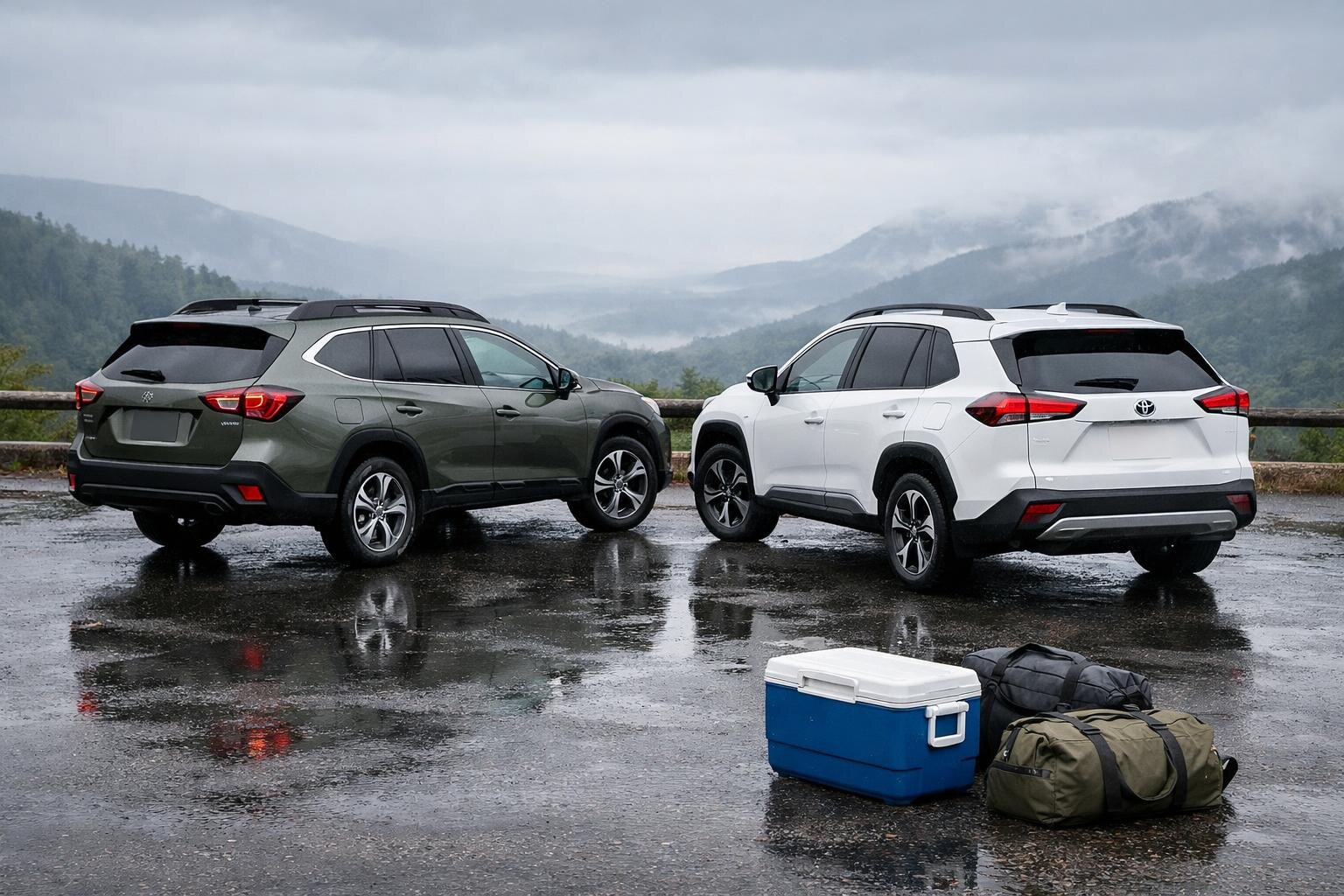
X-MODE signals intent. Subaru highlights available X-MODE for low-traction situations. Systems like this are typically about calibration choices such as throttle mapping and traction logic at low speeds, not about turning a compact SUV into a rock crawler. The practical value shows up when conditions are messy and inconsistent, like slushy intersections or an unplowed neighborhood hill. Citation: https://www.subaru.com/vehicles/forester.html
CR-V: AWD depends on how it is equipped. Honda lists Real Time AWD as available rather than standard across the board. That does not make it a fair-weather vehicle, but it does mean you need to confirm the exact drivetrain on the exact VIN you are considering. This is one of those small details that becomes a big deal after the first freezing rain event. Citation: https://automobiles.honda.com/cr-v
Cargo and passenger life: what we can say without guessing numbers
A lot of comparison pieces turn this into a spec-sheet duel. We cannot do that here without inventing cargo volumes or interior dimensions.
The useful takeaway from the verified info is positioning. Subaru frames Forester around all-weather readiness and practical use (standard AWD plus available X-MODE). Honda frames CR-V around broad everyday usability while letting you choose hybrid or 1.5T gas powertrains and add AWD if needed. Those are different starting points for family logistics even before you measure cubic feet. Citations: Subaru Forester, Honda CR-V
If cargo fit is your deciding factor: rely on an in-person check or official spec sheets for your exact trims. In practice, liftgate opening shape and load-floor height can matter as much as total volume when you are loading groceries one-handed or wrestling a stroller at night.
Powertrains and efficiency: hybrid choice vs Subaru's MPG headline
This is where many buyers feel the difference every single week at the pump.
CR-V offers two powertrain routes. Honda advertises both a hybrid powertrain and a 1.5-liter turbo gas engine on its CR-V page. That choice matters because commuting patterns vary wildly. In typical stop-and-go use, hybrids often reduce fuel consumption versus non-hybrid equivalents, but you should still verify EPA ratings for the exact configuration you plan to buy. Citations: https://automobiles.honda.com/cr-v, https://www.fueleconomy.gov/
Forester leads with an efficiency claim too. Subaru advertises up to 35 MPG on its Forester model page. Treat that as a manufacturer headline until you match it to an EPA listing for your specific trim and drivetrain configuration as sold. Citations: https://www.subaru.com/vehicles/forester.html, https://www.fueleconomy.gov/
A quick maintenance implication (general guidance only): choosing hybrid versus non-hybrid changes what components exist under the skin (high-voltage systems in hybrids; turbocharger heat management considerations in turbo engines). Neither manufacturer page here provides maintenance schedules or cost projections for these 2026 models, so treat this as a prompt for questions at the service counter rather than a prediction.
How they tend to feel day to day (without pretending we road-tested them)
No made-up lap notes here. Still, engineering choices often show up in predictable ways.
AWD standardization influences baseline tuning priorities. When a vehicle line is built around standard AWD as part of its identity, that usually shapes calibration decisions across trims because AWD behavior is not an add-on case engineers have to accommodate only sometimes. Subaru explicitly positions Forester this way by making Symmetrical AWD standard. Citation: https://www.subaru.com/vehicles/forester.html
A hybrid option changes how some commutes feel. Many drivers prefer hybrids in traffic because electrified torque delivery can feel smoother at low speeds than conventional powertrains, depending on calibration. Honda confirms that a CR-V hybrid exists in the lineup; output figures and performance metrics are not confirmed within our allowed sources here. Citation: https://automobiles.honda.com/cr-v
The best real-world check: drive both at city speeds over rough pavement and then spend a few minutes at highway speed if possible. Steering effort, seat comfort over time, brake pedal response, and road noise character are hard to predict from marketing pages alone.
Tech usability and driver assistance: what this article can and cannot confirm
This is often where buyer satisfaction lives or dies, especially if you spend hours per week in traffic.
What we can confirm from the provided sources: we can confirm powertrain availability and AWD availability positioning (standard versus optional) because both brands state those items clearly on their model pages. That indirectly affects tech shopping because drivetrain constraints can push you into trims you did not originally want when you are dealing with real dealer inventory. Citations: Subaru Forester, Honda CR-V
What we cannot confirm here: infotainment screen sizes, audio system specs, named driver-assistance packages by trim, or which features are standard versus optional for 2026 based solely on these links and the current article context. If tech matters to you (phone pairing stability, camera clarity at night), sit in both vehicles with your own phone before committing.
The cross-shopper reality: crowded segment, small differences matter
If you are looking at Forester versus CR-V, you are probably also glancing at other compact SUVs such as Toyota RAV4 (including hybrids), Mazda CX-5 or CX-50 for steering feel priorities, Nissan Rogue for value-focused packaging depending on incentives, Ford Escape if electrification is on your list, Kia Sportage and Hyundai Tucson for feature density per dollar depending on trims and availability.
This article does not cite specifications for those competitors because they are outside the verified source set used here.
If your week looks like this, here is the likely fit
You see real winter regularly: Forester has an immediate advantage in purchase simplicity because Subaru states Symmetrical AWD is standard across Forester models, plus available X-MODE for low-traction situations. Tires still matter more than badges when roads turn icy; plan accordingly. Citation: https://www.subaru.com/vehicles/forester.html
Your commute dominates your mileage: CR-V becomes especially interesting because Honda offers both hybrid and 1.5-liter turbo choices in the lineup; then verify fuel economy via EPA listings once your exact configuration appears there. Also confirm whether your preferred CR-V inventory locally includes AWD if you need it since Honda lists Real Time AWD as available rather than standard. Citations: https://automobiles.honda.com/cr-v, https://www.fueleconomy.gov/
You want fewer branching decisions while shopping: Forester removes one major variable immediately because AWD is standard per Subaru's page; that can reduce dealer-lot frustration when availability is uneven across trims and drivetrains. Citation: https://www.subaru.com/vehicles/forester.html
You want powertrain choice first, everything else second: CR-V gives you two distinct routes (hybrid versus 1.5T) before you even get into option packaging; that structure can be satisfying if you like tailoring the vehicle to your driving pattern rather than defaulting to one setup. Citation: https://automobiles.honda.com/cr-v
The dealer-lot checklist that prevents regret later
1) Confirm drivetrain by VIN. Subaru states Forester has standard Symmetrical AWD; Honda states CR-V has available Real Time AWD; do not assume every CR-V on a lot matches what online filters suggest. Citations: Subaru Forester, Honda CR-V
2) Confirm fuel economy using official EPA listings for that exact build. Subaru's up to 35 MPG claim is a headline; Honda markets hybrid availability; either way, shop using window-label data once posted for your configuration on the EPA-backed platform at FuelEconomy.gov. Citations: Subaru Forester MPG claim location, Honda CR-V powertrains location, FuelEconomy.gov
3) Ask directly about towing ratings if towing matters at all. This article does not have verified towing numbers from Subaru or Honda sources provided here; do not buy first then research later.
4) Do a real cargo test. Open the liftgate; load your usual bulky item; fold seats if needed; check whether load-floor height feels friendly after ten repetitions per week.
A quick CR-V detour if your real question is gas vs hybrid
If this comparison made you realize your dilemma is less about brand choice and more about which CR-V powertrain fits your routine best, bookmark our 2026 Honda CR-V gas-vs-hybrid guide.
The bottom line: pick your priority first
If standard AWD coverage is non-negotiable because weather surprises are part of your winter routine, Forester makes that decision easy with standard Symmetrical All-Wheel Drive and available X-MODE (and Subaru also advertises up to 35 MPG on its model page). Verify EPA labels once available for your exact configuration before treating any MPG number as final shopping math. Citations: Subaru Forester official page, FuelEconomy.gov (EPA-backed)
If efficiency flexibility matters more because commuting dominates your mileage pile-up each month, Honda offering both hybrid and 1.5-liter turbo choices in CR-V form is hard to ignore, with available Real Time AWD if your climate occasionally demands it. Again, let final EPA listings guide any fuel-cost expectations for specific trims and drivetrains. Citations: Honda CR-V official page, FuelEconomy.gov (EPA-backed)
No matter which way you lean, three checks keep this decision grounded: confirm drivetrain by VIN (especially on CR-V), confirm official fuel economy labels once posted for that exact build via FuelEconomy.gov, and make sure cargo loading works with your real stuff instead of idealized luggage shapes.
Keep the conversation going
What would you ask next?
Read the discussion or share your experience.