 DriveSense
Verified facts first: what Toyota says the 2026 Camry is
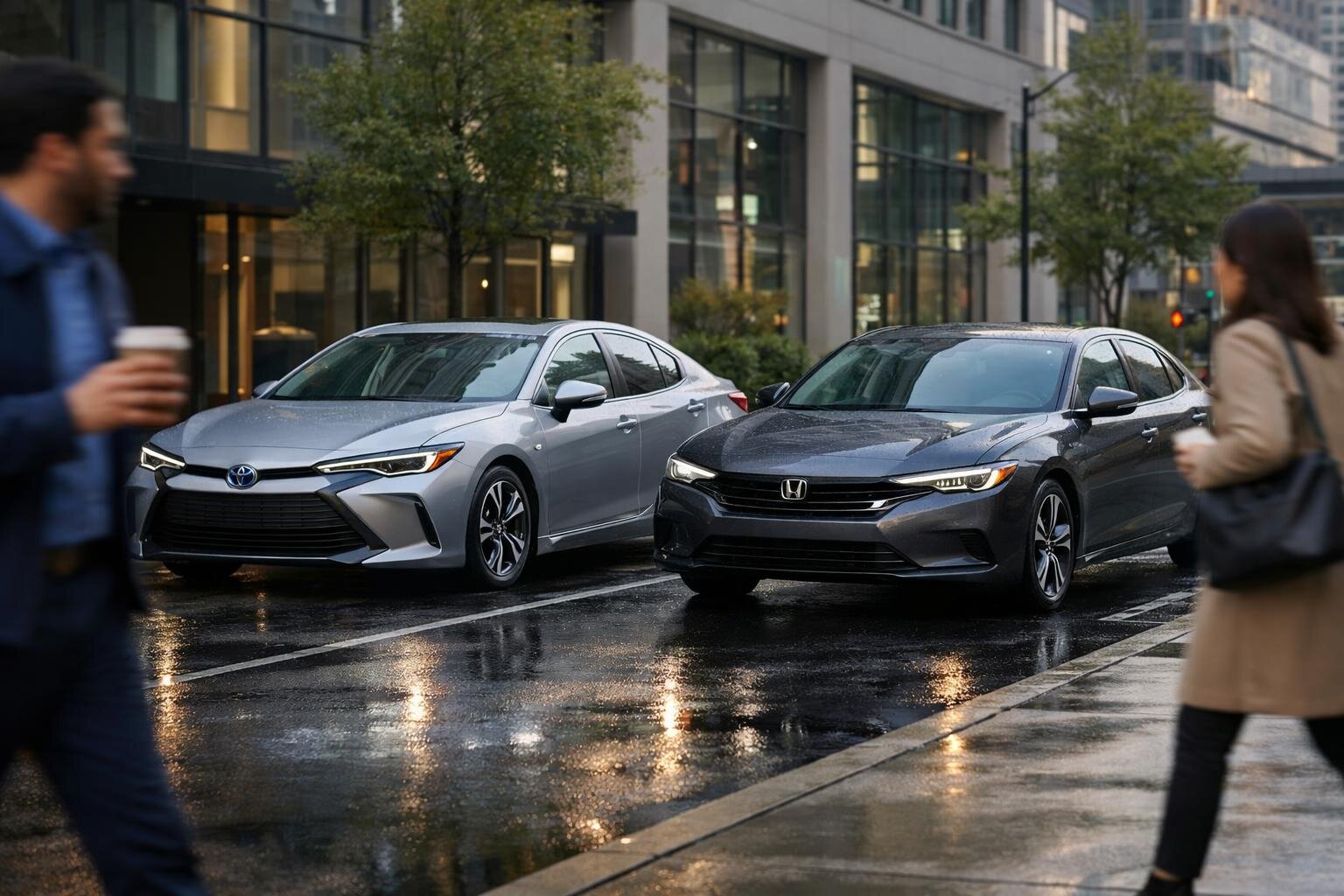
The 2026 Toyota Camry is still part of Toyota’s newest Camry generation, and Toyota positions it as a hybrid-only midsize sedan in the U.S. lineup. That matters because the usual trim-to-trim debate about “base engine vs upgrade engine” is basically gone. Whether you pick an LE or an XLE, you’re buying the same core idea: a Camry tuned for daily efficiency and low-effort commuting, with available all-wheel drive depending on configuration.
Toyota’s own model page is the cleanest place to verify the big-picture claims for trims, hybrid positioning, available AWD, and Toyota’s mileage estimates and pricing guidance. If you want to cross-check anything you read here against the source, start there: Toyota’s 2026 Camry model page.
One important honesty note up front: detailed trim-by-trim specs like exact horsepower by drivetrain, towing capacity, and every standard feature list can change with options and regional packaging. The brief for this piece also limits sourcing to Toyota’s model page. So where a specific number is not explicitly verified there (or is not clearly published at the time you’re reading), I will call it out instead of guessing.
LE vs XLE: same mission, different priorities
In the real world, LE and XLE buyers usually want the same thing: a quiet, efficient sedan that feels painless in traffic and doesn’t punish you at the pump. The split happens when you start living with the car, not when you read the headline spec.
The LE is typically the trim that makes the most sense on paper because it sets the price floor for getting into a Camry Hybrid at all. It’s the version that tends to attract commuters, rideshare drivers, and anyone who wants Toyota hybrid efficiency with minimal fluff.
The XLE is aimed at people who like the Camry concept but don’t want it to feel “base.” You pay more to make the cabin feel richer and daily comfort feel more automatic. In most trim walks I’ve done over the years (Camry included), this is where shoppers get pulled in by touchpoints: seat comfort, cabin presentation, screen size and clarity, and how relaxing the car feels after a long day.
Powertrain and performance: what changes (and what doesn’t)
Toyota’s key positioning claim for this Camry is that every 2026 Camry is a hybrid. That simplifies shopping. You are not choosing between a thirsty engine and an efficient one; you are choosing how much comfort and equipment you want wrapped around an efficient drivetrain.
Both LE and XLE are built around that hybrid setup, and Toyota also notes that all-wheel drive is available. The practical takeaway: if your priority is winter traction in places like upstate New York or northern New Jersey, AWD availability matters more than whether you choose LE or XLE. The caveat is configuration. AWD availability can depend on how Toyota packages trims and options for a given model year, so confirm on Toyota’s configurator or at a dealer before assuming any specific LE or XLE on a lot will be AWD.
Specific output figures (horsepower and torque) are widely discussed for modern hybrids, but this article will not quote numbers unless they are explicitly verified in the provided official source set. Check Toyota’s model page for current published power claims for 2026.
Fuel economy: “daily hybrid efficiency” is the point, but verify the label
This comparison really does come down to efficiency expectations versus comfort spending. Toyota markets fuel economy estimates for the Camry on its model page, but fuel economy can vary by drivetrain (FWD vs AWD) and wheel and tire package. That’s exactly where LE vs XLE can diverge in typical industry practice: higher trims often wear larger wheels or different tires that can nudge efficiency down.
If you’re shopping purely for maximum mpg in typical commuting, keep your eye on two things while comparing an LE to an XLE on a dealer lot:
First, whether the car is FWD or AWD. Second, what wheels are fitted. The window sticker (EPA label) is still your best reality check once EPA figures are finalized for each configuration. If EPA figures for your exact 2026 configuration are not yet released or not shown on the vehicle you’re considering, treat any mpg talk as provisional and confirm before signing.
Towing capacity: likely not your reason to buy a Camry (and not fully published here)
Midsize sedans generally are not bought as tow vehicles in the U.S., and Toyota’s consumer-facing model pages do not always emphasize towing ratings for cars like Camry. For this article’s sourcing constraints, I cannot responsibly state a towing capacity number for either 2026 Camry LE or XLE without an explicit published figure in the provided official material.
The practical advice is simple: if towing is even a “maybe,” ask for an official tow rating from Toyota documentation tied to your exact VIN or configuration. Most shoppers will be better served by planning on “no towing” rather than assuming capability that may not be supported.
How they feel on real roads: steering, ride comfort, and noise
I’m not going to pretend I’ve run instrumented tests on these exact trims for this story. But there are some grounded expectations you can bring into a test drive based on how trim strategy typically works in this segment.
The LE usually feels like the cleanest expression of what engineers tune first: easy steering effort at low speeds, predictable brake feel under light use, and a ride that doesn’t call attention to itself. In typical daily use that means it should be easy to place in tight city lanes and parking garages around New York without feeling like it wants constant correction.
The XLE tends to earn its keep on longer drives. Not because it suddenly becomes sporty (that’s not what XLE means), but because comfort features often change your perception of refinement. Better seat materials or additional adjustments can reduce fatigue; extra sound insulation or different glass can make highway miles feel less busy; larger screens can be easier to glance at without squinting.
The key point: neither trim choice should be made expecting radically different handling character. This isn’t a “base suspension vs performance suspension” story based on verified information available here. It’s more about how relaxed you feel after 45 minutes of traffic.
Cabin usability: where your money shows up every day
If you’re deciding between LE and XLE, spend time doing boring stuff in both cars: adjust seating position; pair your phone; try climate controls; put sunglasses somewhere; check rear-seat knee room with the front seat set for your height; open the trunk; look over your shoulder at blind spots.
Toyota’s model page confirms trim availability and positioning but does not give us enough verified detail in this evidence pack to list every feature difference without risking errors. Still, here’s what typically separates these trims in buyer experience terms:
On an LE, tech tends to cover essentials well enough: modern driver-assistance expectations, smartphone connectivity, clear gauges, straightforward climate control behavior. It’s built to be used hard without making you worry about every surface.
On an XLE, buyers usually pay for nicer touchpoints and convenience features that become muscle memory quickly. Think of things like upgraded seat comfort over long commutes, more upscale interior presentation, and screen upgrades that make navigation prompts easier to follow at a glance.
If you’re sensitive to cabin noise or do lots of highway driving on rough pavement (the kind that makes tire roar obvious), this is where it’s worth being picky during a test drive. Even small differences in wheels and tires can change how calm a car feels at 70 mph.
Price reality: why this choice often comes down to budget discipline
Toyota publishes starting MSRP guidance on its model page for the 2026 Camry lineup. That starting number matters because it frames everything else: taxes in high-cost states, insurance differences by trim level in some markets, and interest paid if you finance.
The LE exists so Toyota can advertise an accessible entry point into a hybrid-only Camry lineup. For many buyers, especially those who rack up miles fast, keeping upfront cost low while banking hybrid savings over time is the whole strategy.
The XLE exists because plenty of people don’t want “entry point.” They want their daily car to feel like a step up without jumping into luxury-brand pricing or premium-fuel habits. The catch is that comfort upgrades are rarely cheap when bundled into higher trims.
I also have to be blunt about dealer-lot reality: transaction prices vary wildly by region and inventory pressure, and this brief explicitly says not to claim dealer transaction prices. So treat MSRP as your baseline reference only; shop multiple listings if you want a real market read.
Maintenance and ownership: hybrids have their own logic
Toyota hybrids have been mainstream long enough that many shoppers see them as low-drama ownership plays when maintained properly. But I’m not going to claim specific maintenance costs or reliability outcomes here because those require data beyond our allowed evidence set.
What we can say without stretching facts: both LE and XLE share the same fundamental hybrid approach Toyota is selling across this lineup year. That generally means your maintenance schedule should look more similar than different between trims because major mechanical components are aligned around one powertrain concept.
Where ownership differences can show up is mundane stuff: wheel size (tire replacement cost), interior materials (how they wear if you have kids or pets), and feature complexity (more equipment can mean more things you may eventually service). Those aren’t reasons to fear an XLE; they’re just part of paying for nicer things.
Resale value: Camry strength helps both trims (but don’t overpay upfront)
The Camry nameplate has long been associated with strong demand in the U.S., which usually supports resale value better than many rivals in the mainstream midsize segment. Still, I’m not going to quote residual percentages or depreciation curves without verified data attached.
A practical way to think about resale between LE and XLE is this: mainstream buyers tend to value condition and sensible equipment more than niche features. An LE kept clean with service records can be very easy to sell later simply because it hits “reliable commuter” expectations cleanly.
An XLE can also hold appeal because used buyers like comfort upgrades when they don’t have to pay full new-car premiums for them. But if you pay too much upfront for luxury-adjacent features in a non-luxury badge car, resale does not always make you whole. The safest move is buying what you’ll actually enjoy using every day rather than trying to game depreciation.
Competitors shoppers cross-shop anyway
Even if you walk into a Toyota store set on Camry, most midsize-sedan shoppers end up looking sideways at familiar rivals depending on incentives and availability. In this class that often means Honda Accord Hybrid territory on one side of the conversation and Hyundai Sonata Hybrid on another. I’m mentioning them as market context only; I’m not making spec claims here because we’re constrained to Toyota-sourced verification for numbers.
The bigger trend angle is hard to miss from New York: hybrids keep gaining mindshare as buyers look for fuel savings without changing habits around charging access. A hybrid-only Camry lineup fits that moment neatly.
So which one should you buy?
Pick the 2026 Camry LE if your goal is straightforward value: lowest entry price into Toyota’s hybrid-only Camry strategy (based on Toyota’s published starting MSRP guidance), strong everyday efficiency expectations depending on configuration, and fewer upscale add-ons that raise replacement costs later. If you view your car as transportation first and personal space second, LE tends to land right where most budgets want it.
Pay extra for the 2026 Camry XLE if your commute is long enough that comfort becomes part of your mental health plan; if you care about cabin presentation; or if screen upgrades and convenience features will genuinely get used daily instead of admired once then ignored. In typical ownership terms it’s less about “faster” or “more capable” than “more pleasant.”
The honest bottom line is right there in this story’s title: price sets your ceiling, comfort sets your satisfaction level, and hybrid efficiency sets your baseline expectation no matter which trim badge sits on the trunk lid. Confirm FWD versus AWD availability for your exact build, read the EPA label when available for your exact configuration, then choose based on how relaxed you feel behind the wheel after 20 minutes of normal driving.
By David Ramirez (New York). Source used for verified lineup claims: Toyota 2026 Camry model page.
Keep the conversation going
What would you ask next?
Read the discussion or share your experience.