 DriveSense
What Honda actually verifies for 2026 (and what’s still TBD)
Let’s get the boring but important part out of the way first: for the 2026 model year, Honda continues to sell the CR-V with a choice of gas-only and hybrid powertrains, and it’s openly pushing the hybrid as the efficiency play. Honda also confirms that there’s a CR-V Hybrid TrailSport in the lineup, and that AWD is available across the range depending on trim. That’s straight from Honda’s own model information for 2026. Source: Honda’s CR-V page: https://automobiles.honda.com/cr-v
What Honda does not clearly lock down on that page (at least in a way you can responsibly quote in a comparison like this) is the full set of hard numbers shoppers always ask for: exact horsepower and torque figures by powertrain, towing capacity by trim, and final EPA fuel economy ratings for every 2026 configuration. Those details typically live in official spec sheets and EPA listings, and if they’re not published yet or aren’t clearly shown on the manufacturer page, I’m not going to guess.
So this comparison leans into what’s verified: powertrain availability, hybrid positioning, TrailSport Hybrid existence, and AWD availability. Then we translate that into real commuting and ownership decisions without inventing performance stats.
The basic fork in the road: gas simplicity vs hybrid strategy
The gas CR-V is for buyers who want the familiar rhythm of a conventional drivetrain: fill up, go, no behavior changes required. It’s also usually the version that keeps your upfront cost lower when you’re staring at monthly payments and insurance quotes. Even if you never say it out loud, there’s comfort in choosing the “standard” powertrain in one of America’s most mainstream compact SUVs.
The hybrid CR-V is aimed at drivers who rack up stop-and-go miles and hate watching the fuel needle move during a week of errands. Hybrids tend to shine in city-style driving because they can recapture energy during braking and reduce how often the engine has to do the heavy lifting at low speeds. Honda explicitly positions the CR-V Hybrid around fuel economy benefits for 2026, so if efficiency is your headline goal, Honda is telling you where to look.
Your commute: where each one makes sense
If your commute is mostly city traffic, the hybrid is usually the smarter bet in principle, because hybrids are built to claw back efficiency when you’re constantly slowing down and speeding up. You’ll also likely appreciate how hybrids can feel smoother at low speeds in typical daily use, since electric assist can reduce that “waiting for the engine” sensation when you’re creeping through congestion. I’m keeping that phrasing careful because I’m not claiming a specific 0 to 60 time or an exact throttle response profile for 2026 without published data or instrumented testing.
If your commute is mostly highway, it gets more nuanced. Highway driving often narrows the efficiency gap between gas and hybrid vehicles compared with city use. Depending on pricing and your annual mileage, a gas CR-V can pencil out just fine if you spend most of your time cruising at steady speeds. The hybrid still has advantages for many buyers, but this is where you should actually do the math once official EPA ratings and MSRPs are posted for your exact trim.
If you do short trips all day, think school drop-off, grocery run, gym, repeat, hybrids tend to be in their element because they’re constantly cycling through braking and acceleration events where electrification helps. If that’s your life pattern, it’s hard to ignore Honda putting extra emphasis on CR-V Hybrid trims for 2026.
Weather, traction, and that TrailSport Hybrid badge
Honda confirms AWD availability for the 2026 CR-V lineup (again, depending on trim), which matters more than most people admit until they hit their first slushy uphill intersection of winter. AWD does not magically shorten braking distances on ice, but it can make pulling away from a stop or merging into fast traffic less stressful when conditions are messy.
The interesting twist for 2026 is TrailSport Hybrid. The TrailSport name has become an industry-wide signal flare: buyers want something that looks outdoorsy and feels ready for rough weather or gravel roads. The key thing to keep expectations realistic here is that TrailSport branding generally does not mean “hardcore off-roader.” It usually means some combination of rugged styling cues and capability-minded tuning choices. Honda confirms the trim exists; it does not automatically mean locking differentials or rock-crawling hardware.
So who should care? If you live where winters are real or your weekends include muddy parking lots at trailheads, a hybrid with AWD availability plus TrailSport positioning may hit a sweet spot. You get efficiency goals without giving up that extra traction option many commuters want when weather turns unpredictable.
Cargo routine: strollers, Costco runs, and dirty gear
The CR-V’s popularity has always been tied to doing normal-life stuff well: groceries, sports gear, luggage, dog crates. Gas vs hybrid typically doesn’t change the basic footprint of how you use the cabin day to day, but there can be packaging differences in hybrids (battery placement can affect underfloor storage or spare-tire arrangements on some vehicles). Since Honda’s 2026 consumer page does not provide cargo volume figures or packaging specifics we can quote here, treat cargo layout as something to verify in person with your own gear.
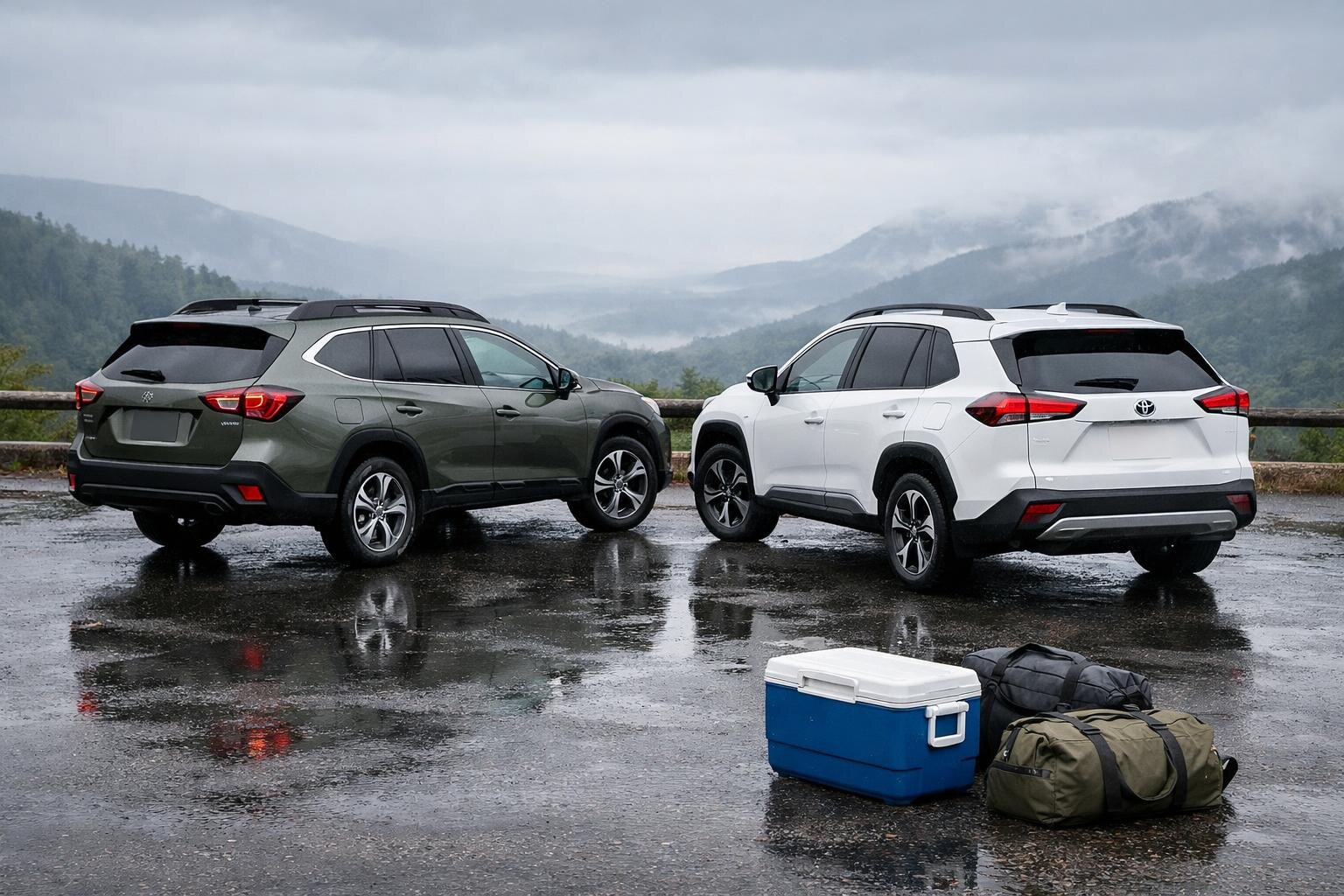
This is one of those dealer-lot reality checks that actually matters: bring the stroller. Bring the cooler. Pop the rear hatch and see if anything about floor height or underfloor storage changes between trims you’re cross-shopping. If you’re choosing between a gas CR-V and a Hybrid TrailSport specifically because of weekend routines, that five-minute test can prevent months of mild frustration.
Driving feel: what tends to matter more than raw numbers
Without published performance specs to cite for 2026 here, I’m not going to play dyno-guessing games. But there are still real-world impressions worth discussing in a responsible way.
Steering and chassis behavior: In this segment, most compact crossovers prioritize calm responses over razor-edge feedback. For commuting and family duty that’s often exactly what you want; predictable turn-in and stable tracking on the highway beat “sporty” any day when you’re tired after work. If you come from performance cars or track-day culture, neither powertrain choice turns a CR-V into an autocross weapon. The smarter question is which one feels less busy during your daily loop.
Low-speed smoothness: Many hybrids feel especially relaxed in parking lots and stop-and-go traffic because electrification can soften drivetrain transitions at very low speed. That can translate into an easier time inching into tight spaces or creeping through school pickup lines. It’s not guaranteed across every system or calibration year-to-year; it’s just a common reason commuters like hybrids beyond fuel savings.
Road noise and ride comfort: Tire choice often matters as much as powertrain here. A TrailSport-branded trim might wear more all-terrain-leaning rubber depending on how it’s equipped (verify on your exact vehicle), which can change noise levels on coarse pavement. If your commute includes long highway stretches, pay attention during a test drive to wind noise around mirrors and how the suspension deals with sharp expansion joints.
Tech and usability: pick based on what you’ll touch every day
This decision usually comes down to trim strategy more than gas vs hybrid alone. Honda confirms a range of CR-V trims including hybrid variants for 2026 on its model page; what varies by trim are features that affect daily satisfaction: seat materials, driver-assist content bundles, wheel size (which affects ride), and convenience features you either love or never use.
A practical way to shop it:
If you want maximum value, start with whichever trim gives you the safety tech and comfort features you consider non-negotiable (heated seats for cold climates are a classic example), then decide whether paying extra for hybrid makes sense given your mileage.
If you’re drawn to TrailSport Hybrid, be honest about why. If it’s mostly aesthetics plus winter confidence plus occasional dirt-road duty, great. If you expect it to replace a purpose-built off-road SUV experience, that’s where expectations can get out over their skis.
Fuel economy: what we can say now (and what we can’t)
Honda positions the CR-V Hybrid as delivering better fuel economy than non-hybrid versions for 2026 on its official page (link above). That part is clear enough to treat as verified intent from the manufacturer.
What I cannot responsibly do here is quote exact mpg figures because EPA fuel economy ratings for every specific 2026 configuration are not provided in the evidence package. If your buying decision hinges on payback time, wait until EPA numbers are published for the exact trim and drivetrain you want (including AWD vs FWD if both are offered), then run your own annual fuel-cost comparison using your real commute miles.
Towing: don’t assume either one is your weekend tow rig
Towing is where compact SUV shoppers often make expensive assumptions quickly. The evidence provided here does not include official towing capacity figures for either 2026 CR-V gas or hybrid trims. Because towing ratings can vary by drivetrain and equipment level (and because manufacturers sometimes set different limits for hybrids), this is not a place to wing it.
If towing matters even occasionally (small trailer, jet ski, lightweight camper), check Honda’s published specs or your dealer’s official documentation for your exact VIN build before signing anything. In this class of vehicle, staying inside ratings matters not just for safety but also for heat management and long-term wear.
Ownership factors: price pressure, maintenance reality, resale vibe
Price: The usual market pattern is that hybrids cost more upfront than comparable gas trims. That may or may not be offset by fuel savings depending on how much you drive and what fuel costs look like where you live. Since official 2026 pricing details are not included in the provided sources, treat any dealer quote as local reality rather than gospel and compare like-for-like equipment when cross-shopping gas vs hybrid.
Maintenance: A gas-only model keeps things straightforward conceptually: engine maintenance items are familiar to every shop in America. Hybrids add electrical components and high-voltage systems; they’re designed for longevity but they change who some owners feel comfortable letting work on their car outside warranty. The flip side is that hybrids often reduce brake wear in typical commuting due to regenerative braking behavior (general hybrid principle), though actual results depend heavily on driving style and calibration.
Resale: Compact SUVs with strong reputations tend to hold value well over time compared with more niche vehicles; within that world, hybrids have been gaining demand as buyers chase efficiency without going full EV. Still, resale values swing with fuel prices and supply cycles; without current market data tied directly to 2026 CR-V trims from authoritative sources in this package, it’s best framed as “likely favorable,” not guaranteed.
Competitors (and why this comparison still matters)
The CR-V lives in one of the busiest arenas in America: compact crossovers where shoppers bounce between multiple brands in a single afternoon. Even without naming specific rivals with specs we cannot cite here, the competitive reality is simple: most competitors offer both conventional gas models and some form of electrified option now.
The reason this gas vs hybrid decision matters inside one model line is that it lets you keep everything else constant: seating position, basic size class, brand preferences, dealer network comfort level. You’re mainly choosing how you want to pay for your miles: more upfront cost with lower fuel use potential (hybrid), or lower upfront cost with potentially higher fuel spend over time (gas).
What not to overpay for (real talk)
Do not pay extra purely because “hybrid equals better” if your driving doesn’t match it. If your week is mostly steady highway cruising with light traffic and low annual mileage, a gas CR-V might be perfectly rational once prices are compared apples-to-apples.
Do not buy TrailSport Hybrid expecting it to be a rock crawler. Buy it because you like the vibe and want something aimed at rough-weather confidence plus light adventure roads while keeping hybrid efficiency goals intact.
Do not assume AWD is mandatory everywhere. If you live somewhere flat with mild weather year-round and good road maintenance, FWD with good tires can be plenty for many drivers. But if winter mornings regularly include unplowed side streets or steep driveways, AWD availability becomes less of a luxury feature and more of a stress reducer.
The verdict by commute type
Choose a 2026 CR-V Gas if your priority list starts with lower upfront cost (assuming typical market pricing), simple ownership vibes, lots of highway miles at steady speed, or if you just want fewer moving pieces conceptually while still getting AWD availability depending on trim.
Choose a 2026 CR-V Hybrid if your life is city miles, short trips, frequent stop-and-go traffic, or if fuel economy sits near the top of your decision tree. Honda itself frames the Hybrid as its efficiency-forward option for 2026.
Choose a 2026 CR-V Hybrid TrailSport if you want that outdoorsy positioning plus hybrid intent and AWD availability depending on configuration; just keep expectations grounded about off-road intensity.
If you take nothing else from this comparison: wait for official EPA numbers and final spec sheets before making claims about mpg or towing between these two powertrains. Then test drive both back-to-back on roads that match your commute because that’s where little things like low-speed smoothness and ride comfort show up fast.
Keep the conversation going
What would you ask next?
Read the discussion or share your experience.