 DriveSense
Before the light on the dash
There was a time when “checking your tires” meant something you did only when a road trip was coming up, or when the steering started to feel a little vague, or when you caught that faint, uneven thump-thump at neighborhood speeds. Tire pressure lived in the background of driving life. You knew it mattered, in the same way you knew it mattered to drink water and stretch your legs on a long day. But most of us did not treat it like a daily number.
That older routine was built around a simple tool and a small habit: keep a tire gauge somewhere you can find it, and check pressure regularly. The most common advice still sounds almost quaint in an era of screens and sensors: check your tire pressure at least once a month. That guidance remains part of NHTSA’s tire-safety messaging today, right alongside reminders about tread depth and tire aging. (NHTSA groups all of it under its TireWise-style consumer guidance.)
Back then, if you were diligent, you checked pressures “cold,” before driving much, because heat builds in the tire as it rolls and pressure rises. If you were like most people, you checked when it was convenient. Gas-station air hoses were sticky, the built-in gauges were questionable, and the whole process felt like one more errand.
Then the dashboard started talking back.
The dashboard warning era: TPMS arrives and changes the mood
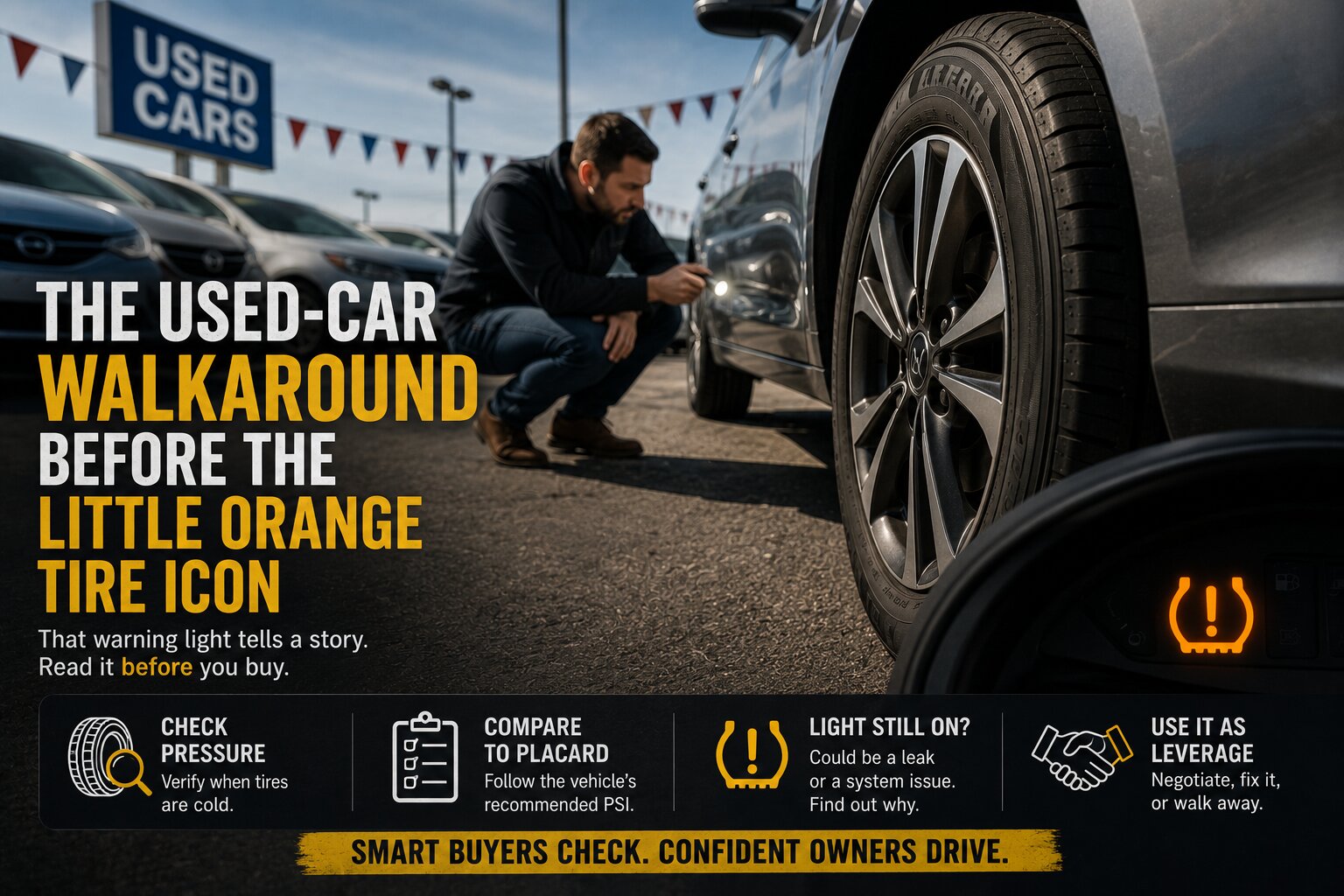
TPMS, short for tire-pressure monitoring system, took something that had been optional and made it visible. You did not have to be “a car person” to get the message. A little icon lights up, and suddenly tire pressure feels urgent in a way it never did when it lived on a sidewall spec and a door-jamb label.
NHTSA’s consumer-facing tire safety information is clear about what TPMS does for normal drivers: it warns you when one or more tires are significantly underinflated. It is not a vague “something might be wrong” suggestion. It is specifically about low pressure, because low pressure is common, easy to miss from the driver’s seat, and tied to safety and tire health.
The cultural shift was immediate for anyone who has owned cars across that transition. In older cars, you might notice underinflation only after it had already changed how the car behaved. With TPMS, you can get a warning before the vehicle feels dramatically different in typical commuting.
But there is also a psychological twist: once drivers got used to being warned, many stopped thinking about tire pressure until the car told them to think about it.
What TPMS actually tells you (and what it does not)
The cleanest way to understand TPMS is to treat it like a smoke alarm for one specific problem. It is there to alert you to significant underinflation. That is valuable because tires can lose air gradually over time, and because seasonal temperature swings can move pressures around enough that a marginally inflated tire becomes an underinflated tire without any puncture drama.
NHTSA’s tire-safety guidance also helps set expectations: TPMS is not a substitute for maintenance. The system is designed to warn; it is not designed to replace checking pressures with an accurate gauge on a regular schedule.
This matters because drivers often assume the warning lamp equals precision. In reality, even without getting into brand-specific details or sensor types, there are basic limitations that show up in everyday use:
First, TPMS is not telling you that your tires are perfect; it is telling you that at least one tire has dropped low enough to trigger the warning logic. Many drivers learn this the hard way in winter: no light does not necessarily mean “set exactly to spec,” especially if one tire is just slightly down but not far enough down to trip the system.
Second, TPMS cannot cover every kind of tire problem. A tire can be damaged in ways that are not simply “low air.” NHTSA’s broader tire-safety messaging includes tread condition and aging for a reason; those are separate issues from inflation level.
Third, there is timing. Pressure changes with temperature, and pressure changes with driving because tires warm up as they flex. That is why “cold-pressure accuracy” still matters as a concept even after TPMS became normal equipment in many vehicles. If you want your tires set correctly relative to the vehicle maker’s recommended cold pressure (the number meant for tires that have not been driven much), you still need to check them cold with a gauge rather than chasing whatever number you imagine after an hour on the highway.
The warning lamp behavior: why that little icon creates big reactions
If you have ever seen the TPMS lamp come on right as you merge into fast traffic, you know how quickly your brain goes from “music and commute” to “what did I hit?” Even though TPMS is about underinflation rather than instant catastrophe, the warning light feels like an emergency because it appears in the same visual language as other dashboard warnings.
NHTSA’s tire-safety resources include TPMS as part of consumer education precisely because drivers need help interpreting what they see on the dash. The key takeaway is simple: treat the light as a prompt to check pressures promptly with a gauge and inflate as needed. Do not ignore it for weeks just because the car still seems to drive fine.
At the same time, do not treat TPMS as proof that everything else about your tires is fine. A dashboard lamp cannot tell you if your tread is worn down or if your tires are aging out. Those require eyes on rubber.
How habits changed: from monthly ritual to “I’ll deal with it when it dings”
This is where TPMS quietly rewired driver behavior.
Before TPMS became common knowledge, responsible owners tended to have some kind of recurring pattern: check pressures every so often (often monthly), especially before long trips or big weather changes. It was preventative maintenance in its purest form: quick, boring, cheap.
After TPMS entered everyday life, many people shifted into an alert-driven routine. If no light appears, no action happens. That can feel efficient in day-to-day commuting because modern life already has too many reminders competing for attention.
The downside is that alert-driven maintenance encourages late action rather than early action. You might be driving around with pressures lower than ideal for weeks without ever seeing a warning lamp, depending on how far down they drift relative to whatever threshold triggers an alert in your vehicle’s system design.
And there is another subtle effect: people began trusting “the car” more than their own senses or tools. A generation grew up with vehicles that monitor themselves constantly. When everything from oil-life reminders to lane-assist graphics shows up on screens, checking air with a small metal gauge can feel almost old-fashioned.
Why drivers still need a gauge
The reader question gets right to it: if cars can warn us about low pressure now, why keep an old-school gauge?
NHTSA’s consumer guidance answers this indirectly through its continued emphasis on regular manual checks: TPMS is helpful, but it does not replace checking your tire pressure at least once a month. The reason is practical rather than nostalgic.
A gauge lets you measure each tire against the recommended cold inflation pressure for your specific vehicle setup (the reference point drivers are meant to use). It also lets you catch small differences between tires before they become large differences that affect ride feel or stability in typical driving.
A gauge also keeps you honest about timing and temperature. If you check early in the morning before driving much, you are closer to true cold pressure than if you check right after highway speeds when heat has built up inside the carcass of the tire.
And then there is routine itself. A quick monthly check forces you into contact with your tires long enough to notice other things: uneven wear patterns starting up, embedded debris, sidewall scuffs from an ill-timed curb kiss. Those are not things TPMS exists to detect.
A modern tire-pressure routine that fits real life
If TPMS taught drivers anything positive beyond safety awareness, it taught us that tires are dynamic. Pressure changes over time; it changes with weather; it changes enough that ignoring it can eventually trigger an unmistakable warning.
The best modern routine borrows from both eras:
Use TPMS as an early nudge, not as your only source of truth. If the lamp comes on, take it seriously and check pressures soon with a gauge rather than guessing which corner looks low.
Keep the monthly habit anyway. NHTSA still promotes regular checks (commonly framed as monthly) because slow leaks and seasonal shifts do not always announce themselves immediately through handling or through warning behavior.
Check cold when you can. If your goal is accuracy relative to recommended cold pressure settings, check before driving much that day. It keeps your numbers consistent and helps avoid overcorrecting based on warmed-up readings.
Let pressure checks lead into broader tire awareness. While you are there with the gauge, look at tread condition and give each tire a quick once-over for obvious damage.
This ties neatly into other overlooked maintenance habits too. For example, if your car has a spare (or even if it does not), building routines around tires often nudges people into related checks like spare tire age checks. Tires age whether they rack up miles or sit quietly out of sight.
The bigger picture: safety tech that changed our relationship with rubber
TPMS did not magically make tires carefree. NHTSA’s own tire-safety materials keep repeating fundamentals because fundamentals still matter: inflation pressure matters; tread matters; aging matters; driver response matters when something goes wrong.
But TPMS did change culture in one important way: it made invisible maintenance visible. It turned air into information and turned information into behavior even if that behavior sometimes looks like procrastination until a light appears.
If you want the best of both worlds, let TPMS do what it does best: warn you when underinflation becomes significant enough to deserve immediate attention. Then bring back one small old habit that never really deserved to disappear: checking pressures yourself regularly with a gauge.
If you want one authoritative place to start
NHTSA keeps its consumer tire-safety guidance in one public place that covers pressure checks, tread awareness, tire aging concepts, and how TPMS fits into safe driving expectations: https://www.nhtsa.gov/vehicle-safety/tires.
Keep the conversation going
What would you ask next?
Read the discussion or share your experience.