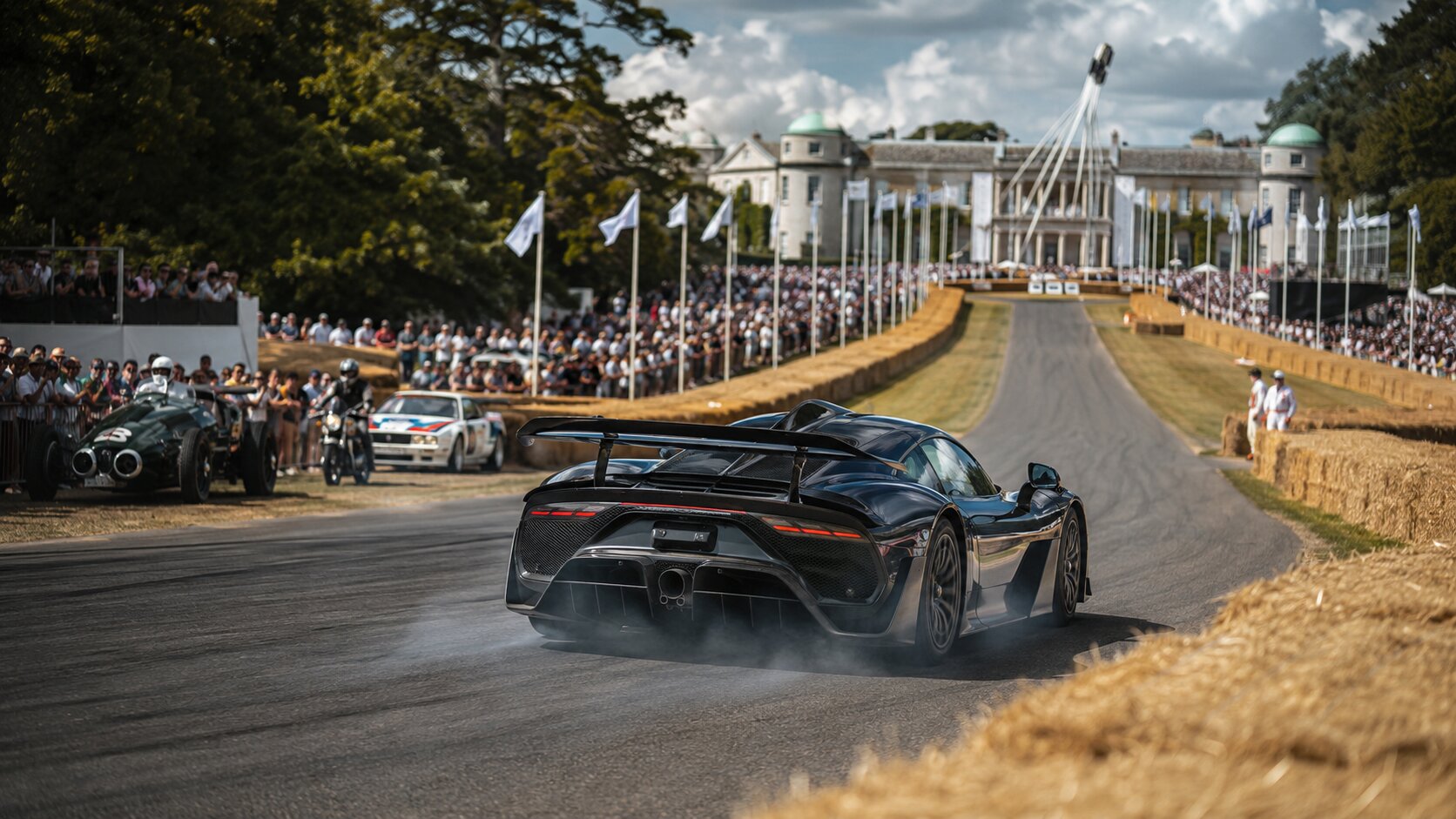
Goodwood in one paragraph (and why Americans should care)
The Goodwood Festival of Speed is a four day motorsport and car culture event held on the Goodwood Estate in West Sussex, England. If you have never watched it, picture a living highlight reel: brand new road cars and prototypes doing short, loud demonstration runs; historic race cars that usually live behind ropes; motorcycles; rally cars; and the kind of one off engineering projects that do not fit neatly into “race” or “street.” The centerpiece is a timed hillclimb up the estate’s driveway course, with spectators lining the route like it is a neighborhood parade for people who think tire warmup is a love language.
One quick distinction that clears up a lot of confusion: Goodwood also hosts the Goodwood Revival, which is a separate event with a strict period dress vibe and historic racing focused on earlier eras. Festival of Speed is the modern, mixed era, mixed category celebration where an EV hypercar can run right after a 1960s Formula 1 car.
Hillclimb 101: what you’re actually watching
The hillclimb is the organizing principle for almost everything you see on video. The course is about 1.16 miles (1.86 km) long and climbs from the start line near Goodwood House to the finish at the top of the hill. It is narrow by racetrack standards, bordered by hay bales and close set barriers, with quick direction changes that punish overconfidence. Drivers run one at a time, so it feels more like a sprint than a wheel to wheel race.
Across the weekend, cars run in batches called run groups. A run might be a full timed attempt or a demonstration pass depending on the group and the moment in the schedule. The key thing for first timers: not every car you see is trying to set an overall record every time it launches. Some are shakedown runs, some are publicity runs with a bit of showmanship, and some are serious attempts where you can hear the driver treat every inch of pavement like it costs money.
The format culminates in what Goodwood calls the Timed Shootout, where the quickest drivers and cars from earlier timed sessions get a final chance to set a headline time. If you only have bandwidth for one chunk of viewing, this is usually it because everyone is finally playing the same game at once.
The viewing menu: 10 things worth watching for
1) New car debuts that are not just static reveals. Automakers use Festival of Speed as a global stage because they can put a new model in motion immediately. Seeing a car accelerate hard, brake hard, and change direction tells you more than studio lighting ever will. Not every debut is confirmed until close to the event, so if you’re tracking announcements, stick to OEM press releases and Goodwood’s own news posts rather than rumor accounts.
2) Prototypes and “not for sale” engineering flexes. You will often see camouflaged development cars or limited run specials doing quick runs. For Americans used to auto show turntables, this is refreshing because you can watch cooling systems work, tires fight for grip, and drivers manage traction in real time.
3) The contrast between modern aero grip and old school bravery. A contemporary GT3 style race car looks planted and clinical through fast bends. A classic single seater can look busy and alive, even at lower speeds, because suspension travel, tire construction, and downforce are from another century. It’s not about which is “better.” It’s about understanding what progress looks like when it has to fit inside physics.
4) Road cars being driven like road cars rarely get driven. Even when a run is not an all out attempt, you’ll see supercars and performance sedans launch harder than most owners would ever risk on their commute. That matters if you are cross shopping something like an M car versus an AMG versus an RS model in the real world. You get a glimpse of how those powertrains deliver torque off the line and how stable they look when they transition into braking.
5) Electric performance without the soundtrack crutch. EVs at Goodwood are interesting because there is nowhere to hide. Without engine noise as drama, you notice things like immediate torque delivery, how quickly speed builds on a short course, and whether the chassis looks calm or overwhelmed when it has to change direction quickly. You also notice tire noise more than usual, which is oddly helpful if you care about what daily driving refinement might feel like.
6) Motorcycles doing motorcycle things. Bikes at Goodwood can look almost unreal on such a tight course because acceleration happens in an instant and body position becomes part of aerodynamics. Even if you are not a rider, it’s worth watching because it recalibrates your sense of speed.
7) Rally cars that look like they want loose surfaces anyway. Rally machinery on tarmac has its own flavor: quick steering corrections, aggressive weight transfer, and that slightly sideways attitude that seems baked into the DNA even when grip is high. For fans who grew up on Subaru WRXs and Evo lore in America, this is catnip.
8) Celebrity drivers who can actually drive. Goodwood attracts champions from F1, endurance racing, touring cars, rallying, MotoGP, and more. The fun part is not name spotting. It’s seeing how cleanly top level drivers adapt to a short course with no room for error.
9) The paddocks as moving museums. Festival of Speed paddocks are unusually open by major event standards (exact access rules vary by ticket type and year). That means you can often get close enough to see details that matter: brake ducting complexity on modern race cars, tire sizes that look cartoonish in person, or how compact some hybrid systems are when packaged for racing or high performance road use.
10) The “how did they even bring this here?” factor. Part of Goodwood’s charm is its mix. You might see an ultra rare classic followed by something brand new that will be on U.S. dealer lots eventually (depending on market availability). The whiplash keeps your attention better than any single series race weekend.
Why it matters to road cars (even if you never go)
Festival of Speed matters because it sits at the intersection of engineering credibility and marketing theater. Automakers do not just show up to pose for photos. They show up because enthusiasts pay attention to what happens when a car has to perform outside a controlled test cycle or glossy promo film.
Public reaction becomes product feedback. When an automaker debuts something radical in design or technology at Goodwood, they get immediate sentiment from hardcore fans who know what they’re looking at. That does not mean internet comments rewrite vehicle programs overnight, but perception shapes how brands message their tech and sometimes how they prioritize future trims or special editions.
The hillclimb highlights usable performance traits. A short sprint course rewards traction calibration, throttle mapping, brake confidence, cooling robustness for repeated runs, and chassis balance at medium speeds as much as it rewards peak horsepower. Those traits map closely to what makes a fast road car feel easy to live with on real roads: predictable torque delivery in traffic, stable braking on freeway off ramps, and consistent response when conditions change.
It’s where motorsport tech gets translated into buyer friendly language. Hybrid systems, active aerodynamics, lightweight materials like carbon fiber composites (and sometimes more affordable aluminum intensive structures), advanced dampers, torque vectoring strategies: these ideas often arrive in racing first or in halo cars first. Goodwood provides a stage where brands can demonstrate them without asking customers to understand lap times at Spa or Nürburgring lore.
If you want to attend: practical basics for U.S. travelers
If you’re coming from the U.S., treat it like planning for any major destination event plus one very British twist: rural roads feeding into an estate setting can mean traffic pinch points at peak arrival times. Build slack into your schedule.
Tickets: Buy through Goodwood’s official site (and verify availability and terms at publish time). Ticket types change year to year; some packages include grandstand access or other perks.
Getting there: Most international travelers route through London airports (Heathrow or Gatwick are common options), then take train plus taxi or rent a car depending on comfort with left side driving. If you rent a car, remember many local roads are narrower than U.S. two lanes and parking logistics depend on your ticketing instructions.
What to bring: Comfortable walking shoes are non negotiable; you will rack up miles without noticing because there is always something else firing up in another paddock. Weather can swing quickly in southern England; pack layers and rain protection even if forecasts look friendly early in the week.
Where to watch: Rather than chasing one “secret best spot,” think in zones: start line for launches and sound; mid course corners for seeing balance under braking and turn in; top section for watching commitment as speeds build toward the finish. Grandstands offer consistency; roaming offers variety but costs time between runs.
If you’re watching from home: how to follow without getting lost
The easiest way to enjoy Goodwood remotely is to accept that it’s more festival than championship. Pick your priorities each day: maybe one session focused on modern performance cars, another on historic machinery, then circle back for Shootout coverage when it arrives on the schedule.
Where to watch legally: Goodwood typically provides official livestream coverage through its own channels (often via its website and YouTube). Availability can vary by region and by year; verify links at publish time using Goodwood’s official Festival of Speed pages rather than rehosted streams.
Schedules: Start with Goodwood’s published timetable (again via official sources). Time zone conversion trips up Americans every year; West Sussex runs on UK time (British Summer Time during summer). If you’re on U.S. Eastern Time during daylight saving season overlap, UK events often land in your morning hours. Pacific viewers should expect early starts if watching live.
A simple viewing strategy: Watch opening day coverage for debuts and first runs when surprises happen; then save time for the Timed Shootout day when stakes are clearest. Fill gaps with highlight clips because there will be more content than any normal human can consume across four days.
A few terms that make everything click
Hillclimb: A point to point sprint course run one vehicle at a time against the clock (or as demonstration).
Run group: A scheduled batch of vehicles grouped by theme or category that take turns running up the hill.
(Timed) Shootout: The headline timed finale where top times compete for overall bragging rights within that year’s event format.
Paddock: The staging area where cars park between runs; at Goodwood this often functions like an interactive museum depending on access rules.
The American takeaway
If your reference points are Pebble Beach concours lawns or U.S. track days where everything is either tightly regulated or strictly competitive, Goodwood feels different in the best way. It’s performance as public theater backed by real machinery doing real work up a short course that exposes strengths and weaknesses quickly. And because automakers use it as both celebration and proving ground for attention spans, what happens there tends to echo into what shows up later in production specs sheets, option packages, special editions, and even how brands talk about their tech when those cars finally land stateside.
If you keep hearing about Goodwood and wonder what’s happening: it’s basically the world’s most watchable reminder that road cars still borrow their personality from motorsport culture, even when most of their lives will be spent commuting quietly with coffee in the cupholder.
0 comments
Join the discussion around this article.
Please login to comment.