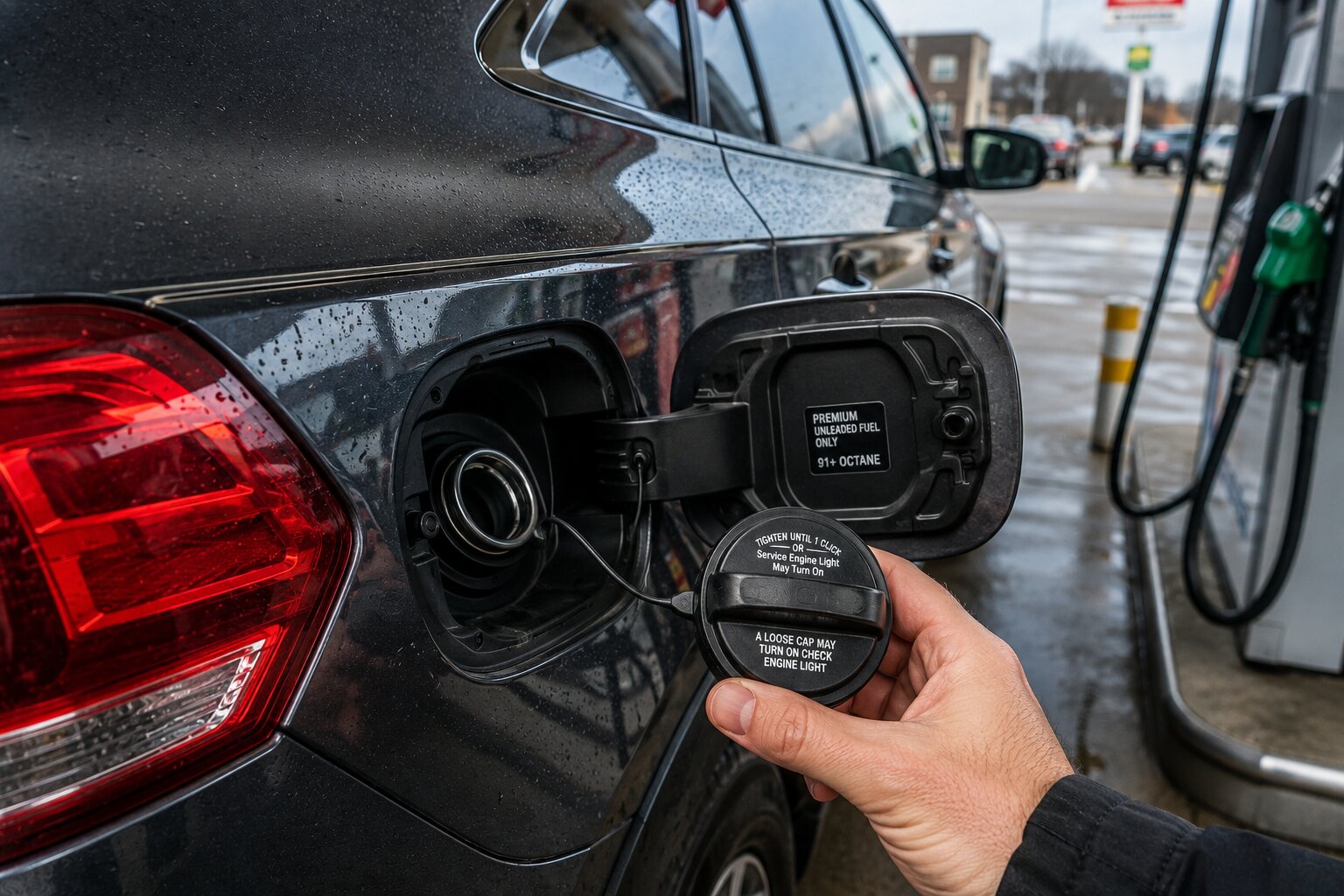
Why a gas smell right after filling up gets my attention
I am Brian O’Connor, based in Chicago, and I came up through automotive design engineering. I like performance cars and trucks as much as the next enthusiast, but I get very unromantic about fuel smells. If you smell gasoline after filling up, your car is telling you something. Sometimes it is harmless and embarrassingly simple (a loose cap). Other times it is a real leak or an evaporative emissions (EVAP) fault that can put raw fuel vapor where it does not belong.
A quick reality check: modern fuel systems are sealed. Your tank vents through a charcoal canister and valves that store and meter vapors back into the engine to be burned. So if you are getting a noticeable gas odor after a fill-up, something in that sealed system is not sealing, or liquid fuel is escaping.
This guide sticks to widely accepted, mainstream info across modern gasoline vehicles. I am not going to suggest bypassing emissions hardware or “venting to atmosphere.” That is illegal in many places, it can trigger check engine lights, and it is a fire risk.
First: separate “outside smell” from “inside smell”
Before you assume the car is broken, figure out where the odor lives.
If it smells outside only, especially near the rear quarter panel where the filler door is, you might be dealing with a cap issue, a splash from overfilling, or a small EVAP leak near the tank.
If it smells inside the cabin, take that more seriously. Vapors can enter through body vents, a leaky trunk seal area, or from the engine bay through the HVAC intake at the base of the windshield. A strong cabin smell can also point to leaks forward of the firewall on some vehicles (fuel rail lines, injector seals), though those usually show up regardless of fill-up.
The most common causes after a fill-up
1) Loose gas cap (or a cap that is not sealing anymore)
This is still the classic. Many vehicles use a ratcheting cap designed to click when tight enough. If it is not clicked down, vapors can escape and your EVAP monitor may eventually flag a fault and turn on the check engine light (often after a few drive cycles).
Even when it is tight, caps age. The rubber seal can crack or flatten. In Chicago winters, road salt grime around the filler neck can keep a good cap from sealing cleanly.
Safe check: With the engine off, tighten until it clicks. Wipe dirt off the sealing surface if you can do it cleanly without dropping debris into the filler neck.
2) Capless fuel systems that do not fully close
Many late-model cars use capless fillers with internal flaps. They are convenient until they are not. If the flap does not close fully because of debris or damage (or sometimes an incorrectly inserted nozzle), vapors can seep out after fueling.
Safe check: Look for obvious debris around the filler opening. Do not spray lubricants or shove tools into the mechanism. If it looks damaged or does not spring back normally, that is shop territory.
3) Topping off after the pump clicks
If you keep squeezing in fuel after the nozzle clicks off, you can push liquid fuel into parts of the EVAP system that are meant to handle vapor, not liquid. The charcoal canister is designed to store vapors; saturating it with liquid fuel can cause persistent odors and drivability issues on some vehicles (hard starting after refueling is a common complaint when purge control gets upset).
Practical habit: When it clicks off, stop. You do not gain anything meaningful besides potential headaches.
4) A small spill that lingers longer than you think
If fuel splashes onto paint or down behind the filler pocket, you may smell it for a while, especially on warm days when evaporation ramps up. This tends to be strongest right after fueling and fades as you drive.
Safe check: Look for wetness around the filler area and on the ground under that corner of the car. If you see liquid dripping after you leave the station, treat it like a real leak until proven otherwise.
5) EVAP leaks near the tank: hoses, clamps, seals
The EVAP system includes vapor lines running from tank to charcoal canister and purge valve plumbing up front on many designs. A cracked hose end, brittle plastic line, loose clamp, or failing seal at the pump module can leak vapor most noticeably when the tank is full (more vapor pressure headspace behavior changes as levels change). That timing is why people notice odors right after filling up.
This kind of leak often comes with an EVAP diagnostic trouble code once monitors run. The exact code varies by make and model; what matters for you as an owner is that an EVAP code plus fuel odor should not be ignored.
6) Leaks at or near the fuel pump module seal
The electric fuel pump typically lives inside the tank on modern cars. The module seals to the tank with an O-ring or gasket. If that seal seeps, you might get odor after fill-up and sometimes dampness on top of the tank area (not always visible without lifting the vehicle). This is not something I recommend poking at in your driveway because access often requires lowering the tank or working under a rear seat service panel depending on vehicle design.
7) Fuel filler neck issues (rust in older vehicles, cracked hoses in some trucks and SUVs)
In rust-belt states like Illinois, older vehicles can develop corrosion around metal filler necks or clamps where rubber sections join metal tubing. Some trucks and SUVs use longer filler neck routing that flexes with body movement; age and vibration can crack rubber couplers.
Clue: Odor near the filler area plus visible wetness around clamps or along the neck path after filling.
8) Purge valve problems that show up right after refueling
The purge valve controls when stored vapors get pulled from the charcoal canister into the intake manifold to be burned. If it sticks open on some vehicles, it can cause rough idle or hard starting right after refueling because too much vapor gets pulled in at once. You may also get odor if vapor handling is no longer controlled correctly.
This one usually pairs with symptoms beyond smell: stumble at idle, extended cranking after filling up, or a check engine light.
What’s normal vs what’s not
A faint whiff outside for a minute at a gas station happens. You are standing next to open pumps handling volatile fuel.
Less normal: You drive away and ten minutes later your garage smells like fuel. Or you park at work and catch strong gasoline odor walking past your rear bumper hours later. That points toward ongoing vapor escape or liquid seepage.
Not normal at all: A strong cabin smell while driving with windows up. That deserves immediate attention because fumes plus an ignition source is a bad combination even if actual fire risk remains low in most cases.
A quick safety checklist you can do without tools
I like checks that keep hands clean and avoid turning owners into amateur emissions technicians.
1) Look under the car before you leave. After fueling, glance under the rear half of the vehicle for fresh drips. Gasoline looks like clear wetness and evaporates fast compared with oil. If there is active dripping, do not drive away if you can avoid it.
2) Sniff test around zones. Start outside: filler door area first, then near rear wheel wells, then front of car near hood gap if needed. This helps narrow whether it is filler related or engine bay related.
3) Check your cap behavior. Tighten until it clicks (if equipped). If your vehicle uses capless fueling and has an included funnel tool for emergency refueling from a gas can (common on many cars), confirm you did not leave anything interfering with closure.
4) Pay attention to driveability right after refuel. Hard start or rough idle right after filling often points toward EVAP purge control issues rather than an external liquid leak.
5) Do not “test” leaks with open flames or improvised smoke sources. Shops use regulated smoke machines designed for EVAP diagnostics; backyard methods are risky and unnecessary.
Red flags: when to stop driving
If any of these show up, I would treat it as pull-over-and-call-for-help territory rather than “I will deal with it this weekend.”
You see liquid fuel dripping, especially near hot exhaust components or anywhere forward of the tank area.
The smell is strong inside the cabin, particularly if it worsens with HVAC on fresh air (that suggests fumes entering near HVAC intake paths).
You feel lightheaded or get headaches. That is your body voting no even if you cannot see anything leaking.
The car runs poorly right after refueling, such as stalling in traffic or repeated hard starts combined with strong odor. Get somewhere safe and arrange service; stalling in Chicago traffic is its own safety problem even before we talk about vapors.
If your check engine light comes on afterward
A loose cap is one of the most common reasons owners see an EVAP-related check engine light soon after fueling. Tightening properly may resolve it after several trips once monitors rerun (exact timing varies by vehicle).
If your cap was already tight and you still have odor plus a light, schedule diagnosis. A shop will typically scan codes and may run an EVAP smoke test to find leaks in hoses, canister plumbing, valves, or seals. That is legitimate diagnostics using proper equipment; it is not emissions tampering.
A few words about garages, hot weather, and why full tanks seem worse
You will often notice this problem more when:
The tank is full. There is less air space above liquid fuel in some conditions and vapor management changes as temperature swings happen; any marginal seal tends to show itself more when everything is saturated with fumes right after fill-up.
The car sits in a warm garage. Heat increases evaporation rate; vapors expand; smells concentrate in enclosed spaces. People blame “bad gas” when really they just trapped fumes indoors overnight.
You park nose-up on an incline. Depending on tank shape and vent routing (varies by model), fuel slosh can bring liquid closer to vent lines right after fill-up; if there is any weakness in seals or hoses higher up on one side of tank routing, odor might spike briefly.
What I would tell a friend at a Chicago gas station
If you texted me from a station saying “my car reeks like gas,” I would keep it simple:
Tighten your cap until it clicks (or confirm capless flap looks normal). Do not top off. Look under the car for drips before pulling out. Drive with windows cracked for a minute if needed so you are not sitting in fumes while you evaluate what’s going on.
If there are no drips and smell fades quickly outside only, monitor it over your next couple drives and check again after your next fill-up. If odor persists for days, shows up inside strongly, or pairs with hard starts or a check engine light, book service soon rather than chasing guesses online.
How shops typically diagnose this (and what to ask for)
You do not need to speak fluent OBD-II to advocate for yourself at the counter. Here are reasonable requests:
Ask them to scan codes first, even if your light turned off. Many codes store as pending history codes that still help diagnosis.
If they suspect EVAP leaks, ask whether they plan an EVAP smoke test using proper equipment. This helps pinpoint leaks at hoses, purge valve connections, canister cracks, vent valve seals, pump module gaskets, or filler neck areas depending on layout.
If there was liquid dripping, ask them to inspect filler neck connections and tank area for wetness first before chasing purely electronic faults.
A note for truck and performance-car folks
I spend plenty of time around enthusiast vehicles where owners modify intakes, tunes, exhausts, sometimes even swap tanks in race builds. On street-driven cars in emissions-regulated areas (which includes Illinois), keep EVAP hardware intact unless you have very specific legal allowances for off-road-only use where applicable. Besides legality, deleting EVAP equipment often creates persistent odors that make daily driving miserable even if power gains are nonexistent (and they usually are).
The bottom line: do not normalize gasoline smell
A modern car should not routinely smell like raw fuel after every fill-up. Sometimes you get lucky and it really is just a cap that did not click down all the way. Other times it is an EVAP leak waiting to become an inspection failure or an actual liquid leak that deserves immediate attention.
If you take away one habit change: stop topping off once the pump clicks off. It costs nothing and avoids one of the most common self-inflicted EVAP problems I see people deal with later at inspection time.
0 comments
Join the discussion around this article.
Please login to comment.