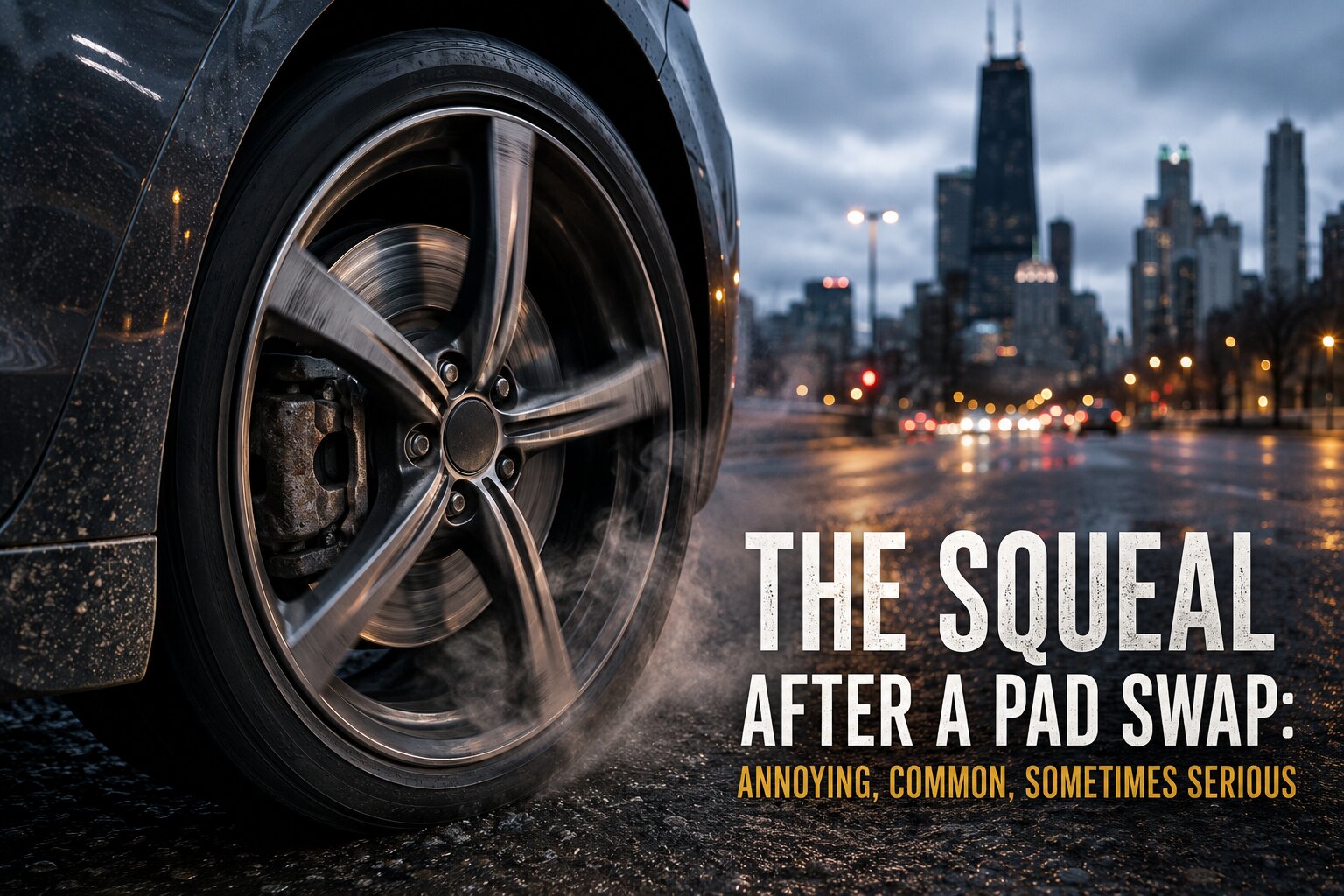
The squeal after a pad swap: annoying, common, sometimes serious
I’m Brian O’Connor, based in Chicago. I come at brake noise with an engineer’s bias: friction systems are messy in the real world. Pads and rotors are designed to convert speed into heat, and that heat, pressure, and vibration can create sound. So yes, a squeal right after a pad swap can be “normal.” It can also be the first clue that something is wrong enough to shorten pad life, chew up rotors, or in the worst cases reduce braking performance.
This is a symptom-led guide. Think of it like triage: cold squeal vs constant squeal, light-brake chirp vs full-on banshee. I’ll stick to safe checks you can do without taking anything apart, plus what to ask a shop if the noise persists.
Verified basics: what changed when you swapped pads
Widely accepted brake facts first, because they explain most post-service squeals:
Brake squeal is vibration. Most high-pitched squeal comes from pad and rotor vibrations in the audible range. The pad can “stick-slip” against the rotor face, especially at light pedal pressures.
New pads need bedding (burnishing). Many manufacturers recommend a bedding procedure so an even transfer layer of friction material forms on the rotor. If that layer is uneven, you can get noise and judder. Exact procedures vary by pad maker and vehicle, so I won’t give a one-size-fits-all step-by-step here. The key point is that some noise during the first heat cycles is not unusual.
Pad compounds behave differently. Semi-metallic pads often tolerate heat well but can be noisier than many ceramic formulations. Ceramics are often marketed as quieter and lower dust, but they are not silent on every car. (No universal guarantee.)
Hardware matters. Modern disc brakes rely on abutment clips, shims, and sometimes anti-rattle springs to control pad motion. Missing or mis-seated hardware is a classic cause of “it didn’t do that before” noises.
Caliper slides must move freely. Most everyday cars use floating calipers with slide pins. If a slide pin binds, one pad can drag or wear unevenly, which invites noise and heat.
Cold squeal: the most common “normal-ish” complaint
What it sounds like: A brief squeal or chirp on the first few stops of the day, especially in cool weather or after rain. It often fades once the brakes warm up.
Why it happens:
Moisture and surface rust. In Chicago, a damp night can leave a thin rust film on rotors. The first stop scrubs it off. That initial scrape can squeak.
Cold pad compound. Some pads are simply louder when cold. Performance-oriented street pads can be especially prone to this because their friction characteristics change with temperature.
Fresh surfaces bedding in. New pads meeting used rotors (or new rotors with machining marks) can make noise until the contact pattern stabilizes.
When cold squeal is probably fine:
If it’s brief, predictable (mostly first thing in the morning), and braking feel is normal with no steering shake or pulling, many drivers just live with it. You may also notice it more at very light pedal pressure in parking lots. That’s a common trigger for squeal because low clamp force lets vibration build.
When cold squeal deserves attention:
If it’s getting worse week to week instead of fading after a few days of driving, treat it as a clue. New pads should generally settle in, not escalate into constant noise.
The “light pedal” chirp at 5 to 15 mph
This one drives enthusiasts nuts because everything feels fine at speed, but creeping to a stop sign produces an embarrassing squeak that turns heads.
Common causes:
Pad vibration at low clamp load. Light braking is where many systems are most prone to audible vibration. A proper shim and clip setup helps damp it; some pad designs do better than others.
Glazing or uneven transfer layer. If pads get hot early in life without proper bedding, or if you do lots of gentle stops only (never warming them), surfaces can glaze and get noisy. This is not always dangerous by itself, but it can be a sign your friction surfaces are not happy.
Aggressive pads on commuter duty. Some high-friction street performance pads trade quiet operation for bite and fade resistance. That’s not “wrong,” it’s just a mismatch if you expected OEM-level silence on school-run duty cycles.
Safe check:
Pay attention to whether the noise changes when you brake slightly harder versus feathering the pedal. If firmer braking quiets it immediately and consistently, that points toward vibration behavior rather than something physically loose. Still worth mentioning to a shop if it’s new after service.
Constant squeal: where I start worrying
What it sounds like: Squeal that happens on most stops regardless of temperature, or squeal that persists even after several days of normal driving.
The big buckets of causes:
1) Hardware issues (most common after a pad swap). Missing shims, incorrectly installed anti-rattle clips, bent abutment hardware, or pads that don’t slide cleanly in their brackets can all create noise. Many vehicles use specific shim stacks or clip styles; reusing damaged hardware is asking for problems.
2) Rotor surface problems. A rotor that is heavily grooved, has hard spots from prior overheating, or has an uneven transfer layer can make new pads noisy. Some shops resurface rotors; others replace them; some manufacturers discourage machining below minimum thickness. What matters is staying within spec (minimum thickness and runout). If you don’t know whether your rotors were replaced or resurfaced during the job, ask.
3) Caliper slide or piston issues leading to drag. Dragging brakes create heat and noise. A sticking slide pin is common on older cars in rust-belt climates; boots tear and water gets in. A sticking caliper piston is less common but more serious.
4) Pad selection mismatch or low-quality friction material. Not all pads are created equal. Some budget pads are noisier; some premium pads still squeal on certain platforms because of resonance characteristics of that caliper and rotor combo. There isn’t one “best” pad for every car.
A grinding sound is not squeal (and it’s usually bad news)
Squeal is high-pitched; grinding is rough and crunchy. Grinding right after a pad swap is a red flag because something may be contacting metal-to-metal or debris may be trapped where it shouldn’t be.
If you hear grinding:
Treat it as urgent. Avoid hard driving and get it checked quickly. Grinding can damage rotors fast and can indicate incorrect assembly or severe drag conditions.
The red flags: when noise suggests an unsafe install
I’m careful about calling anything “unsafe” from afar, but these patterns deserve immediate attention from a qualified shop:
Squeal plus a soft pedal or longer stopping distances. Any change in pedal feel after brake work matters more than noise alone. A low or spongy pedal can indicate air in the hydraulic system or other issues unrelated to pad installation but still critical.
The car pulls left or right under braking. That suggests uneven brake torque side-to-side. Possible causes include contaminated pads/rotors (grease or brake fluid), stuck caliper hardware, or hose/caliper issues.
A burning smell or smoke near a wheel after normal driving. That points toward dragging brakes generating excess heat. In extreme cases you might also feel reduced power as the car fights itself rolling down the road.
A wheel is noticeably hotter than the others after a short drive (careful check). You can cautiously bring your hand near each wheel after driving without touching hot components. If one corner radiates significantly more heat than the rest, that corner may be dragging. Do not touch the rotor or wheel face directly if you suspect overheating; burns happen fast.
Squeal that continues when you are not pressing the brake pedal. Light scraping all the time suggests contact where there shouldn’t be any (dust shield bent into rotor path), a seized caliper/pad drag issue, or debris stuck between rotor and shield. Continuous contact creates heat; heat creates more problems.
Loud clunking plus noise changes with steering angle at low speed. Not classic brake squeal behavior. Could be loose hardware at the wheel end (lug nuts improperly torqued) or suspension issues coincidentally noticed after service. Either way: stop driving and verify torque at a shop immediately if you suspect lug nut problems.
The simple checks you can do safely (no disassembly)
I’m not going to walk you through pulling wheels or compressing calipers here. But there are still useful checks that keep you out of trouble:
1) Confirm what parts were installed. Look at your invoice: pad brand/part number matters; whether new rotors were installed matters; whether new hardware was included matters. If rotors were reused without resurfacing, ask if they were measured for thickness and runout per manufacturer specs (shops should have this capability).
2) Listen for patterns and write them down. Annoying as it sounds, good notes help a tech reproduce it: cold only vs hot only; first stop only; only when reversing; only light pedal; only turning left into your driveway; only after highway braking then stopping at an exit ramp.
3) Do a careful visual look through the wheel spokes if possible. You might spot obvious issues like deep rotor grooves, heavy scoring right away after service (not normal), or shiny witness marks on dust shields indicating rubbing. Visibility depends on wheel design; don’t force your hands into tight spaces near sharp edges or hot parts.
4) Check your parking brake behavior (if applicable). Many cars use rear calipers with integrated parking brake mechanisms; others use small drum shoes inside the rear rotor hat (“drum-in-hat”). If your noise appears only when using or releasing the parking brake, mention that specifically because diagnosis changes depending on system design. Exact layouts vary widely by model year and platform; without your exact vehicle info I cannot say which system you have.
The shop conversation: what to ask without telling them how to do their job
If you’re going back to the installer (which is usually smart while it’s fresh), here are practical questions that get you real answers:
“Did you replace all pad hardware and shims?” Many quality pad sets include new clips and sometimes shims; sometimes they’re sold separately as a hardware kit. Reusing rusty clips is one of those small shortcuts that often comes back as noise complaints in salt states like Illinois.
“Were the caliper slide pins cleaned and lubricated with appropriate brake grease?” Slides need correct high-temperature lubricant compatible with rubber boots. Over-greasing can attract grit; under-greasing can seize over time; wrong grease can swell boots. You’re not asking them to confess sins here; you’re confirming best practice happened.
“Did you check rotor thickness/runout and hub cleanliness?” Hub rust scale can prevent rotors from sitting flat, creating lateral runout which contributes to pulsation and sometimes noise complaints later on. Shops commonly use dial indicators for runout checks when diagnosing issues; whether they did it proactively varies by shop policy and time budget.
“Did you bed/burnish them according to pad manufacturer guidance?” Some shops do this automatically with controlled stops; some leave it to the customer with instructions; some don’t mention it unless asked. There isn’t one universal routine for every compound, so manufacturer guidance matters here (and if they don’t know it, they should be able to look it up).
“Can you inspect for contamination?” Grease fingerprints on friction material happen more than anyone wants to admit during rushed jobs. Brake fluid leaks also contaminate pads and rotors. Contamination often produces persistent noise plus inconsistent bite.
A few real-world scenarios I see around Chicago
You swapped to cheaper pads because prices are up everywhere… now they squeal constantly at stoplights downtown. That’s plausible even with correct installation. Ask about switching compounds next time rather than chasing endless re-greasing attempts that don’t change resonance characteristics much.
You kept old rotors with visible ridges because “they still had life.” They might have thickness left but still have surface conditions that make new pads unhappy: grooves that prevent full contact area early on, prior hot spots from aggressive driving, or an uneven transfer layer from old pads that were run hard then parked hot in winter slush conditions (salt plus heat cycling does no favors).
You did pads right before winter road salt season… now one corner squeals more each week. That pattern makes me think about slides binding as corrosion creeps in quickly once boots are compromised or hardware was already marginal before service.
If you want quiet brakes next time: choices that help
This isn’t about brand worship because results vary by vehicle platform and driving style, but these strategies tend to reduce post-swap noise complaints:
Select pads known for low noise for your exact application, ideally with proper shims included. Many mainstream daily drivers respond well to OEM-equivalent ceramic formulations for quiet operation in typical commuting use, but there are exceptions depending on rotor size, caliper stiffness, and vehicle weight (trucks and performance cars often respond differently).
If rotors are questionable, address them during the job. Sometimes replacement makes more sense than machining depending on rotor cost and minimum thickness limits set by the manufacturer (those limits are published in service data). Skipping rotor work can save money today but cost comfort later if noise becomes chronic.
Avoid mixing unknown parts combinations. Pads designed around certain rotor metallurgy and finish tend to behave better together than random pairings from different tiers of quality control.
The bottom line: treat brake noise like feedback
A little cold squeal right after new pads go on does not automatically mean someone botched your brake job. Friction materials settle in; weather leaves film on rotors; some compounds sing at low speed no matter what you do. But constant squeal that doesn’t improve deserves inspection because it often points to hardware fitment issues, rotor surface problems, or dragging components that can turn into real wear and performance problems over time.
If there’s any change in pedal feel, pulling under braking, burning smell, smoke, grinding noises, or heat concentrated at one wheel, stop treating it as an annoyance and start treating it as safety-critical maintenance. Brakes are one system where “I’ll see if it goes away” has limits fast around city traffic lights and expressway ramps here in Chicagoland.
0 comments
Join the discussion around this article.
Please login to comment.