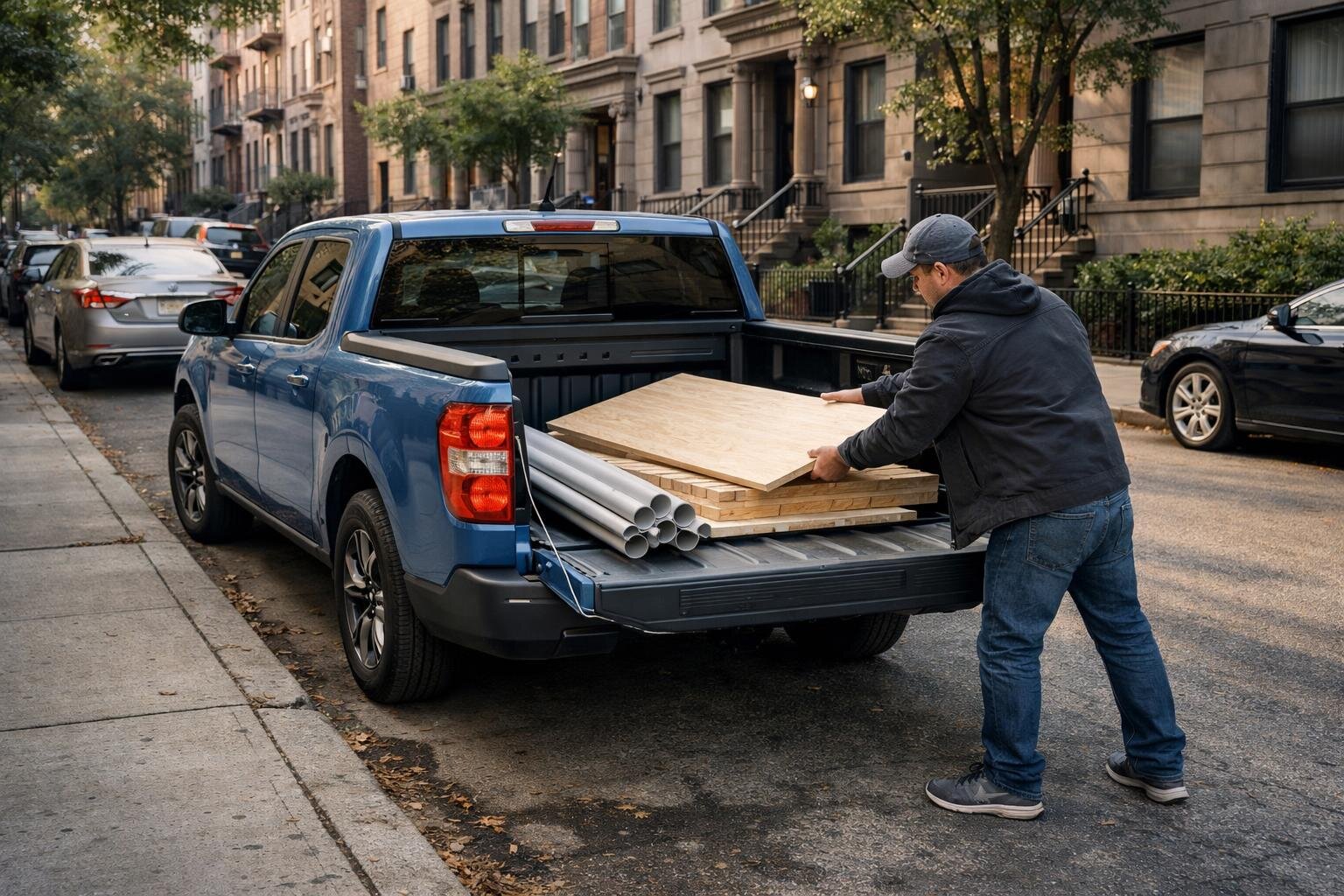
I cover the U.S. market from New York, and here is the straight buyer answer: the 2026 Ford Maverick can make a lot of sense if you want a small pickup that fits city errands, carries real people in the back seat, and gives you an open bed for messy stuff. The catch is that, for this model year, many of the details shoppers normally rely on (exact powertrains, towing numbers, bed features by trim, pricing, and standard equipment) should be treated as “verify before you sign.” Ford’s own online configurator is the cleanest public source to confirm what is actually orderable right now.
This review is built as a checklist. I will tell you what can be verified from Ford directly and what you should confirm locally at the dealer or on the exact truck’s window sticker. I am not going to guess specs that are not published in the provided source.
What we can verify (and what we cannot) for the 2026 Maverick
Verified from an authoritative source: Ford is offering a 2026 Maverick in the U.S. market, and Ford provides a public Build and Price tool where you can select a configuration and see available trims, options, and equipment groupings as presented by the manufacturer.
Primary source link (use this to verify your exact build): 2026 Ford Maverick Build & Price.
Not verified in the provided source package: specific engine outputs (horsepower and torque), EPA fuel economy, towing capacity, payload ratings, exact bed dimensions, trim walk details, safety ratings, pricing or MSRPs, and any trim specific “standard vs optional” claims beyond what you can see in the configurator. Those are all common shopping questions, but they must be confirmed on Ford’s configurator for your build and then cross checked against the Monroney label for the specific VIN you are buying.
The buyer reality: why Maverick is even on your list
The Maverick’s whole pitch in typical daily use is simple: it is easier to live with than a full size pickup while still giving you a bed. In dense places like the New York metro area, that matters more than people admit. Parking garages, curbside loading zones, tight alleys behind rowhouses, and parallel parking all punish big trucks. A compact pickup can be a practical tool without turning every grocery run into a three point turn exercise.
The other reason it stays on shopping lists is lifestyle flexibility. A small bed changes what you can do on a random Tuesday. Garden supplies. A muddy stroller after a rainy soccer game. A used dresser from Facebook Marketplace that you do not want inside your cabin. Even if you only use the bed a few times a month, it can be the difference between “I need to borrow a vehicle” and “I am done in one trip.”
Bed utility checklist: prove it works for your errands
This is where buyers should slow down and get specific. With any compact pickup, the bed is useful but not infinite. The Maverick’s job is to be usable for real tasks without pretending to be a contractor rig.
1) Confirm bed features by trim and option package. Do not assume tie downs, bed lighting, rails, or outlet style features are included just because a photo shows them. Use Ford’s Build and Price tool to see which bed related items are included or optional on your chosen trim (and then confirm on the window sticker).
2) Bring your “most annoying item” measurement. If you routinely haul something awkward (a folded wheelchair, a large dog crate, a landscaping tool case), measure it and compare it against whatever dimensional info Ford provides during configuration or in official literature tied to that build. If dimensions are not shown clearly in your shopping flow, treat it as an open question until you see official documentation.
3) Think about tailgate habits. Some owners live with their tailgate down more than they expected. That changes how you park behind other cars or how you load in tight spaces. Before buying, simulate how often you will need extra length versus how often you will want everything fully closed up.
4) Cargo management matters more in small beds. In typical daily use, compact beds benefit from simple add ons like bins, straps, or dividers because items slide around more easily when space is limited. Again: do not assume factory cargo management pieces are included unless they appear on your exact build summary.
Seating and cabin checklist: can four adults actually live back there?
A compact pickup lives or dies by its cabin packaging because many buyers want one vehicle that does commuter duty and family duty. The Maverick is often cross shopped by people who would otherwise buy a compact SUV.
1) Do a real back seat test with your tallest passenger. Sit behind your own driving position. That sounds obvious; most shoppers still skip it. If your household includes long legs or child seats that force front seats forward, check it now rather than discovering it after delivery day.
2) Check child seat logistics instead of trusting internet confidence. Bring your actual car seat if possible and see how it installs. Look for practical things like whether you can reach anchors easily and whether rear facing setups crush front passenger comfort. None of this requires published specs; it requires five minutes in the vehicle.
3) Storage is part of seating comfort. In daily life, clutter builds fast in smaller cabins. Verify where bags, work gear, umbrellas, and takeout containers actually go without landing on someone’s lap. This is also where pickups can feel less “family friendly” than SUVs if storage is not thoughtfully laid out for your routine.
Daily driving impressions (without pretending I tested one)
I have not conducted an instrumented test of the 2026 Maverick for this piece, and the provided source does not supply performance metrics to cite responsibly. Still, there are some grounded expectations that come with the format.
A compact pickup typically feels more maneuverable than larger trucks simply because of its footprint and mass expectations relative to full size models. For city drivers, that usually translates into less stress threading through narrow streets and less drama squeezing into street parking spots that would be off limits in bigger pickups.
The tradeoff most buyers notice with any pickup shape is ride behavior over broken pavement when unladen. A bed means different weight distribution than a hatchback or crossover. Depending on suspension tuning and tire choice on your trim level (both items to verify per build), ride comfort can swing from pleasantly controlled to busy over potholes. The only honest way to judge this before purchase is an extended test drive over roads like the ones you actually use.
Tech and safety: treat every feature as VIN specific
This is where shoppers get burned in 2026 shopping because availability changes quickly based on trim level and option packages.
Your verification workflow should look like this:
Step 1: Build your desired Maverick using Ford’s official configurator so you know what Ford says is available together today: 2026 Ford Maverick Build & Price.
Step 2: Ask the dealer for a printout of the exact order summary (if ordering) or send them photos of the window sticker (if buying from inventory).
Step 3: Match key items line by line: driver assistance features, infotainment screen size if listed, heated seat availability if important to you in northern climates like mine, and any towing related equipment if you plan to pull anything at all.
A note on “proof”: A document or dashboard indicator alone does not prove condition or correct function. Features should be confirmed by equipment listing and then validated during delivery walkthrough.
Competitors: where Maverick fits (and where it does not)
The compact pickup space has become a practical alternative to small SUVs for buyers who want open cargo capability without jumping to full size truck ownership costs and bulk. The obvious rivals most shoppers consider include other small pickups such as Hyundai Santa Cruz and mid size pickups like Toyota Tacoma or Chevrolet Colorado if towing or off road priorities rise up the list.
The subtle comparison point is daily livability versus capability ceiling. Mid size trucks generally bring more room for heavy duty hardware choices depending on configuration, but they also bring bigger exterior dimensions that can be tiring in dense metros and older neighborhoods with tight parking geometry. On the other hand, car based crossovers beat pickups when weather proof cargo volume matters every day (strollers plus groceries plus backpacks), especially if you hate using tonneau covers or dealing with wet gear in an open bed.
If your weekly routine rarely involves dirty cargo but frequently involves passengers plus luggage under cover, it is worth admitting that an SUV may simply fit better even if pickups feel more fun to shop.
Pros and cons (based on what we can responsibly say)
Pros
1) Compact pickup concept suits real errands: easier to place in urban life than larger trucks while still offering an open bed use case.
2) Manufacturer provides a public configuration tool that lets buyers verify availability before negotiating at a dealer (useful when trims and packages shift).
3) Flexible buyer positioning: can overlap with compact SUV shopping while adding occasional hauling capability.
Cons
1) For this review’s evidence rules, many key specs cannot be cited without stepping beyond verified sourcing; buyers must do their own confirmation work on powertrain outputs, towing ratings, payload limits, dimensions, economy figures, and pricing.
2) Pickup tradeoffs remain: open bed exposure and potential ride compromises when unloaded depend heavily on configuration and personal tolerance.
Your dealer order verification checklist (print this)
Before you talk money:
1) Build your exact 2026 Maverick online using Ford’s tool and save screenshots or printouts of the final summary: 2026 Ford Maverick Build & Price.
2) Confirm trim name exactly as shown online; do not rely on shorthand descriptions like “loaded” or “tech package.”
If ordering:
3) Ask for an order preview showing option codes or package names matching your build summary.
4) Ask what items are constrained or subject to late availability changes; if they cannot say clearly, assume substitutions are possible until VIN assignment.
If buying off the lot:
5) Photograph the window sticker and match equipment against what matters most to you: seating heat ventilation if relevant to climate needs, driver assistance features if commuting is heavy highway time, bed tie downs if hauling happens weekly.
No matter what:
6) Sit in every seat position you will actually use; test child seat fit if applicable.
7) Do a test drive over rough pavement plus highway speeds; listen for wind noise tolerance levels that match your expectations for daily commuting (this varies by person more than by spec sheet).
Verdict: who should buy the 2026 Maverick?
The 2026 Ford Maverick looks like it can still hit that sweet spot many Americans want right now: practical size with real utility. If your life includes occasional hauling but constant commuting and parking constraints, this category makes sense before you even argue about horsepower numbers.
The smart way to shop it in 2026 is almost procedural. Use Ford’s configurator as your baseline truth for what exists today; then validate every must have item against the exact truck’s documentation before committing. If you do that homework up front, Maverick ownership tends to start with satisfaction instead of surprise compromises about seating comfort or missing bed equipment.
0 comments
Join the discussion around this article.
Please login to comment.