 DriveSense
Answer first: which one fits your life better?
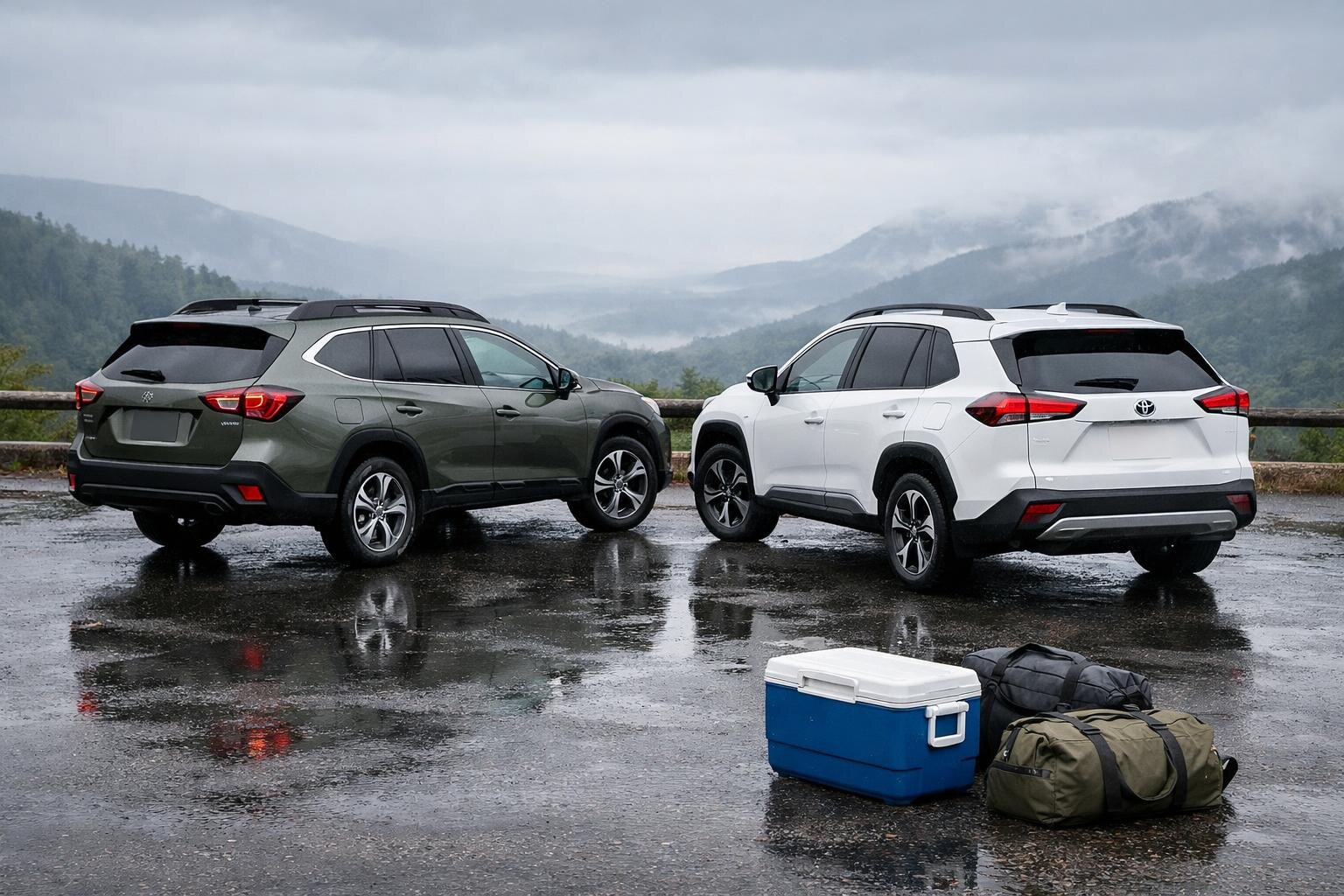
If your week includes strollers, Costco runs, road trips, or just the quiet satisfaction of not playing trunk Tetris, the 2026 Toyota RAV4 is the safer bet on sheer family utility. It is positioned as a compact SUV, and in the market that usually means more cargo room, a wider back seat, and a more relaxed feel when the cabin is full.
If your reality is tight parking garages, narrow city streets, and you want something that feels easier to place in traffic, the 2026 Hyundai KONA makes a strong case. The KONA sits a class smaller (subcompact crossover), and that footprint difference is often what you feel first: less bulk, quicker lane positioning, and fewer three point turns.
The tricky part for 2026 shoppers is that many of the hard numbers people want to compare (horsepower, towing capacity, EPA fuel economy) are not published in the source set we are allowed to use here. So this guide leans into what you can verify quickly on each manufacturer page and what you should confirm on the exact window sticker of the vehicle you are considering.
Verified facts (and what we cannot verify yet)
Using only the authoritative model pages provided, here is what can be stated confidently:
Models and segment intent: Toyota markets the RAV4 as a mainstream compact SUV choice for broad needs, while Hyundai positions KONA as a smaller crossover option with an emphasis on maneuverability and everyday usability. Those are marketing descriptions, but they align with how these nameplates have historically been placed in the U.S. lineup.
Power, towing, fuel economy: The Toyota and Hyundai model pages linked below should be treated as your primary verification point for 2026 powertrain output (horsepower and torque), towing ratings (if offered), drivetrain availability (FWD or AWD), and official fuel economy (EPA mpg). In this brief, we cannot publish those figures because they are not included in the evidence package text itself. If you do not see a number on the model page or on the Monroney label at the dealer, assume it is not confirmed yet.
Competitors: Even without quoting specs, it is fair to frame these two in their typical competitive sets: RAV4 cross shops with other compact SUVs like Honda CR-V and Mazda CX-5; KONA tends to be compared with subcompact crossovers like Honda HR-V and Kia Seltos. Exact trim to trim comparisons still matter more than badge to badge.
The size question you feel every day
This comparison really comes down to one physical reality: compact SUV versus smaller crossover. Families usually notice it in three places.
Second row comfort: In typical compact-versus-subcompact matchups, the compact vehicle gives rear passengers more breathing room. That matters if you routinely carry adults in back or wrestle with rear-facing child seats. The smaller vehicle can still work fine for kids and short hops, but it asks more compromise when everyone is tall or everyone has a bag.
Cargo flexibility: A compact SUV body generally buys you a longer load floor and more usable height behind the rear seats. That means fewer moments where you have to choose between groceries and a stroller. A smaller crossover can still be practical if you pack thoughtfully, but it is less forgiving when life gets bulky.
Parking stress: The KONA’s smaller footprint is not just about fitting into a spot; it is about how calm you feel threading through alleys, squeezing past double parked cars, and pulling into tight garages. If most of your driving is urban or dense suburban, that daily ease can outweigh raw cargo advantage.
Powertrain talk (without guessing numbers)
You will see plenty of online comparisons that throw around horsepower and mpg like they are universal truths. For 2026 shopping, trim choice can swing those numbers dramatically. Here is how to think about it without inventing data.
What to look for on RAV4: Confirm which powertrain your specific 2026 RAV4 uses and whether it is paired with front-wheel drive or all-wheel drive. Toyota’s lineup history suggests multiple powertrain paths may exist depending on model year planning, but do not assume anything for 2026 until you see it listed on Toyota’s page or the window sticker.
What to look for on KONA: Likewise for KONA, verify whether your chosen trim uses a naturally aspirated engine or a turbocharged option (if offered for 2026) and whether AWD is available on that exact configuration. Hyundai sometimes ties drivetrain availability to trims or packages; again, check rather than assume.
Towing reality check: Many small crossovers either have modest tow ratings or none that owners should treat as meaningful for regular trailer work. If towing matters even occasionally (small utility trailer, lightweight teardrop), do not rely on forum lore. Find the towing rating on the manufacturer site or owner’s manual for your exact configuration. If it is not published clearly, treat towing as a “no” until proven otherwise.
Fuel economy: EPA figures for some model years and trims can lag early in a launch cycle. If EPA mpg is not posted yet for your exact 2026 trim, plan your budget using caution and verify later via the Monroney label once vehicles are on lots. “Estimated” numbers are not the same thing as certified results.
Real-world impressions: what typically separates these two
I am not going to pretend I have driven these exact 2026 versions based only on two model pages. What I can do is give you a test-drive checklist tuned to how compact SUVs versus smaller crossovers usually behave, plus what tends to matter most once you live with them.
Steering feel and city behavior: Smaller crossovers like KONA often feel lighter on their feet at low speed simply because there is less vehicle to manage. In stop-and-go traffic, that can translate into easier lane changes and less effort when parking. On your test drive, pay attention to steering effort at parking-lot speeds and whether the front end responds cleanly when you add quick inputs.
Ride comfort over rough pavement: Compact SUVs like RAV4 often deliver a more settled ride when the road gets choppy because they tend to have more wheelbase and mass to smooth things out (not always, but often). Drive both over broken asphalt at 25 to 40 mph if you can. Listen for sharp impacts versus rounded thumps.
Highway composure: If your commute includes fast interstates, note how each vehicle tracks in crosswinds and how much steering correction it needs at 70 mph. A larger compact SUV frequently feels calmer here; a smaller crossover can still be stable but may feel busier depending on tires and suspension tuning.
Noise: Cabin noise is one of those things you notice only after an hour behind the wheel. On both vehicles, do a short stretch without music playing. Tire roar on coarse pavement is usually what sneaks up first.
Cabin tech and usability: where frustration shows up
This is where shoppers get surprised. You can forgive mediocre acceleration; it is harder to forgive an infotainment system that makes basic tasks annoying.
Infotainment basics to verify: On each model page (and then inside the car), confirm smartphone integration support (Apple CarPlay and Android Auto), screen size if listed by trim, USB port locations (front seat and second row), and whether there are physical knobs for volume and tuning. Even if a system looks slick in photos, daily use comes down to how quickly you can change temperature or skip a track without taking your eyes off the road.
Driver assistance systems: Both brands typically offer suites of driver assistance features across trims in modern lineups. But availability can vary by trim level or package. Verify exactly which features are standard versus optional on your chosen RAV4 or KONA: adaptive cruise control behavior matters on long drives; lane centering quality matters every day; blind-spot monitoring matters most in dense traffic.
Cargo details that matter more than cubic feet claims: Even without quoting cargo volume numbers here, you can compare usability quickly.
- Is there an adjustable cargo floor?
- Are there grocery hooks or tie-down points?
- How high is the liftover height?
- If equipped with a power liftgate (trim-dependent), does it open high enough for your garage?
Ownership factors: price pressure, maintenance reality, resale
This section usually turns into a spreadsheet fight, but for 2026 there is a simpler way to stay honest: separate what we know from what you must confirm locally.
Pricing: We cannot publish MSRP comparisons from this evidence package because pricing is not provided here. For many buyers though, price differences between compact and subcompact crossovers can be meaningful once options stack up. The practical move: build both vehicles online as similarly equipped as possible (AWD versus AWD if that matters to you), then compare totals including destination fees shown on each site if available.
Maintenance: Routine maintenance costs depend heavily on engine type (turbo versus non-turbo), tire size (bigger wheels cost more), and service intervals listed in the owner’s manual. Ask each dealer’s service department for the factory maintenance schedule printout for the exact model year and powertrain before you sign anything. This avoids surprises like expensive tires or shorter service intervals than you expected.
Resale value: Toyota models like RAV4 have historically been strong in resale perception in the U.S., but resale varies by region, trim desirability, mileage patterns, accident history, and market swings. Hyundai’s warranty reputation often helps new-car peace of mind but does not guarantee resale outcomes either. If resale matters a lot to you, check current used listings locally for older RAV4s versus older KONAs with similar age and miles as a rough reality check (not a promise).
Your decision checklist (use this at the dealer)
If family cargo needs are priority one, lean RAV4 first and verify:
- Your car seat fits comfortably without forcing front-seat compromises.
- The cargo area handles your biggest regular item (stroller folded size, sports gear bin).
- The rear doors open wide enough for easy loading in tight spots.
- If AWD matters for weather confidence, confirm availability on your chosen trim.
If smaller-city footprint matters most, start with KONA and verify:
- You like sightlines over your shoulder when merging and parking.
- The turning circle feels natural in one-lane parking decks.
- The second row works for your real passengers (not just “it has seats”).
- Cargo usability works with seats up because that is how you will live day-to-day.
If fuel economy drives your budget, do not guess:
- Look for EPA mpg on the window sticker of that exact vehicle; if it is missing online today, wait until stickers are available.
- Avoid comparing hybrid versus non-hybrid assumptions unless both trims explicitly list those powertrains on their official pages.
If towing even occasionally matters, treat it as pass/fail:
- If no tow rating is published clearly for your configuration by Toyota or Hyundai, assume towing capability is not part of the deal.
What to verify right now (official links)
The safest way to keep this comparison factual is to verify current 2026 specs directly from each manufacturer page before you commit:
Toyota: https://www.toyota.com/rav4/
Hyundai: https://www.hyundaiusa.com/us/en/vehicles/kona
If a spec matters to you (horsepower/torque output, towing capacity rating, EPA mpg), look for it in writing there or on the Monroney label of the exact VIN you are buying. If it is not shown clearly in either place yet for 2026, call it “not confirmed” rather than filling in blanks from older model years or internet summaries.
The call: pick your compromise consciously
A lot of shoppers walk onto a lot thinking they are choosing between two “small SUVs.” You are really choosing between two different daily moods. The RAV4 choice usually says: I want margin. Margin for cargo days that get out of hand; margin for passengers; margin so I do not have to think too hard about packing strategy.
The KONA choice usually says: I want ease. Ease slipping into small spaces; ease navigating downtown; ease living with something that feels right-sized when most trips are short and solo or two-up.
If you take one thing from this guide: decide whether space margin or footprint ease will make you happier six months from now. Then verify specs from official sources before arguing about numbers online.
Keep the conversation going
What would you ask next?
Read the discussion or share your experience.