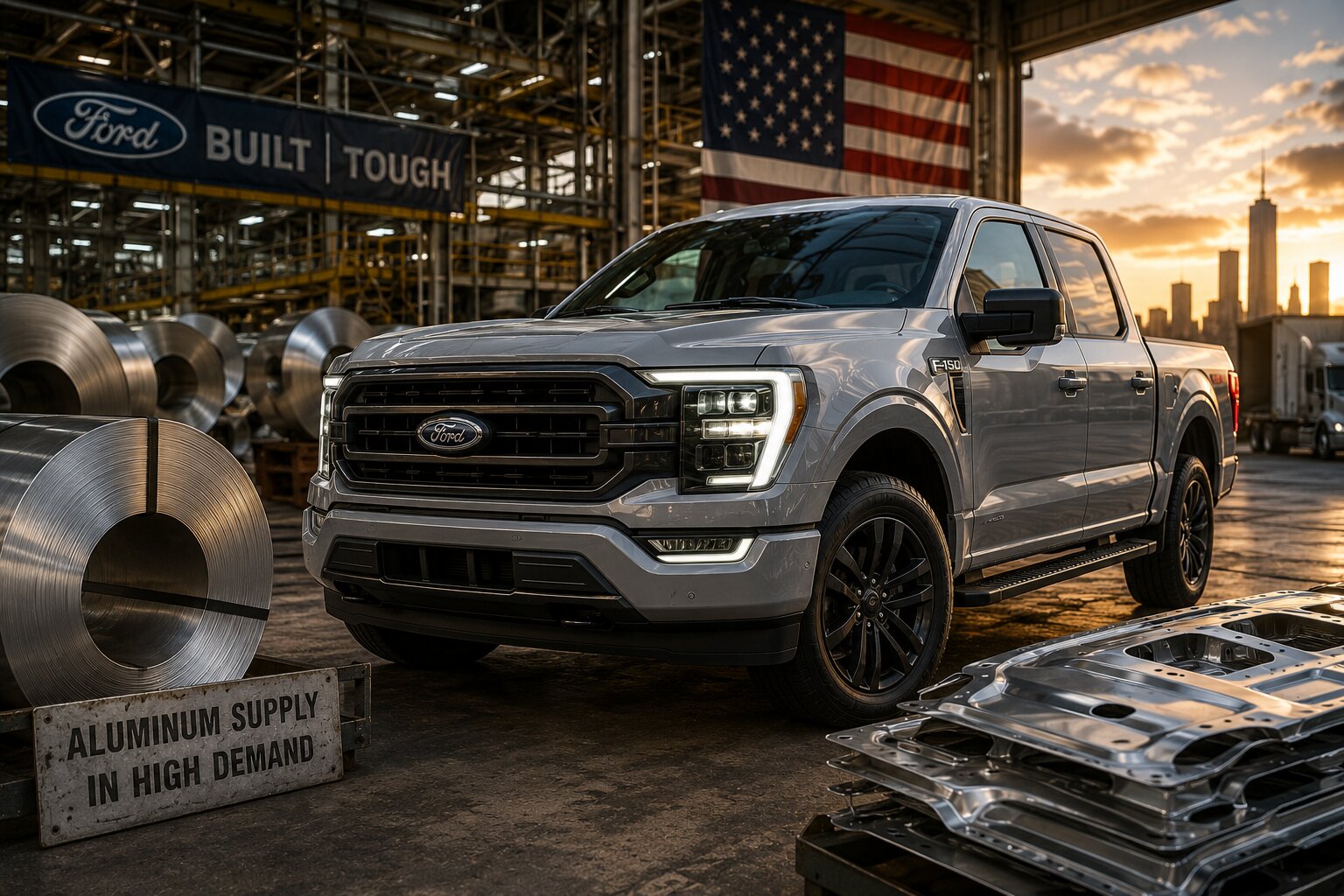
Ford’s 2026 outlook gets a lift, but the real story is aluminum
Ford says it has raised its 2026 outlook while it scrambles to secure enough aluminum, a combination that reads like two headlines stitched together. One is upbeat, the other is operationally tense. For U.S. truck buyers, especially anyone shopping an F-150, the aluminum piece is the part that can show up in real life as tighter dealer inventory, fewer build combinations, and less negotiating room depending on how long the supply disruption lasts.
Reuters reported on April 29, 2026 that Ford raised its 2026 outlook and flagged the challenge of sourcing aluminum. Ford’s modern full-size truck strategy makes that material more than a line item. The F-150’s body has been aluminum-intensive for years, and Ford has built an entire manufacturing rhythm around high-volume aluminum stampings, closures, and related components. When that flow gets choked, it does not just affect one trim or one plant. It can ripple through scheduling and parts availability across the lineup.
Some specifics around Ford’s updated 2026 guidance and the precise scope of the aluminum constraint were not fully detailed in the prompt beyond Reuters’ framing. Where Ford did not provide numbers or plant-by-plant impacts publicly, it is better to be blunt about what is unknown than to fill in gaps with guesswork. What is clear is the direction of travel: Ford is signaling confidence in demand and execution for 2026 while simultaneously warning that a basic industrial input could become a bottleneck.
Why aluminum matters more for the F-150 than most vehicles
Aluminum is not rare, but automotive-grade supply can become tight quickly when multiple industries compete for it or when processing capacity gets constrained. For Ford, aluminum has been central to the F-150’s identity since the company moved to an aluminum-alloy body for mainstream F-150 models starting with the 2015 model year. The frame remains steel, but many exterior body panels are aluminum. That design has helped manage weight in a segment where capability expectations keep rising.
This matters because pickups are large vehicles with large panels. A disruption in sheet supply or a shortage of specific alloys can be harder to work around than a shortage of smaller commodity parts. Automakers can sometimes substitute suppliers or reroute logistics, but you cannot easily redesign body stampings midstream without cost and lead time. When an automaker says it is scrambling for aluminum, it usually means planning teams are working through a mix of supplier negotiations, allocation decisions, and build prioritization.
What “scrambling” can look like inside manufacturing
When materials get tight, automakers tend to pull several levers before they accept outright production losses. They may prioritize higher-margin trims and configurations, simplify build combinations to reduce complexity, and adjust plant schedules to match parts availability. Sometimes they will build partially completed vehicles and hold them until missing parts arrive, though that approach depends on which part is missing and whether it blocks downstream processes.
In the context of aluminum constraints, Ford’s options are narrower than they would be for something like a seat module or an infotainment component. Body panels and structural pieces are foundational. If you do not have them, you do not have a truck.
The most likely near-term impacts for F-150 supply are therefore practical rather than dramatic: fewer units produced than planned in certain weeks, uneven availability by trim level or cab/bed configuration, and more variability in dealer allocation from one region to another.
The F-150’s place in Ford’s U.S. business makes this a high-stakes input
The F-Series has long been one of the best-selling nameplates in the United States across decades (Ford reports this regularly). Even without leaning on any single year’s sales tally, it is widely understood inside the industry that full-size pickups are profit centers when volumes are healthy and incentives are controlled.
That context helps explain why Reuters’ pairing of an improved outlook with an aluminum scramble feels plausible rather than contradictory. If demand holds and pricing remains resilient, management may feel comfortable raising outlooks even while acknowledging supply friction. At the same time, any constraint on F-150 throughput risks leaving money on the table and handing share to rivals who can keep lots stocked.
Competitors waiting in plain sight: Silverado, Sierra, Ram, Tundra
The U.S. full-size pickup market does not give manufacturers much time to recover from a supply stumble. The direct competitors are familiar: Chevrolet Silverado 1500 and GMC Sierra 1500 from General Motors; Ram 1500 from Stellantis; Toyota Tundra; plus niche volume from Nissan Titan historically (though availability varies by model year and market strategy). Buyers cross-shop aggressively within this set because transaction prices are high and loyalty only goes so far when a contractor needs trucks now.
If F-150 inventory tightens meaningfully, some shoppers will simply switch brands rather than wait out lead times. That is especially true for fleet buyers and small businesses where downtime costs more than brand preference.
Which trims get protected first if supply tightens
Automakers rarely say outright which trims they will favor during shortages, but industry behavior has been consistent across recent years of supply disruption. Higher-margin retail trims typically get priority over lower-margin fleet builds when parts are constrained. On the F-150 side, that could translate into stronger relative availability of well-optioned XLTs and higher trims versus basic work-spec trucks depending on how Ford chooses to allocate limited material.
It can also show up as fewer “odd” configurations on lots. If you have ever walked a dealer row looking for a specific bed length or a particular package combination, you know how quickly choice evaporates when factories simplify scheduling.
This does not mean work trucks disappear entirely. Fleet relationships matter and Ford sells plenty of trucks into commercial channels. But if aluminum becomes an allocation exercise rather than a normal procurement flow, buyers should expect some unevenness across trims and body styles.
Pricing trends: what tends to happen when supply gets choppy
This story is not about stock tickers or investor sentiment; it is about what happens at dealerships when production planners start rationing inputs.
If F-150 supply tightens while demand stays steady, pricing pressure typically moves upward at retail even if MSRPs do not change overnight. Incentives often become less generous when inventory turns quickly. Dealers also tend to hold firmer on price when they have fewer comparable units sitting nearby at competing stores.
That said, pricing outcomes vary by region and by trim mix. If shortages concentrate on specific configurations while other builds remain available, you can see odd pockets of discounting next to hard-to-get trucks selling close to sticker or above it depending on local conditions.
Because we do not have verified details here on how severe Ford expects the aluminum constraint to be or how long it might last into 2026 production planning cycles, any precise forecast would be speculation. The reasonable takeaway is simpler: supply uncertainty usually reduces negotiating leverage for many buyers.
Incentives: what buyers should watch instead of chasing rumors
Incentives on full-size pickups move around constantly based on inventory age, regional objectives, and competition within local markets. When supply tightens due to material constraints like aluminum availability, incentives often narrow first on fast-moving trims.
For shoppers trying to time a purchase, two grounded signals matter more than online chatter:
First, days’ supply on dealer lots in your region (you can gauge this informally by searching inventory within a realistic driving radius). Second, whether dealers still have multiple examples of your preferred configuration sitting for weeks rather than days.
If you see thin selection across multiple stores at once, incentive generosity tends not to improve until production catches up.
Resale values: scarcity can support used prices, but only up to a point
Used truck values are influenced by broader economic conditions as well as new-truck availability. When new inventory tightens, late-model used examples often hold value better because they become the substitute good buyers can actually take home today.
If F-150 supply becomes constrained due to aluminum shortages in 2026 planning windows, resale values for certain trims could stay firmer than they otherwise would have been. Still, resale is never guaranteed protection against market swings. Condition, mileage, powertrain choice (gas versus hybrid), and regional demand all matter materially.
The most practical advice for owners who might trade soon is boring but effective: keep service records organized and avoid modifications that narrow your buyer pool unless you plan to keep the truck long term.
Buyer demographics: who feels this first
The people most likely to feel an F-150 supply squeeze are not necessarily enthusiasts chasing a particular appearance package. It is working buyers with schedules: contractors replacing aging half-ton fleets; rural owners who need towing confidence through winter; small businesses that cannot afford downtime; families who use a crew-cab truck as both commuter vehicle and weekend hauler.
These customers tend to shop pragmatically: monthly payment tolerance first, then capability requirements such as towing capacity or payload (which vary widely by configuration), then comfort features because modern trucks often double as daily drivers.
If certain configurations become scarce, these buyers may compromise on color or options before they compromise on timeline.
A quick reality check on specs: what we can say without guessing
The F-150 spans a wide range of powertrains and capability ratings depending on model year and configuration (engine choice, axle ratio, cab/bed layout). Because this article centers on Reuters’ April 2026 report rather than an official Ford spec release for a specific 2026 F-150 variant list, it would be irresponsible to cite exact horsepower figures or towing numbers here without confirmed documentation tied to the relevant model year.
What is widely established: towing and payload ratings vary substantially across trims and options; higher towing packages typically require specific configurations; hybrid availability has been part of recent F-150 offerings; there is also an all-electric F-150 Lightning sold separately under its own nameplate with different supply chain considerations (notably batteries rather than aluminum body panels alone).
What Ford’s message implies for ordering strategy
If you are planning an F-150 purchase tied to business needs or a fixed replacement schedule later in 2026 model-year timing windows (exact order banks vary), uncertainty around aluminum supply argues for earlier action rather than later indecision.
That does not automatically mean paying any price asked. It means being disciplined about priorities: decide which features are must-haves versus nice-to-haves so you can pivot if your preferred build becomes unavailable or delayed. In typical dealer-lot reality during constrained periods, flexibility becomes its own form of leverage.
What to watch next
The next meaningful signals will come from tangible operational updates rather than broad outlook language: supplier commentary from the metals value chain; any public statements from Ford about production scheduling; shifts in dealer inventory patterns; and whether build complexity appears to narrow over time.
If Ford continues to raise expectations for 2026 while describing active efforts to secure aluminum inputs, it suggests management believes mitigation steps are working or at least manageable. For buyers eyeing an F-150 purchase window soon after those planning decisions hit production lines, “manageable” can still mean waiting longer for certain configurations than you would expect in a normal year.
The bottom line for F-150 shoppers
A raised outlook sounds confident; scrambling for aluminum sounds like triage behind factory doors. Both can be true at once in modern automotive manufacturing.
If aluminum supply remains tight into key production periods, expect uneven dealership selection and less predictable pricing behavior across trims. Many buyers will still find an F-150 that fits their needs because Ford builds them in enormous variety when materials flow normally. The frustration comes when you want one specific combination at one specific time and the system cannot quite deliver it.

0 comments
Join the discussion around this article.
Please login to comment.