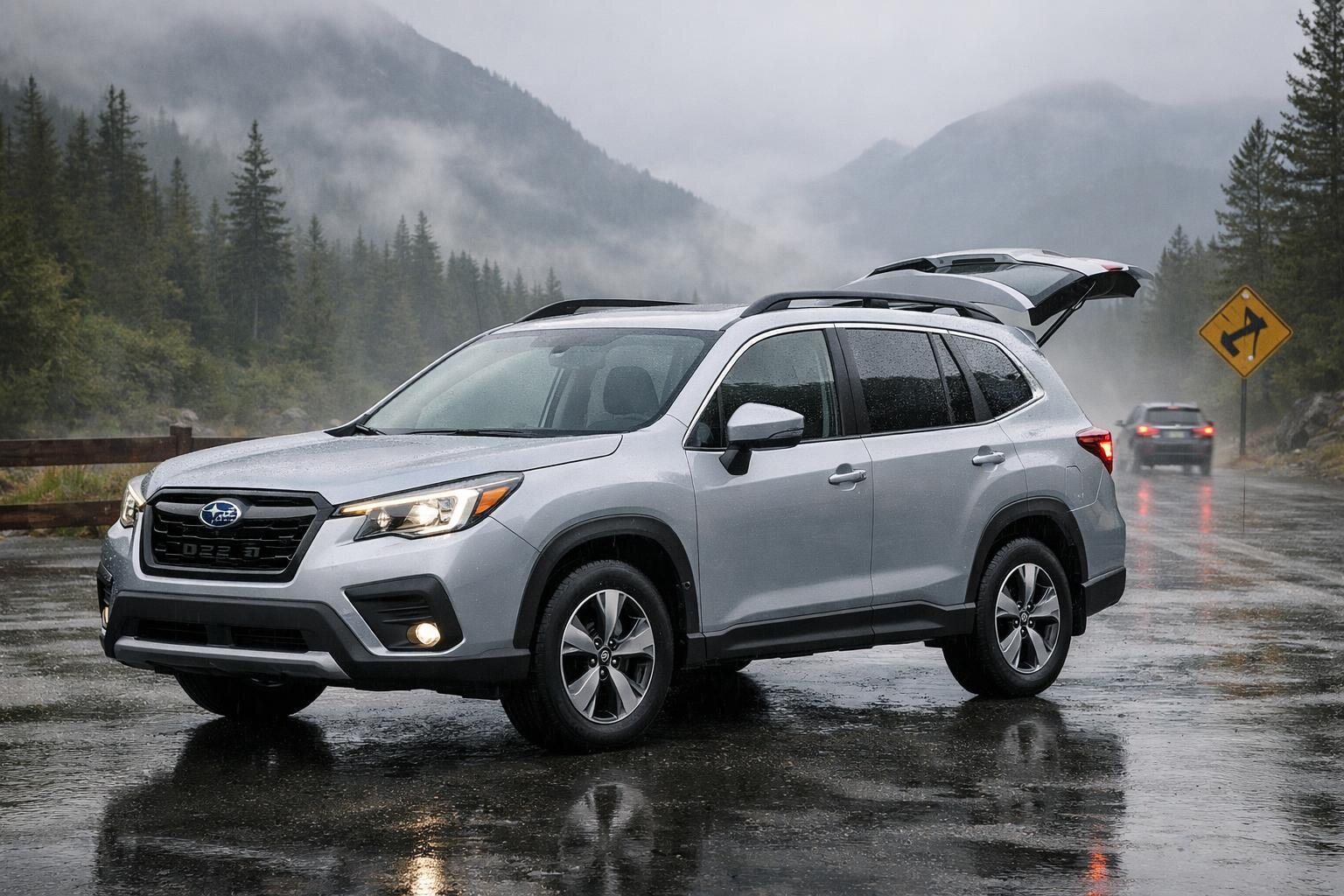
Forester buyer profile: the person who wants the week to go smoothly
The 2026 Subaru Forester is aimed at a very specific kind of compact SUV buyer, and it is not the one chasing quick 0 to 60 times. It is for drivers who care about sightlines in traffic, predictable behavior on wet roads, easy kid and cargo logistics, and a cabin that feels like it was laid out by someone who actually parks in tight lots. If that sounds like faint praise, it is not. “Boring competence” is a real virtue in this segment, and Forester loyalists tend to buy the idea that less drama equals a better daily life.
Your question gets to the point: if visibility, bad-weather confidence, and easy daily living matter more than speed, the Forester is one of the most logical picks in the compact SUV class. The caveat for this review is important, though. As of my knowledge cutoff (August 2025), Subaru had fully introduced the redesigned Forester for the 2025 model year in the U.S., and many 2026 details were not yet comprehensively published trim by trim. Where 2026 specifications are not confirmed by Subaru or widely published EPA documentation, I will say so plainly rather than guess.
Verified facts (and what is still unconfirmed) for the 2026 Forester
Confirmed generation and layout: The current Forester is part of Subaru’s latest redesign cycle (introduced for 2025 in the U.S.). It continues as a five-passenger compact crossover with Subaru’s standard symmetrical all-wheel drive.
Confirmed core powertrain (U.S.): The redesigned Forester launched with a naturally aspirated 2.5-liter flat-four (boxer) paired with a continuously variable automatic transmission (CVT). Output for this engine has been widely published for the redesigned model at 180 horsepower and 178 lb-ft of torque. For 2026, Subaru had not broadly announced a different base engine for the U.S. market within widely available information up to that cutoff.
Hybrid availability: Subaru has discussed expanding hybrid offerings, but a Forester Hybrid for the U.S. was not fully confirmed in widely available official detail for the 2026 model year within the information available up to August 2025. If you are shopping specifically for a hybrid Forester badge in 2026, treat it as “possible” rather than guaranteed until Subaru publishes final ordering guides and EPA data.
Trims: The redesigned Forester has been sold in familiar U.S. trim names such as Base, Premium, Sport, Limited, and Touring (Wilderness has historically been part of the lineup, but specific 2026 trim walk details should be verified against Subaru’s final 2026 lineup release). Feature availability often shifts slightly year to year even when trim names stay consistent.
Key hardware themes that are consistent: Standard AWD; CVT; elevated ground clearance typical of Forester; roof-rail practicality on many trims; and Subaru EyeSight driver-assistance as a central safety technology suite.
The “visibility SUV” reputation: why people keep bringing up sightlines
The Forester’s calling card has long been outward visibility. That reputation comes from design choices you can feel immediately in normal driving: a tall seating position without an exaggeratedly high beltline, generous glass area for a modern crossover, and an overall shape that prioritizes “seeing out” over coupe-like styling.
I cannot quantify pillar thickness or glass area without sourced measurements, but in typical ownership terms, Foresters tend to be easier to place in a lane and easier to judge when backing into a spot compared with more aggressively styled rivals. This matters more than it sounds. It reduces low-grade stress every time you merge in rain or thread through school pickup traffic.
If you are cross-shopping something like a Mazda CX-5 or CX-50 because you like how they look and drive, you may notice those Mazdas often trade some of that airy greenhouse feel for style and a more snug cockpit sensation. Many buyers accept that trade happily. The Forester generally does not ask you to.
Daily-life ergonomics: seats, doors, kids, and cargo
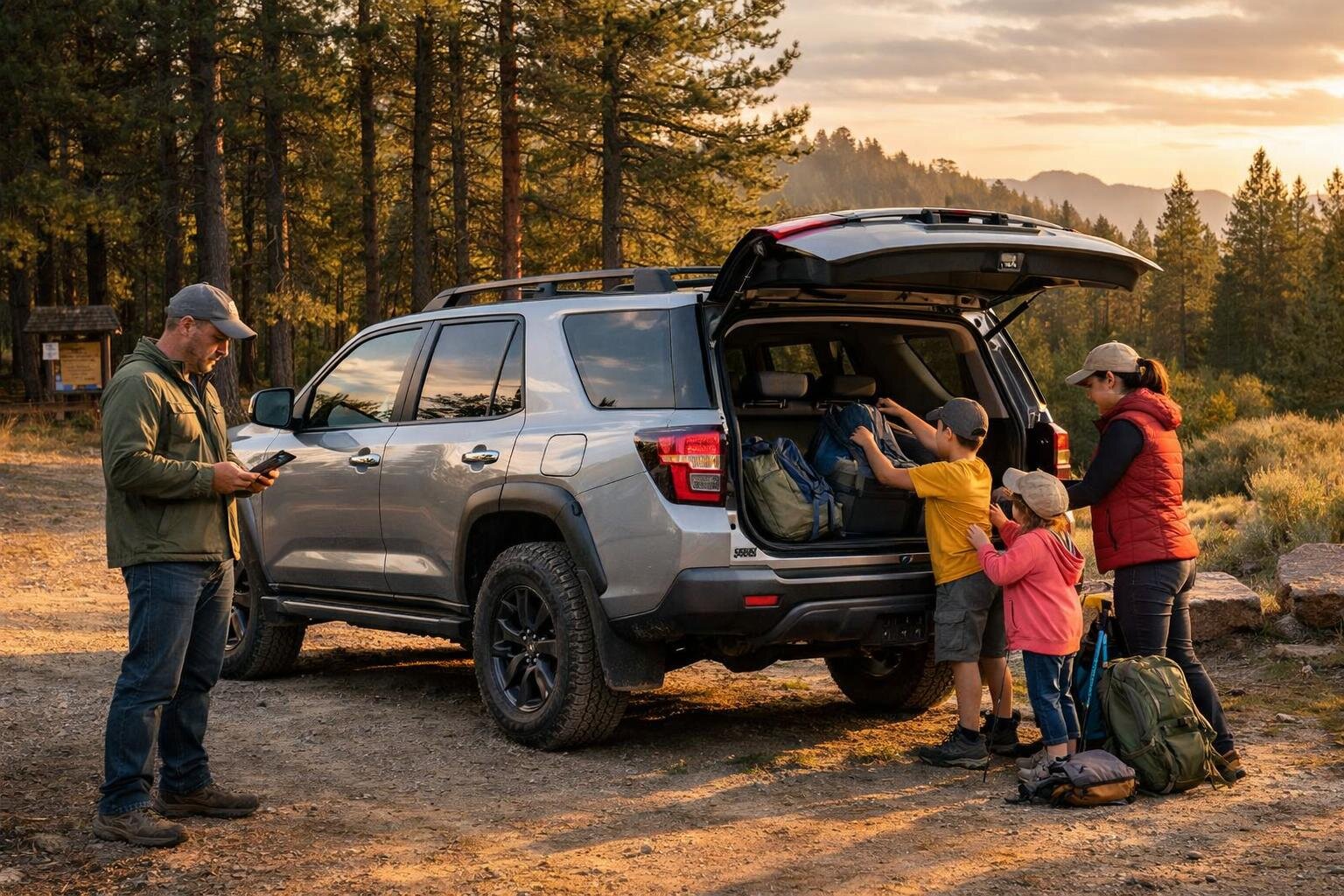
A compact SUV succeeds or fails on small interactions. How wide do the doors open? Is there enough room to lean in and buckle a child seat without contorting? Does the cargo area swallow bulky items without requiring puzzle-solving?
Seating position and comfort: Based on the model’s long-running design priorities and available specifications for the redesigned generation, the Forester continues to emphasize upright seating with good headroom. For many drivers, that translates into less fatigue on longer commutes because your hips are not dropped into a low-slung posture.
Rear-seat access: The Forester’s body shape typically supports straightforward rear-door access. That tends to help with rear-facing child seats and with simply stepping into the back without ducking under an aggressively sloped roofline.
Cargo practicality: Exact cargo volume figures should be confirmed against Subaru’s published 2026 spec sheet or EPA interior volume classifications once available. Historically and by design intent, Forester has been competitive in usable cargo space among compact SUVs because it leans boxier than some rivals. In real-world terms that often means fewer compromises when you load strollers, coolers, or square-ish home-improvement purchases.
Roof-load reality: Subarus are commonly bought by people who actually use roof racks. Depending on trim, integrated roof rails are common equipment. Always confirm dynamic roof load limits in Subaru’s documentation if you plan to carry heavy gear because ratings vary by model year and configuration. The point here is simpler: the Forester’s upright roofline makes rooftop gear less of an afterthought than it can feel on sleeker crossovers.
Weather competence: what standard AWD does well (and what it cannot fix)
The Forester’s standard all-wheel drive is a major reason buyers cross-shop it against front-wheel-drive standard competitors like the Honda CR-V and Toyota RAV4 (both offer AWD as an option) or Nissan Rogue (AWD optional). In day-to-day rain and light snow conditions, standard AWD can reduce wheelspin during takeoffs and help maintain composure when traction changes suddenly across lanes or intersections.
That said, AWD is not magic. Tires still matter more than most people want to admit. If you live where winters are serious, budgeting for true winter tires will do more for braking and turning than any AWD badge ever will. The Forester’s advantage is that its baseline configuration starts from “ready for bad weather” rather than “upgrade required,” which can simplify shopping if you do not want to play option-package roulette.
Ground clearance: Foresters have traditionally offered generous ground clearance for the class (often cited around 8.7 inches on prior generations). For 2026 specifically, verify Subaru’s published figure because ground clearance can vary by trim and wheel-tire setup. Even with good clearance, this is still a compact crossover tuned primarily for roads. It can handle rutted driveways and snowy streets; it is not meant to replace a true off-road vehicle.
Powertrain behavior: adequate power, predictable responses
The widely published output for the redesigned Forester’s 2.5-liter engine is 180 horsepower and 178 lb-ft of torque paired with a CVT. That combination tends to deliver smooth operation at light throttle and reasonable fuel economy expectations for an AWD compact SUV, but it also tends to feel strained when you ask for quick passing power on short highway ramps.
This is where rivals split into two camps. A RAV4 Hybrid or CR-V Hybrid can feel more responsive around town thanks to electric torque assist (while also often returning strong fuel economy), but those hybrids cost more upfront and their availability can be uneven depending on region and demand cycles. A Mazda CX-5 with an available turbocharged engine offers stronger acceleration feel than most non-hybrid competitors, though it usually gives up some fuel economy in return.
If your priority list starts with visibility and calm control rather than speed, the Forester’s drivetrain makes sense even if it will never be accused of being exciting.
Ride comfort and noise: what “tool-like” means on real roads
I am not presenting this as an instrumented road test or claiming firsthand seat time in a specific 2026 press vehicle. Still, based on the Forester’s positioning and typical Subaru tuning priorities in this class, you should expect an emphasis on ride compliance over sharp handling theatrics. That usually translates into decent bump absorption on broken pavement and predictable body motions rather than sporty immediacy.
The tradeoff many buyers notice in this segment is road noise versus tire choice and trim level. Larger wheels with lower-profile tires can sharpen steering response slightly but tend to transmit more impact harshness and noise over rough surfaces. If quiet comfort is high on your list, pay attention to wheel size when choosing trims.
Safety tech and driver-assist: EyeSight strengths plus real-world quirks
Subaru EyeSight has become central to why families buy these vehicles. The suite typically includes features such as automatic emergency braking support, adaptive cruise control functionality, lane departure warning or lane keeping assistance (exact naming varies), and other driver-assistance functions depending on trim level.
What it tends to do well: In typical highway use cases across modern systems like this, adaptive cruise control reduces workload during long drives; lane support features can provide gentle corrections when drivers drift unintentionally; forward collision mitigation can add a layer of protection during inattentive moments.
Where it can annoy: Driver-assist systems across brands can be sensitive about lane markings quality or can behave conservatively around curves and cut-ins from other vehicles. Some drivers find steering assistance interventions intrusive until they tune settings or learn how the system “thinks.” The best advice is practical: take an extended test drive on your actual commute routes if possible, including poorly marked roads at night or in rain if your dealer allows it safely.
Caveat: Standard versus optional content varies by trim year to year; confirm which EyeSight functions are included on your chosen 2026 trim using Subaru’s final equipment list.
Infotainment: check usability before you sign
The compact SUV market has largely moved toward larger center touchscreens with more functions routed through software menus. Subaru has followed that direction across its lineup in recent years. Whether that feels modern or frustrating depends on your tolerance for touch controls versus physical buttons.
This matters because “easy daily living” includes simple things like adjusting climate settings without taking your eyes off traffic in bad weather. Before buying any trim level, sit in the car parked at the dealership and try common tasks quickly: defrost controls, fan speed changes, audio volume adjustments, switching drive modes if equipped. If any of those feel fiddly standing still, they will not improve at 40 mph in sleet.
Towing and utility: keep expectations realistic
Towing ratings vary by model year and configuration; historically many Foresters have been rated around 1,500 pounds, while some competitors offer higher ratings depending on engine choice (for example certain RAV4 configurations have offered higher towing capacities). For 2026 specifically, confirm Subaru’s official rating for your exact trim before planning trailer use.
The more important point is behavioral: even if towing numbers look acceptable on paper for small trailers or lightweight campers, short-wheelbase compact SUVs generally require careful loading discipline and conservative speeds when towing near their limits.
The rivals you should actually cross-shop (and what you are really deciding)
Toyota RAV4: A default competitor because of brand strength and strong hybrid availability historically. If fuel economy is your top metric and you can find one at sane pricing, RAV4 Hybrid often makes financial sense over time. Visibility is decent but styling priorities differ; some buyers still prefer Forester’s airy feel.
Honda CR-V: One of the most balanced choices in the segment with strong packaging efficiency. The hybrid version is popular for good reason if you want better around-town response without chasing performance numbers. AWD is optional rather than standard; factor that into pricing comparisons.
Nissan Rogue: Often cross-shopped because dealers may discount more aggressively depending on region and inventory cycles (this varies widely; do not assume). Rogue offers an efficient turbo three-cylinder powertrain in recent years; some buyers like its low-end torque feel around town. If visibility confidence is your top priority rather than cabin style or screen wow-factor, Forester remains compelling.
Mazda CX-5 / CX-50: For buyers who want richer steering feel and interior ambiance at similar money. You may give up some outward visibility openness compared with Forester’s greenhouse-like approach; whether that matters depends on your driving environment.
Pricing trends, incentives, resale considerations: how it usually plays out
I am not listing specific MSRPs because pricing changes frequently by model year rollout timing and because unverified numbers do not help shoppers make decisions responsibly here without current source documents. Segment positioning is clear nonetheless: Forester typically sits squarely in mainstream compact SUV pricing alongside CR-V/RAV4/Rogue rather than pushing into luxury territory.
Incentives: Incentives depend heavily on region, inventory levels, interest rates, and time of year. Subaru models with strong demand often see fewer factory-backed deals than slower-moving nameplates; still, dealer-level discounts can appear when supply improves or when buyers are flexible about color and options.
Resale: Subarus have historically held value well relative to many mainstream competitors in many U.S. markets due to brand loyalty and demand in snow-belt regions. That said, resale value fluctuates with used-car market conditions; treat any blanket claim as probabilistic rather than guaranteed.
Pros and cons (grounded in what we know)
Pros
- Standard AWD supports straightforward bad-weather confidence without forcing expensive packages.
- Visibility-focused design remains a practical advantage in daily traffic.
- Upright packaging tends to support easy entry/exit plus family-friendly cargo use.
- EyeSight driver-assist suite aligns with family safety priorities (verify trim content).
Cons
- Base powertrain prioritizes smoothness over quick acceleration; passing power can feel merely adequate.
- CVT behavior is not everyone’s favorite under hard throttle.
- Touchscreen-heavy controls (depending on configuration) may frustrate buyers who prefer physical buttons.
- Towing capability tends to be modest versus some competitors; confirm your exact rating before planning trailer use.
- Some 2026 specifics (trim packaging changes, potential hybrid timing) may be unclear until final Subaru documentation lands.
The verdict: boring competence done right
If your priorities are visibility, bad-weather confidence, predictable road manners, easy child-seat access, usable cargo space, roof practicality for real gear, and driver-assist tech that reduces workload rather than adding excitement, the 2026 Subaru Forester remains one of the most rational buys in the compact SUV field based on available specifications carried forward from its recent redesign.
You should cross-shop a CR-V or RAV4 if hybrid efficiency is central to your budget math or if you want alternative powertrain choices right now without waiting for Subaru announcements. You should cross-shop Mazda if driving feel outranks sightlines on your list. But if your goal is simply an SUV that makes winter errands less tense and weekday logistics less annoying while staying firmly mainstream in price positioning, this Forester-shaped answer keeps showing up for good reasons.
Your question answered directly
Yes, the 2026 Subaru Forester is likely a strong fit if your priorities are visibility, bad-weather confidence (with proper tires), straightforward family ergonomics, and calm daily usability rather than speed. The only reason to pause is timing: verify final 2026 trim equipment lists and any hybrid announcements before committing if those details affect your purchase decision.
0 comments
Join the discussion around this article.
Please login to comment.