A short timeline: from crank handles to glass canopies
Automotive sunroofs began as a luxury flourish, closer in spirit to a coachbuilt landaulet than a modern option code. Early passenger cars sometimes used fabric “ragtop” openings, and by the postwar era steel sliding panels and pop up vents became familiar on European sedans. The idea was simple: let light and air into a cabin that otherwise felt like a sealed box.
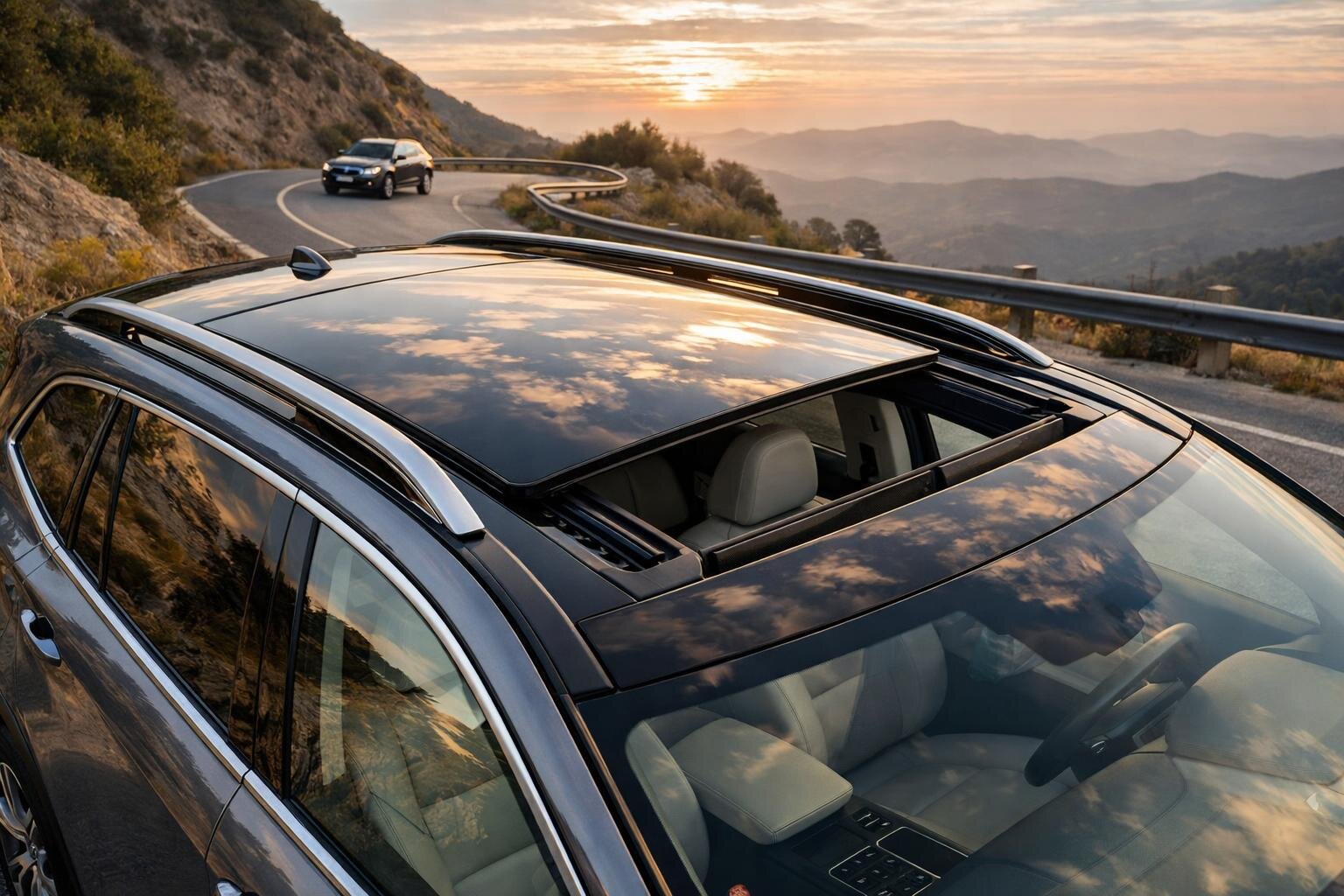
The modern panoramic roof is a different animal. Instead of a relatively small hole in a steel roof with a sliding panel, today’s popular setup is a large glass assembly bonded into the body, often spanning front and rear seating areas. It might still open in front, but just as often it is fixed glass with an interior shade. That shift happened gradually, then all at once.
By the late 1990s and early 2000s, automakers started using larger glass areas as a signature feature. The first generation Mercedes-Benz M-Class (1997) offered a sunroof and helped normalize the idea that SUVs should feel airy rather than trucklike. Around the same period, Renault’s first generation Scenic (late 1990s) and later models such as the Renault Avantime (early 2000s) leaned into expansive glass as part of their design identity. In the U.S., vehicles like the first generation Ford Edge (2007) made a “Vista Roof” style panoramic opening a showroom talking point. By the 2010s, big-roof glass spread rapidly through crossovers and mainstream sedans, and by the 2020s it was common to see it bundled into popular trim packages or used as a visual marker of an upscale variant.
It is difficult to point to one model as “the” turning point because the trend came from many directions at once: styling fashion, supplier capability, and buyers who had grown accustomed to brighter cabins in homes and consumer electronics. What is clear is that panoramic roofs moved from rare indulgence to near-default expectation in many segments, especially compact and midsize crossovers.
What changed: bonded modules, better adhesives, and supplier scale
The panoramic roof boom tracks closely with changes in how cars are built. Traditional sunroofs were mechanical systems integrated into stamped steel roofs. They relied on frames, tracks, drains, seals, and moving panels that had to fit within tight packaging constraints.
As suppliers got better at building large pre-assembled roof modules, automakers could treat the roof opening less like a bespoke body feature and more like an installable unit. Bonded glass technology is central here. Modern vehicles already depend heavily on structural adhesives for windshields and backlights, and those same families of adhesives and primers enabled larger bonded roof glass while meeting durability requirements for temperature cycles, water exposure, and body flex. The manufacturing logic is compelling: install a complete module on the line, reduce variation, simplify parts logistics, and create a feature customers can see instantly.
There is also an economic truth that rarely gets said out loud on dealer lots. A panoramic roof is easy to sell in 30 seconds. You do not need to explain torque curves or suspension geometry. You open the shade, flood the cabin with light, and the vehicle feels more expensive than its window sticker might suggest.
Why buyers wanted it: space you can feel without changing wheelbase
Americans have been buying crossovers in enormous numbers for two decades. Crossovers bring practical ride height and easy ingress, but they also tend to have thick roof rails, tall door structures, and higher beltlines for side-impact performance and styling. Those elements can make cabins feel darker than older wagons or minivans with larger side glass.
A panoramic roof counters that sensation immediately. It creates perceived spaciousness without increasing exterior dimensions or changing crash structures in obvious ways. For many buyers shopping compact SUVs such as the Honda CR-V, Toyota RAV4, Mazda CX-5, Hyundai Tucson, Kia Sportage, or Volkswagen Tiguan (competitors where panoramic roofs are commonly offered depending on trim), the glass roof becomes part of the “nice place to spend time” equation alongside softer materials, larger screens, and quieter cabins.
There is cultural context too. The rise of rideshare normalized sitting in the back seat of ordinary cars for long stretches. A brighter rear cabin matters more when adults are actually using that second row. At the same time, social media trained shoppers to value photogenic interiors: light upholstery under natural light reads as premium in photos; dark cabins do not.
The engineering trade-offs: structure first, then everything else
Engineers do not get something for nothing when they cut away steel from the top of a unibody vehicle. The roof is part of the safety cage; it contributes to stiffness that affects squeaks and rattles over time; it helps manage noise paths; it plays a role in rollover protection.
In the United States, roof strength requirements are addressed under Federal Motor Vehicle Safety Standard (FMVSS) No. 216a for roof crush resistance for many passenger vehicles (with applicability depending on vehicle class). Automakers design roofs to meet these standards with high-strength steels, reinforcements around openings, robust header rails above the windshield, and carefully engineered load paths through pillars. A panoramic opening changes where those reinforcements must live and how loads travel through the body structure.
That structural conversation has second-order effects owners can feel even if they never think about regulations. Stiffness influences how well doors stay aligned over years of potholes; it affects how quiet a car remains as miles accumulate; it can influence ride tuning because chassis flex interacts with suspension inputs.
It would be misleading to claim panoramic roofs automatically make vehicles unsafe or flimsy; modern vehicles are engineered around them from day one when they are planned properly. The honest point is narrower: large roof openings complicate structural design and leave less margin for error.
NVH: wind noise has more ways to find you
Noise, vibration, and harshness work is where panoramic roofs quietly earn their keep or expose their compromises. Glass itself does not absorb sound like layered trim does. Large panels can transmit rain impact noise more directly than insulated steel roofs with headliners packed against them.
Then there is airflow management. A traditional small sunroof created localized turbulence when tilted open; panoramic systems often have larger openings when openable sections slide back. Wind deflectors help but can introduce their own buffeting characteristics depending on vehicle shape and speed.
Even with fixed glass roofs that never open, sealing strategy matters because there are more edges and interfaces between glass, frame, body aperture seals, and interior trim pieces. A quiet cabin depends on consistent compression of seals across temperature swings from summer heat to winter cold.
Heat management: sunshine is not free
A bright cabin can be pleasant on an overcast day; in July it can become work for your air conditioning system. Automakers fight this with tinted glass, infrared-reflective coatings on some applications (availability varies by model), thicker laminated constructions in certain designs, plus power shades that close tightly against headliners.
The trade-off shows up in everyday behavior: owners who love panoramic roofs often drive with shades closed more than they expected. That does not negate the feature; it reframes it as optional ambience rather than constant openness.
For EVs especially, heat load matters because HVAC demand can affect range. It is common knowledge in EV ownership circles that climate control usage influences efficiency; however, attributing specific range impacts to panoramic roofs alone requires model-specific testing data that varies widely by vehicle design and glass specification. Without those verified figures for each model, the safest statement is qualitative: more solar load generally means more cooling demand unless mitigated by coatings or shading.
Curtain airbags and packaging: an invisible reason roofs got complicated
Side curtain airbags became widespread across the industry in the 2000s as safety expectations rose and regulations evolved around occupant protection in side impacts and rollovers (requirements differ by class and standard). Those airbags typically live along the roof rails above side windows.
A panoramic roof changes packaging around those rails because there is less traditional roof structure available for mounting points and trim coverage. Engineers must integrate airbag housings with drainage channels (for openable roofs), wiring for lighting or antennas (often integrated into glass), shade mechanisms if fitted, plus structural reinforcements around larger apertures.
This layering helps explain why panoramic roof assemblies feel like complete sub-systems rather than simple options. When something goes wrong in one part of that stack-up, diagnosis can be more involved than owners expect.
The new problems owners noticed: leaks (sometimes), rattles (sometimes), repairs (often complicated)
No responsible overview should claim that all panoramic roofs leak or rattle; many do not over years of use. Still, reported issues are common enough across brands that they have become part of buyer folklore.
Water management is at the center of most complaints involving openable designs. Sunroofs generally do not rely solely on perfect sealing at the glass edge; instead they use troughs and drain tubes to route water away from the opening. If drains clog due to debris like leaves or pollen sludge, water can back up into headliners or pillars. That risk exists with traditional sunroofs too; panoramic systems simply increase surface area exposed to water pathways while adding complexity in routing drains around airbags and wiring looms.
Squeaks and rattles often come down to tolerance stack-up between glass frames, interior trim panels, shade tracks, and body flex over time. Large shades can develop chatter if guides wear or if tension changes after repeated heat cycles.
Chips and cracks are another reality because glass lives up high where impacts from road debris still happen but are harder to see until damage spreads. Repairability varies by design: some chips may be addressable like windshield chips depending on location and severity; full panel replacement can be more involved because bonded assemblies may require specialized tools and procedures similar to windshield replacement but on larger parts with different access constraints.
Repair complexity deserves emphasis without turning into scare tactics. Panoramic roof service can require removal of interior trim pieces near airbags or headliners; calibration concerns may apply if sensors or cameras are disturbed during related work (this depends on vehicle design). Labor time varies widely by model; any attempt to generalize costs without verified estimates would be guesswork. The practical takeaway is simpler: when you choose big-roof glass you are choosing a system that can be expensive to put back exactly right if damaged.
Why dealers like it: option strategy in an era of packages
The panoramic roof also fits modern option packaging strategy neatly. Many brands have moved away from à la carte ordering toward trim walks where high-volume configurations are pre-built with bundled features such as premium audio, larger wheels, driver assistance tech packages (names vary by brand), and upgraded interiors.
A big glass roof signals “upper trim” instantly during a walkaround without requiring deeper product knowledge from sales staff or shoppers doing quick comparisons across lots full of similar crossovers.
A buyer’s checklist: what to verify on a test drive
If you are shopping new or used and wondering whether this feature will delight you or irritate you three summers from now, there are practical checks worth doing:
1) Operate it fully. If it opens, run it through tilt and slide functions several times while parked on level ground. Listen for binding or uneven movement.
2) Check wind noise basics. On your test drive at typical highway speeds where legal and safe (and where traffic allows), note whether wind roar seems concentrated overhead or around the leading edge of the opening area. Some vehicles are simply louder here than others due to shape and seal strategy.
3) Inspect shade operation. Power shades should move smoothly without shuddering; manual shades should glide without snagging at corners.
4) Look for water evidence. On used vehicles especially, inspect headliner edges near A-pillars and around grab handles for staining or waviness that could indicate past moisture intrusion. This does not prove an active leak but it warrants questions.
5) Ask about service history. If drains were cleaned or seals adjusted under warranty or during service visits, documentation helps clarify whether there was a one-time fix or recurring attention needed.
6) Consider your climate. In very hot regions or high UV environments where cars bake outdoors daily, prioritize strong shade coverage and effective air conditioning performance during your drive. If you routinely park outside at work with no cover, you will live with this decision every afternoon.
Who should think twice (and who will love it)
A panoramic roof tends to make sense for buyers who keep vehicles in garages when possible, enjoy bright cabins during commuting hours when glare is manageable, carry rear passengers often enough that second-row ambience matters, or simply value design touches that make everyday driving feel less utilitarian.
If you are a long-term keeper who plans to run a vehicle deep into high mileage ownership outside warranty coverage (especially if you park outdoors under trees), caution is reasonable. Not because failure is guaranteed but because any future issue can be harder to diagnose and more time-consuming to repair than simpler roofs.
The same goes for buyers who are sensitive to cabin heat or who live where summers dominate most of the year; you may end up using the shade closed so often that you question why you paid for extra glass at all.
The bottom line: why glass became default
The panoramic roof did not win because engineers forgot how to stamp steel panels; it won because it solves multiple modern product problems at once. It makes tall crossovers feel open inside despite thick pillars demanded by safety engineering. It gives brands an instant premium cue visible from across a parking lot. It fits modular manufacturing trends built around bonded assemblies supplied ready-to-install.
The compromises are real but usually manageable when expectations are set correctly: more heat load unless shading and coatings do their job well; more potential noise paths if sealing is imperfect; more complexity if repairs become necessary; routine drain maintenance on openable designs if your environment fills channels with debris.
If you want one clear answer to why so many new cars have panoramic roofs now: they sell comfort you can see immediately. The engineering response has been smarter structures, better adhesives, improved shading systems, tighter assembly control. Owners inherit both sides of that story: a brighter cabin on demand plus a sophisticated piece of hardware overhead that deserves respect rather than neglect.

0 comments
Join the discussion around this article.
Please login to comment.