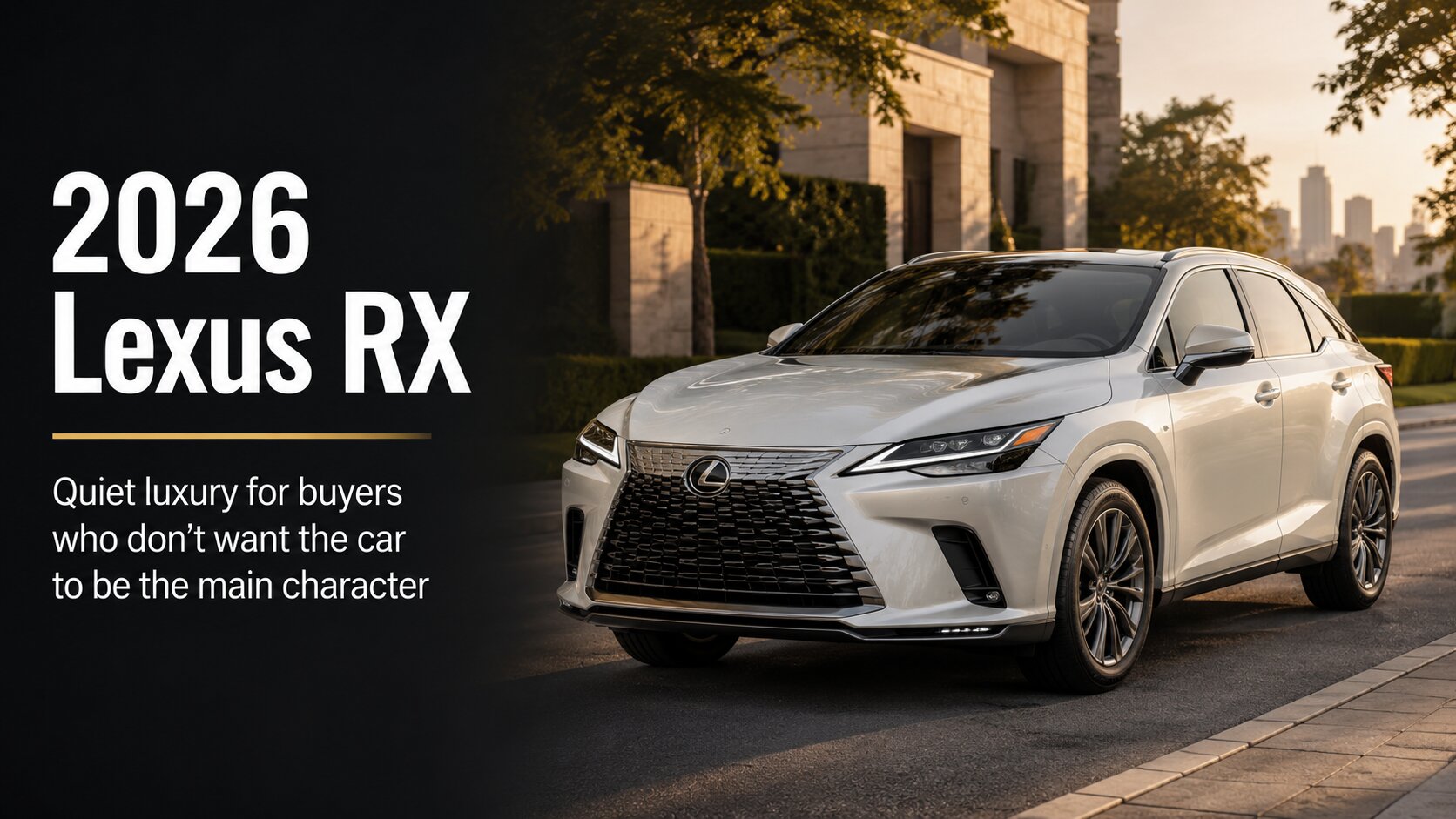
2026 Lexus RX Review: Quiet Luxury for Buyers Who Don’t Want the Car to Be the Main Character
The Lexus RX has always been an exercise in restraint. It is not the loudest, fastest, or most extroverted SUV in the luxury aisle. In typical American daily use, that is precisely the point. The RX’s appeal is the way it dissolves into your routine: calm cabin, gentle controls, a ride tuned for imperfect roads, and a brand promise that prioritizes low-stress ownership.
For 2026, Lexus continues with the fifth-generation RX introduced for 2023. As of my knowledge cutoff (August 2025), Lexus had not released a comprehensive set of U.S. market changes for the 2026 model year beyond what is already widely documented about this generation and its established powertrains. If Lexus introduces new packages, revised trim names, or updated driver-assistance calibrations for 2026, confirm those details against the official Lexus press kit and Monroney label on the specific vehicle you are shopping.
What can be said with confidence is this: the current RX formula is well understood. It is offered with a turbocharged four-cylinder (RX 350), a hybrid (RX 350h), a more powerful turbo hybrid (RX 500h), and a plug-in hybrid (RX 450h+). All are built around the same core mission, which is quiet luxury that does not demand attention.
Verified basics: model lineup, platform, and where it sits
Model: Lexus RX (mid-size luxury crossover SUV). Current generation launched for 2023 in the U.S.
Powertrains widely documented for this generation:
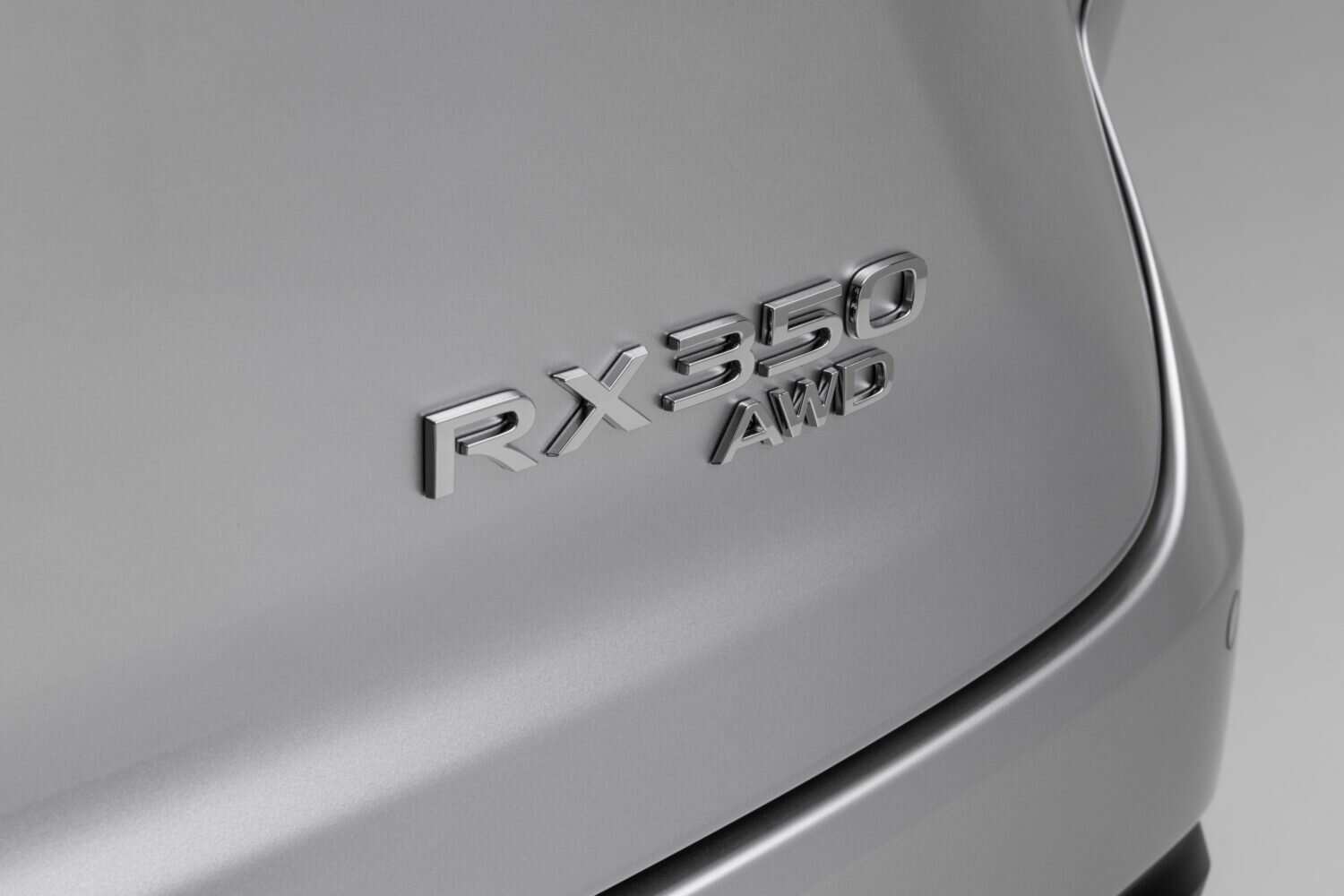
RX 350: 2.4-liter turbocharged inline-four (Lexus quotes 275 hp). Available with front-wheel drive or all-wheel drive depending on configuration.
RX 350h: hybrid system based around a 2.5-liter four-cylinder (Lexus quotes a combined 246 hp). Typically positioned as the efficiency play in the range.
RX 500h: performance-oriented hybrid using a turbocharged 2.4-liter plus hybrid components (Lexus quotes 366 hp) and standard all-wheel drive.
RX 450h+: plug-in hybrid (PHEV) pairing a 2.5-liter engine with electric drive. Lexus has quoted an EPA-estimated electric-only range of about 37 miles for this generation’s RX 450h+ in U.S. specification, though always verify the exact EPA listing for the model year you are buying.
Core competitors in the U.S.: Acura MDX, BMW X5, Mercedes-Benz GLE, Audi Q5 and Q7 (depending on how you cross-shop size), Volvo XC90 and XC60, Genesis GV80, Lincoln Nautilus, and to some extent Toyota’s own Grand Highlander Hybrid when buyers decide they prefer value over badge.
The RX’s positioning is subtly different from several of those rivals. A BMW X5 can feel engineered to impress a driver first; an MDX often leans into steering feel and chassis response; a Volvo XC90 sells serenity with Scandinavian minimalism; a Genesis GV80 courts buyers with dramatic styling and feature density. The RX tends to win shoppers who want premium materials and technology without being recruited into an enthusiast narrative.
Design: intentionally understated, but not anonymous
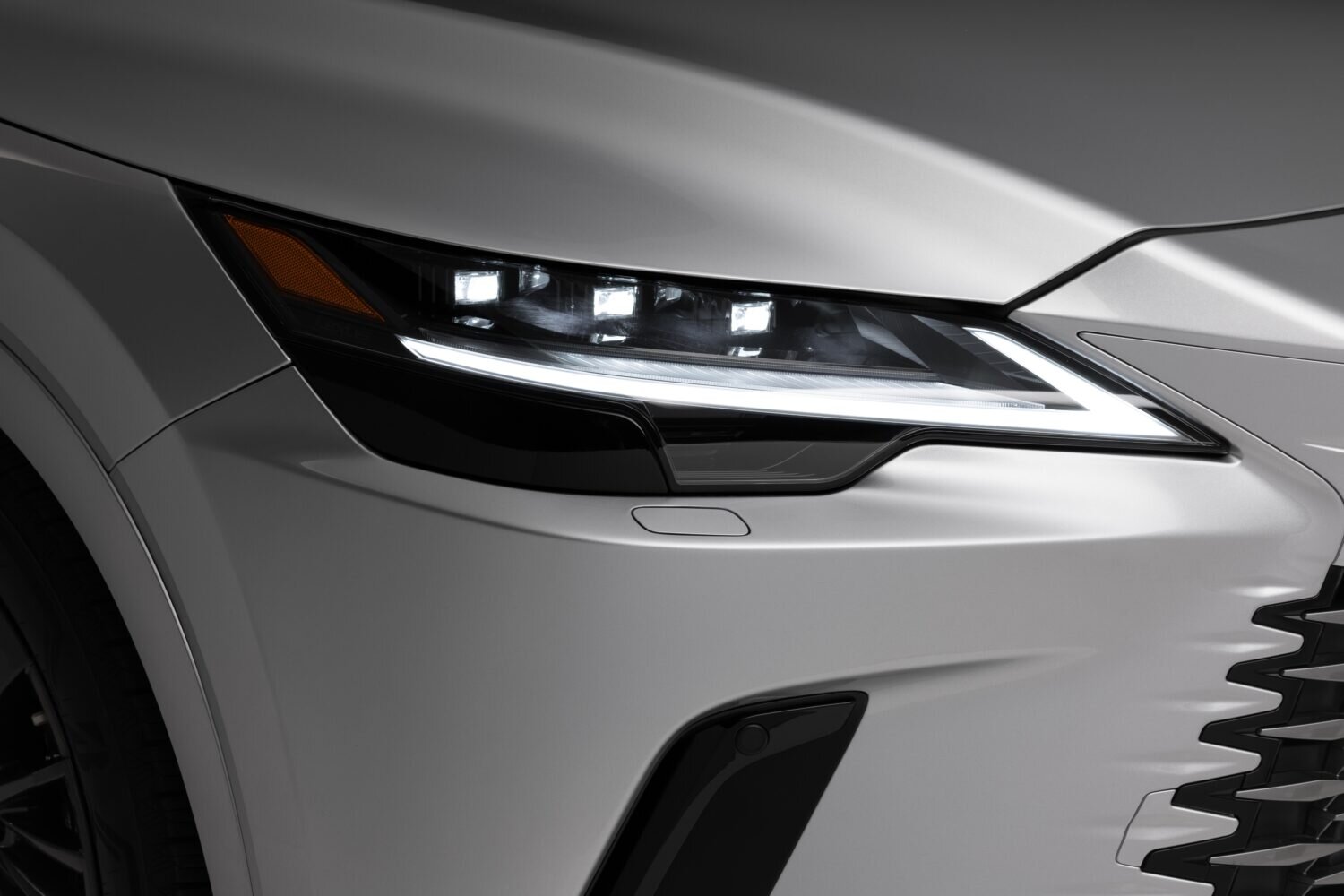
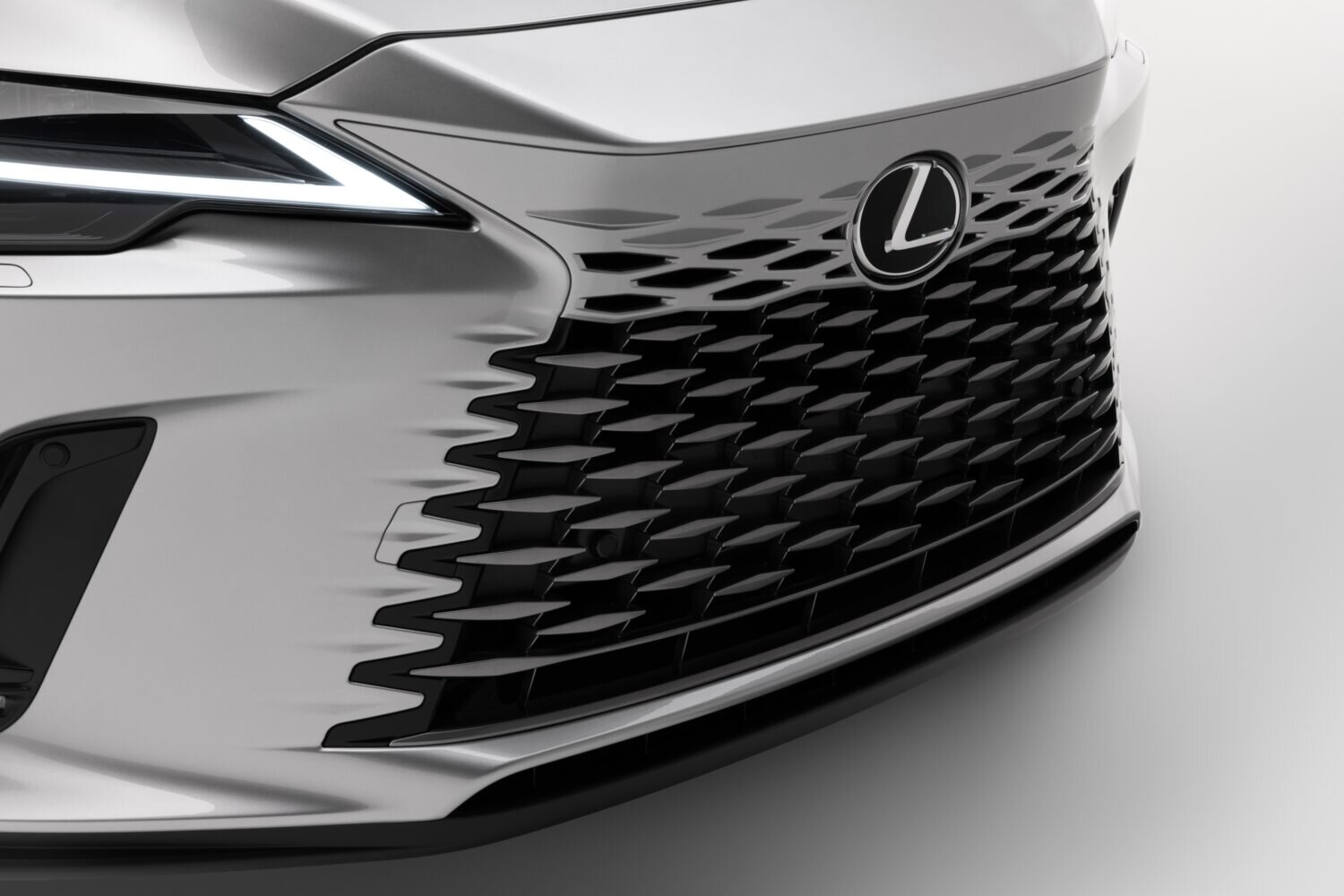
The current RX design language is sharper than older generations, yet it still reads as measured rather than theatrical. The grille treatment remains unmistakably Lexus, but the overall silhouette has matured into something more cohesive than past iterations that could look busy in profile.
If you are coming from an earlier RX, you may notice that this generation looks lower and wider in stance. That visual change aligns with what many buyers report wanting from a modern luxury SUV: confidence without bulk. In neutral colors that dominate dealer lots, it blends into upscale traffic in a way some owners will consider tasteful and others will consider too polite. Both reactions are fair.
Cabin calm: where the RX makes its strongest argument
Lexus has long treated noise suppression as part of its brand identity, and the RX continues that tradition. Even without quoting unverified decibel readings or instrumented results, it is widely accepted among reviewers that RX cabins prioritize isolation over road chatter and mechanical drama. In everyday commuting terms, it means phone calls feel easier and long highway stints ask less of you.
Material selection is central to this car’s definition of luxury. Depending on trim and options, you will find soft-touch surfaces where hands naturally land, convincing leather or leather-like upholstery choices (Lexus uses NuLuxe on many trims), and carefully damped switchgear that avoids flimsy clicks. The experience is less about one showpiece feature and more about consistent tactile quality.
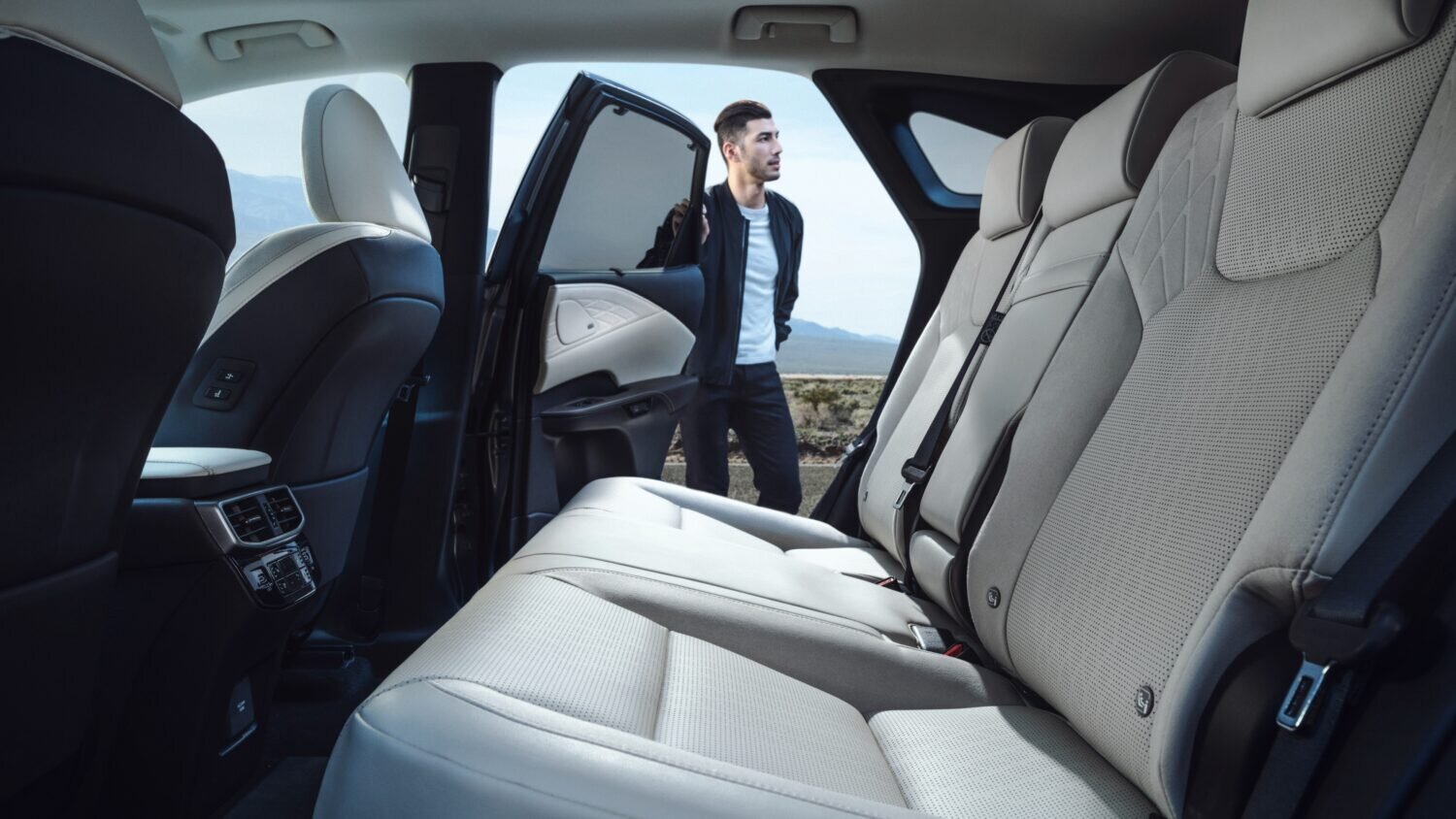
The seating deserves special mention because it aligns with how Americans actually use mid-size luxury SUVs: long drives at steady speeds, traffic patterns that punish posture, weekend errands that turn into two-hour slogs. The RX typically offers supportive front seats with broad cushions aimed at comfort rather than aggressive bolstering. If your priorities include easy ingress and egress or minimizing fatigue rather than maximizing lateral support on an on-ramp, that approach makes sense.
Second-row comfort will depend on configuration and how far forward front occupants sit, but this generation’s packaging generally supports adult-friendly rear seating for typical family duty. If you regularly carry taller adults behind taller adults, it is still wise to do a real sit test at your dealer because rivals like the Acura MDX can feel more accommodating in certain dimensions depending on seat positioning.
Controls and usability: Lexus gets many things right, then complicates one or two
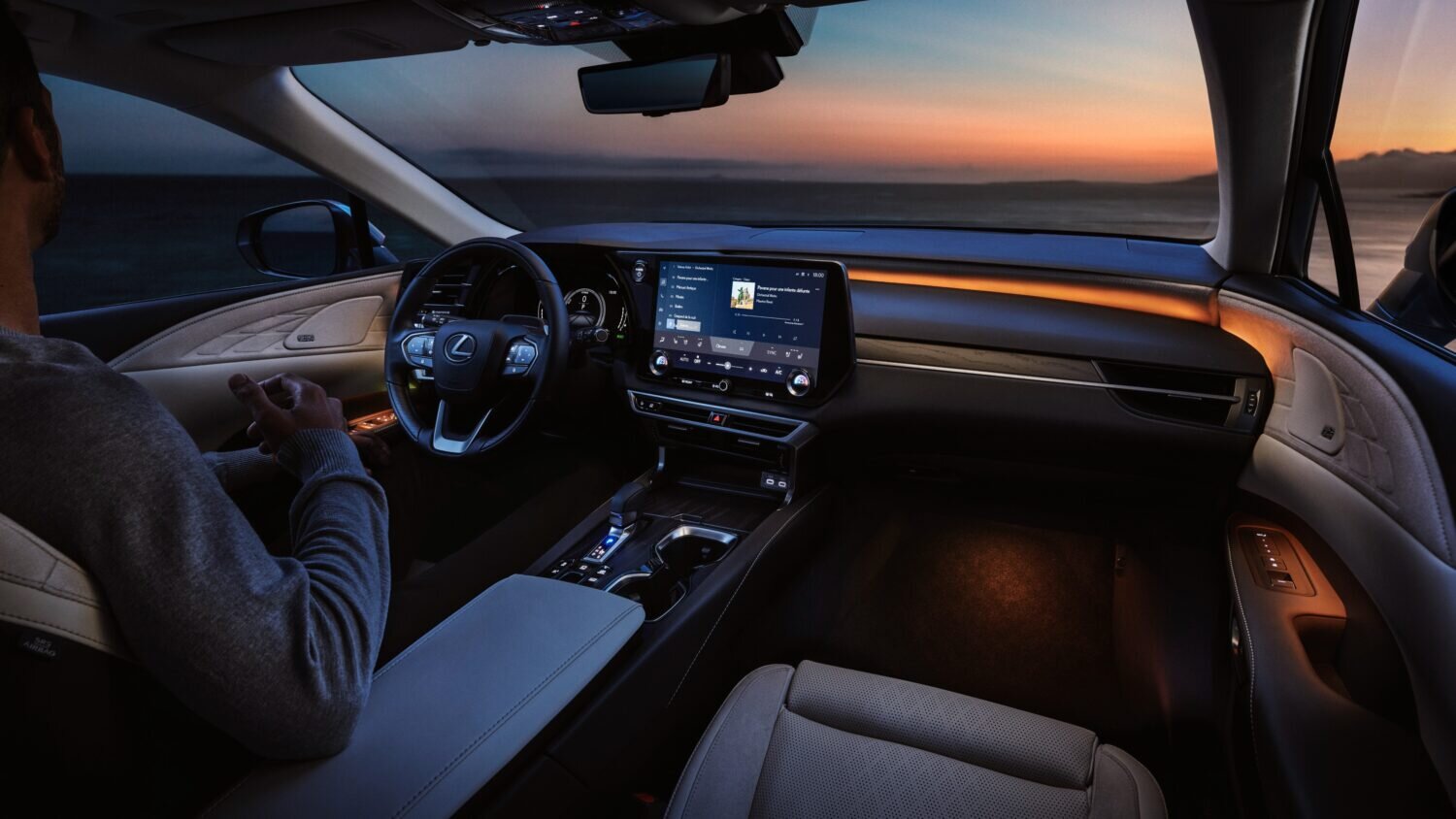
Lexus moved away from its old touchpad interface in recent years, which was a meaningful usability improvement across its lineup. The current infotainment system relies on touchscreen operation with available larger displays depending on trim. In principle it brings Lexus closer to what owners expect from modern smartphones: direct manipulation rather than cursor choreography.
The tradeoff is familiar in luxury cars right now: as screens get bigger and dashboards get cleaner, physical controls often shrink in number or become multifunctional toggles. Lexus still tends to preserve more conventional ergonomics than some German rivals that bury everything in menus, but you should pay attention to how climate settings are handled on the specific RX you are considering because daily satisfaction lives there. A cabin can be beautifully stitched and still irritate you if basic adjustments require too much attention.
The good news is that Lexus typically prioritizes legibility over flashiness. Fonts are readable; icons tend to be clear; the overall design language aims for calm rather than nightclub theatrics. That matters at night on unfamiliar roads when you want information without glare.
Driver assistance: helpful when calibrated gently
Lexus offers its suite of driver-assistance technologies under the Lexus Safety System umbrella (exact version depends on model year and trim). Commonly available features include adaptive cruise control with lane centering assistance, automatic emergency braking with pedestrian detection capability, blind-spot monitoring with rear cross-traffic alert, lane departure alert or lane tracing assistance depending on configuration.
The question for many luxury buyers is not whether these features exist but how they behave when used daily. A well-tuned system feels like quiet support; a poorly tuned one nags or intervenes abruptly. Across the industry, calibration varies by brand and sometimes by software update cadence. Without claiming test-specific behavior for a particular 2026 build I have not driven or seen validated reports for post-2025 updates, I would encourage shoppers to conduct a deliberate test drive using adaptive cruise and lane centering on familiar highways. Pay attention to steering corrections near exit ramps and how confidently it tracks lane lines in worn pavement conditions.
If you value assistance systems but dislike feeling supervised by your car, Lexus traditionally leans toward conservative interventions rather than aggressive autonomy theater. That tends to fit the RX personality well.
Powertrains in plain terms: choosing your version of “quiet”
The RX range offers multiple ways to achieve serenity, each with its own compromises.
RX 350 (2.4-liter turbo four): With 275 horsepower quoted by Lexus for this generation’s RX 350, it offers straightforward performance for merging and passing without turning your commute into an event. Turbocharged four-cylinders can sound busy when pushed compared with six-cylinders of old; however, many owners will find that normal throttle inputs keep things subdued enough. If your driving involves frequent short trips or stop-and-go congestion where efficiency matters less than simplicity, the RX 350 remains an uncomplicated choice.
RX 350h (hybrid): The hybrid’s combined output is widely cited at 246 horsepower for this generation. Its appeal is not speed; it is smoothness in low-speed operation and improved fuel economy versus non-hybrid variants in typical mixed driving. Hybrids also tend to feel particularly relaxed around town because electric assist reduces engine effort during gentle acceleration. If your routine includes heavy traffic or lots of suburban speed changes between 25 mph and 55 mph, this can be the most natural-feeling RX powertrain for daily life.
RX 500h (turbo hybrid performance): At a quoted 366 horsepower for this generation’s RX 500h, this is the RX that acknowledges buyers who want stronger acceleration without stepping into something as overtly sporty as an AMG-branded Mercedes variant or an M-badged BMW product. It also comes with standard all-wheel drive in U.S.-market spec as commonly documented for this model line. Still, expectations should be calibrated: “performance” here generally means confident thrust and composure rather than playful chassis antics.
RX 450h+ (plug-in hybrid): The PHEV exists for buyers who want quiet electric commuting without giving up gasoline range for road trips. Lexus has previously quoted roughly 37 miles of EPA-estimated EV range for this model line; confirm current EPA figures for the exact model year because ratings can change with certification updates or wheel-and-tire variations. In real ownership terms, PHEVs reward drivers who charge consistently at home or work; without regular charging habits they become heavier hybrids carrying unused capability.
Ride and handling: tuned for grace more than drama
The RX’s driving character generally aligns with its reputation: composed ride quality first, predictable handling second. That does not mean it feels floaty or disconnected; rather it means suspension tuning tends to prioritize impact absorption over razor-sharp body control.
This matters because American roads can be punishing even in affluent zip codes. Expansion joints on interstates, broken asphalt near construction zones, uneven concrete patches around bridges all add up to fatigue if a vehicle insists on transmitting every imperfection through its seat base and steering column. The RX typically aims to soften those edges without losing basic control at speed.
If your benchmark is a BMW X5 or even an Acura MDX Type S mindset where steering weight and chassis response are part of the purchase justification, you may find the RX less engaging at seven-tenths driving. Many buyers will not miss that energy at all; they will appreciate that passengers remain unbothered while errands accumulate quietly in the background.
Cargo space and family duty: practical luxury done sensibly
The RX remains fundamentally a two-row SUV in U.S.-market form for this generation; Lexus moved three-row duty to other products such as the TX (and previously offered an RX L before this generation). That clarity helps set expectations: you buy an RX because two rows are enough most days and you prefer better second-row comfort over squeezing in an occasional third row that no adult wants to occupy.
Cargo capacity figures vary by measurement method and configuration; consult official Lexus specifications for exact cubic-foot numbers by trim because small differences can show up depending on spare tire packaging or audio system placement. In practical terms though, the RX usually accommodates airport luggage runs comfortably for four people if packing is reasonable, handles stroller duty without theatrics depending on stroller type, and swallows normal Costco-style bulk trips when rear seats fold down.
Towing: check your specific rating before planning weekend toys
Towing capacity can vary by powertrain within the RX family across model years and configurations; do not assume one number applies universally across all trims. If towing matters even occasionally (small camper trailers, lightweight boats), verify towing ratings directly from Lexus documentation tied to your VIN or exact build spec before purchase.
The ownership vibe: why understated luxury still sells
The RX succeeds because it meets buyers where they live emotionally as much as mechanically. Many luxury customers do not want their vehicle to dominate their identity; they want it to support their day quietly while signaling discernment rather than showmanship.
Lexus also benefits from strong brand perception around durability and dealer experience in many U.S. markets. It would be irresponsible to promise specific reliability outcomes for any individual owner because maintenance history and usage patterns matter greatly; still, Lexus’ broader reputation influences shopping behavior in ways German competitors sometimes struggle to counter without aggressive leasing programs or incentives (which vary widely by region and time).
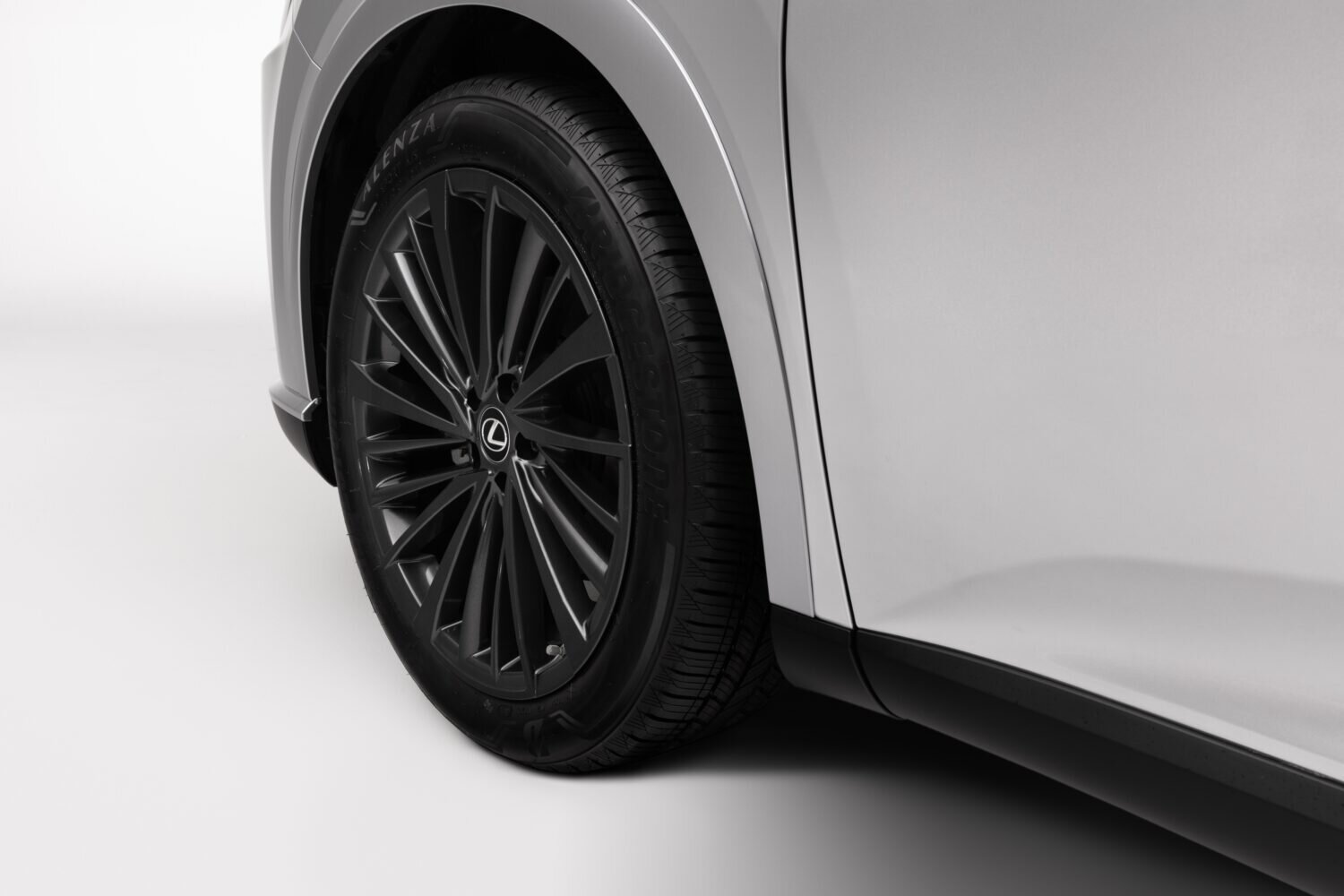
A realistic consideration when shopping an RX is availability versus exact preference match. Certain trims and color combinations can be easier to find than others depending on allocation patterns at local dealerships. If you are particular about interior colorways or wheel designs because visual quietness matters to you as much as literal quietness does, patience may be required unless you custom order or expand your search radius.
How it compares softly to rivals
Acura MDX: Often feels more driver-focused in steering response and chassis tuning while offering three-row availability (depending on trim). If you need occasional third-row use or prefer a more engaged feel behind the wheel, MDX may tempt you away from Lexus’ calmer approach.
BMW X5: A benchmark for balanced dynamics with strong powertrain options; it also tends to command higher option prices quickly as equipment piles up. Buyers who enjoy driving may prefer X5; buyers who prioritize serenity over stimulation often gravitate back toward RX after living with firmer setups.
Mercedes-Benz GLE: Offers rich ambiance and strong brand cachet; complexity rises with options and powertrain variety across the lineup can make comparisons tricky at dealer level. Some shoppers find Mercedes’ cabin presentation more theatrical than Lexus’, which can be either delighting or tiring depending on taste.
Audi Q7: Three-row flexibility plus clean design language; typically feels solidly built with restrained styling similar in spirit to Lexus but often more European-firm in ride character depending on wheels and suspension setup.
Volvo XC90: One of the most serene cabins aesthetically; also offers plug-in hybrid variants like Lexus does. Volvo’s interior minimalism appeals strongly to certain buyers who may find Lexus’ interface more conventional by comparison.
Genesis GV80: Striking design inside and out with generous features content; long-term ownership perception differs by buyer due to dealer network differences regionally versus Lexus’ established footprint.
Pros
Cabin serenity: The overall tuning philosophy favors quiet travel and low fatigue in daily use.
Tactile quality: Materials tend to feel carefully selected where hands touch most often; switchgear generally feels substantial.
Powertrain choice: Gas turbo, conventional hybrid, performance hybrid, and plug-in hybrid options cover a wide range of buyer priorities based on available specifications for this generation.
User-friendly luxury: More approachable ergonomics than some rivals that lean too heavily into screen-first control schemes (though specifics depend on trim).
Cons
No third row: For families needing occasional extra seating capacity within this size footprint, competitors like MDX or Q7 have an advantage.
Not an enthusiast’s pick: Buyers seeking sharp steering feedback or playful handling may find better matches elsewhere.
PHEV value depends on charging habits: The plug-in hybrid makes most sense when charging is consistent; otherwise its extra complexity may not pay off emotionally or financially depending on local electricity rates versus gasoline prices.
Verify year-specific updates: For 2026 specifically, confirm any changes against official Lexus information since comprehensive updates beyond what is known up through August 2025 cannot be asserted here without newer documentation.
The verdict: quiet luxury done deliberately
The 2026 Lexus RX remains one of America’s clearest answers to a simple question: what if luxury meant less noise instead of more spectacle? Based on widely known specifications of this generation’s lineup through August 2025, it offers credible powertrain variety from sensible turbo gasoline through hybrids up to a plug-in option that can cover many commutes electrically if you charge regularly.
If your ideal premium SUV disappears into your life while making every errand feel slightly more composed than it has any right to be, the RX continues to make excellent sense. Rivals may outshine it in outright performance theater or seating flexibility; few match its steady commitment to calm as a daily virtue.
Photo: Lexus / Toyota Motor Sales, U.S.A., Inc.


0 comments
Join the discussion around this article.
Please login to comment.