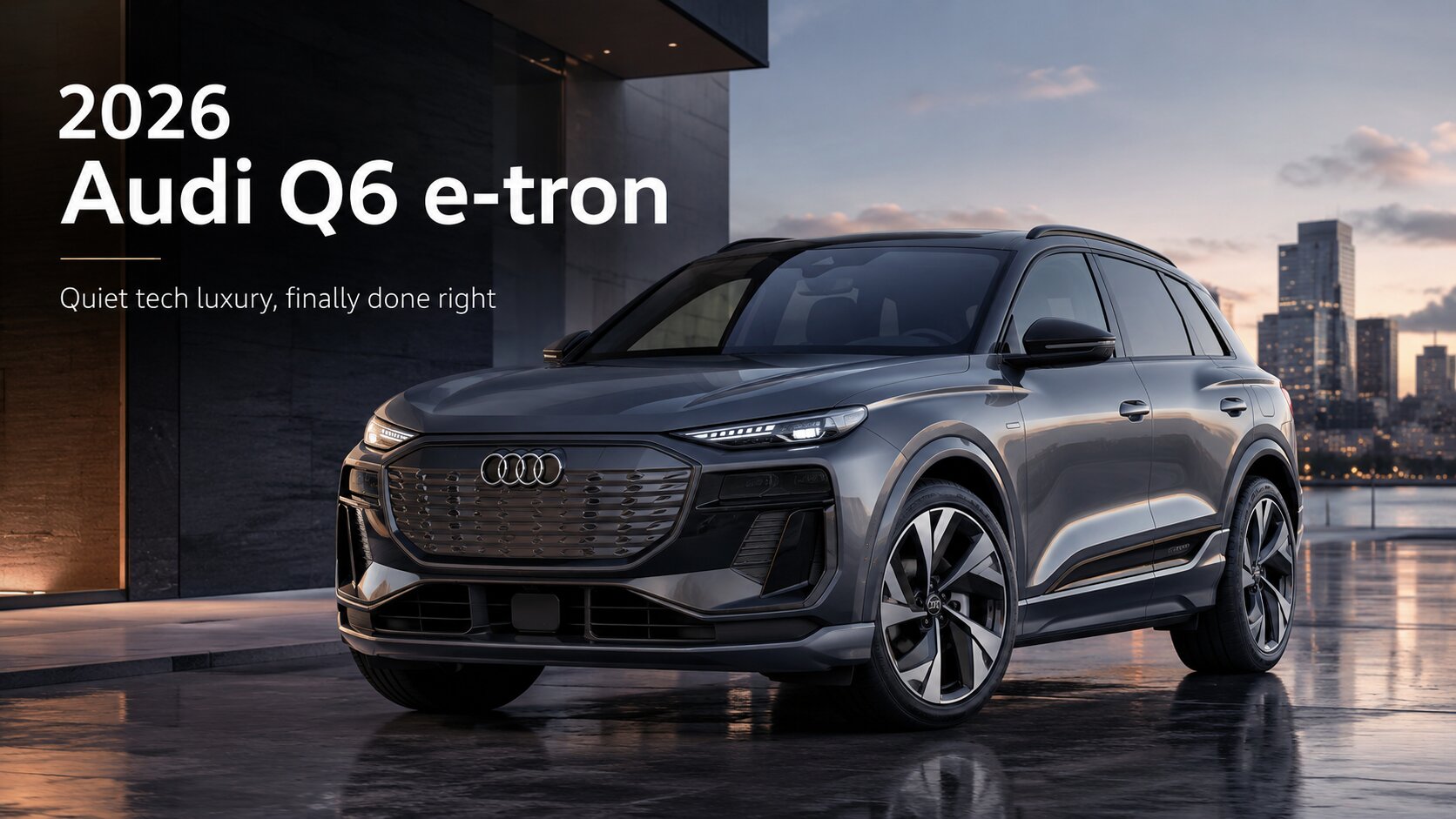
Verified facts before we get comfortable
The 2026 Audi Q6 e-tron is Audi’s new mid-size, two-row electric SUV for the U.S. market, positioned between the smaller Q4 e-tron and the larger three-row Q8 e-tron (which Audi has sold in the U.S. as its flagship EV SUV). The Q6 e-tron is also the first Audi model built on the Volkswagen Group’s new Premium Platform Electric (PPE), co-developed with Porsche and shared with the Porsche Macan Electric. That platform fact matters because it sets expectations for charging performance, electrical architecture, and overall sophistication.
In U.S. specification, Audi has announced Q6 e-tron variants including Q6 e-tron quattro and SQ6 e-tron. Audi has also shown a Sportback body style globally; U.S. availability can vary by model year and trim, so confirm with Audi USA if you are shopping a specific body style. The key powertrain story is straightforward: dual-motor all-wheel drive is central to the lineup at launch, with the SQ6 serving as the performance halo.
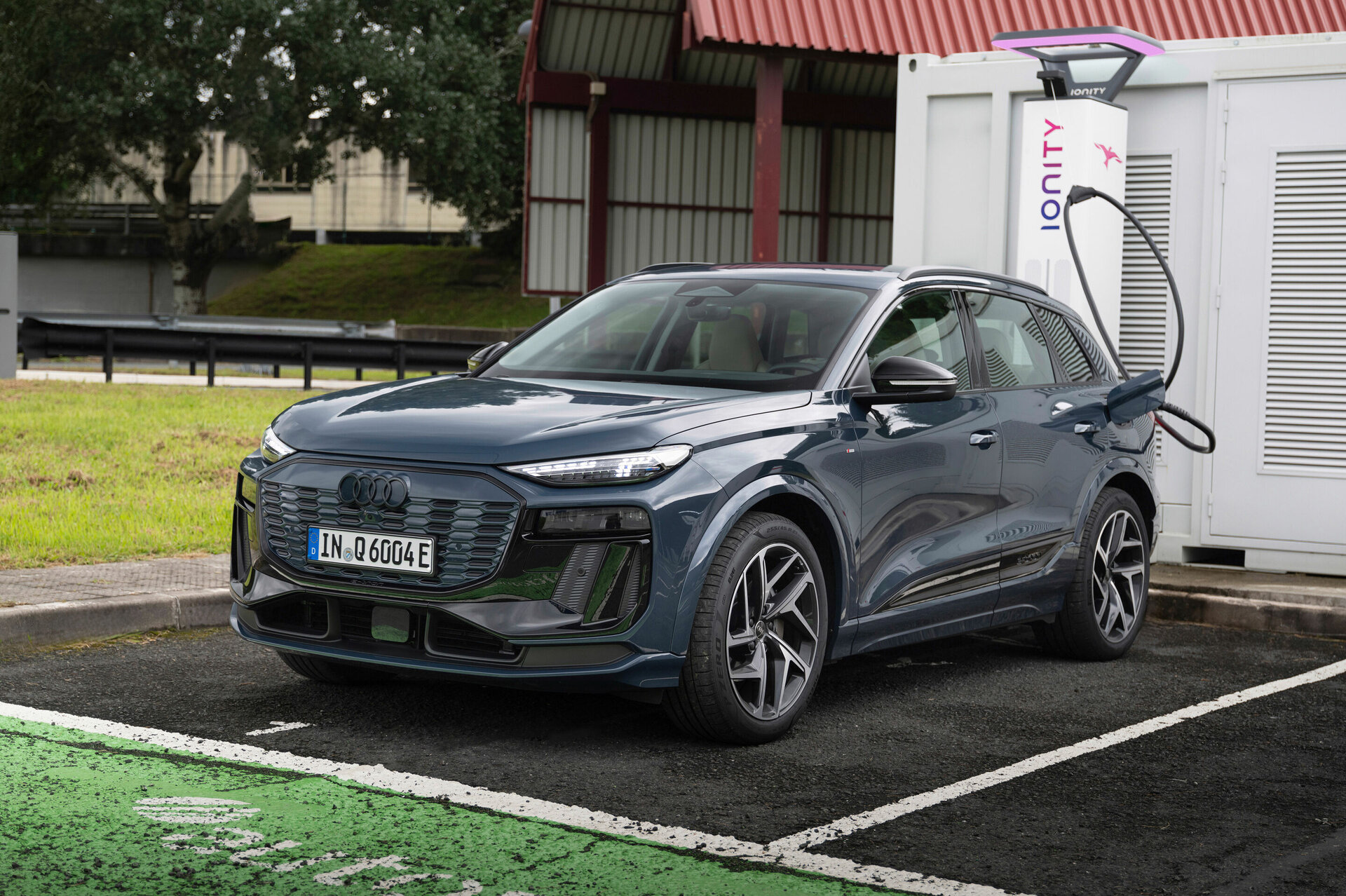
Charging is one of the headline improvements versus earlier Audi EVs. The PPE-based Q6 e-tron uses an 800-volt electrical architecture and supports DC fast charging up to 270 kW (based on Audi’s published specifications). Audi also states that under ideal conditions this enables roughly 10 to 80 percent charging in about 21 minutes. As always, that kind of claim assumes a healthy charger, a warm battery, and a cooperative charging curve. Real-world results vary by temperature, station capability, and battery state of charge.
Battery capacity is widely reported at around 100 kWh gross, with about 94.9 kWh usable for the Q6 e-tron family on PPE. Audi has communicated those figures in technical materials around the launch of the model. EPA range for specific U.S. trims can differ and can change with wheels and tires; if a particular 2026 configuration’s EPA number is not yet posted at time of purchase, treat any estimate as provisional.
Core rivals in America are familiar: BMW iX (more expensive but established), Mercedes-Benz EQE SUV (comfort-first), Tesla Model Y (value and charging network gravity), Cadillac Lyriq (American luxury alternative), Genesis Electrified GV70 (smaller but premium), Volvo EX90 (three-row class shift), and the Porsche Macan Electric (closest technical cousin with a sportier brief). Depending on price and size expectations, shoppers also cross-shop Rivian R1S, though it sits in a more adventure-oriented lane.
What the Q6 e-tron is trying to be
Audi’s best modern products tend to succeed when they do not audition for attention. The Q6 e-tron follows that instinct. It aims to deliver quiet luxury, clean design, credible tech, and everyday usability without leaning on science-fiction theatrics. That is a meaningful distinction in an EV market where some cabins feel like rolling concept cars and others feel like a tablet bolted to a bench.
The Q6’s role in the lineup is also strategic. The outgoing e-tron SUV that became Q8 e-tron was refined but heavy and relatively conservative on charging speed compared with newer rivals. The Q4 e-tron is accessible but not quite “full Audi” in ambiance or platform ambition. Q6 e-tron lands in the middle with a newer electrical backbone and an interior philosophy that reads upscale without being fussy.
Design: restrained surfaces, modern proportions
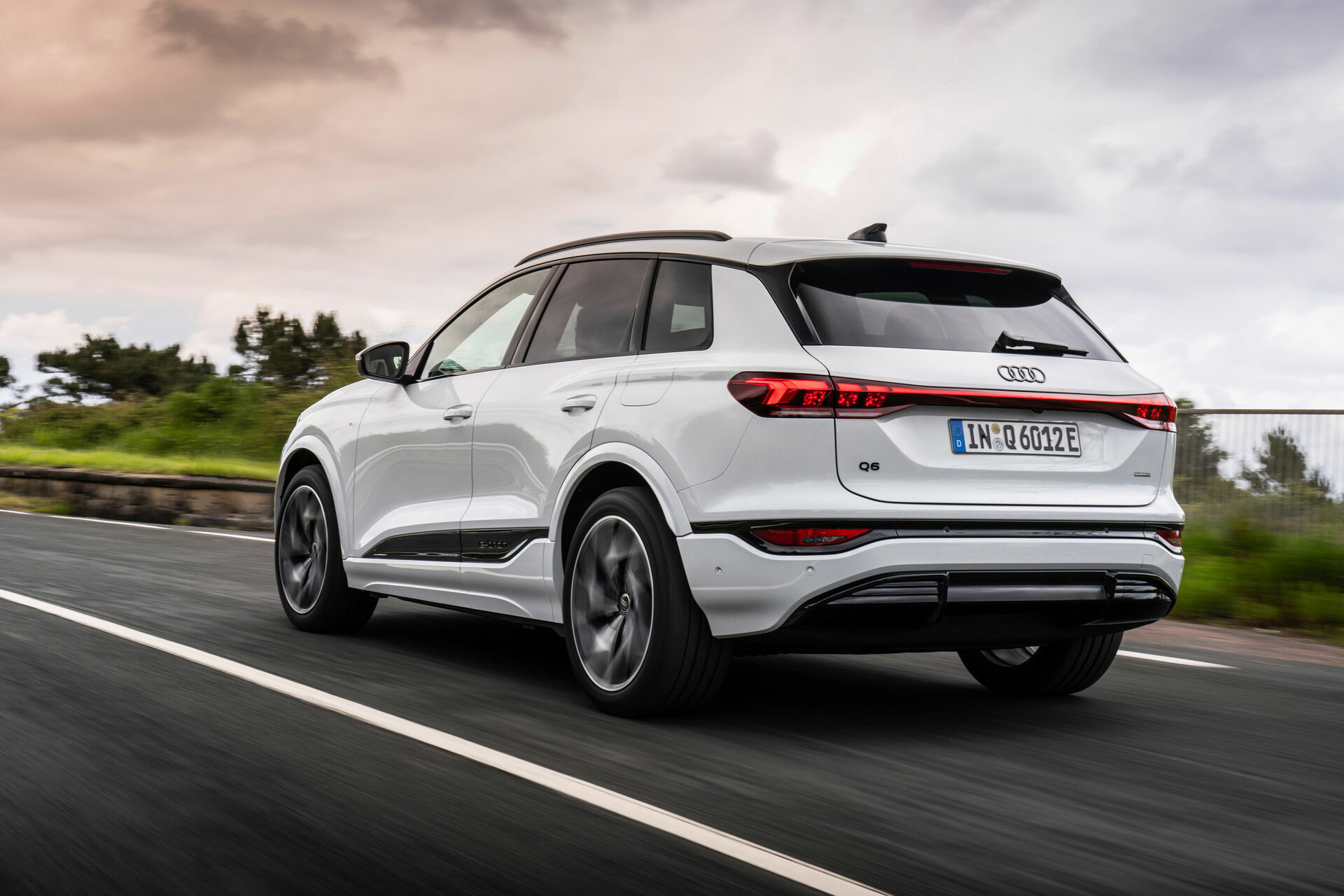
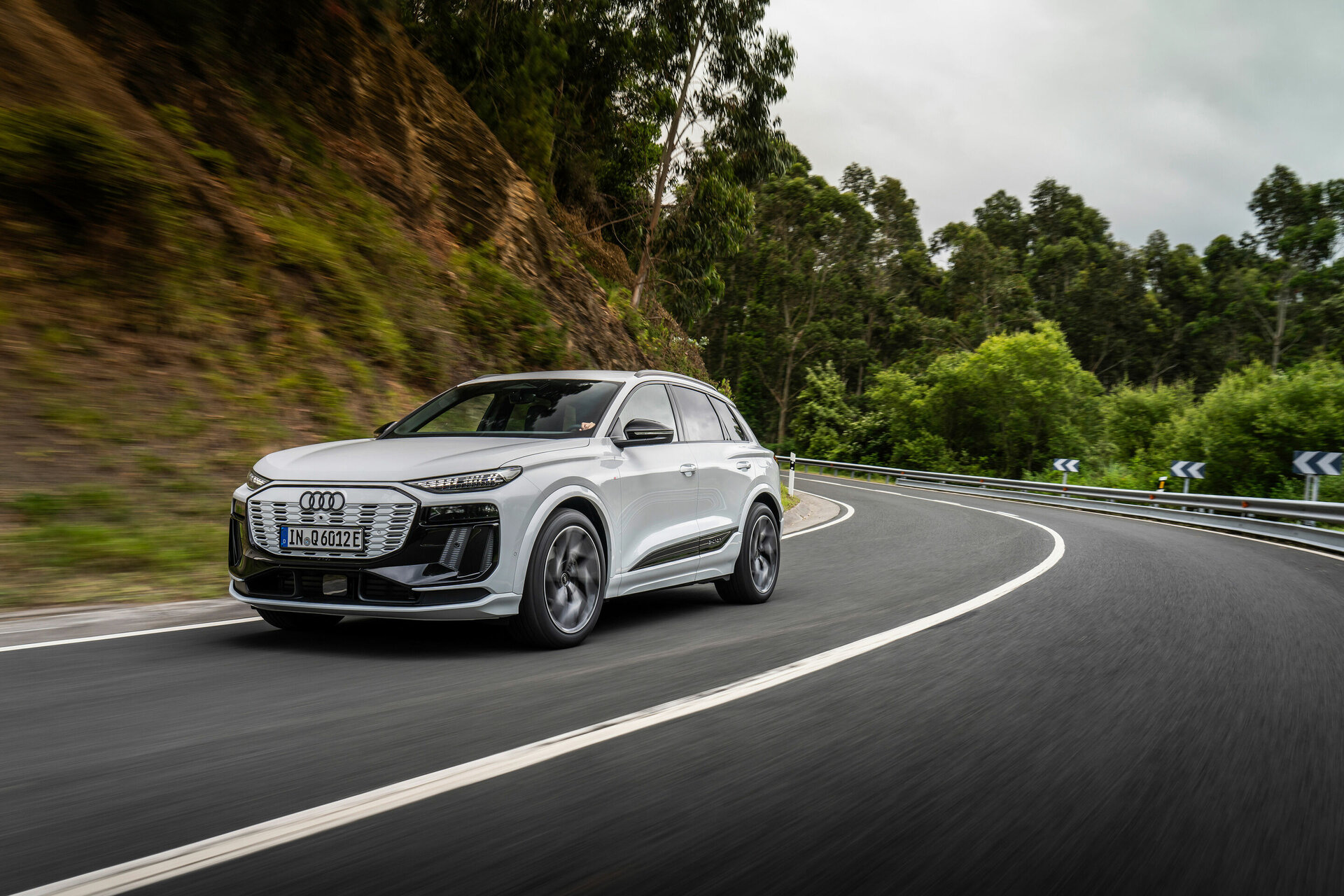
From the outside, Q6 e-tron looks like an Audi first and an EV second. The proportions are tidy for a mid-size two-row SUV, with short overhangs typical of dedicated EV platforms. The face uses Audi’s familiar Singleframe theme adapted for an EV, with lighting doing much of the branding work. Audi has made lighting a signature skill over several generations, and Q6 continues that direction with advanced LED technology available depending on trim and options.
This is not an overtly dramatic shape in the way some electric crossovers try to be. That will please many luxury buyers who want their neighbors to notice quality rather than novelty. It also means you buy it because it feels right at close range: panel fit, paint finish, glass quality, door heft. Those tactile cues matter in this segment.
Cabin: luxury by composition rather than spectacle
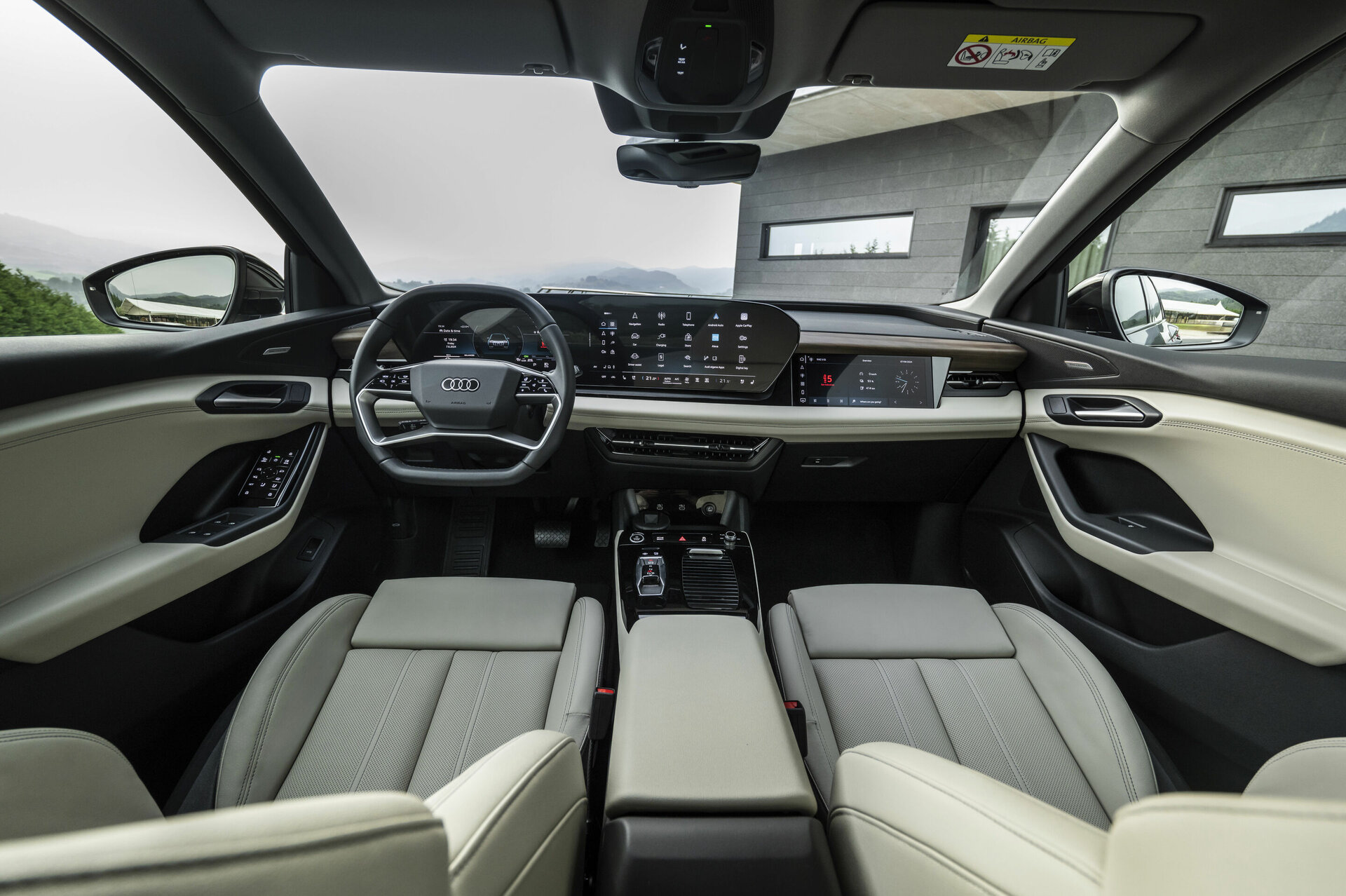
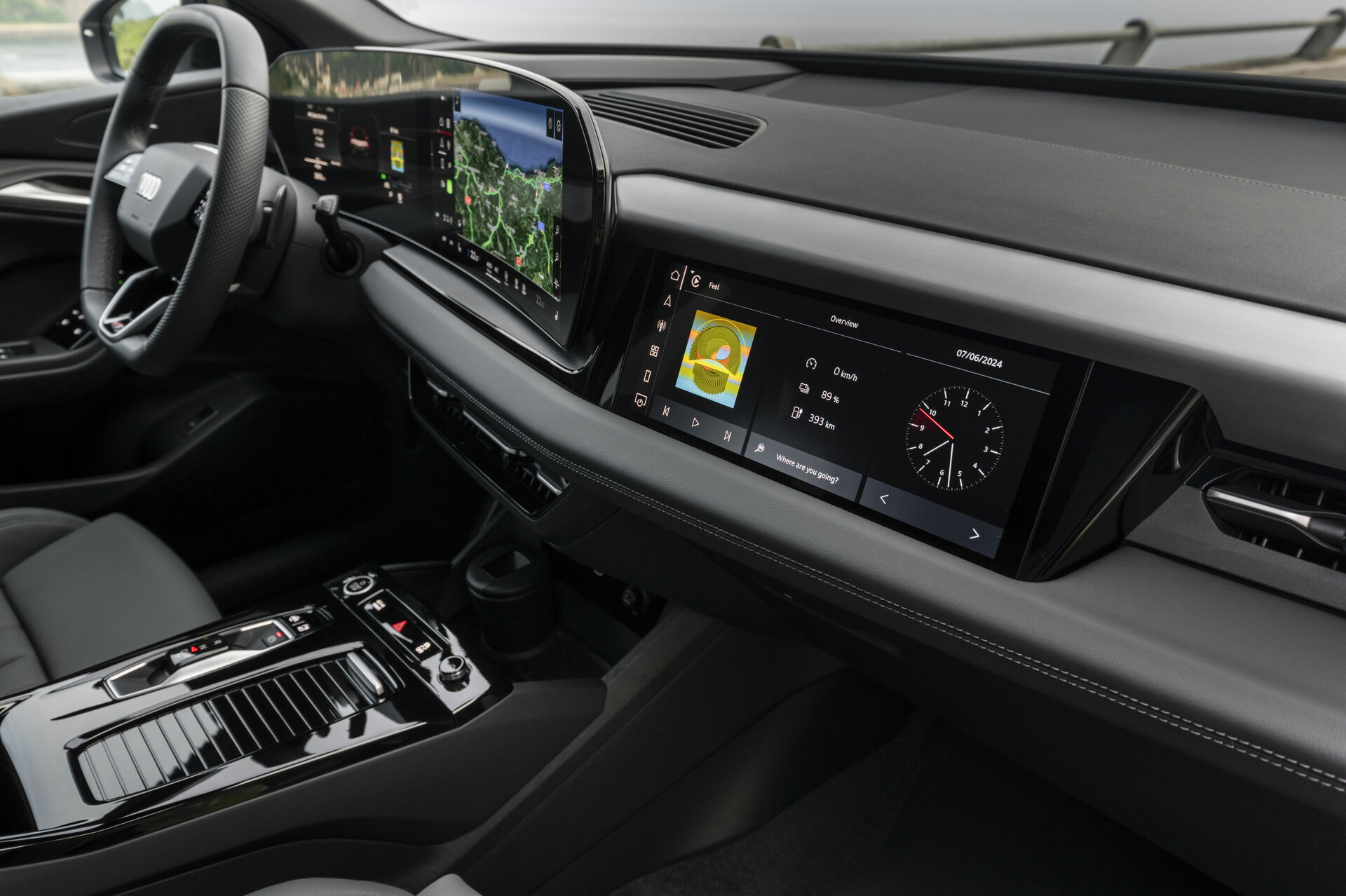
The best way to understand the Q6 e-tron interior is that it tries to look expensive without looking busy. Audi has introduced a new dashboard layout built around a curved display panel for the driver and center infotainment screen, plus an available passenger-side display integrated into the dash design rather than stuck on as an afterthought.
Audi’s published interior tech highlights include an 11.9-inch digital instrument display paired with a 14.5-inch central touchscreen (both under one curved glass surface), plus an optional 10.9-inch passenger display depending on trim and market configuration. Those screen sizes are now common among premium EVs; what separates them is integration and day-to-day behavior.
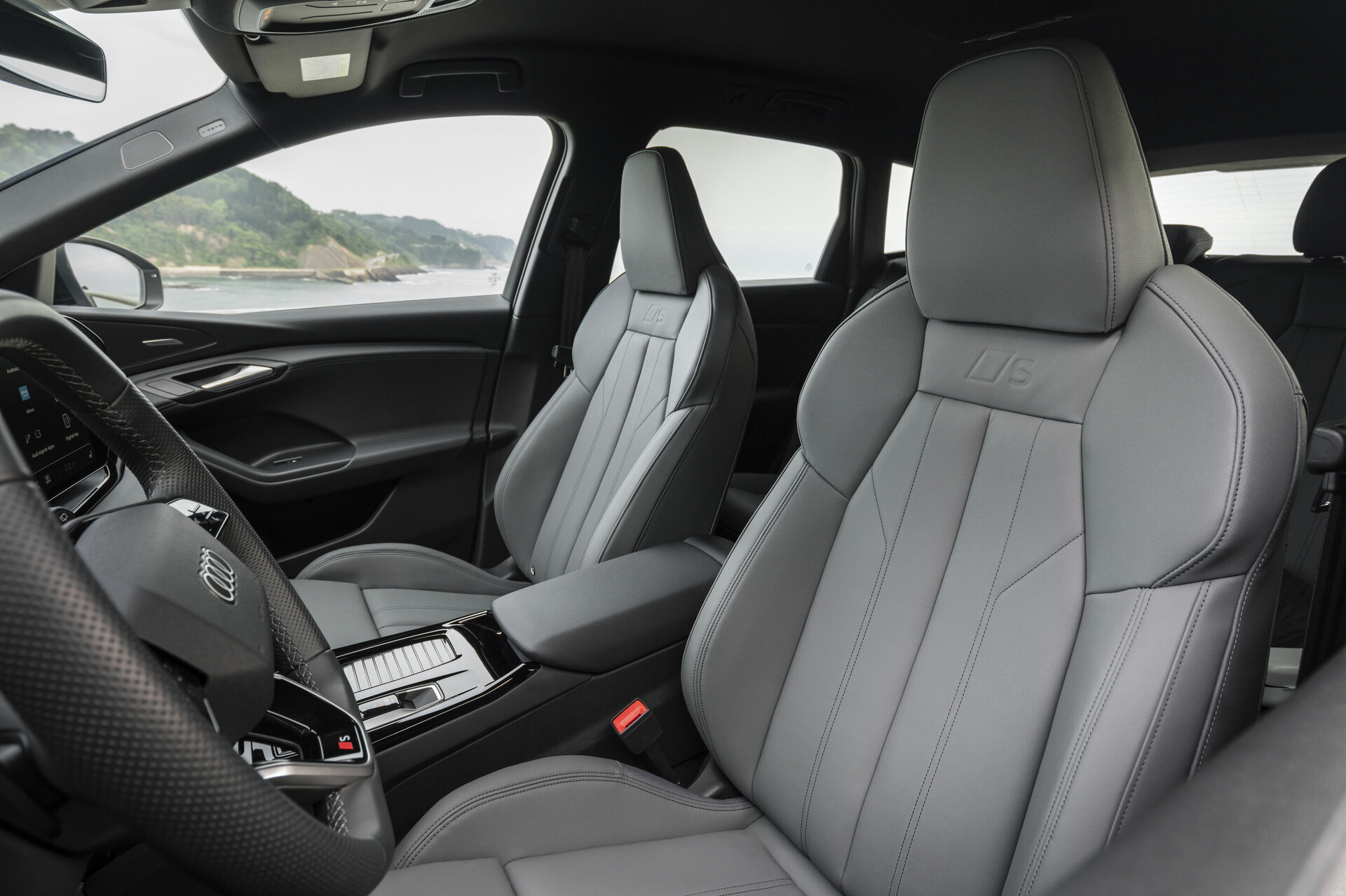
The Q6’s appeal is that it does not ask you to relearn what a luxury car should feel like just because it is electric. Materials selection matters more than pixel count: soft-touch surfaces where your elbows land, convincing metal accents rather than shiny plastic, and seat comfort tuned for long American highway miles rather than short urban commutes.
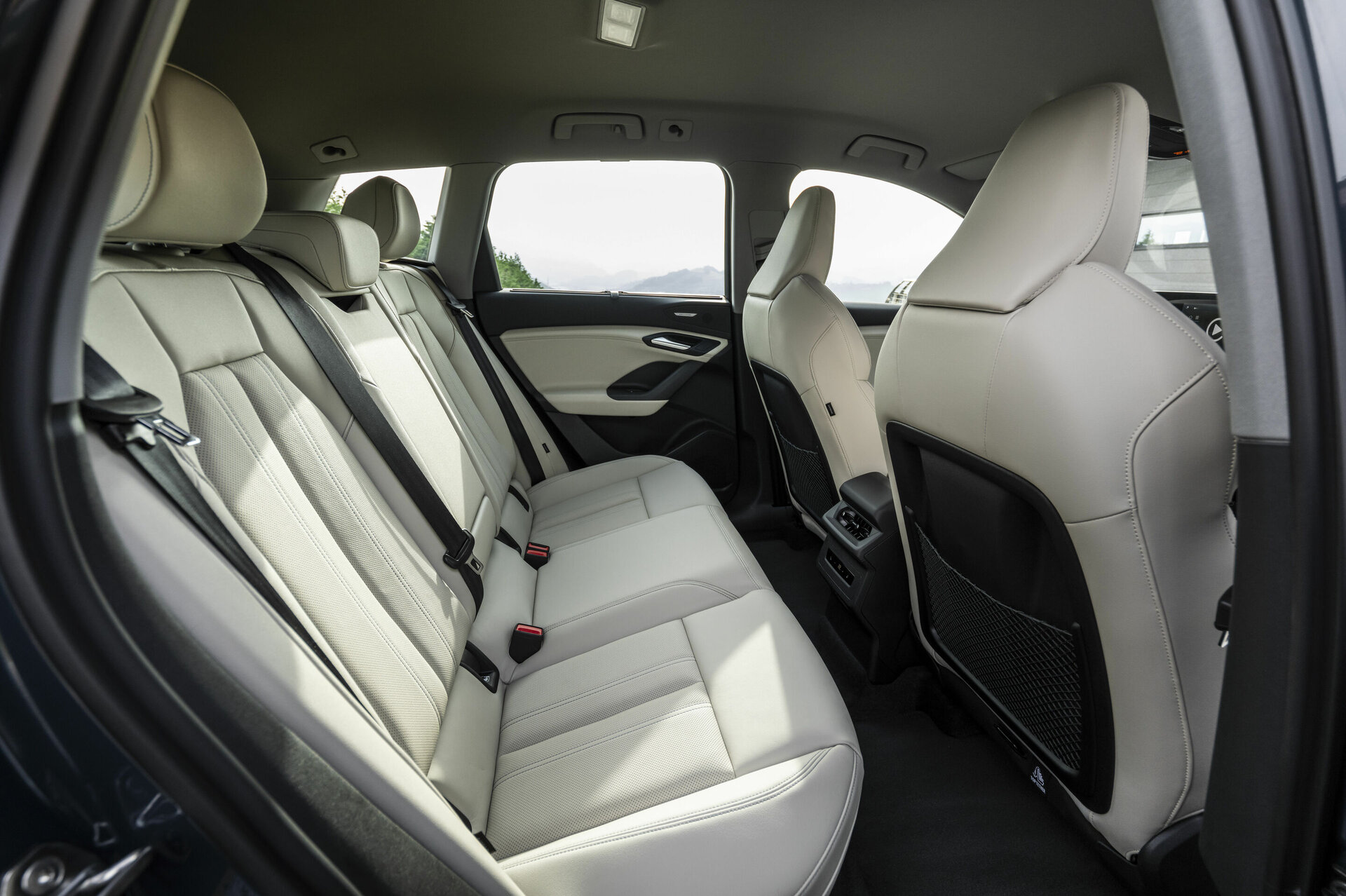
Audi has also emphasized improved cabin packaging on PPE, including practical storage solutions up front and rear cargo space appropriate for a two-row family hauler. Exact U.S.-spec cargo volume figures can vary by measurement method and whether you count underfloor storage; consult EPA or manufacturer specs for your configuration if this is a deciding factor.
Interface design: modern screens, less drama
Audi’s interface strategy here feels like an attempt to keep up with Tesla-style speed while retaining traditional automotive clarity. A proper instrument cluster remains in front of the driver instead of forcing everything into one central screen, which many buyers still prefer at this price point.
The available passenger display is a particularly telling feature from an editorial standpoint. It can reduce driver distraction when used well by letting a passenger handle navigation inputs or media browsing without reaching across the cabin. It can also become another glowing rectangle if your passengers do not care about it. Whether it feels tasteful depends on how often you travel with someone who actually uses it.
As with any modern infotainment system, polish shows up in small moments: how quickly it wakes up, whether Bluetooth pairing behaves consistently, whether climate controls are easy to access while wearing gloves in winter or while bouncing over broken pavement. Without claiming specific long-term test outcomes here, it is fair to say this is where premium brands win or lose loyalty now.
Powertrains: what we know about output
Audi has published performance figures for key variants at launch. The Q6 e-tron quattro uses dual motors for all-wheel drive; output has been communicated at roughly 422 horsepower with launch control enabling up to about 456 horsepower briefly (Audi’s stated figures). The SQ6 e-tron steps up significantly; Audi has cited around 483 horsepower with launch control enabling up to about 509 horsepower.
Those numbers place Q6 competitively among luxury electric SUVs without turning it into a straight-line caricature. A BMW iX xDrive50 sits higher on raw output depending on model year specification, while Tesla’s quickest Model Y variants deliver sharp acceleration but do so with a different kind of refinement and cabin isolation than most German luxury brands prioritize.
Torque figures are often discussed in EV marketing; however torque can be presented in different ways across brands (motor torque vs wheel torque). If you are comparing spec sheets across manufacturers, focus on verified acceleration times from official sources or reputable instrumented testing rather than torque headlines alone.
Charging expectations: finally competitive where it counts
The move to an 800-volt architecture is not just bragging rights. In typical American EV ownership, it influences how often you will choose DC fast charging over simply plugging in at home overnight.
Audi’s stated peak DC fast charging rate of up to 270 kW puts Q6 e-tron in the conversation with newer premium EVs rather than trailing them. The claimed roughly 10 to 80 percent time of about 21 minutes (under ideal conditions) reads like modern premium competence: quick enough that a coffee stop does not become an unplanned lunch.
There are caveats worth stating plainly because they affect satisfaction more than brochure language does:
First, peak power is not sustained power; charging curves taper as the battery fills. Second, many public chargers do not deliver their advertised output consistently due to sharing power between stalls or thermal limits. Third, cold weather can slow charging unless preconditioning brings battery temperature into its sweet spot before arrival.
On home charging, U.S.-spec details such as maximum AC charging rate depend on onboard charger configuration; many premium EVs support Level 2 charging around 11 kW in this class, but confirm what Audi fits to your trim for model year 2026 because onboard charger specs can vary by market and update cycle.
Range: avoid false precision
Shoppers want one number, but range does not behave like that in real life. Battery usable capacity around 94.9 kWh suggests respectable highway legs if efficiency is competitive; however official EPA range depends heavily on wheel size, tire compound, drive mode calibration, ambient temperature, speed profile, and accessory loads such as heat or air conditioning.
If an EPA figure for your exact 2026 trim is available at purchase time, use that as your anchor rather than early estimates circulating online or numbers from European WLTP testing (which tends to be more optimistic than EPA). If it is not available yet for a newly configured model year or wheel package, plan your buying decision around how you actually drive: daily commute distance plus winter penalty plus a buffer you can live with.
On the road: quiet authority rather than theater
Without claiming a specific instrumented test drive here, there are some reasonable expectations based on platform layout and brand tuning philosophy.
An EV skateboard architecture typically brings a low center of gravity thanks to underfloor battery placement. That usually benefits stability and reduces pitch under acceleration and braking compared with similarly sized gasoline SUVs.
Audi traditionally tunes steering and chassis behavior toward secure composure rather than playful looseness. In practice that often translates into calm tracking at speed and predictable responses when lanes narrow or pavement quality drops suddenly. For many luxury buyers who spend more time cruising than carving switchbacks, that composure reads as quality.
The SQ6 exists for those who want sharper responses and stronger acceleration reserves without leaving the Audi ecosystem for something like the Porsche Macan Electric or BMW iX M60 style of performance statement (model naming varies by year). Still, even performance-oriented Audis tend to keep their manners; they chase speed without sacrificing daily civility as aggressively as some rivals do.
Ride comfort: where luxury EVs earn their keep
The most persuasive argument for an electric luxury SUV can be ride serenity: fewer vibrations through the cabin structure at low speeds and less powertrain commotion when pulling away from traffic lights.
The Q6 e-tron should naturally benefit from EV smoothness around town because there is no transmission shifting through gears under light throttle. What matters more is how well suspension tuning filters broken pavement while controlling body motions over freeway undulations.
Wheel size plays an outsized role here. Many premium trims wear large wheels that look excellent under showroom lighting but can sharpen impacts over potholes and expansion joints common on American roads. If ride comfort ranks above visual drama for you, consider modest wheel sizes if available on your preferred trim level.
Noise isolation: quiet done properly
A quiet cabin is not simply “no engine sound.” Road noise from tires and wind noise around mirrors become more noticeable in EVs because there is less mechanical masking from an internal combustion engine.
Audi’s brand identity has long included solid body structures and careful sealing work; those strengths tend to translate well to EVs when executed properly. In typical use cases such as suburban commuting or interstate cruising at steady speeds, buyers should expect low conversation effort and less fatigue compared with mainstream crossovers.
If you are cross-shopping a Tesla Model Y, this becomes one of the most noticeable differences in philosophy: Tesla prioritizes software ecosystem and efficiency leadership; German luxury brands tend to chase isolation feel even when it costs weight or complexity.
Driver assistance: polished help beats flashy promises
Audi offers a suite of driver assistance systems appropriate for this segment: adaptive cruise control functionality depending on configuration, lane keeping assistance features depending on package selection, parking aids including camera systems depending on trim level.
The editorial question is not whether these features exist but how they behave minute-to-minute: whether lane centering feels smooth rather than twitchy; whether adaptive cruise reacts naturally when another driver cuts into your lane; whether alerts are calibrated so they inform rather than nag.
Audi typically aims for conservative calibration rather than aggressive autonomy theater; many buyers prefer that approach because it feels trustworthy instead of experimental. If hands-free capability is your priority feature set today rather than conventional assistance features, confirm exactly what level of hands-free driving support is offered on your chosen trim for model year 2026 because feature availability changes quickly across brands and years.
Practicality: family duty without pretending to be three rows
The Q6 e-tron sits squarely in two-row territory for American families who want premium comfort without stepping up into full-size SUV bulk. That means car seats should fit comfortably behind average-height front occupants in most scenarios typical of mid-size packaging, while cargo space should handle strollers and airport luggage without requiring Tetris-level planning.
If you routinely carry adults in the second row on long trips or need true three-row flexibility for carpools, vehicles like Volvo EX90 or larger gas alternatives may still make more sense depending on budget and charging appetite.
Rivals: where Q6 fits among familiar names
Porsche Macan Electric: The closest relative technically because both use PPE architecture concepts. The Porsche typically leans harder into steering feel and performance identity; Audi tends to offer a calmer expression of similar underlying tech along with its own design language inside and out.
BMW iX: A strong alternative if you value bold design choices inside and out along with impressive efficiency credentials depending on version. The iX often feels more avant-garde; Q6 feels more traditionally luxurious in presentation.
Mercedes-Benz EQE SUV: Comfort-first tuning appeals to buyers who prioritize softness over sharpness. Mercedes cabins can feel lounge-like; Audi cabins often feel tailored and architectural by comparison.
Cadillac Lyriq: A compelling American option when pricing aligns with expectations and availability cooperates. Lyriq emphasizes style-forward luxury; Audi emphasizes precision-forward luxury.
Tesla Model Y: Still difficult to ignore due to pricing pressure over time and access to Tesla’s charging ecosystem advantages depending on network access arrangements for other brands where you live and travel. Model Y wins on minimalism-for-speed-of-use; Audi counters with craftsmanship cues and traditional premium quietness many buyers still crave.
The ownership lens: what matters after the first week
Luxury EV ownership tends to settle into three routines: home charging habits; software update behavior; service interactions when something small goes wrong (a sensor complaint or trim rattle) rather than major drivetrain issues.
Audi’s dealer network strength varies regionally in America; some metropolitan areas have excellent EV-capable service infrastructure while rural coverage can be thinner simply due to population density realities. Before signing paperwork, it is sensible to ask your local dealer about EV-certified technicians onsite, typical appointment lead times, loaner policies for warranty work, and how software updates are handled (over-the-air versus dealer-installed) because those factors shape day-to-day satisfaction more than brochure specs do.
Tires are another real cost line item worth acknowledging upfront in this class because EV torque delivery can accelerate wear if driven enthusiastically. Wheel-and-tire packages also influence ride quality significantly as noted earlier; choosing style over sidewall height can quietly raise both replacement cost and impact harshness later.
Pros
PPE platform sophistication: A modern foundation shared with Porsche brings credibility where previous-generation EV platforms sometimes felt behind on charging pace.
Fast-charging promise looks contemporary: Up to 270 kW peak DC fast charging capability (based on published specs) positions Q6 well for road-trip use when chargers cooperate.
Cabin restraint done well: Screens are present but integrated into an interior that still reads like tailored luxury rather than gadget theater.
Audi-style quietness: Brand strengths in isolation should translate naturally into relaxed daily driving manners versus louder mainstream alternatives.
Cons
Range clarity depends on final EPA ratings: For any given buyer decision today, exact EPA range can hinge on trim details that may not be fully posted for every configuration at all times during rollout cycles.
Larger wheels may compromise comfort: As with most luxury SUVs now chasing visual drama through big rims, ride quality can suffer depending on wheel-and-tire selection.
Public charging reality still applies: Even with strong peak capability on paper, station reliability and cold-weather behavior remain real-world variables outside Audi’s control.
Verdict: quiet tech luxury without trying too hard
The 2026 Audi Q6 e-tron reads like an overdue correction in Audi’s electric SUV story for American buyers who want modern charging performance but still value understatement as a form of status. Its PPE underpinnings bring legitimate technical progress where it counts most day-to-day: faster DC charging potential through an 800-volt system and a contemporary electronics foundation designed from the start for today’s expectations.
The more interesting part is how deliberately unshowy it appears poised to be inside its own cabin. Where some rivals chase spectacle through novelty shapes or interface gimmicks, Q6 aims for composed craftsmanship backed by screens that look integrated instead of performative. For many luxury customers shopping this segment now, that restraint will feel like confidence rather than conservatism.
If you want maximum brand drama per dollar or hands-free autonomy headlines above all else, other badges may tempt you first. If you want an electric SUV that behaves like a mature luxury product from day one instead of asking you to adapt your habits around its quirks, the Q6 e-tron shapes up as one of Audi’s most convincing answers yet.
Photo: Audi of America

0 comments
Join the discussion around this article.
Please login to comment.