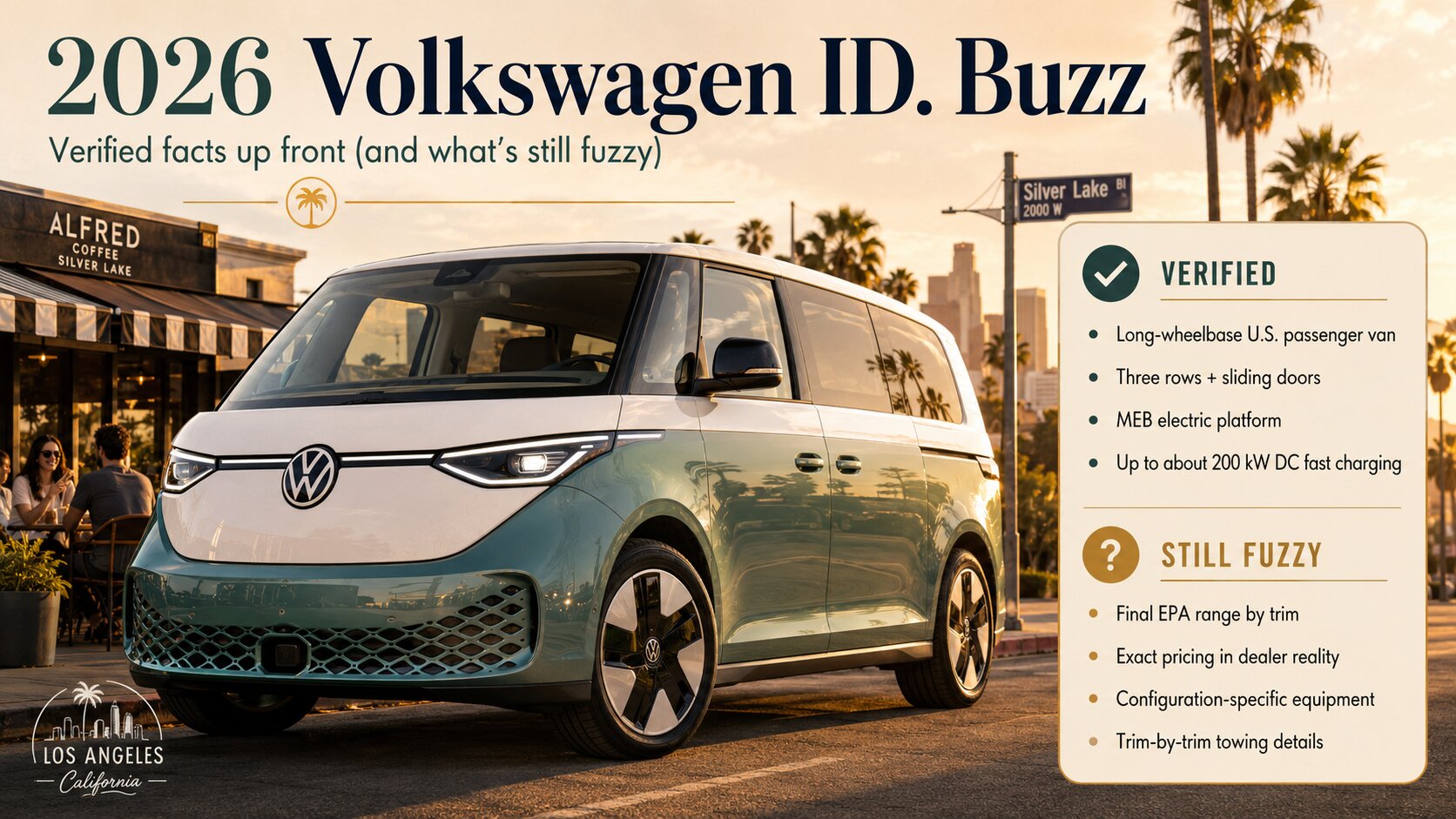
Verified facts up front (and what’s still fuzzy)
Before we get romantic about the ID. Buzz, let’s anchor this in what’s confirmed and widely reported. The Volkswagen ID. Buzz is VW’s modern, all electric take on the classic Microbus. In the US, it arrives as a longer wheelbase passenger van with three rows and sliding doors, built on the Volkswagen Group MEB electric platform (the same basic architecture used by vehicles like the VW ID.4 and Audi Q4 e-tron). The Buzz uses a large lithium ion battery around 91 kWh gross (roughly mid 80s kWh usable in most reporting), and it supports DC fast charging that VW has quoted at up to about 200 kW under ideal conditions.
Powertrain wise, US models have been discussed in rear wheel drive form with a single motor around 282 horsepower, and an all wheel drive dual motor setup around 335 horsepower. Those figures have been widely repeated in mainstream coverage and align with VW’s messaging for the US bound Buzz. Exact EPA range varies by configuration; published estimates for the US market have landed in the neighborhood of the mid 200 mile range depending on drivetrain and wheels, but final EPA ratings can differ by trim and options and should be treated as configuration dependent until you’re looking at a specific window sticker.
Pricing is also a moving target because model year packaging changes and dealer reality can complicate things. The ID. Buzz has been positioned as a premium lifestyle van in the US, with MSRPs commonly reported starting in the low to mid $60,000 range before destination for some configurations, then climbing quickly with higher trims and AWD. If you are shopping, treat any number you see online as “starting point,” then confirm with VW’s current configurator and local inventory.
Competitors are a little unusual because there is not a direct electric minivan equivalent sold nationwide in the US right now. In spirit, the closest lifestyle rivals tend to be three row EV SUVs like the Kia EV9, Rivian R1S, Tesla Model X, Volvo EX90 (availability depends on timing), and even gas or hybrid people movers like the Toyota Sienna or Kia Carnival if your priority is maximum passenger usefulness per dollar rather than full EV living.
2026 Volkswagen ID. Buzz Review: The Electric Van That Turns Errands Into a Small Event
I live in Los Angeles, where cars are both transportation and personality broadcast. Most of us are not just commuting; we’re curating our day in motion. Coffee run becomes a tiny ritual. A trip to Target becomes a social outing. And that’s exactly where the Volkswagen ID. Buzz makes sense, not as an appliance but as a rolling mood.
The thing about vans is that they are secretly the best body style for real life. Sliding doors do not care if someone parked six inches from your line. A tall roof does not ask you to crouch or contort when you’re buckling kids into car seats or coaxing friends into the third row after dinner in Silver Lake. A big glasshouse makes city driving feel less like peering through mail slots. But vans have also carried baggage for decades: school run stigma, rental fleet vibes, the sense that you gave up on being interesting.
The ID. Buzz tries to flip that script with design charm so strong it practically waves at strangers first. It’s an EV van that looks like it wants to be invited places. The question is whether it works as daily transportation in 2026 America, where charging infrastructure is improving but still uneven, where SUV culture is baked in, and where price tags matter even to people who pretend they don’t.
Design: nostalgia without cosplay
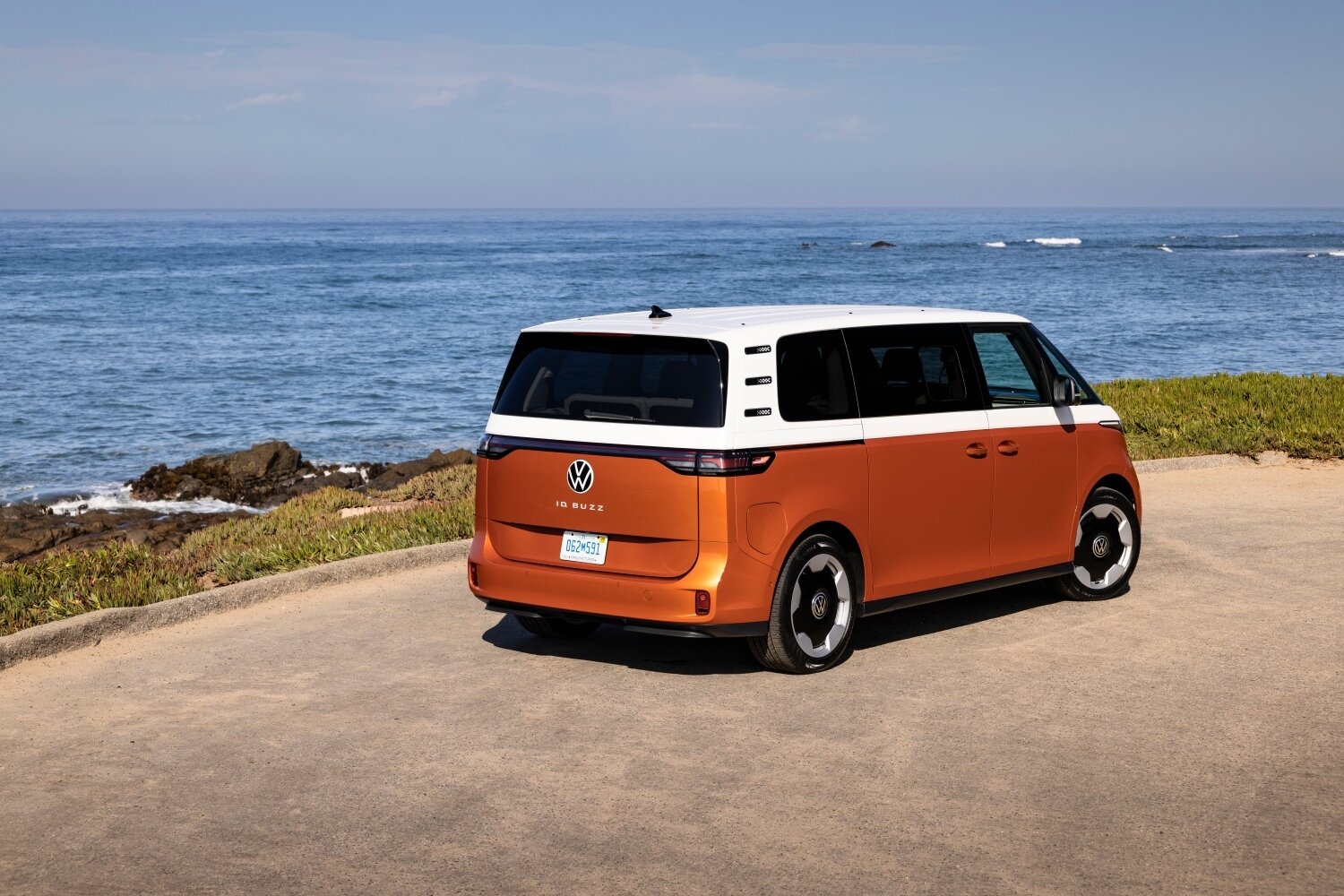
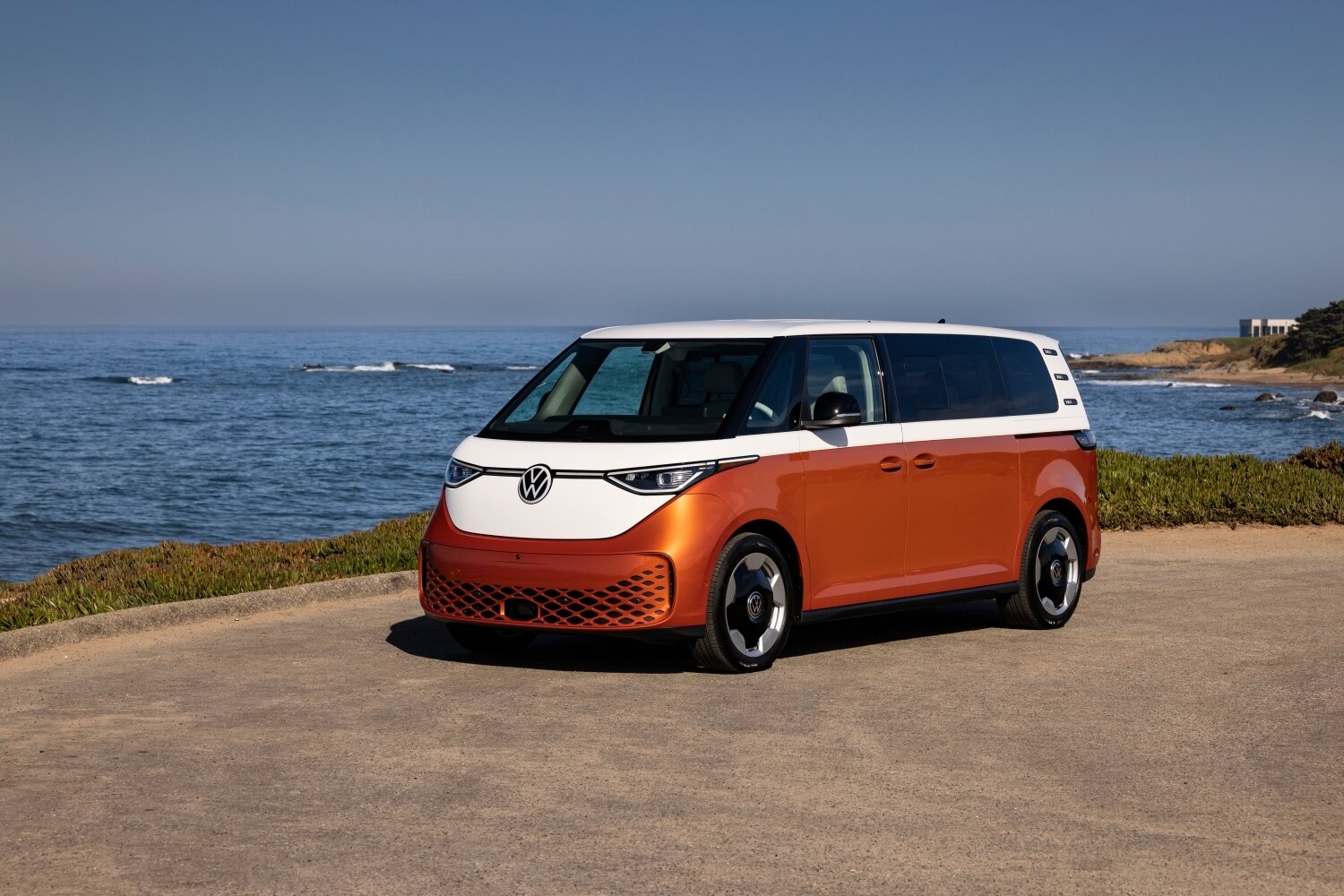
VW could have phoned this in with a retro face and called it a day. Instead, the ID. Buzz leans into friendly proportions and clean surfacing that reads modern even if you have never seen an old Microbus photo on your feed.
The nose is short because there’s no big engine up front. The windshield sits far forward, which gives it that classic cab forward vibe without feeling like you’re driving a bus. Two tone paint options (availability depends on trim) are a huge part of the appeal; they make the Buzz look like it belongs near a beach parking lot even when it’s actually headed to Costco.
And then there are the wheels pushed out toward the corners, an EV packaging trick that helps both stance and interior space. It’s tall but not clumsy looking. It’s boxy but not punitive. In LA traffic, where everything from G Wagons to Model Ys blends into one gray stream of sameness, this thing stands out like a well designed piece of luggage.
A quick spec check: what you’re actually buying
Based on widely available specifications for US market ID. Buzz models:
Platform: Volkswagen Group MEB electric architecture.
Battery: Around 91 kWh gross (usable capacity commonly reported lower; VW tends to quote gross capacity publicly). If you care about real world range math, usable kWh matters more than gross, but exact usable numbers are not always emphasized in consumer facing materials.
Power: Roughly 282 hp for rear wheel drive versions; roughly 335 hp for dual motor all wheel drive versions (as widely reported for US models).
Charging: DC fast charging up to about 200 kW under ideal conditions has been quoted by VW for this vehicle family; actual peak rates depend on battery temperature, state of charge, charger capability, and software strategy.
Seating: Three rows for US passenger versions.
Layout: Sliding rear doors on both sides.
Towing: Towing capacity varies by market and configuration; US specific numbers should be verified by trim because towing ratings can change with drivetrain and equipment. If towing is central to your purchase decision (small trailer, e bikes plus cargo trailer), confirm official US ratings before signing anything.
The cabin: where van logic meets EV minimalism
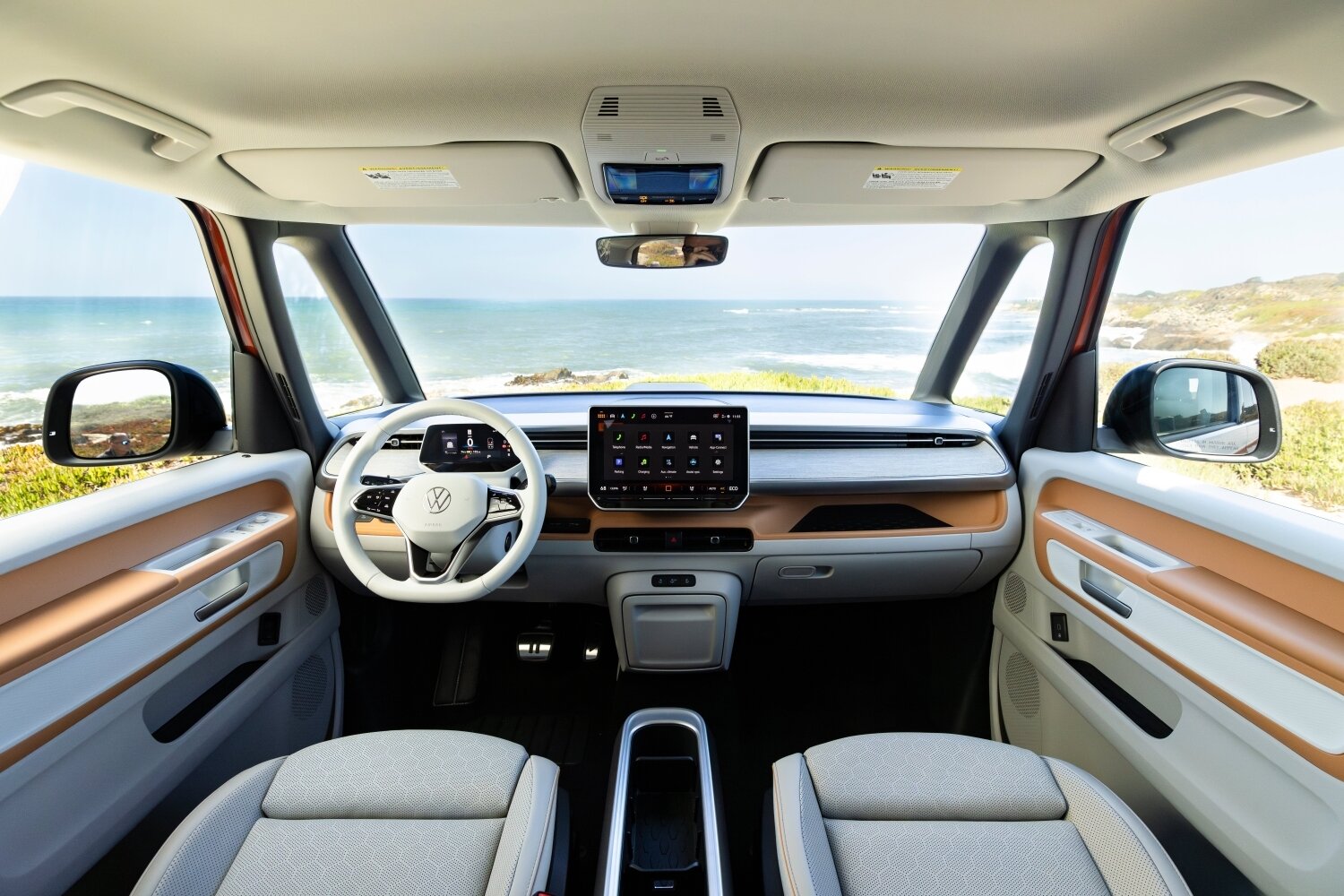
The first impression inside an ID. Buzz is airiness. That’s partly design and partly physics: tall roofline, generous glass area, upright seating positions that let you see out rather than sink down into door panels. In typical daily use, visibility is one of those features you stop noticing until you get back into something else and realize how much you were compensating.
The second impression is that VW wants this to feel more like a lounge than a work truck. Materials vary by trim, but the overall theme is bright and modern rather than dark and serious. It fits the Buzz’s whole mission: turn normal errands into something slightly more pleasant.
If you are coming from an SUV like a Tesla Model Y or even a three row crossover that technically has space but not grace, the Buzz’s upright packaging feels like cheating. People get real headroom in all rows because there’s no sloping roofline trying to look sporty at the expense of skulls.
The sliding doors are still one of civilization’s best inventions for families and friend groups. They make school pickup less stressful, parking garage exits less dramatic, and curbside drop offs easier when someone insists on opening their door directly into traffic.
Third row reality: adult friendly by van standards
A lot of three row SUVs treat row three as an apology seat: fine for small kids for short trips, questionable for adults unless everyone likes each other enough to laugh about it later.
The ID. Buzz has more honest third row energy because it starts with van proportions instead of trying to stretch an SUV silhouette into something it isn’t. You still need to check legroom expectations against your household size because seat positioning matters, but conceptually this is closer to “bring friends” than “bring children only.”
This is also where rivals show their hand. A Kia EV9 can be genuinely roomy too and it offers different seating configurations depending on trim; it also comes from a newer wave of EVs designed from scratch as family haulers rather than as crossovers first. Meanwhile something like a Tesla Model X has impressive tech theater and speed but feels more precious inside when life gets messy.
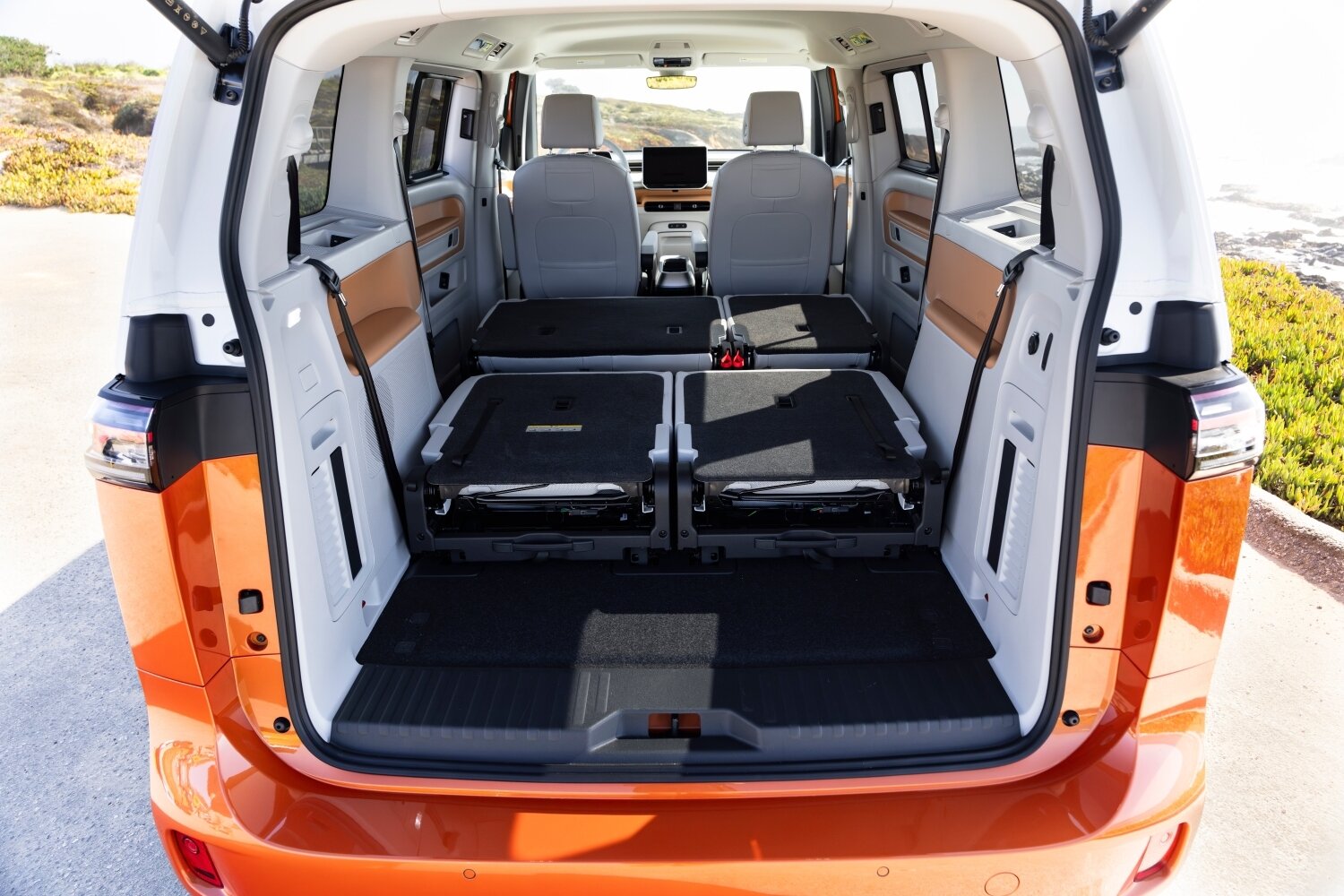
Cargo space: tall openings beat clever marketing numbers
I’m not going to throw cargo volume numbers at you here because they vary depending on how VW measures behind each row and because exact US spec sheets can shift by model year packaging. What I can say confidently is that vans win in real life because of shape: tall roofline plus wide rear opening plus low load floor relative to many SUVs makes bulky stuff easier.
If your weekends involve strollers, folding wagons, beach chairs, sports gear bags that multiply like rabbits, or Home Depot runs where you pretend you’re only buying one thing but leave with six awkward boxes, square footage matters less than how easily you can stack and access items without playing Tetris every time.
Tech and controls: modern VW strengths plus some familiar quirks
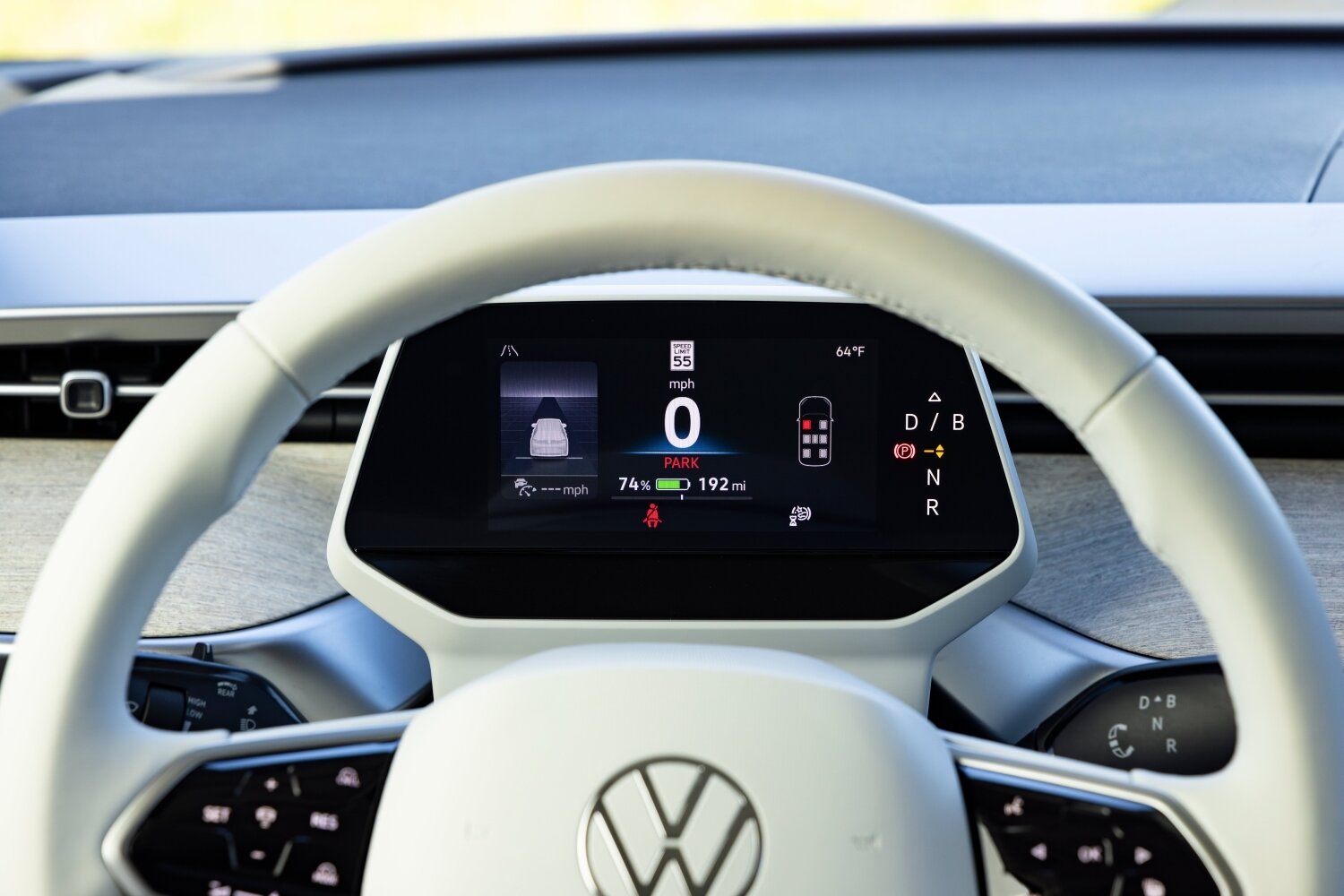
The ID family has been associated with a clean dashboard layout anchored by screens rather than buttons. Depending on your taste level for touch controls versus physical knobs, this can feel either futuristic or mildly annoying at exactly the wrong time (like when you just want to adjust something quickly while merging onto the 405).
VW has improved its infotainment software over time across its lineup, but experiences vary by model year updates and system versioning; if you are shopping a 2026 model specifically, pay attention to what software generation it ships with and how responsive it feels during your test drive.
The practical tech story in a vehicle like this is less about flashy graphics and more about daily ease: phone integration reliability, charging route planning competence if you road trip occasionally, camera quality when parking something tall in tight city spaces, and whether driver assistance features feel smooth rather than jumpy.
Driving impressions: not sporty, not sleepy either
I’m going to be direct about something: I have not personally logged instrumented test miles in a 2026 ID. Buzz under controlled conditions for this review format here, so I’m not going to invent quarter mile times or claim I carved Angeles Crest like I was chasing lap records.
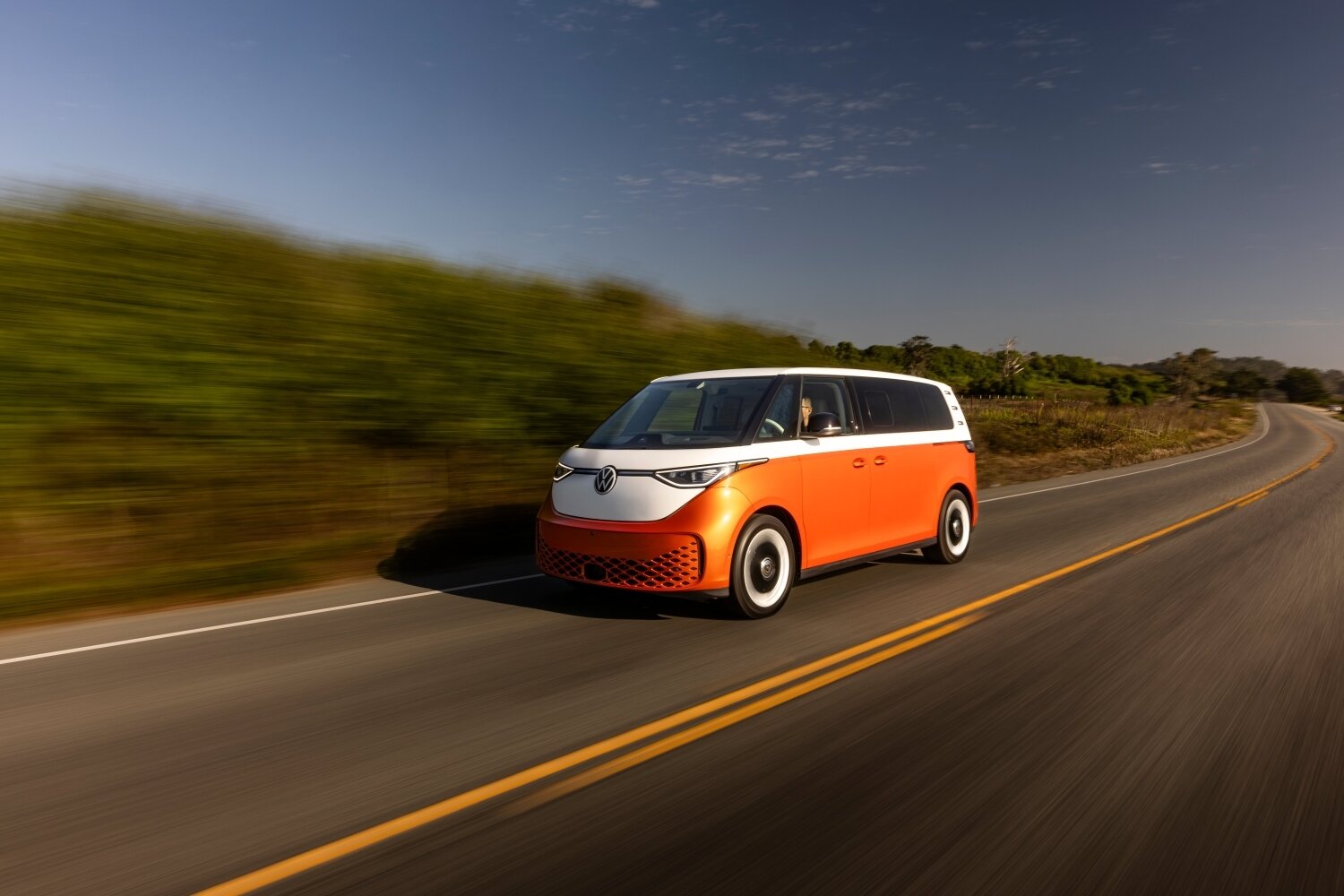
What we do know from its basic layout tells you most of what matters day to day. An electric van with its battery pack mounted low in the floor tends to feel planted compared with old school vans that carried their weight higher up. That low center of gravity helps stability during lane changes and freeway sweepers even when the body is tall.
The rear wheel drive setup should feel naturally balanced around town because propulsion comes from behind rather than pulling from the front tires; that often translates into cleaner steering feel under power than many front drive based family vehicles deliver. The dual motor all wheel drive version brings extra power headroom for merging and loaded up driving (friends plus gear plus AC blasting), plus traction benefits if your life includes wet climates or mountain trips rather than just sunny SoCal streets.
The Buzz is still van shaped though. Expect more wind presence at freeway speeds than a sleek crossover simply because aerodynamics do what they do; shape matters for noise too depending on tires and mirrors. For many buyers that tradeoff is worth it because what you gain is space efficiency and visibility that crossovers struggle to match without getting huge.
Range anxiety versus van reality
This is where romance meets math. Van shaped EVs face two challenges at once: they’re bigger vehicles with more frontal area pushing air around at speed, and they tend to be used as people movers loaded with passengers or cargo which adds weight.
If your life is mostly local commuting with home charging (garage outlet at minimum; Level 2 preferred), range becomes background noise quickly. You plug in at night like it’s your phone; you leave every morning topped up enough for whatever LA throws at you: school run loops, errands stacked across neighborhoods, spontaneous dinner plans that turn into late night drives home through traffic that somehow still exists at 10 p.m.
If your life includes frequent long road trips or if you rely heavily on public charging without home access, this becomes more complicated than it needs to be compared with gas minivans or hybrids like the Toyota Sienna which can go long distances quickly without planning stops around chargers.
The good news is charging speed capability matters more than raw range once you’re already above roughly 200 miles for typical highway travel patterns; stopping faster feels better than stopping less often but waiting longer each time. VW quoting up to about 200 kW DC fast charging suggests solid road trip potential on paper under ideal conditions (again dependent on temperature state of charge charger quality). The bad news is that real world fast charging experiences vary wildly based on infrastructure reliability which can still be inconsistent depending on region even in 2026.
City life: sliding doors are therapy
If I had to pick one reason why vans deserve their comeback moment beyond nostalgia posters on Instagram Stories, it’s sliding doors in tight parking situations.
You know those LA lots where every spot was designed for cars from 1994? Or street parking where someone leaves exactly enough room for you to fit but not enough room to open anything? Sliding doors make those situations boring again instead of stressful.
Add an upright seating position with good outward visibility and suddenly parallel parking feels less like guesswork even though the vehicle itself has presence. This matters if your day includes multiple stops where you are constantly getting people in and out: daycare pickup then groceries then soccer practice then dinner at someone’s place where there are five cars already squeezed into their driveway apron like puzzle pieces.
How it stacks up against rivals (subtle comparisons)
Kia EV9: If your priority is three row EV utility with more conventional SUV styling (and potentially different price positioning depending on trim), EV9 is probably the closest mainstream alternative vibe wise: modern family hauler energy with serious space planning inside. The VW counters with sliding door practicality and iconic design charm that feels less utilitarian even when doing utilitarian things.
Tesla Model X: The Model X plays in a different emotional lane: performance bragging rights plus tech ecosystem plus distinctive doors that some families love until they don’t (because sensors weather garages). The Buzz feels simpler socially; it invites conversation without looking expensive in an aggressive way (even if pricing says otherwise).
Rivian R1S: Rivian has adventure credibility plus available off road capability depending on configuration; it also tends to cost more once equipped similarly and rides on SUV proportions rather than van logic. If your life includes dirt roads regularly or towing heavier toys (confirm tow ratings), Rivian may fit better; if your life includes friends kids dogs groceries city parking sliding doors win hearts quickly.
Toyota Sienna (hybrid): Not an EV rival technically but absolutely a lifestyle rival when budgets get real. Sienna offers long distance convenience without charging planning plus proven minivan practicality at generally lower cost of entry depending on market conditions (and sometimes markups). The Buzz offers design magic plus EV smoothness plus quiet local driving potential if charged at home; it asks more money upfront for many buyers while giving back style points no other van currently matches.
The compromises of van shaped EV life
You buy an ID. Buzz because you want what only this shape gives you: space efficiency visibility sliding door ease vibe.
You live with an ID. Buzz because you accept what this shape costs you too:
Aerodynamics tax: Boxy means charming but also means energy use rises faster at highway speeds compared with sleeker EVs; range can feel more sensitive on long freeway drives especially loaded up depending on speed weather wheels tires.
Price pressure: This thing is positioned as premium lifestyle transportation not bargain family utility. If your family budget math leans practical first emotional second there will be moments where hybrid minivans look extremely rational from across the showroom aisle.
Charging dependency: If home charging is not part of your plan yet make sure public charging availability near your home work school routes feels reliable enough before committing; otherwise daily convenience can slip away fast regardless of how cute the vehicle looks outside brunch spots.
Pros
Design charisma: One of the few new vehicles that consistently looks joyful without trying too hard.
Real van practicality: Sliding doors tall roof upright seating easy entry make daily hauling calmer.
MEB EV packaging benefits: Flat floor roomy cabin feel planted handling relative to old vans thanks to low battery placement (based on platform characteristics).
AWD option available: More power traction flexibility depending on configuration (verify exact trim availability).
Cons
Price will be tough for many households: Premium positioning pushes it into luxury adjacent territory quickly depending on trim options dealer reality.
Range efficiency tradeoffs: Boxy shape means highway efficiency likely lags sleeker EV SUVs; exact EPA range depends heavily on configuration so shop carefully.
No direct minivan EV ecosystem yet: You’re early adopting an idea more than joining an established segment which can affect resale expectations service familiarity dealer knowledge depending on region (hard to quantify today).
The verdict
The 2026 Volkswagen ID. Buzz isn’t trying to be everything for everyone; thank goodness. It’s trying to make everyday movement feel lighter while doing genuinely useful things: carrying people comfortably letting them climb in without gymnastics swallowing awkward cargo making city parking less dramatic thanks to sliding doors giving drivers better outward sight lines than most modern crossovers manage anymore.
If you have home charging and your daily life looks like errands carpools friends visiting from out of town weekend gear runs or just wanting one vehicle that makes normal tasks feel slightly special, the ID. Buzz makes a strong case despite its premium pricing posture.
If your world revolves around long highway miles frequent road trips without predictable fast charging access or strict value per seat calculations there are smarter plays including hybrid minivans or three row SUVs with lower starting prices depending on incentives availability timing.
I keep coming back to one simple truth: most cars disappear into traffic both visually and emotionally within weeks of ownership. The ID. Buzz seems built not just to transport but to participate in your day; it turns grocery runs into small events because people notice it passengers enjoy it and you end up using its space without feeling like you bought something purely sensible. For some buyers that combination will be worth every compromise attached to living with an electric van shaped like optimism.
Photo: Volkswagen of America
0 comments
Join the discussion around this article.
Please login to comment.