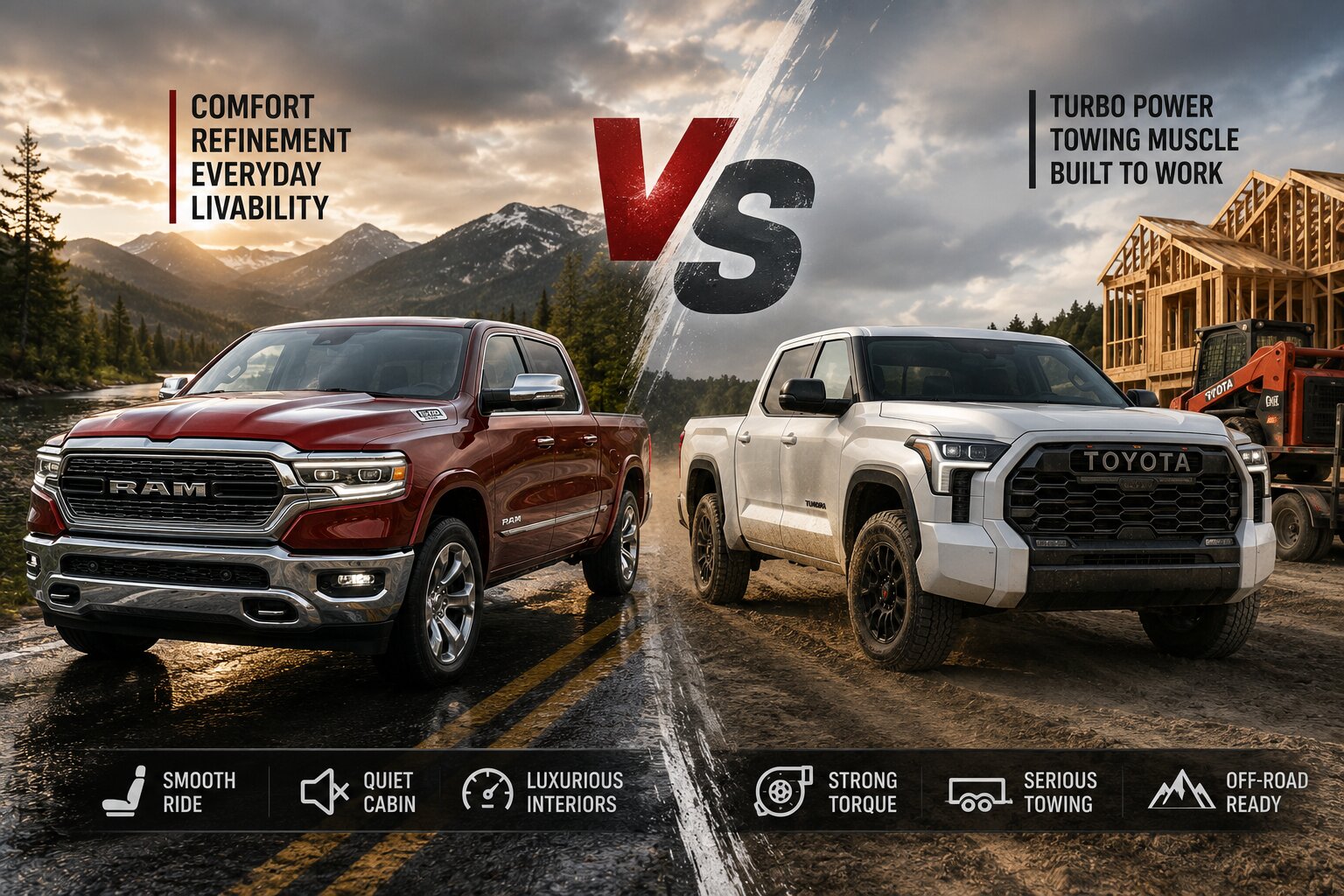
Ram 1500 vs Toyota Tundra: two half-tons with very different personalities
On paper, the Ram 1500 and Toyota Tundra land in the same driveway. Both are full-size, half-ton pickups aimed at people who tow, haul, commute, and occasionally point the nose down a rutted trail to a campsite. In practice, they feel like they were tuned for different owners.
The Ram 1500 has long leaned into comfort and everyday livability. Even buyers who work their trucks tend to notice how calm a Ram feels on broken pavement. The Toyota Tundra, especially in current-generation form (2022 and newer), comes off more like a tough-edge modern truck that happens to be hybrid-capable, with powertrains built around turbo V6 torque and an available i-FORCE MAX hybrid that brings real muscle.
This comparison sticks to widely published U.S.-market specs and what those numbers tend to mean in typical use. Where details vary by trim, drivetrain, axle ratio, or configuration, that is called out directly. Also, fuel economy and towing can swing dramatically based on cab, bed length, tires, and whether you choose 2WD or 4WD.
Model years and what we are really comparing
Ram 1500: The current Ram 1500 is part of the fifth-generation truck introduced for the 2019 model year. It has been updated over time with technology changes and powertrain availability shifts. As of the 2025 model year, Ram moved away from the long-running 5.7-liter Hemi V8 in favor of the Hurricane twin-turbo inline-six family (availability varies by trim), but many shoppers are still cross-shopping late-model Hemi trucks on dealer lots and used listings.
Toyota Tundra: The current Tundra launched for 2022 with an all-new platform and an all-new engine strategy: a twin-turbo 3.4-liter V6 as the base engine (Toyota calls it i-FORCE) and an available hybridized version (i-FORCE MAX). There is no V8 in this generation.
Main competitors: Ford F-150 (including PowerBoost hybrid), Chevrolet Silverado 1500 and GMC Sierra 1500 (including available diesel), Nissan Titan (recently discontinued after 2024 model year in the U.S.), plus the off-road focused trims across all brands.
Engines and power delivery: smooth comfort vs boosted torque
The easiest way to understand these trucks is to start with how they make power.
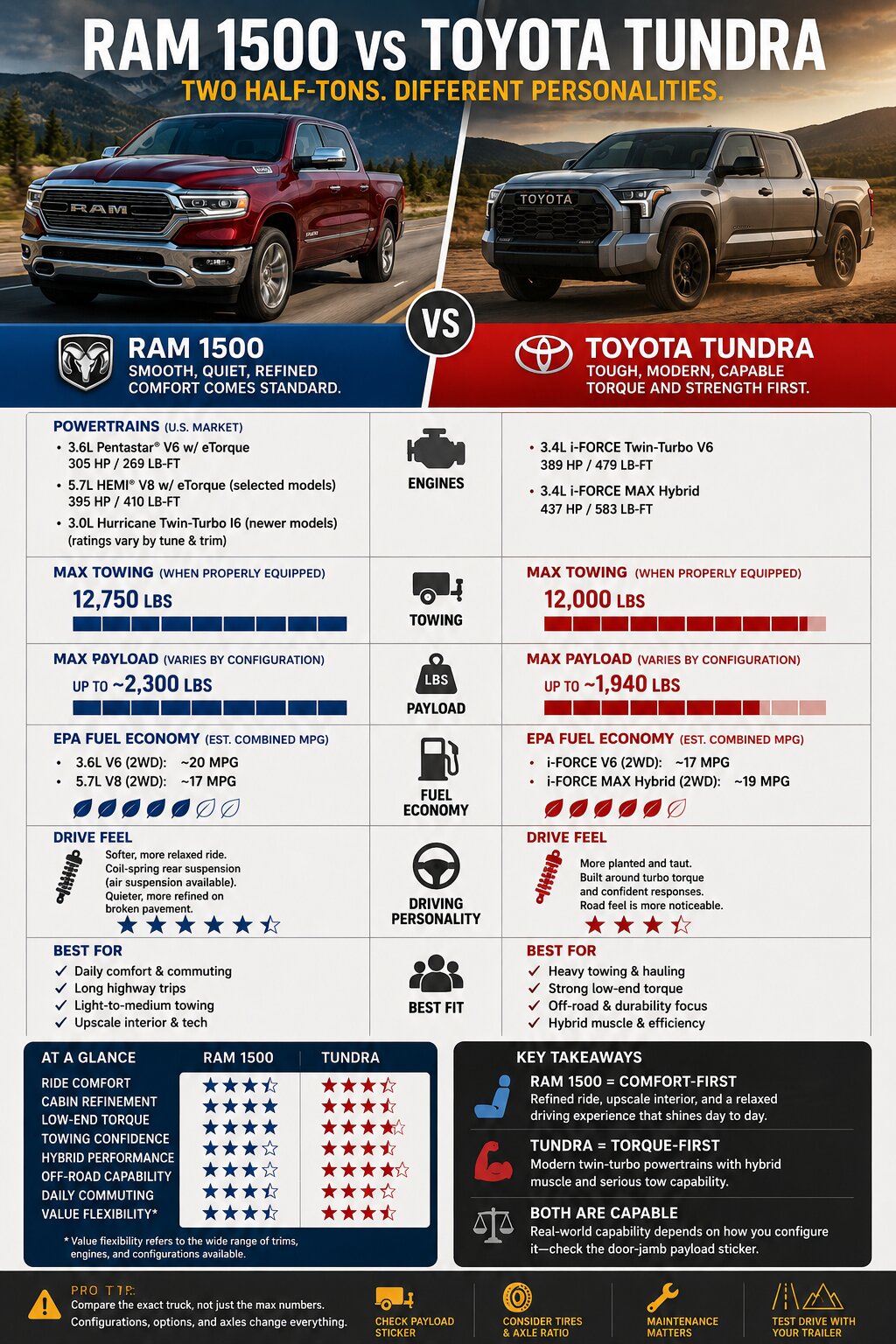
Toyota Tundra i-FORCE (non-hybrid): Toyota’s twin-turbo 3.4-liter V6 is rated at 389 horsepower and 479 lb-ft of torque in most non-hybrid applications. That torque number is the headline because it arrives in a way that feels ready for towing and merging without needing big rpm.
Toyota Tundra i-FORCE MAX (hybrid): The hybrid adds an electric motor integrated into the drivetrain. Total system output is 437 horsepower and 583 lb-ft of torque. This is not a plug-in hybrid, so you do not charge it. It uses the motor to add shove at low speed and fill gaps while the turbos spool. In typical driving, that translates to strong initial pull when you roll into the throttle, which matters when you are dragging a trailer up a grade or trying to slip into fast traffic with a bed full of gear.
Ram 1500 engines: Ram’s story depends heavily on year and trim.
For many recent model years prior to the Hurricane changeover, the lineup commonly included a 3.6-liter Pentastar V6 with eTorque mild-hybrid assist on many trims (commonly published at 305 horsepower and 269 lb-ft; eTorque adds launch smoothness but does not change the headline peak numbers), plus the familiar 5.7-liter Hemi V8 (commonly published at 395 horsepower and 410 lb-ft, with eTorque optional on many configurations).
For newer trucks where equipped, Ram’s Hurricane twin-turbo inline-six family has been published in multiple output levels depending on trim; exact ratings depend on configuration and model year. If you are shopping new Rams, verify which engine is actually under the hood because dealer inventory can be a mix during transitions.
What it means on the road: The Tundra’s turbo V6 torque feels modern and immediate, especially in hybrid form where electric assist helps right off idle. The Ram’s V6 tends to feel adequate rather than eager when loaded; it works best for light towing and daily driving. A Hemi-equipped Ram has that familiar naturally aspirated response and sound that some buyers still prefer for towing feel, even if it is not always the most efficient path to speed.
Towing: confidence matters more than bragging rights
If you tow regularly, both brands can get you into serious capability, but their best numbers come with specific configurations.
Toyota Tundra maximum towing: Toyota has widely published a maximum towing rating of up to 12,000 pounds for properly equipped Tundras depending on configuration (typically certain SR or SR5 setups with the right drivetrain). Many higher trims tow less due to added weight and equipment.
Ram 1500 maximum towing: Ram has widely published maximum towing figures up to around 12,750 pounds for properly equipped Ram 1500 models in recent years (configuration-dependent). Again, your actual rating depends on cab style, bed length, axle ratio, drivetrain, engine choice, and options.
The real-world catch: payload and tongue weight
A half-ton’s towing experience is often limited by payload rather than max tow rating. Tongue weight from a travel trailer can easily land in the 600 to 1,000 pound range depending on trailer size and loading. Add passengers, coolers, tools, maybe a generator or firewood in the bed, then look at your door-jamb payload sticker. That number becomes your reality check.
Tundra payload varies widely by trim and drivetrain; published figures are configuration-specific. The Ram also varies widely; some configurations are known for strong payload numbers while others prioritize ride comfort with softer springs or heavier luxury equipment that eats into capacity. Because payload stickers are truck-specific, it is worth checking actual trucks on lots rather than relying solely on brochure maxima.
Towing feel: Based on their mechanical layouts and typical tuning priorities, many drivers describe the Ram as calmer over highway expansion joints when hitched up (especially when equipped with available rear air suspension), while the Tundra tends to feel more taut and controlled in its responses but can transmit more road texture through the chassis depending on wheel-and-tire package. Trailer sway control systems exist on both trucks as part of their stability control suites; always confirm what is standard versus optional by trim.
Fuel economy: hybrid muscle is not always hybrid thrift
This is where expectations need a reset.
Toyota Tundra EPA figures: EPA ratings vary by drivetrain and trim. Widely published EPA estimates for many non-hybrid 4WD Tundras land around 17 mpg combined, while some i-FORCE MAX hybrid configurations are also around 19 mpg combined. Depending on exact trim (TRD Pro vs Limited vs Platinum), wheels/tires, and whether it is 2WD or 4WD, those numbers move around.
The key takeaway is that Toyota’s i-FORCE MAX hybrid was engineered primarily for torque delivery and performance under load rather than chasing class-leading mpg. It can help efficiency in some scenarios compared with certain non-hybrid setups, but it does not turn a full-size pickup into an economy car.
Ram 1500 EPA figures: EPA ratings also vary widely by engine and configuration. The 3.6-liter V6 versions have historically posted better mpg than Hemi V8 versions in similar configurations; mild-hybrid eTorque can help smooth stop-start behavior and improve efficiency slightly depending on driving cycle. A Hemi-equipped Ram typically trails a V6 setup in fuel economy; exact EPA numbers depend heavily on year and configuration.
A note on comparing apples to apples: If you want a fair mpg comparison between these two trucks today, pick specific trims with similar tires (all-terrain tires can dent mpg), similar drivetrains (4WD usually costs mpg), similar cab/bed sizes, then compare EPA labels directly for those exact builds. Broad statements get misleading fast in half-ton land.
Ride character: where the Ram earns its “comfort truck” reputation
This is one of those areas where specs do not tell you enough.
The Ram 1500 stands out because it uses a coil-spring rear suspension rather than traditional leaf springs found on many competitors (and yes, there are exceptions across brands depending on model). That design choice has been part of why Rams often feel less choppy over potholes when unloaded. Add available rear air suspension on some trims and you get another layer of composure plus useful features like load leveling for trailers or heavy cargo.
The Tundra rides like a modern full-size truck should: solid structure, controlled body motions at speed, confident stance. But depending on trim level (especially off-road oriented packages with stiffer sidewalls or aggressive tires), you may notice more road texture coming through compared with a similarly equipped Ram aimed at comfort.
If most of your miles are empty-bed commuting mixed with long highway runs across rough concrete interstates, the Ram’s relaxed gait can be a deciding factor all by itself for many buyers.
Steering and handling: light-and-easy vs planted-and-direct
The Ram’s steering tends to be easygoing in typical driving: light effort at parking-lot speeds with predictable response as speed climbs. It encourages one-hand cruising rather than constant micro-corrections. That pairs well with its overall comfort mission.
The Tundra generally feels more tied-down through its front end at speed. The steering has a truck-like heft that some drivers associate with stability when towing or running faster highway speeds in crosswinds. Wheel-and-tire choices matter here too; big wheels with shorter sidewalls can sharpen response but also make impacts more noticeable.
No half-ton feels like a sports sedan when pushed hard down a back road with an empty bed bouncing around. Still, if your definition of “confidence” is steady tracking under load rather than plush isolation over potholes, the Toyota’s demeanor can appeal.
Cabs you live in: space, seating comfort, noise
You buy these trucks with your hands as much as your eyes: door handles clunking shut every day, seat cushions doing long-haul duty, cupholders earning their keep during jobsite mornings.
Ram 1500 cabin vibe: Rams have earned praise for interior design across multiple model years, especially in higher trims where materials quality looks genuinely upscale for a pickup. Seating comfort is subjective but many shoppers find the front seats supportive for long drives. Road noise tends to be well-managed for this class depending on tires; aggressive all-terrains will always add hum no matter whose badge is on the grille.
Toyota Tundra cabin vibe: The current-generation Tundra cabin feels modern and functional with straightforward controls mixed with big screens depending on trim level. It leans durable rather than plush unless you step into higher grades like Limited/Platinum/Capstone territory (trim naming varies by year). The seating position feels truck-correct: high view out over the hood with wide mirrors doing real work when backing up to trailers or threading narrow lanes near construction zones.
Crew cab reality: Both brands offer spacious crew cabs suitable for adult passengers behind tall drivers in typical configurations (exact legroom varies by cab style). If you routinely carry adults in back seats or install bulky child seats while still needing front-seat travel room, crew cab versions are usually where most buyers end up regardless of brand.
Beds and hauling routines: tie-downs beat brochure talk
A pickup’s bed is where intentions meet reality: muddy coolers sliding around after a weekend hunt; sheets of plywood flexing over wheel wells; toolboxes eating into usable length; gravel leaving scars if you do not run a liner.
Tundra bed basics: The current Tundra offers multiple bed lengths depending on cab configuration (commonly short bed around 5.5 feet with crew cab; longer beds available). Toyota includes practical bed features depending on trim such as tie-down rails in some configurations; verify per trim because equipment varies widely across SR through high-end grades.
Ram bed basics: The Ram also offers multiple bed lengths across quad cab/crew cab setups (often around 5 feet 7 inches short bed for crew cabs; longer beds available). Ram’s optional multifunction tailgate on certain trims can be genuinely useful if you load motorcycles or reach deep into the bed often; availability depends on year/trim/package.
The practical advice that applies to both: If you haul often, prioritize factory tie-down provisions or plan your own system early: bedliner choice (spray-in vs drop-in), tonneau cover compatibility if you want weather protection for tools or camping gear, plus step solutions if you climb into beds daily. These details matter more than one extra inch of bed length once you live with the truck.
4WD systems and off-road trims: traction tools vs trail toys
A lot of half-tons wear off-road badges now. Some are legitimately useful; others mostly buy you looks plus tires that get loud at highway speed.
Toyota TRD ecosystem: Tundra TRD Off-Road packages typically add hardware aimed at traction management such as skid protection elements and off-road tuned components depending on year; TRD Pro sits at the top as Toyota’s factory off-road flagship with unique suspension tuning versus standard models (details vary by model year). Toyota also offers features like Multi-Terrain Select/Crawl Control on certain trims within its truck/SUV lineup; availability depends heavily on specific grade and options so it is worth verifying build sheets rather than assuming every TRD badge brings every feature.
Ram off-road options: On the Ram side you will see packages like Rebel aimed at trail use while staying livable daily; then there is Power Wagon in heavy-duty territory (not directly comparable here because it is based on the Ram HD line). For Ram 1500 shoppers who want real off-pavement confidence without giving up comfort entirely, Rebel-style builds tend to be where capability meets daily use best depending on year availability.
A grounded expectation check: Both trucks can handle dirt roads, snowed-in driveways, sandy access trails to boat launches or campsites when properly equipped with good tires and sensible driving. But if you plan regular rock crawling or deep mud work where recovery points matter weekly rather than yearly, you will want to look closely at approach angles, underbody protection coverage, tire size options from factory, and how easy it is to fit real recovery gear without compromising cooling or sensors. Published ground clearance varies by trim/tire package; check manufacturer specs for your exact build because “TRD” or “Rebel” alone does not guarantee identical geometry across years.
Towing tech and driver assistance: cameras matter when backing solo
If you have ever tried backing a trailer alone while someone yells directions from behind the bumper line of sight they cannot see either, you already know why camera systems have become as important as tow ratings.
Toyota offers trailer-oriented camera views and driver assistance features depending on trim level; higher grades tend to bundle more camera angles plus larger screens. Ram similarly offers extensive camera options across trims including surround-view systems depending on package selection. Availability changes frequently by model year so treat this as a shopping checklist item rather than an assumption about brand superiority.
The biggest usability win across both trucks tends to be simple: clear resolution rear camera views combined with predictable steering response at low speed plus good mirror coverage. If you tow frequently at night or hook up alone early mornings before dawn hunting trips or jobsite runs, lighting at the hitch area becomes another underrated feature worth checking during your walkaround.
User interface: screens are easy to sell; controls are what you live with
The modern half-ton cockpit lives somewhere between work tool and rolling office: phone calls between suppliers; navigation reroutes around construction; playlists battling wind noise over bridge joints; gloves still on because it is freezing outside but you need heat now.
Tundra tech feel: The current-generation Toyota infotainment system uses large displays in many trims (screen size depends on grade) plus physical controls where they matter most such as volume/tuning knobs in many configurations. Toyota’s driver assistance suite (Toyota Safety Sense) is broadly available across its lineup though exact content varies by model year; confirm specifics if features like adaptive cruise behavior matter to you during long interstate hauls.
Ram tech feel: Ram’s Uconnect system has been widely regarded as one of the easier interfaces in full-size trucks over multiple generations thanks to clear menus and responsive touch input; screen sizes vary dramatically by trim level including very large portrait-style displays offered in certain models/years. Climate controls remain usable even when bouncing down rough roads because key functions typically have dedicated buttons or knobs depending on configuration.
Tough stuff: brakes, cooling confidence, durability vibes
No responsible comparison should pretend every owner will have identical durability outcomes because maintenance history matters as much as brand reputation once miles pile up. Still, there are some practical considerations that show up again and again among truck buyers who actually tow or haul regularly.
Cooled turbo power vs naturally aspirated simplicity: Turbocharged engines make strong torque from smaller displacement but rely more heavily on heat management through intercoolers and cooling systems under sustained load. Toyota engineered the i-FORCE engines specifically for this truck generation; they are designed for towing duty cycles but any turbo engine will reward diligent maintenance habits like oil changes done correctly using proper spec oil intervals per manual guidance rather than stretching them because life got busy.
A naturally aspirated V8 like older Hemi-equipped Rams has fewer forced-induction components but still needs proper cooling performance under load too; tow packages exist for good reasons beyond hitch receivers alone because they often include cooling upgrades depending on manufacturer strategy.
Bigger picture: If your routine includes long mountain grades at high ambient temps while pulling near max ratings or carrying heavy payloads through desert heat zones like Arizona summers or West Texas wind stretches then pay attention to how each brand configures tow packages for your exact build: transmission cooling strategy, integrated brake controller availability/options listings (varies), plus tire load ratings from factory builds because tires do real work controlling sway under load.
The ownership side without value advice: resale patterns and service realities
You asked for ownership factors without cost/value advice so this section stays away from telling anyone which deal to chase today. Still there are non-negotiables that affect how ownership feels regardless of price paid upfront.
Toyota resale reputation: Toyota trucks have historically carried strong resale value perceptions in the U.S., especially among buyers who keep vehicles clean and documented then sell privately later or trade them toward another Toyota product. Actual resale outcomes depend heavily on market swings plus mileage/condition/trim demand at time of sale so treat this as general reputation rather than guaranteed math.
Ram resale reputation: Full-size domestic pickups can vary widely by region because brand loyalty runs deep locally; certain trims sell quickly while others sit longer depending on fuel prices and fleet demand cycles. Again this is market behavior rather than promise of any specific residual value percentage since those numbers move constantly and depend upon lender data not appropriate to invent here.
Service network reality:
- Toyota dealers are widespread but some regions have fewer truck-specialist service bays compared with domestic-heavy markets where pickups dominate every lane at rush hour.
- Ram service access depends heavily on local Stellantis dealer quality which varies significantly by metro area versus rural regions where pickups are bread-and-butter business vehicles supported daily by local shops too.
If your truck earns money or supports remote travel plans where downtime hurts more than any monthly payment ever could then service scheduling convenience matters almost as much as fuel economy differences between trims that might only show up over tens of thousands of miles anyway.
The bottom line feel: relaxed everyday partner or boosted work-hardened punch?
The simplest read goes like this: if your life includes lots of empty-bed commuting mixed with family duty plus occasional towing weekends then the Ram 1500 tends to deliver that calm comfort-truck vibe that makes rough pavement feel less personal. It drives like it wants you fresh after three hours behind the wheel instead of worn out from constant small corrections over broken surfaces.
If your priority tilts toward modern torque delivery under load plus a powertrain lineup built around turbo strength with an available hybrid system that adds real low-speed muscle then today’s Toyota Tundra makes a strong case as a tough-edge half-ton built around shove rather than nostalgia. It feels engineered around working power even when it shows up wearing leather seats and big screens.
Your best move is boring but effective: pick two specific builds that match how you actually use a truck (cab size bed length tire type drivetrain) then compare payload stickers tow ratings for those exact VINs before falling for max numbers online. In half-ton life capability lives inside those details not just underhood badges or brochure headlines.
0 comments
Join the discussion around this article.
Please login to comment.