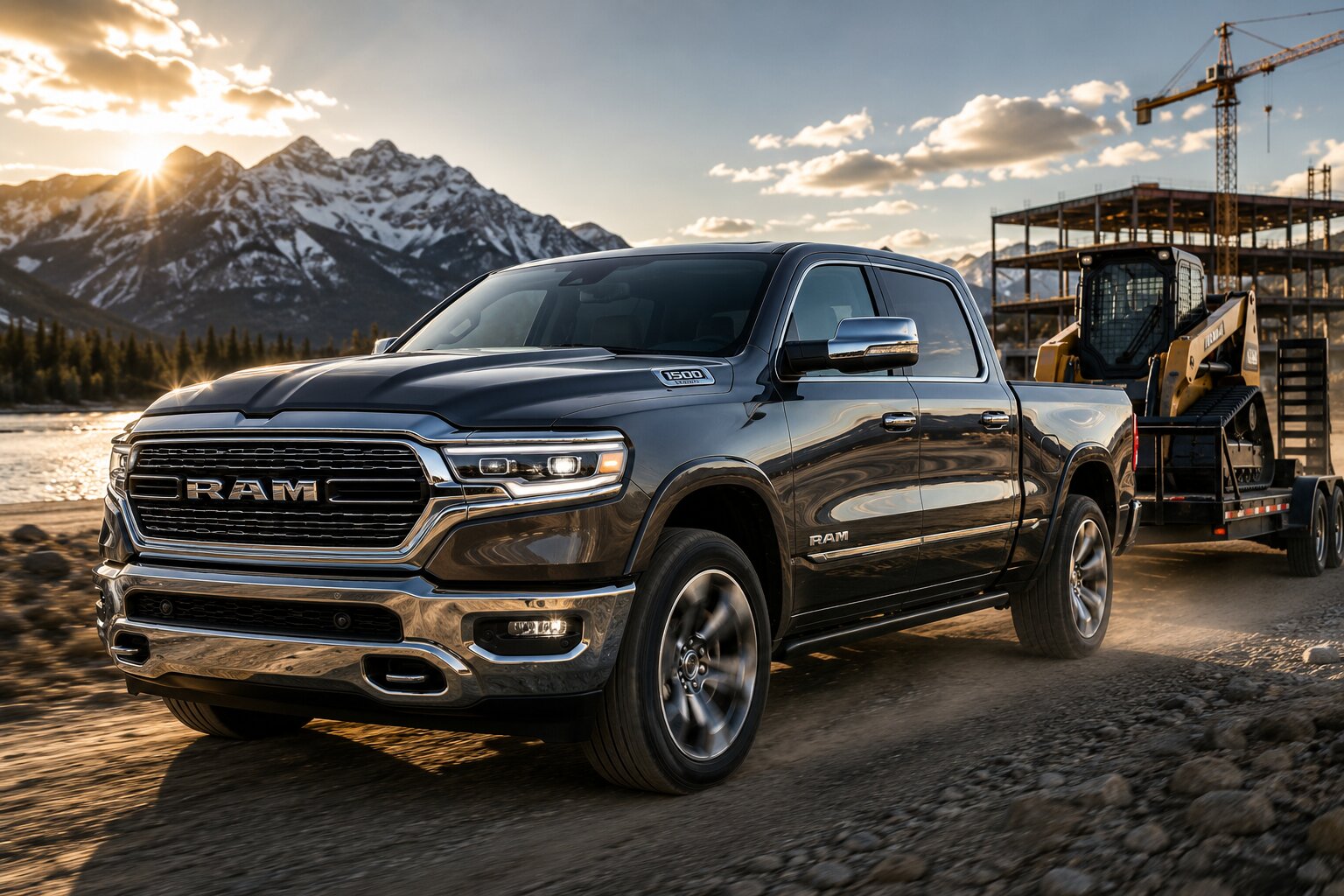
What’s actually confirmed for the 2026 Ram 1500 (and what isn’t)
Ram’s half-ton was fully redesigned for the 2025 model year, and the 2026 Ram 1500 carries that same new-generation truck forward. That matters because the big story is already baked in: the old Hemi V8 is no longer the standard path, and Ram’s new twin-turbo inline-six family does the heavy lifting. Most of what you need to know about a 2026 Ram 1500 is really about how this newer platform and powertrain strategy fits your day-to-day truck life.
Some details for 2026 can vary by trim, package, and late-cycle updates, and not every spec you might want is always presented in one clean chart. Where numbers are widely published and consistent across trusted sources, I’ll call them out. Where they are trim-dependent or not clearly confirmed for every configuration, I’ll say so instead of guessing.
Ram 1500 lineup and rivals: who it’s really fighting
The Ram 1500 sits in the heart of the full-size half-ton market. Its direct rivals are the Ford F-150, Chevrolet Silverado 1500, GMC Sierra 1500, Toyota Tundra, and Nissan Titan (though Titan availability has been winding down recently depending on model year and market). In typical American shopping reality, it is also cross-shopped with “do everything” SUVs like the Chevy Tahoe or Ford Expedition when buyers realize they want family space more than an open bed.
Ram’s angle has historically been ride comfort and cabin livability. Ford tends to win on breadth of configurations and work-truck ecosystem. GM trucks often win buyers who want a traditional feel with a huge spread of trims and powertrains. Toyota’s Tundra leans on standard turbo V6 power and a reputation for durability, though its latest generation also brought some growing pains depending on year and component.
Powertrains: Hurricane inline-six takes center stage
The widely confirmed headline is Ram’s move to the “Hurricane” twin-turbocharged inline-six engines. Two main outputs are commonly referenced for this engine family in the Ram 1500: a standard-output version rated at about 420 horsepower and 469 pound-feet of torque, and a high-output version rated at about 540 horsepower and 521 pound-feet of torque. Those figures have been broadly reported for the redesigned Ram 1500 launch.
Both versions are paired with an eight-speed automatic transmission (Ram has long used an eight-speed in the 1500). Exact availability by trim can vary, and if you are shopping specific models like Rebel, Laramie, Limited, Longhorn, or performance-focused trims such as RHO (where offered), you should verify which output is included or optional on that specific build sheet.
If you are coming from an older Hemi truck, the emotional part of this change is obvious. You lose that familiar V8 sound and low-rpm thump. The practical part is less dramatic than people fear. A modern twin-turbo inline-six can make strong torque across a broad band, which is what you actually feel when you are merging with a trailer or pulling up a grade with a bed full of supplies.
One caution: forced-induction engines can be more sensitive to maintenance discipline over time than an old-school naturally aspirated V8. That does not mean “unreliable.” It means oil quality, intervals, cooling system health, and letting things warm up before hard use become more important if you plan to keep the truck deep into high mileage.
Towing and payload: the numbers depend on how you build it
Half-ton towing capacity is always a configuration game: cab style, bed length, axle ratio, drivetrain, wheel and tire package, options weight, and hitch equipment all move the needle. For the redesigned Ram 1500 generation, maximum towing has been widely cited up to around 11,580 pounds when properly equipped. Payload similarly varies widely; exact maximum payload depends heavily on trim and equipment.
That “when properly equipped” phrase is not legalese fluff. It is your real-world shopping trap. The plush trims that make a Ram feel like a luxury rig often carry more curb weight and more features that subtract from payload. If your workday includes tongue-heavy trailers (equipment trailers, enclosed trailers) or you routinely load pallets in the bed, you need to read the yellow door-jamb sticker on the exact truck you are buying. That sticker is reality.
Compared with rivals: an F-150 can post higher maximum tow ratings in certain configurations; GM’s half-tons also offer strong tow numbers depending on engine choice; Toyota’s Tundra posts competitive towing but often feels more locked into its powertrain choices since it moved to turbo V6 across the line. For many buyers who tow occasionally rather than daily, confidence matters as much as peak rating: stability under crosswinds, braking feel, mirror coverage, hitch access, and how calm the truck stays over broken pavement.
Ride comfort: still Ram’s calling card (for most trims)
If you have driven recent Ram 1500s back-to-back with other half-tons on rough pavement, you already know why people keep bringing up ride quality. Ram has made comfort a brand identity here. Depending on trim and options, air suspension has been a key part of that story in recent years (availability varies by trim). Even without air suspension, the platform tuning tends to prioritize compliance over that stiff work-truck bounce some half-tons still carry.
This matters more than brochures admit because most half-tons live normal lives: school drop-off Monday morning; freeway commute Tuesday; Home Depot run Saturday; towing a camper twice a month in season; dirt road to a trailhead now and then. A truck that stays calm over expansion joints feels less tiring at the end of a long day.
The tradeoff is worth saying out loud: ride comfort can sometimes come with softer body control when unloaded, especially if you pick tires aimed at quiet highway manners instead of load stability. And if you choose air suspension (where available), it adds complexity. Plenty of owners love it for leveling and access height changes. Some buyers will prefer coils for long-term simplicity depending on how harsh their environment is.
Steering, braking, and daily drivability
A modern full-size pickup is big no matter what badge is on the grille. The question is whether it shrinks around you once you are rolling. The Ram’s steering calibration tends to feel easygoing rather than hyper-alert. That suits its comfort-first vibe but may not satisfy someone who wants sharper response on tight back roads.
Braking feel under load is where confidence shows up in real use. Trailer brake controller integration (when equipped), predictable pedal response, and stable rear-end behavior matter more than any one magazine number because most owners do not tow at max rating but they do tow in traffic.
Cabin: where Ram usually wins hearts
Ram’s interior design has been one of its strongest arguments for years. The redesigned generation continues that focus with big screens available depending on trim level (screen size availability varies). The important part for truck people is not screen inches; it is whether basic controls remain usable with gloves on and whether storage makes sense when your life includes straps, tools, kids’ stuff, dog gear, or muddy boots.
In typical crew-cab use, rear-seat space is one of those things that sells trucks even to people who swear they only care about capability. Families notice legroom immediately. Adults notice it when four coworkers pile in for lunch without complaining.
Storage solutions matter just as much as raw space. Under-seat storage bins (where equipped), clever console layouts, deep door pockets that actually hold bottles without rattling around all day: those are small wins that add up over years of ownership.
Noise levels and long-haul comfort
A good full-size pickup should be able to knock down miles without wearing you out. In higher trims especially, modern trucks have gotten impressively quiet inside at highway speeds compared with older generations. Tire choice still makes or breaks this: aggressive all-terrain tires can add hum; highway tires can make the cabin feel almost SUV-like.
If your typical week includes long interstate runs to job sites or hunting land two states away, this kind of quiet matters because fatigue sneaks up on you when your ears are working overtime.
Bed access and workday details: where trucks earn their keep
This is where reviews sometimes get too abstract. The bed does not care about your horsepower number; it cares about how easily you can use it when you are tired or in a hurry.
Start with tailgate height and reach-in distance. Full-size pickups have tall beds now across brands because bodies sit higher for crash structure and capability packaging. That makes loading heavier items harder without steps or smart access features. If your knees are not what they used to be or you are lifting awkward gear solo after dark, bed steps become less of a gimmick.
Tie-down placement matters too. You want anchor points that are easy to reach without crawling into the bed like you are exploring a cave. Bed lighting helps if you actually use your truck at night instead of just talking about it online.
If you plan to run a tonneau cover or topper for tools or overlanding gear organization (drawers, fridge slides), pay attention to bed rail compatibility and how much room hardware eats up along the sides.
4x4 systems and off-road reality
The Ram 1500 can be configured as a legitimate off-pavement truck depending on trim and packages. Models like Rebel have historically aimed at trail capability with more aggressive tires and off-road oriented equipment compared with street-first trims (exact equipment varies by year and package).
The off-road truth for half-tons is simple: size is both an advantage and a problem. You get stability on washboard roads and room for gear. You also get width that makes tight wooded trails feel like threading a needle between pinstripes waiting to happen.
If your “off-road” means snow-covered county roads to get home after work or sandy access roads to fishing spots, traction systems matter more than rock-crawling hardware. Good tires matter most of all. A solid set of all-terrains will change how any half-ton behaves in mud or snow far more than another marketing badge will.
Ground clearance and approach angles: don’t assume
I am not going to toss out clearance numbers here because they vary by trim (especially between street trims on highway tires versus off-road packages) and I do not want to invent specifics that might not match your build.
The practical advice: if you plan to run rutted trails or deep snow regularly, look at tire diameter options from the factory packages you want; check skid plate availability; verify whether your chosen trim offers recovery points; then decide if aftermarket protection makes sense for your use case.
Tech that matters in a truck (and tech that just looks good)
The best truck tech reduces friction during real tasks: backing up to a trailer solo; keeping an eye on trailer sway; monitoring tire pressures; giving you clear camera views around hitch points; providing mirrors that do not leave blind spots when towing wide loads.
The rest depends on taste. Large infotainment screens can be great for map visibility while towing through unfamiliar interchanges. They can also be annoying if basic functions get buried in menus. If possible, sit in one at night on a dealer lot and try doing simple tasks quickly: changing fan speed; turning heated seats on or off; toggling drive modes if equipped; switching camera views while backing up slowly.
Trim choices: picking your Ram based on how it will be used
The easiest way to shop this truck is to start with how dirty your week gets.
If your life includes job sites where boots stay muddy until Friday night cleanup day, lower trims with durable materials make sense even if they look plain in photos. Easy-to-wipe surfaces beat fancy stitching when coffee gets spilled after an early start.
If your truck doubles as family transport most days and sees towing duty mostly on weekends, mid-to-upper trims earn their keep through quieter cabins, better seat comfort (availability varies), nicer audio options (again trim dependent), better lighting inside and out (depending on package), plus convenience features that reduce daily annoyance.
If off-road use is real rather than aspirational Instagram content once per year, prioritize tire package availability, underbody protection options where offered, differential type if specified in packages (open versus limited-slip versus locking where available), recovery points if equipped from factory options or aftermarket support.
Driving impressions based on known character traits
I am not going to pretend I personally put thousands of miles on a specific 2026 press loaner because I cannot verify that here. What I can do is describe what owners and reviewers consistently focus on with this redesigned-generation Ram 1500 based on widely reported characteristics: it aims for smoothness first; it feels refined for a pickup; power delivery from modern turbo sixes tends to be strong once boost comes in; cabin design remains one of its biggest advantages compared with some more utilitarian rivals.
If you value ride comfort above all else in this segment, Ram has been one of the safest bets lately for many buyers shopping half-tons like appliances rather than toys.
The compromises nobody puts in ads
A full-size pickup brings real compromises even when it does everything well:
Parking lots stay annoying. A crew-cab half-ton takes up space everywhere no matter how good cameras get.
Your garage might not cooperate. Bed length plus cab length adds up fast.
Payload gets eaten by luxury. Big wheels, panoramic roofs where offered, heavy interiors: they all add weight.
Towing feels different at speed than around town. Even if ratings look good on paper.
Tires change everything. Quiet highway tires make it feel upscale; aggressive all-terrains make it feel tougher but noisier with less crisp braking feel depending on compound.
How it stacks up against rivals in everyday terms
Versus Ford F-150: Ford often wins shoppers who want maximum configuration flexibility or specific work-focused setups across fleets. The F-150 also has strong towing credentials depending on build. The Ram counters with ride quality polish and interior ambiance that many people find more relaxing day-to-day.
Versus Silverado 1500 and Sierra 1500: GM’s trucks offer broad powertrain choices depending on model year lineup strategy (including well-known V8 options historically) plus trims that range from basic work rigs to luxury-liners. The Ram’s advantage tends to show up when pavement gets broken or when cabin design matters most during long days behind the wheel.
Versus Toyota Tundra: Both now lean into turbocharged six-cylinder power rather than traditional V8s as their mainstream path in recent generations (Toyota uses a twin-turbo V6). Tundra buyers often prioritize brand loyalty and perceived durability history; Ram buyers often prioritize comfort plus interior livability plus available high-output power potential depending on trim availability.
Pros
Smooth ride for a half-ton, especially when configured toward comfort.
Strong modern turbo inline-six output based on published horsepower and torque figures.
A cabin that feels designed around real life, with storage solutions that tend to be better thought out than some rivals.
Towing capability competitive for the class, with max ratings around 11,580 pounds when properly equipped (configuration dependent).
Cons
No escaping full-size dimensions, especially crew cab models in tight cities or older neighborhoods.
Towing and payload vary wildly by configuration, so shopping requires homework beyond online listings.
Twin-turbo complexity may worry long-term keepers, even if performance is excellent.
Certain convenience features depend heavily on trim level, so two Rams parked side-by-side can feel like different species of truck inside.
Verdict: lives or dies by ride quality plus daily usability
The 2026 Ram 1500 makes its case in the places full-size pickups actually win loyalty: how calm it feels over rough pavement; how easy it is to live inside for hours at a time; how quickly you can load gear without cursing tailgate height; how relaxed it stays when family duty collides with workday tasks.
If your priority list starts with ride comfort and cabin livability but still needs real towing muscle when configured correctly, this generation of Ram 1500 belongs near the top of your test-drive list alongside an F-150 or Sierra 1500 class competitor comparison drive. Just go into it like an adult: pick your configuration first based on payload sticker reality and bed needs; then choose powertrain output level based on what you actually tow rather than what looks impressive online.
0 comments
Join the discussion around this article.
Please login to comment.