That moment on the used-car lot
I have bought enough used vehicles in the U.S. to know the vibe: you pop the hood, peek at tire wear, sit in the driver’s seat and picture your commute, your kid’s soccer gear, maybe a weekend run up the coast. Then the conversation turns to history. That is where trust either locks in or evaporates.
Because here’s the thing: most of us are not just buying a car. We’re buying somebody else’s decisions. Oil changes or neglect. Careful parking or door dings. A fender-bender that was fixed right, or one that got “fixed” just enough to sell.
Verified basics: what can actually be checked?
A few clues are widely used in the U.S. market because they’re at least somewhat verifiable. Not perfect, but checkable.
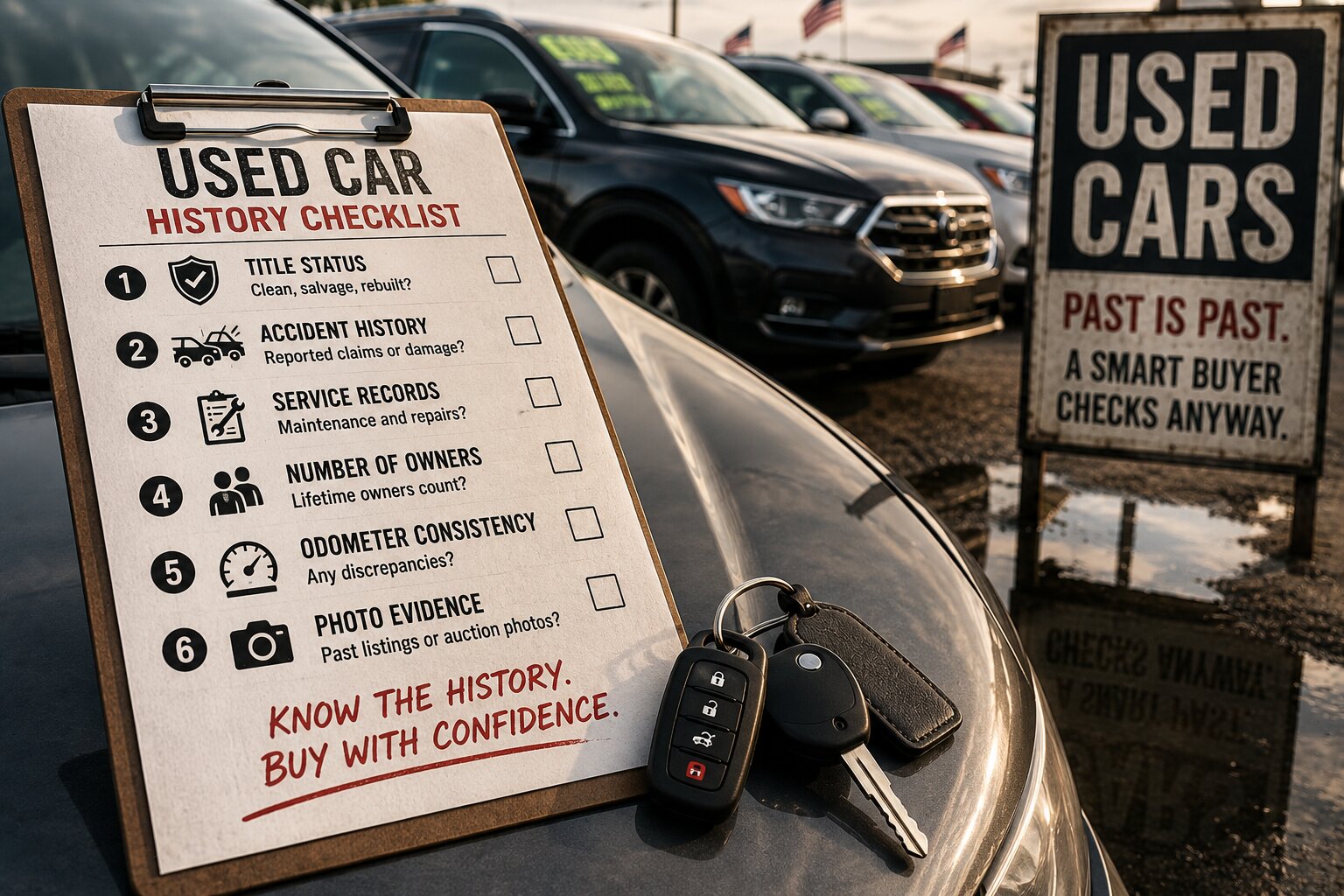
Title status is a big one because it’s tied to state paperwork. “Clean title” versus “salvage” or “rebuilt” is not just a vibe; it affects insurability, resale value, and sometimes whether a lender will touch it. The catch is that rules and branding can vary by state, and paperwork mistakes happen. Still, title status is one of the few signals that has legal weight.
Odometer consistency is another because federal and state rules require odometer disclosures in many transactions, and tampering is illegal. That said, discrepancies can come from mundane stuff too, like instrument cluster replacement or data entry errors, so a mismatch needs investigation rather than instant panic.
Accident history often comes from insurance claims and repair reporting that may show up on vehicle-history reports. The honest limitation: not every accident gets reported, not every repair shop feeds a database, and some damage gets paid out of pocket. So “no accidents reported” is not the same thing as “no accidents.”
The clue I wish was impossible to hide
If I could pick one history clue that should be truly impossible to hide, I keep coming back to structural damage and proper repair documentation. Not every accident matters equally. A bumper cover and a headlight are annoying but manageable. What scares buyers is bent structure, airbag deployment, flood exposure, or repairs that were rushed.
In a perfect world, there would be a standardized, always-followed paper trail for major repairs: what was damaged, what parts were used (OEM vs aftermarket), whether airbags were replaced correctly, and whether calibrations for modern driver-assist systems were performed afterward. Many late-model cars rely on cameras and radar for features like automatic emergency braking or lane-keeping assist (equipment varies by trim and options), and repairs can require recalibration. When you are shopping used, you rarely get that full story unless the seller kept records.
Service records versus “trust me”
Service records feel boring until you have owned a car with mystery maintenance. A stack of receipts can tell you more about an owner than a shiny detail job ever will. Regular oil changes at reasonable intervals, brake fluid services now and then, tires replaced as a set rather than one random bargain tire. It all adds up.
The downside is obvious: service records are easy to lose, easy to never collect in the first place, and sometimes split across dealers and independent shops. Even when a dealer can pull some history by VIN for work done at their stores, it might not reflect everything.
Number of owners: signal or noise?
I go back and forth on owner count. One-owner cars can be gems, especially if they come with records and consistent mileage. But multiple owners are not automatically bad; leases roll over quickly, people move, life changes. For certain models that get flipped often (think sporty coupes or cheap commuter sedans), lots of owners might hint at hard use, but it is not proof.
Photo evidence: surprisingly powerful, still incomplete
Photos help because they freeze time. Old listing photos or auction photos can reveal prior damage, mismatched paint, missing underbody panels, airbag lights on the dash, or flood-line grime in places nobody cleans. But photos can also be low quality or selectively framed. They are evidence, not a verdict.
Your turn: rank these trust signals
This is a community prompt for anyone who has shopped used recently or lived with a car long enough to learn what matters after the honeymoon phase.
Which vehicle-history clue should be impossible to hide? Rank these from most important to least important for your next purchase:
1) Title status
2) Accident history
3) Service records
4) Number of owners
5) Odometer consistency
6) Photo evidence
If you want to add context, tell us what you drive now (or what you’re shopping for) and how you use it: long commute, road trips, towing weekends (if applicable), city parking grind. Different lifestyles make different clues feel non-negotiable.
0 comments
Join the discussion around this article.
Please login to comment.