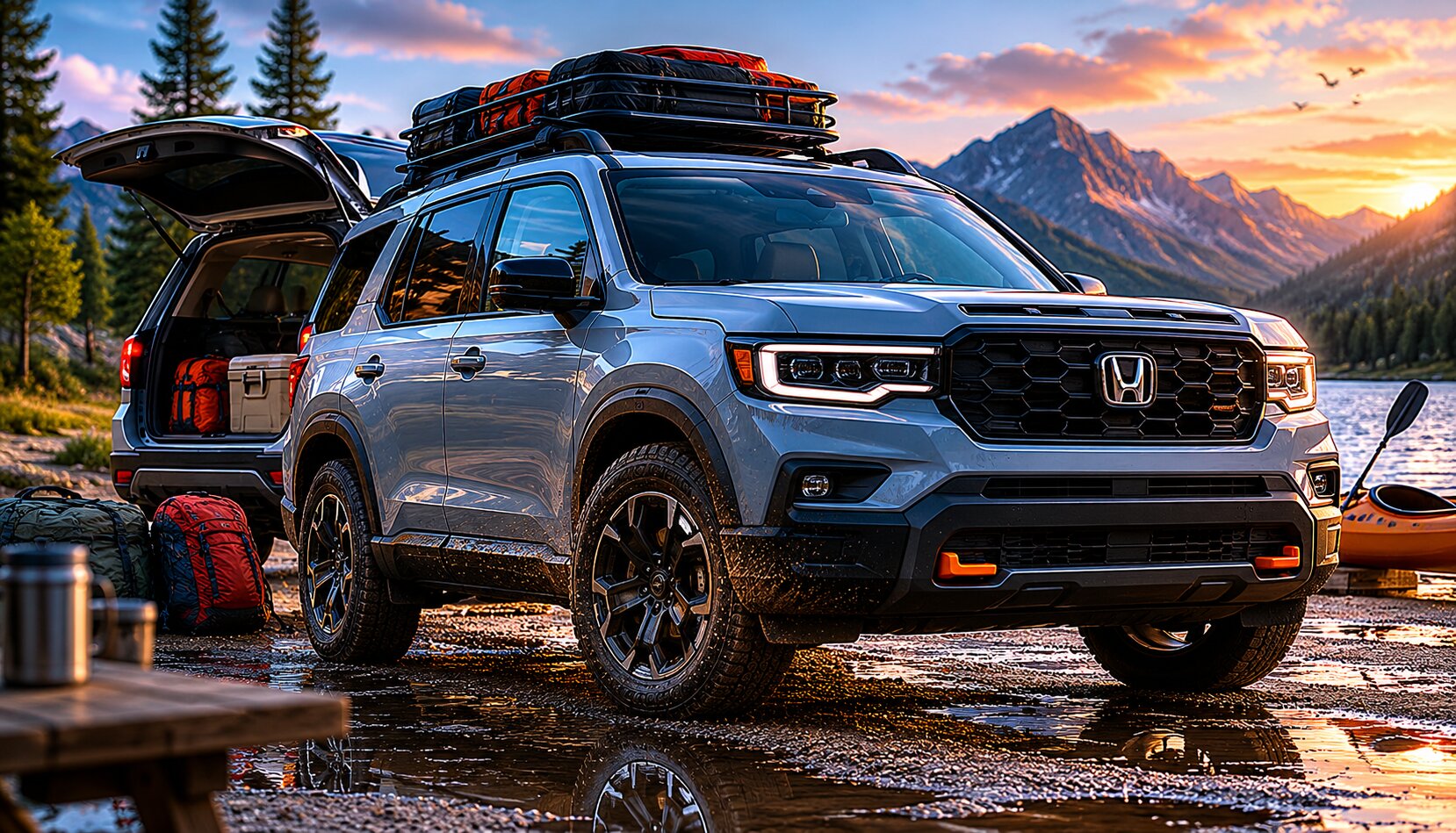
Verified facts first: what we can (and cannot) say about the 2026 Passport
Honda has sold the Passport as a two-row, mid-size SUV positioned between the compact CR-V and the three-row Pilot. In the U.S., the most recent fully detailed Passport generation has been powered by Honda’s 3.5-liter V6 paired with a 9-speed automatic transmission, with front-wheel drive or Honda’s i-VTM4 all-wheel drive depending on trim and configuration. It has traditionally emphasized usable cargo space, straightforward road manners, and a more rugged visual stance than the family-first Pilot.
Here is the important caveat for a “2026 Honda Passport” review: as of my knowledge cutoff (August 2025), Honda had not published full, verified U.S.-market specifications for a 2026 Passport, including confirmed powertrain output, EPA fuel economy, towing capacity, pricing, trim walk, or final dimensions and cargo volumes. Any article that states precise 2026 figures without official documentation should be treated skeptically. What follows focuses on what is widely known about the Passport nameplate’s mission, how the most recently documented Passport is configured in the U.S., what to look for if you are shopping this class in 2026, and where you should demand confirmation from Honda or a window sticker before you buy.
Competitors are clearer. The Passport’s natural rivals remain two-row mid-size SUVs like the Chevrolet Blazer (gas), Ford Edge (recently discontinued in the U.S., but still a reference point on dealer lots), Jeep Grand Cherokee (two-row), Hyundai Santa Fe (now more boxy and family-focused), Kia Sorento (often three-row but comparable footprint), Nissan Murano (two-row comfort play), Subaru Outback (two-row wagon-like alternative), Toyota 4Runner (more off-road oriented and body-on-frame), and even Honda’s own Pilot if you want three rows and do not mind trading some cargo simplicity for seating flexibility.
The Passport idea: two rows, big square cargo, fewer compromises
The reason the Passport has always made sense is not because it tries to be everything. It is because it refuses to chase a third row that many owners rarely use. For buyers who actually live out of their cargo area, dog crates, muddy soccer bags, hockey gear, strollers that never fold as neatly as promised, camping bins that travel every weekend in summer, a two-row mid-size SUV can be the sweet spot. You get a wider load floor and easier access than many compact crossovers, without the packaging penalties of squeezing in extra seats.
That design intent matters in daily life. A two-row layout usually means fewer hinges, fewer latches, fewer rattles over time, and less temptation to keep the third row permanently folded while still paying for its hardware and structural compromises. It also changes how you shop. Instead of asking “how many people can I carry once a year,” you ask “how easy is it to load every day.” The Passport has traditionally been aligned with that second question.
Design and proportions: rugged flavor without pretending to be a rock crawler
Passport styling has historically leaned more upright and athletic than many soft-road crossovers. The TrailSport trim in particular has pushed the outdoors theme with tougher-looking wheels and tires and unique trim details. That visual positioning is useful for buyers who want something that looks ready for weekends without needing a body-on-frame SUV’s tradeoffs.
Still, it is worth keeping expectations realistic. In this segment, most unibody two-row SUVs are designed first for pavement comfort and stability control tuned for safety rather than slow-speed crawling. All-wheel drive systems vary widely in sophistication; some are excellent at apportioning torque on slick roads or gravel driveways but are not built for repeated abuse on sharp rocks or deep ruts. If your use case includes rough trails as a routine hobby, you should cross-shop purpose-built options like the Toyota 4Runner or Jeep Grand Cherokee trims aimed at off-pavement use. If your weekends look more like forest roads to campsites, snow-covered access roads to trailheads, and wet grass at tournament fields, the Passport concept remains well matched.
Powertrain: what is verified from recent Passports, and what must be confirmed for 2026
On recent U.S.-spec Passports (notably 2019 through 2025 model years), Honda used a naturally aspirated 3.5-liter V6 paired with a 9-speed automatic. Output has been quoted at around 280 horsepower in those years. That combination has been a known quantity in Honda’s mid-size lineup: smooth enough when driven gently, responsive when you lean into it, and generally well suited to highway merging with a full load.
For 2026 specifically, buyers should verify whether Honda continues with that V6 or shifts strategy. Across the industry, turbocharged four-cylinders have become common in this class because they can deliver strong low-end torque and help manufacturers meet emissions targets. Some brands have also moved toward hybrid options for efficiency gains. Until Honda publishes official 2026 specifications or dealers receive final Monroney labels for retail vehicles, any statement about engine type, horsepower, torque, transmission gearing, or even whether front-wheel drive remains available should be treated as provisional.
If you are shopping based on towing confidence or mountain driving with camping gear onboard, this uncertainty matters. A V6 can feel calmer at higher speeds under load because it does not rely on boost pressure management and can deliver linear power as revs rise. A modern turbo four can feel punchier around town but may sound busier when pushed hard uphill with passengers and cargo. Neither approach is automatically better; they simply feel different in typical use.
Driving manners: why this kind of SUV succeeds or fails on American highways
A two-row mid-size SUV lives on interstates. It does school runs during the week and then spends Saturday morning at 75 mph headed toward a field complex or lake town an hour away. The Passport’s historical strengths have lined up with that reality: stable straight-line behavior, enough power for easy passing without planning your move minutes ahead, and suspension tuning that leans toward comfort rather than sharp-edged sportiness.
Without claiming seat time in an unverified 2026 model year vehicle, it is still fair to outline what prospective buyers should evaluate on their own test drive because these traits tend to define satisfaction long after the novelty wears off.
Highway noise: Mid-size Hondas have generally been competent but not always class-leading in wind and tire noise suppression compared with some quieter rivals. On any Passport you test, pay attention to how much tire roar comes through on coarse concrete versus smooth asphalt. If you plan to run all-terrain leaning tires on an outdoorsy trim like TrailSport (if offered), expect more tread noise than with street-focused rubber.
Ride quality: With camping bins stacked behind the rear seats and dogs shifting their weight at every stoplight, ride tuning becomes more than comfort; it becomes stability for your living cargo. A well-damped suspension keeps head toss down over expansion joints and avoids that floaty rebound that makes passengers carsick on long drives.
Steering feel: Most crossovers now steer lightly because buyers prefer easy parking-lot effort. What matters is consistency on-center at highway speed. Wander forces constant micro-corrections; good tracking lets you relax your grip.
Transmission behavior: Nine-speed automatics can be smooth when calibrated well but may occasionally hunt ratios at low speeds if software tuning prioritizes fuel economy over immediacy. On your drive route include slow traffic and gentle rolling hills so you can judge whether shifts feel natural.
Cargo area reality check: dogs, bins, strollers, sports gear
The Passport’s core promise is cargo usability with only two rows to package around. In practice that means three things: floor length behind the second row, height under the rear glass line (for stacked bins), and day-to-day convenience details like tie-down points and how easy it is to wipe down plastics after muddy paws.
Dogs: A two-row mid-size SUV tends to work better for medium-to-large dogs because you can dedicate the entire rear area to them without sacrificing passenger seating for humans up front. When evaluating any Passport configuration on a lot, bring your real-world constraints into the cabin mentally: will your crate fit without forcing the second row too far forward? Is there enough vertical space for your dog to sit up comfortably? Are there vents aimed toward the rear area? Those details matter more than brochure lifestyle photos.
Sports equipment: Long items expose packaging quirks quickly. Hockey sticks or folding chairs often require either diagonal loading or partial seat folding if floor length is marginal. The advantage of many two-row mid-sizers is that they offer enough width to lay awkward gear flat rather than building a teetering pile that blocks rear visibility.
Camping bins: Standardized plastic storage totes are unforgiving measuring tools. You want a load floor wide enough to place bins side by side without wasting space around wheel wells; you also want tie-downs that are actually reachable when everything is packed tight.
Easy-clean practicality: Many buyers underestimate how much they will value hard-wearing interior plastics once they start using their SUV like an SUV instead of like a rolling lounge chair. Carpeted side panels look upscale until they collect dog hair and smell like damp gear after rain games. Look closely at where Honda uses carpet versus textured plastic around the cargo opening; those surfaces determine how much you will vacuum versus wipe down.
Cargo volume figures are critical here but must be verified for 2026 once Honda publishes them or once EPA documents list interior volume classifications for that model year vehicle. Historically, the Passport has offered generous space for its class; whether it leads rivals depends heavily on how each manufacturer measures behind-seat volume versus maximum volume with seats folded.
Second-row comfort: two rows does not mean “only for kids”
A common misconception is that two-row SUVs exist mainly for couples or empty nesters. In reality many families choose two rows because they would rather have adult-friendly rear seating plus meaningful cargo space than squeeze in occasional third-row capacity that steals both legroom and trunk depth.
The Passport has traditionally provided a roomy second row by compact crossover standards. When assessing rear-seat comfort for your own household needs in 2026 shopping season, focus on:
Knee room with real front-seat settings: Set the driver seat where you actually sit on long trips (often lower and farther back than dealer-lot posture) before climbing into back.
Foot space under front seats: This matters more than brochure legroom numbers because it determines whether adults can tuck their feet comfortably rather than splaying knees outward.
Seatback angle: Slight recline transforms long drives from tolerable to pleasant.
Rear HVAC vents and USB ports: Availability varies by trim and model year; verify equipment level rather than assuming it exists because competitors offer it.
Cabin layout and controls: why simple usually wins
Honda cabins typically aim for logical ergonomics rather than avant-garde design experiments. That tends to age well in ownership because muscle memory forms quickly: knobs where you expect them; screens that do not bury basic functions too deeply; storage where daily items land naturally.
The caution point is technology cadence. Infotainment systems evolve quickly across model years; what felt competitive early in a generation can feel merely adequate later as screen sizes grow elsewhere and smartphone integration becomes more seamless among rivals. For any 2026 Passport you consider, confirm which infotainment system version it uses (screen size, responsiveness) and whether wireless Apple CarPlay and Android Auto are included on your chosen trim level or optional package.
If you spend weekends shuttling between trailheads or tournament complexes with multiple phones charging at once plus GPS running continuously, count USB ports like they matter because they do. Also check where those ports are located; ports buried behind cupholders are less useful than ones accessible from both seating positions without contortions.
Safety tech: what shoppers should expect but still verify
Honda has broadly offered advanced driver-assistance features across its lineup through Honda Sensing packages over recent years; availability varies by model year and trim strategy. Common features in this class include automatic emergency braking with forward collision warning, lane keeping assistance or lane departure mitigation, adaptive cruise control, blind spot monitoring (sometimes standard only on higher trims), rear cross-traffic alert, parking sensors, and camera systems.
The key here is not assuming content based on badge alone. Verify which features are standard on each trim of the specific model year vehicle you are buying by checking official Honda spec sheets or window stickers when inventory arrives. Also confirm whether adaptive cruise works smoothly at low speeds if you spend time in congestion; some systems are better tuned than others even within one brand family over different generations of hardware.
Towing and hauling: honest expectations for campers and small trailers
Towing capacity often drives mid-size SUV shopping decisions even when owners tow only a few times per year. Recent Passports have been rated to tow up to 5,000 pounds when properly equipped (typically with all-wheel drive). That figure puts it in familiar territory among unibody mid-size crossovers but below body-on-frame SUVs designed around towing durability.
For 2026 specifically you must confirm towing ratings from official sources because ratings can change with powertrain updates or cooling package revisions even if an SUV looks similar externally.
A practical note from real-world use: towing comfort depends as much on wheelbase stability, brake feel under load, cooling capacity in hot weather climbs, hitch receiver integration (factory versus aftermarket), and transmission calibration as it does on headline tow rating alone. If towing matters to you beyond occasional utility trailer duty runs from home improvement stores, prioritize factory tow equipment availability along with trailer brake controller compatibility if needed.
Fuel economy: expect “mid-size V6 normal” unless Honda changes direction
If the 2026 Passport continues with a naturally aspirated V6 AWD layout similar to recent years, fuel economy will likely remain typical of V6 mid-size crossovers rather than class-leading among turbo fours or hybrids. Exact EPA mpg ratings must come from EPA listings or official manufacturer documentation once available; do not rely on speculation or carryover assumptions when budgeting ownership costs.
If Honda moves toward a turbocharged engine or electrified option (not confirmed as of August 2025), fuel economy could improve depending on calibration and drivetrain strategy. The tradeoff often comes down to driving profile: turbos tend to reward gentle throttle use but can drink more when driven hard; hybrids shine most in stop-and-go conditions but may offer smaller gains at steady high-speed cruising compared with city driving improvements.
The TrailSport question: image versus function
The TrailSport badge has become Honda’s shorthand for outdoors-oriented trims across multiple models in recent years. On vehicles where TrailSport exists today (including past Passports), changes have typically focused on appearance elements plus functional tweaks such as tires chosen for rougher surfaces or suspension tuning adjustments depending on model application.
This matters because many buyers want mild capability enhancements without paying penalties they will feel every day. Aggressive tires can help traction on dirt access roads but add noise on concrete highways; blacked-out trim looks great until it shows scratches from brush-loaded weekends; roof racks are useful until wind noise creeps into road trips when empty crossbars stay mounted all year.
If TrailSport continues into 2026 (not confirmed here), consider it through an ownership lens rather than Instagram logic: pick it if its functional equipment aligns with your real usage patterns such as gravel roads in wet weather or frequent snow travel where tire choice matters more than skid-plate aesthetics.
How it stacks up against rivals when cargo use is the priority
Toyota 4Runner: The obvious alternative if “use” includes rough terrain regularly rather than occasionally. The tradeoffs are usually ride quality finesse on pavement versus body-on-frame toughness off pavement; fuel economy also tends to lag typical unibody crossovers depending on powertrain generation involved. For many owners whose adventures are mostly paved miles plus dirt roads near campsites, a unibody SUV like Passport often feels easier to live with day-to-day.
Jeep Grand Cherokee (two-row): A strong competitor if interior ambiance and available powertrains matter most; Grand Cherokee can feel more premium depending on configuration but can also climb quickly in price with options packages. Cargo usability depends heavily on shape details; Jeep’s cabin materials often impress at higher trims but long-term practicality still comes down to wipeable surfaces if dogs ride along weekly.
Nissan Murano: Traditionally comfort-oriented with smooth road manners; however its aging platform history makes tech freshness a key question depending on model year updates available by 2026 shopping season. Murano buyers often prioritize quietness over rugged styling cues.
Chevrolet Blazer: Style-forward with varied powertrain availability across years; packaging can be less boxy than some rivals which affects how efficiently camping bins stack behind the seats even if total volume numbers look competitive on paper.
Kia Sorento / Hyundai Santa Fe: These often tempt shoppers with value content such as tech features per dollar depending on incentives and trim structure at any given time; Santa Fe’s newer boxier approach may appeal strongly to cargo-first shoppers because square shapes tend to pack better than tapered ones. Confirm whether third-row availability affects cargo depth behind row two if comparing directly since configurations differ across trims.
Honda Pilot: The internal rival worth considering seriously if pricing overlaps due to incentives or dealer inventory realities. Even if you never use three rows of seats upright, Pilots sometimes offer compelling deals due to volume sales patterns; however third-row hardware can reduce pure cargo simplicity compared with a dedicated two-row layout depending on how each model’s floor height and seat-fold mechanism are packaged.
Ownership implications: tires, brakes, cleaning time, and everyday wear
A gear-heavy lifestyle changes what “ownership cost” means beyond fuel economy alone.
Tires: If your chosen trim uses larger wheels with lower-profile tires (common in sporty-looking packages across brands), replacement costs rise quickly compared with smaller wheels wearing taller sidewalls. Taller sidewalls also tend to ride better over broken pavement while protecting rims from pothole damage during winter commutes.
Cargo-area durability: Look closely at bumper-top protection near the liftgate opening because sliding coolers out will scuff paint faster than most people expect. Some SUVs offer accessory bumper appliques or reversible mats; those small items pay dividends if your weekly routine includes heavy bins sliding over edges repeatedly.
Mats matter: All-weather floor liners become non-negotiable once dogs ride along regularly or cleats get tossed inside after rainy games days. Verify availability of OEM liners sized correctly for second-row footwells plus cargo area coverage rather than relying solely on universal mats that curl up at edges after one season of use.
The buying reality in 2026: pricing pressure and what information to demand
No credible review should pretend pricing certainty exists without official MSRP releases for each trim level of the exact model year vehicle being discussed. For any 2026 Passport purchase decision you should demand three things before committing:
An official spec sheet or window sticker, confirming engine output (horsepower/torque), drivetrain type (FWD/AWD availability), wheel sizes/tires by trim level, safety tech standardization details such as blind spot monitoring inclusion status).
An EPA fuel economy label, especially if comparing against turbo-four competitors that may look similar until annual fuel costs add up across long commutes.)
A clear towing rating statement, including whether rating depends upon AWD selection or specific tow packages.
If dealer lots mix leftover prior-year inventory alongside early shipments of newer models during transition months، make sure you know exactly which model year you are test-driving because small differences such as infotainment hardware revisions or feature reshuffles can materially affect satisfaction.
Two-row packaging tends to deliver genuinely usable cargo space without third-row compromises.
Historically strong highway confidence from V6 power paired with an automatic transmission suited for American driving.
Practical fit for dog owners، sports-heavy families، and camping routines where wipeable surfaces matter.
Easy-to-understand positioning between CR-V size efficiency Pilot family capacity.
If V6 continues fuel economy likely remains average versus newer turbo-four/hybrid competitors.
Tech freshness depends heavily upon model-year updates؛ verify infotainment hardware rather than assuming parity with newest rivals.
Outdoors-themed trims can add tire noise/costs without improving day-to-day value unless your routes genuinely include gravel، snow، mud.
The Passport idea remains compelling precisely because it is not trying too hard۔ For many American buyers who live out of their trunk area two rows plus real cargo volume is more valuable than occasional third-row bragging rights. That core mission aligns well with dogs sports equipment, camping bins, bulky strollers, home-improvement runs, long interstate miles.
The challenge specific to calling anything a “2026 Honda Passport review” right now is verification
Until Honda publishes complete U.S.-market specifications pricing EPA ratings towing numbers trim equipment lists any definitive claims about performance metrics feature availability would be guesswork
If you are set on buying immediately when new inventory arrives treat early information cautiously insist upon window-sticker confirmation.
If your priority list starts with easy-loading practicality calm highway behavior adult-friendly rear seating an ownership experience built around real messes rather than showroom perfection keep the Passport high on your list۔ Cross-shop it against similarly sized two-row alternatives like Grand Cherokee Blazer while also checking whether deals push you toward an entry Pilot. Then buy based upon verified specs how well its cargo space actually fits your life’s oddly shaped gear.
0 comments
Join the discussion around this article.
Please login to comment.