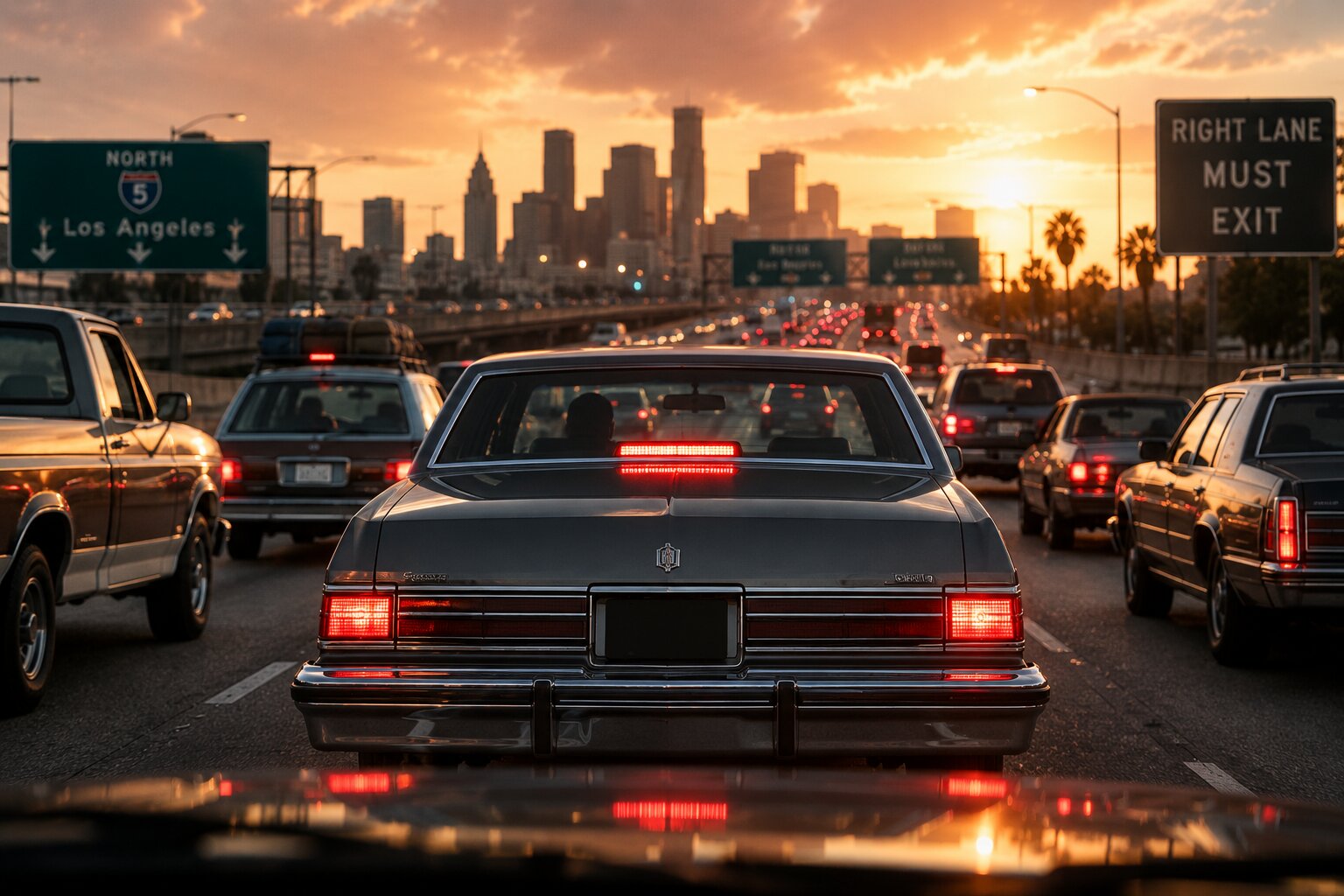
A small red light in a sea of chrome
Picture an American freeway in the early 1980s. Big sedans with upright glass, square pickups with steel bumpers, station wagons loaded for a weekend, and a steady stream of commuters in the right lane. You are following someone at 55 mph, maybe faster depending on the state and the mood of traffic. The car ahead taps the brakes. In that moment, you are waiting on two small red lamps mounted low and wide at the corners of a trunk lid or tailgate, competing with sun glare, dirt, and the visual clutter of turn signals, reflections, and roadside signs.
Rear end crashes were common then, and they are still common now. They happen in normal life: stop and go traffic, a sudden slowdown around a bend, a driver glancing down for half a second too long. The problem is simple to describe and hard to solve. Drivers do not always notice braking quickly enough.
The fix that ended up helping wasn’t a new engine technology or a fancy sensor suite. It was one extra brake light placed where your eyes naturally look.
The safety problem: seeing “brake” fast enough
Rear end collisions tend to be about perception and reaction time. If you recognize “the car ahead is braking” even a fraction of a second sooner, you can lift earlier, brake earlier, or at least reduce impact speed. That is why brake lights matter so much even though they feel like background equipment.
For decades, U.S. passenger cars relied on two rear brake lamps, typically combined with the tail lamps. They worked, but they were low on the vehicle and often close to other red lighting. In bright daylight or heavy traffic, that can be less than ideal. Add in the realities of American roads: SUVs and pickups mixing with compact cars, long commutes where attention fades, and weather that coats lenses with grime. You can see why engineers and regulators kept looking for improvements that did not require changing driver behavior.
Volvo’s early idea: put the message where people look
The third brake light story is often associated with Volvo for good reason. Volvo experimented with an additional high mounted brake lamp well before U.S. rules required it. The idea was straightforward: raise a brake light into the driver’s central field of view so it stands apart from tail lamps and turn signals.
Volvo’s safety reputation was already part of its brand identity in the U.S., especially among families who wanted something sturdy and sensible for daily driving. An extra brake lamp fit that mindset perfectly. It was visible, it was redundant, and it communicated one clear message: the car ahead is slowing.
Exact “first use” details vary by source depending on market and model year, so it is worth being careful here. What is widely accepted is that Volvo was among the early adopters of high mounted stop lamps on production cars in the 1970s, helping push the concept into broader awareness.
The regulatory path: from experiments to federal requirement
In the United States, lighting rules live under Federal Motor Vehicle Safety Standards (FMVSS). The third brake light is formally called the Center High Mounted Stop Lamp (CHMSL), which sounds like something you would only say in a compliance meeting. On the road it is just that red bar glowing at eye level through your windshield.
NHTSA (the National Highway Traffic Safety Administration) evaluated high mounted stop lamps through research and fleet studies before making them mandatory. The agency’s work is often cited for showing meaningful reductions in certain rear end crashes when vehicles had CHMSL compared with similar vehicles without it.
The key verified milestone is this: CHMSL became required equipment on new passenger cars sold in the U.S. starting with the 1986 model year under FMVSS 108 (lamps, reflective devices, and associated equipment). Light trucks followed later; widely cited timelines place that requirement at the 1994 model year for many light trucks and vans as standards expanded beyond passenger cars.
If you were buying an American family sedan in 1985, you might have seen third brake lights showing up early on some models as manufacturers prepared for compliance. By 1986, it was no longer a novelty for passenger cars. It became part of the visual language of traffic almost overnight.
How automakers packaged it: from add on boxes to clean integration
Early CHMSL implementations could look a little improvised by modern standards: a small housing stuck to the rear package shelf inside the cabin on sedans, or mounted high on a hatch or liftgate for wagons and hatchbacks. Some were bulky; some looked like an afterthought. But they worked.
As styling caught up to regulation, third brake lights became more integrated. You started seeing them molded into rear spoilers on sporty coupes or tucked neatly at the top of rear glass on hatchbacks. On pickups and vans, that high center lamp found a natural home at the back of the cab or above rear doors where it could stay visible even when cargo filled the bed or when tailgates were dusty.
This packaging mattered culturally because Americans keep their vehicles busy. People tow boats to lakes, pile luggage for road trips, haul lumber home from big box stores, or drive with bikes hanging off racks that can partially block lower lamps. A higher lamp is harder to obscure by everyday life.
Did it actually help? What we can say without stretching
The third brake light has one of those rare reputations in automotive safety: broadly liked by regulators and easy for drivers to understand. NHTSA’s published analyses over time have credited CHMSL with reducing certain types of rear end crashes in multi vehicle situations (especially those involving passenger cars) after adoption began.
The size of that benefit has been reported differently across studies and eras as fleets changed and drivers adapted; some analyses found strong early gains that tapered later as CHMSL became universal and therefore less of a novelty cue. That tapering effect makes intuitive sense: once everyone has it, it no longer distinguishes one vehicle from another. Even so, moving information into a clearer line of sight remains valuable.
What we should not do is pretend there is one magic number that applies forever across all traffic conditions. Crash data depends on vehicle mix, driver behavior, road design, enforcement culture, and even how people use phones over time. The verified takeaway is simpler: NHTSA required CHMSL because evidence supported real reductions in relevant rear end crash types compared with two lamp setups alone.
Why “high and center” works better than “low and wide”
If you have ever driven behind an older car without a third brake light at dusk or in rain spray, you can feel why CHMSL caught on. Two brake lights down low can blend into background noise: reflections off wet pavement, glare from low sun angles, or just the sheer density of red lights in traffic.
A center high lamp does three useful things at once:
First, it creates separation from tail lamps and turn signals by putting braking information in its own space.
Second, it sits closer to where drivers tend to focus their vision when following another car: around the center mass of that vehicle rather than its corners.
Third, it tends to remain visible when lower lamps are partially blocked by snow buildup, dirt film, or cargo carriers (not always fully blocked of course, but visibility usually improves).
This is also why modern designs often make CHMSL bright and crisp even when taillamps are heavily stylized or tinted looking behind clear lenses. Automakers can play design games at the corners; regulators still want that clear stop signal up top.
The cultural moment: safety tech you could see working
A lot of safety improvements are invisible until something goes wrong: stronger roof structures, better door beams, smarter airbags. The third brake light was different because you could watch it do its job every day on your commute.
You saw it light up through your windshield when traffic compressed near an exit ramp. You noticed it first on rental cars at airports or on newer sedans in office parking lots as model years turned over. For many drivers it became an instant trust cue: if that high red light popped on suddenly several cars ahead in your lane stack, you reacted sooner even if you could not yet see what caused braking downstream.
It also became part of car culture aesthetics in subtle ways. By the 1990s a clean integrated CHMSL looked modern; an older car without one started to look dated even if its paint still shined.
Competitors to the third brake light: what else tried to solve rear end crashes?
No single device owns rear end safety anymore. Over time other ideas joined the fight:
Better rear lighting layouts with larger illuminated areas helped make braking more obvious from farther back.
High mounted stop lamps became standard across passenger cars and then across light trucks as regulations expanded.
More recently, forward collision warning and automatic emergency braking have aimed at preventing impacts even when drivers miss cues entirely (though performance varies by system design and conditions). Those technologies are outside the original CHMSL era but they show how safety layers stack rather than replace each other.
The third brake light sits in a sweet spot among these approaches: cheap relative to advanced sensors, easy to maintain like any bulb or LED module (depending on design), easy for every driver to interpret instantly.
The little maintenance reality nobody talks about
If there is one everyday downside to CHMSL ownership life, it is mundane: sometimes they burn out or fail like any other lamp assembly (or develop wiring issues), and drivers do not always notice because they cannot easily see their own high mounted lamp from behind.
On older sedans with an interior shelf mounted unit using conventional bulbs, replacement could be straightforward but still annoying if trim panels were brittle with age. On some trucks where CHMSL sits above the cab’s rear window, water intrusion has been a known complaint across various makes over decades when seals degrade (the specifics vary by model; it is not universal). None of this changes what CHMSL does well; it just reminds you that even simple safety hardware lives in the real world of weatherstrips and aging plastics.
Why small visibility cues still matter
Modern cars can flash hazard lights during hard braking in some markets or under certain rules; some use rapid pulsing patterns depending on region and regulation. But even as lighting gets smarter around the edges, CHMSL remains a clear baseline signal recognized everywhere in U.S. traffic.
The deeper lesson is not just “add more lights.” It is about human attention under stress. Drivers filter enormous amounts of information at speed: lane lines fading under glare; billboards; mirrors; kids talking; navigation prompts; phone screens buzzing even when ignored. In that environment, safety improvements often come from making one critical message impossible to miss.
A single red lamp placed high and centered does exactly that. It does not ask you to learn anything new; your brain already knows what bright red means on a car ahead.
The legacy: an ordinary part that quietly changed traffic
If you drive today through Los Angeles congestion or across Midwest interstates where traffic runs fast between towns, you are surrounded by decades of accumulated safety logic made physical: crumple zones you cannot see; airbags waiting behind panels; stability control correcting tiny slides before they become stories.
The third brake light stands out because it never pretended to be anything other than what it is: an extra cue for imperfect humans sharing space at speed. It arrived through research, regulation (passenger cars from 1986 model year), then widespread adoption including light trucks later on (commonly cited as 1994 model year). And once it became normal, you stopped noticing it until you find yourself behind an older classic at dusk and realize something feels missing.
That small red lamp did not eliminate rear end crashes. Nothing has. But it changed how America reads traffic flow one tap of the brakes at a time.
0 comments
Join the discussion around this article.
Please login to comment.