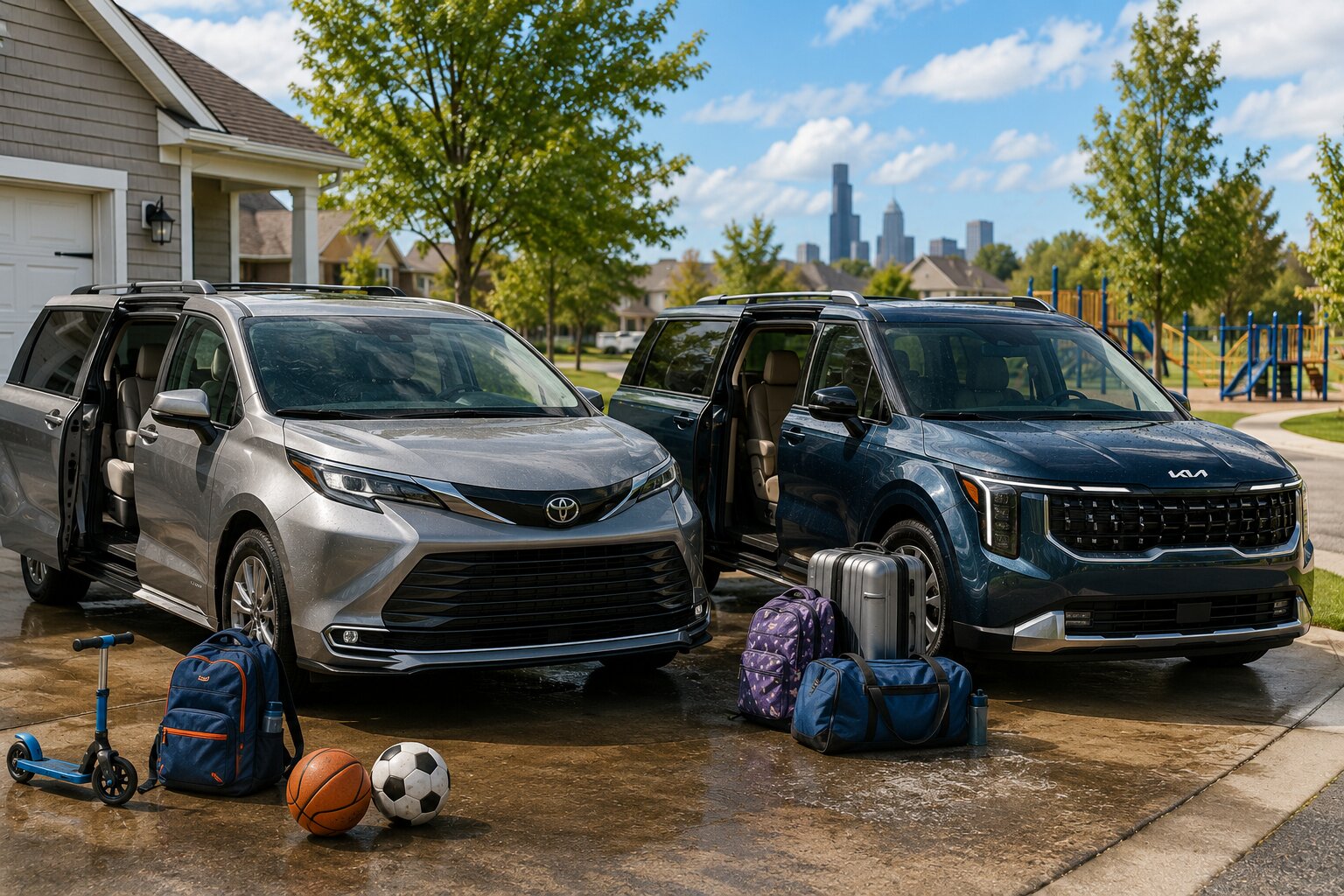
Toyota Sienna vs Kia Carnival: the minivan question that actually matters on a Tuesday
I live in Detroit, which means I see two kinds of family haulers in the wild: the ones that are bought with spreadsheets, and the ones that are bought with a deep sigh after the third daycare pickup of the day. The Toyota Sienna and Kia Carnival sit right in the middle of that reality. Both are modern, safe-feeling, three-row people movers with sliding doors and enough cupholders to make you question your own hydration habits.
But they go about “making your week easier” in very different ways. The Sienna is all-in on hybrid efficiency and a slightly more traditional minivan vibe. The Carnival leans into SUV-like styling, a conventional gas V6 (in most recent model years), and a cabin that can feel more like a premium shuttle than a rolling playroom, depending on trim.
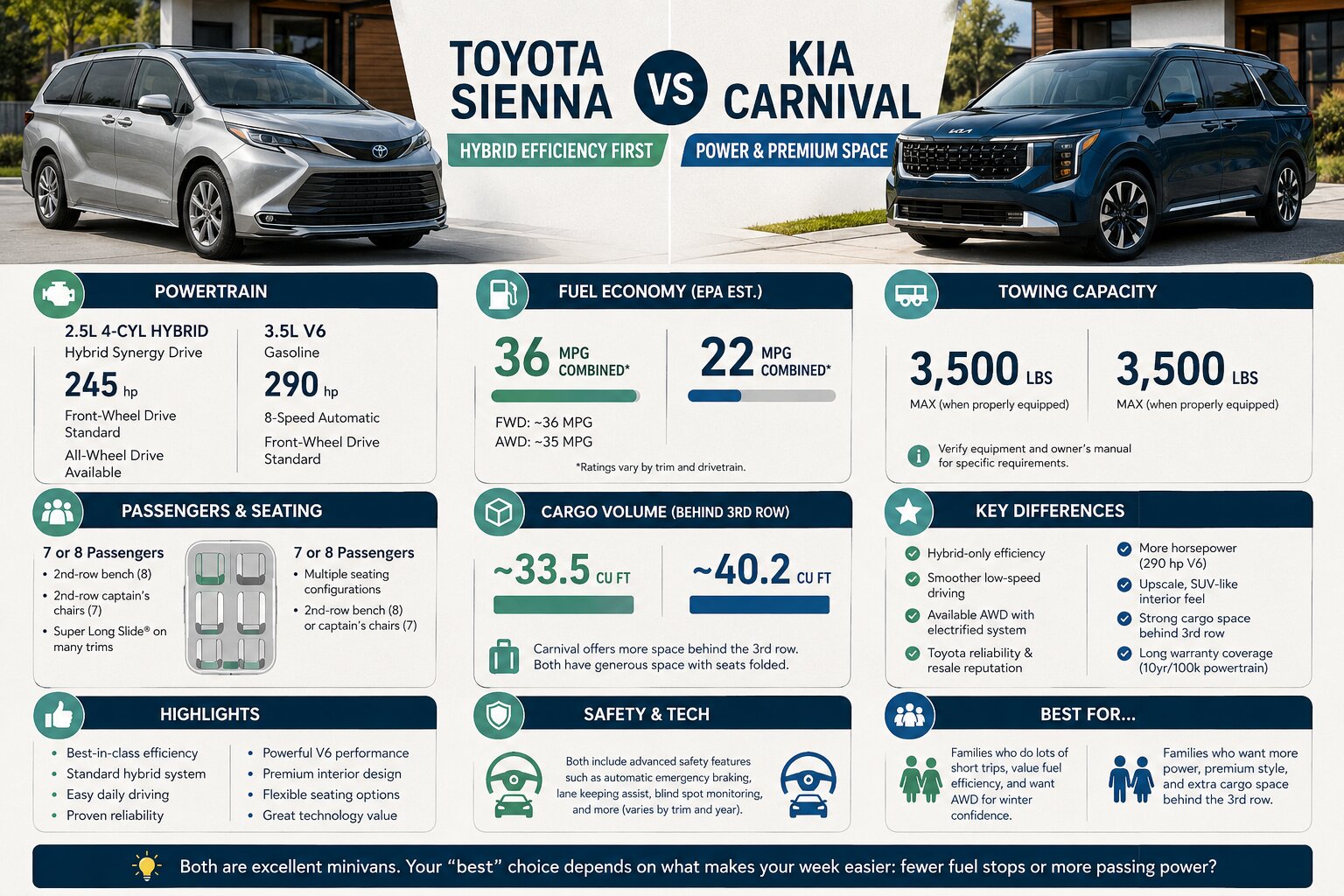
Before we get into the real-life scenarios, here are the verified basics I’m working from. Current-generation Sienna (introduced for 2021) is hybrid-only, using a 2.5-liter four-cylinder with Toyota’s Hybrid Synergy Drive for a combined 245 hp (Toyota’s published system output). Front-wheel drive is standard and all-wheel drive is available. Kia’s current Carnival launched for 2022 in the U.S. with a 3.5-liter V6 making 290 hp and 262 lb-ft of torque (Kia specs). Both are direct competitors to the Honda Odyssey and Chrysler Pacifica (including Pacifica Hybrid), with the Sienna also pulling cross-shoppers from three-row SUVs that people buy before they remember sliding doors exist.
Daycare run reality: sliding doors, tight lots, and low-speed manners
The first test of any minivan is not a road trip. It’s the cramped parking lot with curbs, car seats, and another parent who parked too close. Both the Sienna and Carnival bring power sliding doors in most trims, and that alone can feel like cheating compared with any three-row SUV.
Where they differ is how they behave at low speeds and how calm they feel when you’re doing five things at once. The Sienna’s hybrid setup is naturally suited to this job. In typical stop-and-go use, hybrids tend to feel smooth off the line because the electric motor can handle those first few feet without the engine needing to flare up. Toyota’s system output is 245 hp combined, which sounds modest next to the Carnival’s 290 hp V6, but around town the Sienna’s power delivery is usually more about steady motion than big surges.
The Carnival counters with good old-fashioned V6 response. Kia’s 3.5-liter makes 290 hp and 262 lb-ft, paired with an automatic transmission (Kia lists an 8-speed automatic). In suburban traffic it should feel more familiar to anyone coming out of a non-hybrid vehicle, especially when you need a quick merge or you’re hustling through an unprotected left turn.
Steering feel is not something minivan buyers brag about at parties, but it matters when you’re threading between concrete planters and shopping carts. Neither of these vans is aiming for sports-sedan feedback. Still, there’s a difference between “light” and “vague.” The Sienna generally prioritizes easy effort, while the Carnival’s tuning often comes across as slightly more substantial in an SUV-like way. That does not mean either one is fun; it means one may feel more natural if you’re used to crossovers.
The big weekly win: fuel economy versus fill-ups
If your week includes lots of short trips plus at least one longer highway run, fuel economy becomes less of a bragging right and more of a quality-of-life feature.
The Sienna has one headline advantage you can verify without squinting at marketing copy: it is hybrid-only, and its EPA ratings are widely published at around 36 mpg combined for front-wheel-drive versions in many trims and model years (EPA figures vary by trim and AWD). All-wheel drive typically drops that number slightly (often around the mid-30s combined depending on year and configuration). The point is simple: for many families, fewer gas station stops is real time saved.
The Carnival is not positioned as an efficiency leader in its standard gas form. EPA ratings vary by year and trim, but widely published figures for front-wheel-drive Carnivals are typically in the low-20s combined (often around 22 mpg combined). That gap adds up fast if you do school runs all week and then knock out a few hundred miles on Saturday.
Kia has also introduced a Carnival Hybrid for later model years (the timing depends on market rollout), but if you’re shopping specifically between the established U.S.-market specs most people recognize today, the common comparison remains Sienna hybrid versus Carnival V6. If you are looking at a newer Carnival Hybrid where available, check EPA ratings for that exact year because they were not part of the original U.S. launch spec set for 2022.
Merging onto I-94: power numbers that actually translate to stress level
Here’s where horsepower finally means something. On paper, Kia’s 290 hp V6 has an easy advantage over Toyota’s 245 hp hybrid system output. In practice, how that feels depends on what you value.
The Carnival’s V6 should feel more confident when you lean into it at highway speeds or when you’re loaded with passengers plus cargo. It has torque on tap (262 lb-ft), and traditional automatics tend to deliver predictable kickdown when you ask for more speed.
The Sienna’s hybrid system is tuned for efficiency first. It uses an electronically controlled continuously variable transmission (Toyota’s eCVT-style setup in its hybrids), which can keep the engine at higher revs under heavy acceleration. Some drivers interpret that as “busy” or “loud” even when actual acceleration is adequate for family duty. The upside is that once you settle into cruise mode, hybrids tend to calm down and sip fuel.
If your week includes frequent highway merges with a full cabin, the Carnival’s extra power can translate into lower stress. If your week includes lots of stoplights and idle time plus occasional freeway runs, the Sienna’s efficiency advantage tends to be the bigger daily benefit.
Towing: what each one can realistically handle
Minivans tow less than body-on-frame SUVs or pickups, but plenty of families still want to pull a small camper or utility trailer.
Based on widely published manufacturer specs for recent model years, both vans land in roughly the same neighborhood: about 3,500 pounds max towing when properly equipped (exact requirements can vary by year and market). That figure is commonly cited for both the Toyota Sienna and Kia Carnival in their current generations.
What matters more than the number is how you use it. A 3,500-pound rating can cover small pop-up campers or lightweight travel trailers if you’re careful about payload and tongue weight, but it does not mean carefree towing with eight passengers plus gear. If towing is central to your lifestyle rather than occasional duty, you’ll want to read each owner’s manual guidance closely and consider whether a larger vehicle class makes sense.
Road-trip packing: cargo space and how easy it is to use
Every minivan advertises cubic feet; every parent cares about whether a stroller fits without playing luggage Tetris.
The Carnival has been praised widely for strong cargo volume behind the third row relative to key rivals (depending on measurement method), which helps when all seats are up and you still need space for groceries or sports gear. The Sienna also offers useful space behind its third row, but one practical difference shows up when you start thinking about how these vans handle seat removal or stowing.
Toyota made packaging choices in this generation that affect flexibility: Sienna second-row seats are not designed to be removed easily like some older minivans were, largely due to integrated airbags in certain configurations (this has been widely reported). They slide fore and aft significantly in many trims (Toyota calls it Super Long Slide in some versions), which helps create limo-like legroom or easier third-row access without physically removing seats.
Kia’s Carnival offers multiple seating layouts depending on trim, including configurations aimed at maximizing passenger comfort versus maximizing hauling flexibility. Some trims offer second-row captain’s chairs; others offer bench setups. Whether those seats come out easily depends on configuration and year; Kia provides details per trim. If seat removal flexibility is critical for your use case (think: frequent DIY runs), verify seat removal procedures before buying because this varies across brands and generations.
Third-row adults: who suffers less?
A minivan earns its keep when adults end up back there unexpectedly. This happens more often than anyone admits: airport runs, grandparents visiting, friends piling in after dinner.
Both vans offer adult-usable third rows by modern standards, with decent headroom compared with many three-row SUVs thanks to their taller roofs and flatter floors. In typical reviews across major outlets, both are considered more third-row friendly than most crossovers because minivans simply have better packaging fundamentals.
If you regularly carry adults in row three, pay attention to two things during your test sit: knee angle (how high your knees are relative to your hips) and foot space under the second row. Minivans usually do better here than SUVs because their floors are lower relative to seat height.
Comfort over broken pavement: ride quality matters more than wheel size
Michigan roads have never met a pothole they didn’t like. So I tend to judge family vehicles by how they deal with imperfect pavement rather than how they look doing it.
In general terms based on their missions, both vans prioritize comfort over sharp handling. The Sienna’s hybrid powertrain contributes to a calmer vibe at lower speeds when it can operate electrically or blend power smoothly; it tends to encourage relaxed driving. The Carnival often feels like it was tuned to meet crossover shoppers where they are; some trims ride firmly enough to feel controlled without being harsh, but wheel size choices can change this quickly.
I’m not going to claim one specific decibel level or shock tuning curve without instrumented testing in front of me because those numbers move around by trim and tire choice. What I will say is this: if ride comfort is high on your list, avoid assuming top trims will be best just because they cost more; bigger wheels often look great but can chip away at impact softness.
Cabin design: practical versus plush
This is where brand personality shows up. Toyota interiors tend to be straightforward: clear controls, sensible storage spots, materials that prioritize durability over drama depending on trim level. The current Sienna’s cabin design leans modern without trying too hard; it feels like something meant to survive years of sticky fingers.
The Carnival makes a stronger style play inside. Depending on trim, Kia offers an upscale look with wide screens and design cues that borrow from SUVs in its lineup. Some versions even lean toward VIP shuttle vibes with second-row comfort features available on higher trims (availability depends on year).
Both have useful storage throughout the cabin because minivans are inherently good at hiding stuff: door pockets that actually hold bottles upright; bins for wipes; trays; places where phones don’t immediately launch into oblivion during braking.
Tech that helps instead of nags
For most families today, tech isn’t about showing off; it’s about reducing friction when everyone is tired.
Both Toyota and Kia offer modern infotainment systems with smartphone integration (Apple CarPlay and Android Auto availability varies by model year and trim). Screen sizes vary by trim as well; both brands have offered larger displays in upper trims in recent years.
Toyota’s strength tends to be predictable ergonomics plus broad availability of driver-assistance features through Toyota Safety Sense (exact version depends on year). Kia counters with strong feature content per dollar historically speaking (not discussing pricing here), plus available advanced driver-assistance tech under its Drive Wise umbrella depending on trim.
If your week includes lots of carpool duty after dark or early morning commutes in bad weather, pay attention during test drives to headlight performance (especially if comparing standard versus upgraded lighting) and how each lane-keeping system behaves on imperfect lane markings. These systems vary by calibration even when feature lists look similar on paper.
AWD versus FWD: snow days and confidence
This one matters up here in Michigan: traction changes your whole mood during winter errands.
The Sienna offers available all-wheel drive paired with its hybrid system (Toyota uses an electronic AWD setup in some hybrids where a rear electric motor provides additional traction rather than a traditional driveshaft). That design can respond quickly to slip situations while keeping packaging efficient.
The Carnival has been primarily front-wheel drive in U.S.-spec form since launch; AWD availability has been a frequent shopper question because so many rivals offer it somewhere in their lineups now. If AWD is non-negotiable for your climate or driveway situation, double-check current-year availability where you live because product plans evolve over time.
Safety ratings: what we can say without guessing
Both vehicles are engineered for family duty and offer robust suites of active safety tech depending on trim and year: automatic emergency braking systems, blind-spot monitoring available or standard depending on configuration, rear cross-traffic alerts commonly offered.
Crash-test ratings can change by model year as testing protocols evolve. IIHS Top Safety Pick criteria have become stricter over time; NHTSA star ratings may vary by configuration as well. Rather than pretend one universally “wins,” I’d recommend checking IIHS and NHTSA results for the exact model year you’re considering because families often shop used or certified pre-owned minivans where year-to-year differences matter.
Ownership factors: maintenance rhythm, durability expectations, resale reality
No pricing talk per editor notes, but ownership still matters because these vans tend to stay in families for years.
Maintenance: The Sienna’s hybrid system adds complexity compared with a simple non-hybrid drivetrain, but Toyota hybrids have been mainstream for decades now (Prius being the obvious example). Routine maintenance items remain routine items: tires, brakes, fluids. One practical upside many owners report across hybrids generally is reduced brake wear due to regenerative braking doing some deceleration work; actual results depend heavily on driving style.
The Carnival’s naturally aspirated V6 layout is familiar territory for most service departments. That familiarity can translate into straightforward maintenance expectations for many owners over time. As always, follow factory service schedules rather than internet folklore.
Resale: Minivans as a category can hold value well when supply is tight and demand stays steady among families who know exactly what they want. Historically speaking in recent years, Toyota resale strength has been strong across multiple segments; that reputation tends to help residual values for many Toyota models including minivans. Kia resale has improved significantly over the last decade as brand perception has risen; exact resale outcomes depend heavily on region, mileage patterns, trim desirability, condition, and broader market swings.
Warranty: Kia is widely known in the U.S. for offering long warranty coverage (notably its 10-year/100,000-mile powertrain warranty for original owners) while Toyota typically offers shorter powertrain coverage but includes hybrid component warranties that have expanded over time (coverage terms vary by year). Because warranty terms can change by model year and owner status (new versus subsequent owner), verify details for the specific vehicle you’re shopping rather than relying on memory from an older brochure.
The weekly scenarios that decide this one
If your life is mostly short trips plus constant errands: The Sienna’s hybrid efficiency advantage tends to show up immediately in fewer fuel stops and smoother low-speed operation. For many buyers that becomes “set it and forget it” convenience after about two weeks of ownership.
If your life includes frequent highway miles loaded up: The Carnival’s V6 power advantage can make merging feel easier when you’re carrying people plus gear plus whatever bulky item someone swore would fit easily.
If winter traction anxiety keeps you up at night: The availability of AWD on Sienna gives it an edge if Carnival remains FWD-only in your market year choice.
If cabin vibe matters as much as function: The Carnival often feels like Kia tried harder stylistically inside; some trims look legitimately upscale for this class. The Sienna plays it safer but tends to feel purpose-built.
The verdict I’d give my neighbor
If making your week easier means cutting down fuel stops while still hauling everyone comfortably, the Toyota Sienna remains the cleanest answer because its hybrid-only setup changes daily life more than most features do. It asks you to accept less punchy acceleration than a big V6 minivan might deliver under load, but it pays you back every time traffic slows down or idling stacks up outside school.
If making your week easier means having extra passing power on demand plus an interior that feels more like an upscale family shuttle than a traditional minivan cave of crumbs, the Kia Carnival makes an excellent case. It trades efficiency for muscle and style while keeping minivan fundamentals intact: sliding doors, real third-row usability, sensible cargo capacity.
I’d still tell any shopper to do one unglamorous thing before signing papers: bring your actual car seats (or at least measure them), open every door yourself twice in a tight spot if possible, climb into row three like an adult would after dinner rather than like an optimistic salesperson would at noon. These vans are both good at being vans; which one makes your week easier depends on whether your biggest pain point is fuel stops or merging stress.
0 comments
Join the discussion around this article.
Please login to comment.