The day the car started talking back
Picture a late-1990s quick-lube shop off a U.S. highway. The waiting room smells like burnt coffee and rubber floor mats. Someone is flipping through a dog-eared magazine while a minivan idles outside, “Check Engine” light glowing like a tiny accusation. For decades, that light had been the automotive equivalent of a shrug. Something was wrong, but figuring out what often meant guesswork, experience, and sometimes a pile of parts that did not fix the problem.
Then a technician rolls out a small scan tool, clicks a connector into a port under the dash, and suddenly the car has words. Not poetry, but language: a standardized trouble code that points to an emissions-related fault. That moment, repeated millions of times across America, is what OBD-II made normal. One connector, one set of rules, one shared vocabulary across brands. It did not make cars simple, but it made them readable.
Before OBD-II, diagnosis was part science, part folklore
Cars have always had ways to self-report problems, but for a long time those ways were fragmented. In the early 1980s, as electronic fuel injection and engine computers spread, manufacturers began adding on-board diagnostics. California led much of this push because smog was not an abstract idea there; it was the air people breathed.
That first era is usually called OBD-I. It was real progress, but it was also messy. Each automaker had its own connectors and its own code definitions. Some systems blinked codes through the “Check Engine” light with a jumper wire and careful counting. Others required brand-specific tools that independent shops did not always have. If you were a DIY owner with a socket set and patience, you could sometimes coax information out of the car. But “sometimes” is doing heavy lifting.
The cultural backdrop matters here. The 1980s and early 1990s were when Americans were piling miles onto family sedans and minivans, commuting farther as suburbs expanded, and taking road trips that relied on cars starting every morning without drama. At the same time, emissions rules tightened and engines got more complex to meet them. More complexity meant more things could go wrong quietly.
California’s influence and the road to a national standard
OBD-II did not appear because enthusiasts demanded it or because automakers woke up wanting to standardize their secrets. It came largely from regulation aimed at emissions compliance in real-world use.
California’s Air Resources Board (CARB) required more robust diagnostics for emissions systems as part of its broader strategy to reduce pollution. The federal Clean Air Act Amendments of 1990 set the stage nationally for tighter emissions controls and better monitoring. Out of that regulatory momentum came requirements for standardized diagnostic capabilities.
The key shift was not just that cars would store fault information. It was that they would do it in a consistent way across brands sold in the U.S., with a common connector and common diagnostic trouble codes for emissions-related issues.
By model year 1996, OBD-II became mandatory on passenger cars and light trucks sold in the United States. That year sticks in many mechanics’ memories because it is where “Do you have the right adapter?” started to fade away for basic emissions diagnostics.
The port under your dash: one shape, one promise
If you have ever contorted yourself in the driver’s footwell hunting for the diagnostic connector, you know the physical side of this story: the 16-pin Data Link Connector (DLC). OBD-II standardized that connector and required it to be accessible from the driver’s seat area (typically under the dash). In practice it can still be tucked behind trim or near the center console depending on vehicle design, but it is there.
Standardization did not mean every car suddenly used identical software or identical sensors. Automakers still engineered their own systems and added proprietary data streams for deeper diagnostics. But OBD-II created shared ground rules: standardized trouble codes (the familiar P0xxx format for generic powertrain codes), standardized ways to request certain data parameters (often called PIDs), and standardized monitoring of key emissions components.
This is where the “universal language” metaphor holds up. A Ford truck and a Honda sedan might speak with different accents once you dig deep enough, but they share enough common vocabulary that a basic scan tool can understand both.
The misfire revolution and why your car cares about catalysts
OBD-II’s mission is tied tightly to emissions control hardware: oxygen sensors (and later wideband air-fuel sensors on many vehicles), catalytic converters, evaporative emissions systems (EVAP), EGR systems on many engines, and secondary air injection on some applications. The system is designed to detect faults that could cause emissions to exceed thresholds.
A big deal feature was misfire detection. Misfires are not just about rough running; they can dump unburned fuel into the catalytic converter and overheat it. Catalytic converters are expensive parts and critical for emissions compliance, so regulators wanted vehicles that could recognize conditions likely to damage them.
That is why OBD-II does more than store codes when something fails hard. It runs self-tests called monitors under certain driving conditions: steady cruise, cold start, specific speeds, specific temperatures. If you have ever fixed an issue only to find your inspection station says “not ready,” you have met these monitors in real life.
Inspection readiness: the quiet reason OBD-II matters to normal drivers
OBD-II’s most visible cultural impact might not be in repair shops at all; it shows up at inspection lanes.
Many states moved toward OBD-based emissions inspections where inspectors plug into that same port and check two big things: whether there are emissions-related trouble codes stored (and whether the malfunction indicator lamp is commanded on), and whether the readiness monitors have completed.
This changed behavior in subtle ways. Clearing codes right before inspection might turn off the light temporarily, but it also resets readiness monitors on many vehicles. If those monitors have not run to completion through normal driving cycles, the vehicle may fail or be rejected depending on local rules. That can be frustrating when you just want your sticker and you swear everything is fine now.
From an air-quality standpoint, readiness checks were clever because they made it harder for vehicles with disabled monitors or recently erased faults to slip through unnoticed. From an ownership standpoint, they nudged drivers toward actually fixing root causes instead of living with warning lights indefinitely.
The democratization of diagnostics
Once there was one port and one baseline protocol set, tools got cheaper fast.
In the early days you still saw expensive professional scan tools with big screens and thick cables because shops needed speed and coverage across makes. But over time OBD-II enabled low-cost readers sold at parts stores and online retailers. Later came Bluetooth dongles paired with smartphone apps that could read codes and show live data like engine coolant temperature or fuel trims (depending on vehicle support).
This did something culturally important: it gave regular drivers access to information that used to live behind dealership doors or professional shop counters.
You can argue about whether that always improved outcomes. Some people used code readers as permission slips to throw parts at a problem without proper diagnosis. But plenty of owners used them responsibly: confirming a loose gas cap EVAP code before panicking, checking whether a repair actually cleared an issue after a few drive cycles, or walking into a shop with enough information to ask smarter questions.
Not magic, not mind reading: what OBD-II can’t do
OBD-II is powerful within its lane, but it does not see everything.
It focuses on emissions-related systems by design. A failing wheel bearing will not necessarily set an OBD-II powertrain code just because it is noisy at 65 mph. Suspension clunks do not show up as P-codes. Even within engine management, some problems present as symptoms without immediately tripping a code depending on how quickly they develop and whether they cross diagnostic thresholds.
Also worth saying plainly: while generic OBD-II codes are standardized (like many P0xxx codes), manufacturers also use enhanced codes (often P1xxx) and proprietary data for deeper troubleshooting. That is why professional technicians still rely on factory service information and higher-end tools for certain jobs.
If you have ever seen “pending” codes or freeze-frame data captured at the moment a fault set, you have seen OBD-II trying to give context rather than just blame.
A new ecosystem: repair shops, parts stores, fleets
OBD-II quietly reshaped business as much as it reshaped wrenching.
Independent repair shops benefited because they could invest in fewer brand-specific tools just to cover basic diagnostics across makes sold in America. Parts stores built services around free code reading because it brought customers through the door (with mixed results when customers expected instant certainty from one code). Fleets gained standardized access for maintenance tracking across diverse vehicles.
This matters if you think about how Americans actually use cars: long commutes in mixed weather; delivery vans doing stop-and-go all day; work trucks racking up idle hours; college students buying older used cars where maintenance history is vague at best. A universal diagnostic interface helps keep those vehicles running cleaner and longer by making faults visible sooner and easier to interpret.
The connector stayed put even as cars got smarter
The funny thing about technology is how often yesterday’s solution becomes today’s baseline infrastructure.
Cars now have far more computing power than anything from 1996 could dream of: multiple networks inside one vehicle (often CAN bus among others), advanced driver assistance systems, complex transmissions with their own control strategies, turbocharging everywhere in mainstream segments, hybrid systems common across lineups.
Yet that little port remains part of U.S.-market reality because inspection programs rely on it and because service ecosystems rely on it too.
Protocols evolved over time within the broader OBD framework; Controller Area Network (CAN) became widely adopted as an in-vehicle network standard in later years (exact phase-in details vary by regulation and manufacturer). What stayed consistent is the idea that there should be a minimum common interface for emissions-related diagnostics accessible through that same general connector concept.
Why it still matters today
If you drive anything from an older used sedan to a late-model crossover hauling kids to practice, OBD-II affects your life even if you never touch a scan tool.
It shapes how quickly problems get flagged before they snowball into bigger issues; how inspections are performed; how mechanics communicate findings; how warranty claims can be supported with stored fault data; how aftermarket companies build products; how states try to keep gross polluters from blending into traffic unnoticed.
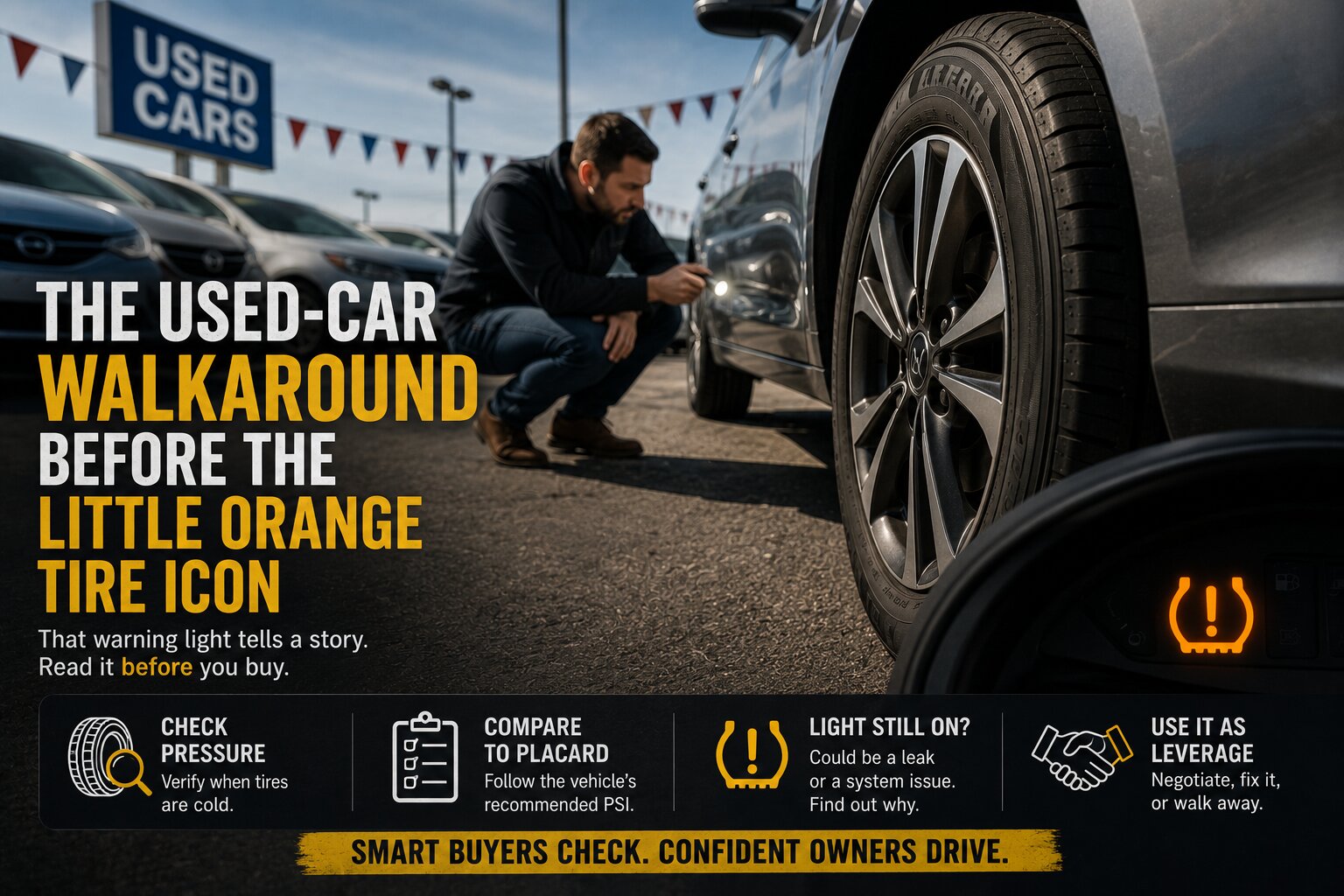
It also influences buying decisions in subtle ways on the used market. A buyer who brings along an inexpensive scanner can check for stored codes or readiness status before handing over cash (keeping in mind that recently cleared codes can hide issues temporarily). That little ritual has become part of modern car shopping culture in America right alongside checking tire wear or looking for mismatched paint.
The universal language wasn’t glamorous, but it stuck
No one puts “Has OBD-II” on a window sticker like it is heated seats or all-wheel drive. It is invisible until something goes wrong or until you need an inspection sticker by Friday afternoon.
Still, it is hard to overstate what changed when America agreed on one diagnostic handshake between cars and tools starting in model year 1996: repairs got more consistent; emissions enforcement got smarter; drivers gained access to basic truths about what their cars were complaining about.
The port under your dash became less like a secret service entrance and more like a public doorbell. Press it with the right tool and most modern cars will tell you something useful about their health. Not everything; never everything. But enough that millions of owners have avoided blind guessing at least once. And in everyday American car life, that counts as real progress.
0 comments
Join the discussion around this article.
Please login to comment.