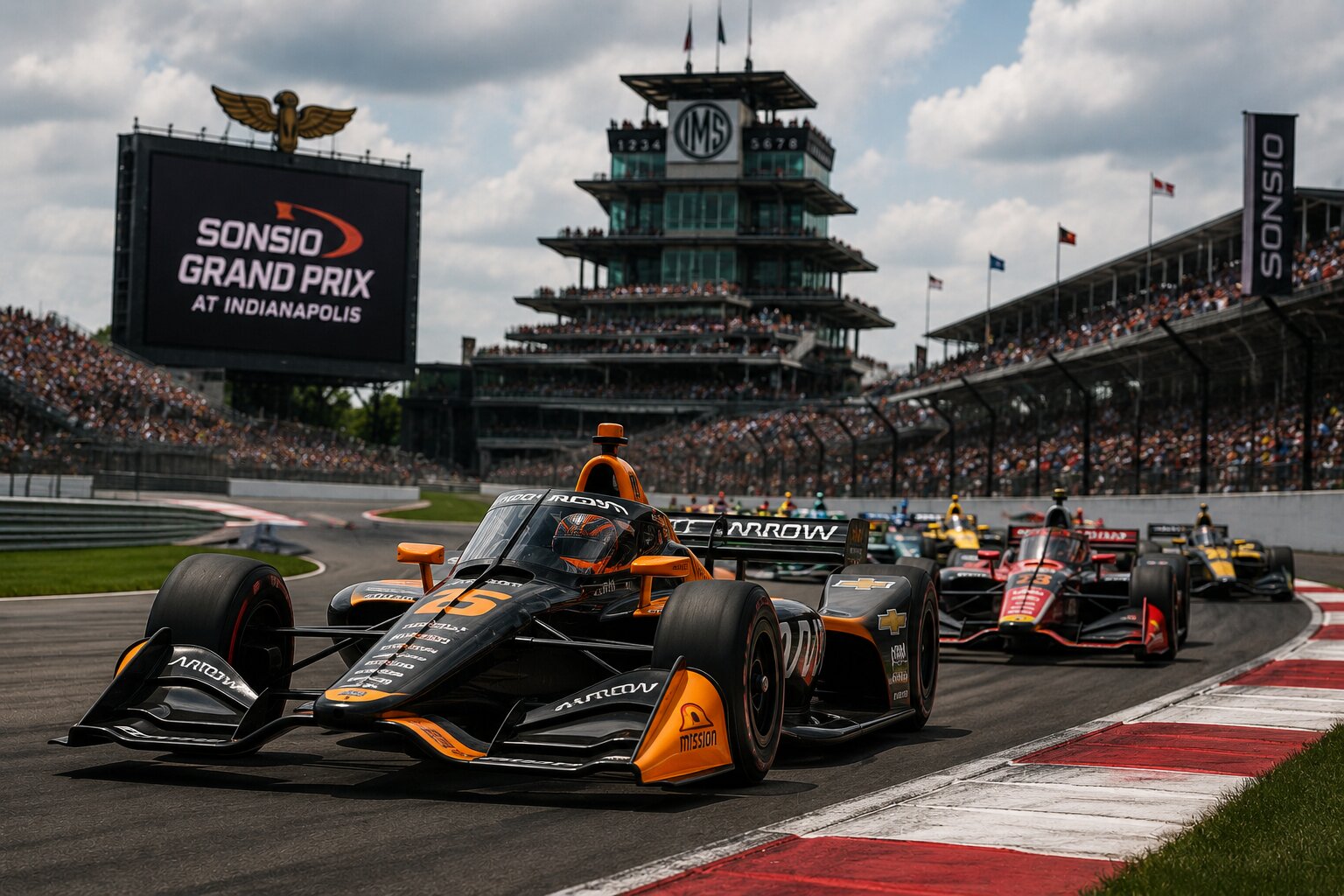
Sonsio Grand Prix 2026 on the IMS Road Course: the vibe is different
The Sonsio Grand Prix is IndyCar’s annual reset button at Indianapolis Motor Speedway, run on the 14 turn, 2.439 mile road course inside the same facility that hosts the Indy 500. Same place, totally different problems. Instead of living on the ragged edge at 230-plus mph for hours, teams are chasing braking stability, tire life, and clean air through a layout that can feel like a street course in how quickly it punishes mistakes.
For 2026 specifics like session times and weekend format, IndyCar’s official schedule and IMS event pages are the right sources. Those details are typically published closer to race week and can shift, so I’m not going to guess at start times or which support series land on which day. What does not change is why this race matters: it is one of the few road course events run in the same month and same venue as the Indy 500, so it becomes a high pressure dress rehearsal for people and processes even if the cars are set up for a very different track.
Why this road course bites: braking zones and “accordion” traffic
The IMS road course is built around big stops and short straights that encourage late braking and ambitious dives. Turn 1 is the headline corner for chaos because it comes right after the front straight, funnels everyone into a tight apex, and invites three wide optimism. The infield complex that follows rewards drivers who can rotate the car without lighting up the rear tires, then get back to power without triggering wheelspin that cooks the rears over a stint.
Traffic is its own discipline here. Even on a permanent road course, IndyCar races can stack up into packs because of cautions and strategy offsets. That means leaders often catch cars on different tire ages or fuel numbers, right in the middle of heavy braking zones. You see it in onboard footage every year: a driver commits to a line, then has to adjust mid corner because someone ahead is braking 20 feet earlier to save fuel or protect worn tires. That is where snap lockups and missed apexes come from.
Tire falloff is not a theory here
IndyCar road course weekends typically revolve around Firestone’s primary and alternate tires. The alternates usually offer more grip but can degrade faster depending on temperature and track rubbering, while primaries tend to be more consistent across a stint. Exactly which compounds show up for 2026 will be confirmed by IndyCar and Firestone, so treat any compound chatter as speculation until it is published.
What’s reliable is the pattern: this track asks a lot of the front tires under braking and turn in, then asks a lot of rear traction on exit. When drivers lean too hard on peak grip early in a stint, lap time can fall away quickly, especially once you add traffic. That makes pit timing feel like chess instead of math. It also makes this race relatable if you do track days. Anyone who has watched their best lap disappear after two hot laps knows the feeling.
Cautions and restarts: where strategy gets messy
IndyCar cautions can swing this race because pit lane delta matters and because restarts compress the field into Turn 1 again. A yellow at the wrong moment can flip track position for drivers who were trying an undercut or stretching fuel. Teams also have to decide whether to prioritize clean air or fresh tires, since passing can be both possible and risky depending on where you are on track.
Restarts are where you see how much confidence a driver has in their brake package and how willing they are to place the car in tight quarters without contact. The IMS road course does not have much patience for light taps. A small nudge can mean a spin into an escape road or damage that ruins straight line speed for the rest of the day.
Who you’re really watching: not just winners, but momentum
I’m not making predictions for 2026 results because form changes quickly in IndyCar and we do not have qualifying or practice data yet. But this event always sharpens focus on the usual heavy hitters and their closest challengers across teams like Team Penske, Chip Ganassi Racing, Arrow McLaren, Andretti Global, and Rahal Letterman Lanigan Racing. The championship context matters too because road course points are hard earned, and Indianapolis tends to magnify small operational mistakes.
If you’re watching with an enthusiast’s eye, pay attention to who can consistently attack curbs without unsettling the car, who can brake deep without locking fronts, and who manages tire life while still defending position. Those skills translate directly to why IndyCar drivers look superhuman from behind the wheel.
What to check before race day
For fans planning travel or streaming: confirm gate times, parking guidance, and any autograph or fan zone details through IMS event info, then cross check session timing via IndyCar.com’s schedule once it posts for 2026. The IMS road course weekend often rewards showing up early because practice reveals who has long run pace versus one lap speed.
This race rarely feels like a calm prelude to anything. It feels like Indianapolis reminding everyone that precision counts here, whether you’re chasing points on Saturday or history later in May.
0 comments
Join the discussion around this article.
Please login to comment.