Parking-lot truth serum
Los Angeles has a special kind of afternoon light bright enough to make metallic paint sparkle, harsh enough to expose every door ding you were hoping no one would notice. It’s the same light that makes dealer inventory photos either feel trustworthy…or feel like a dating profile from 2012.
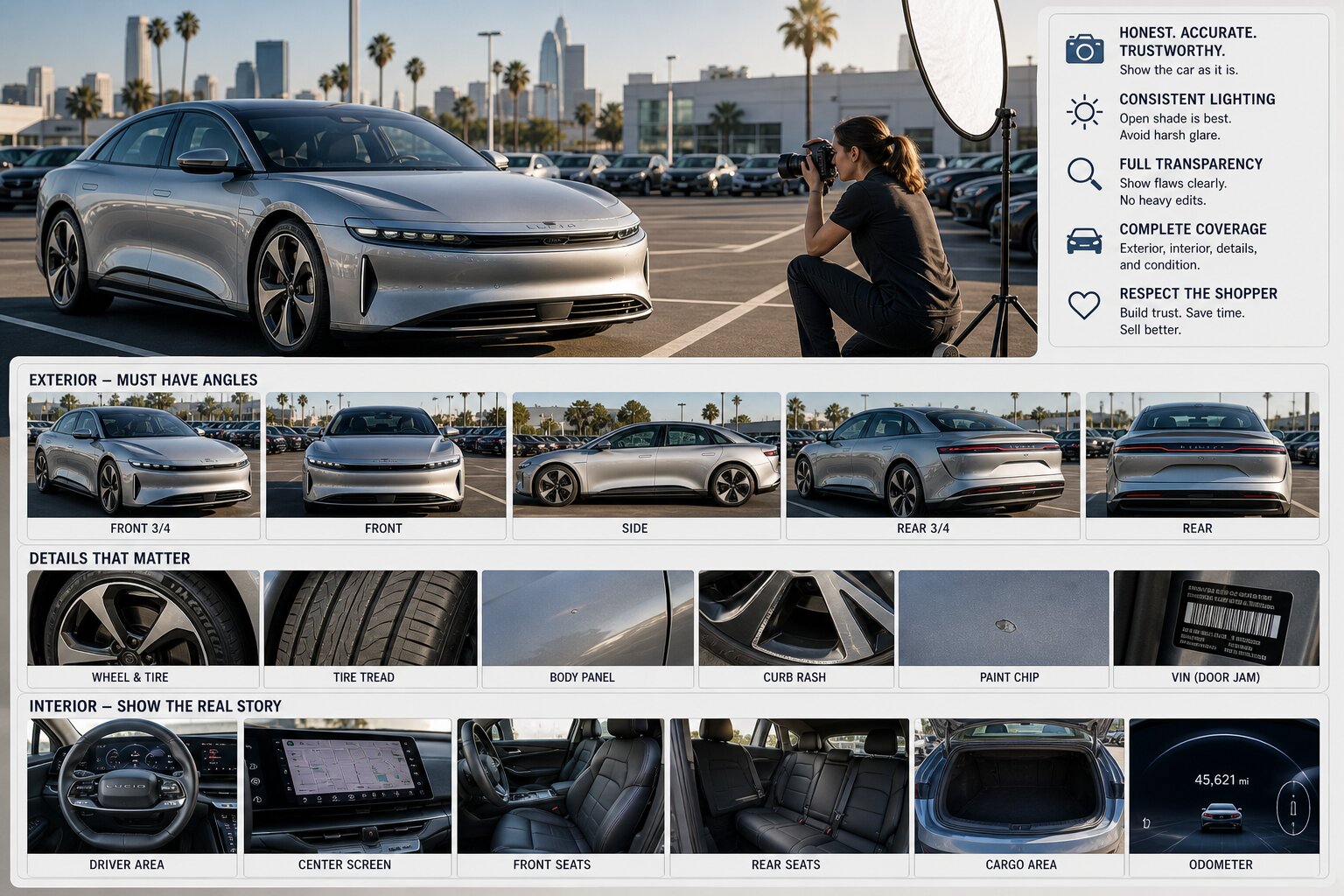
Drive Sense’s photo guidelines (the ones most shoppers never see) are built around a simple idea: show the car as it is. Not “too perfect,” not shot from angles that hide the truth, and not edited into something it’ll never be in real life. So I called up a dealer photographer who lives in that reality every day moving fast, shooting dozens of cars, trying to make each one look good without crossing the line into misleading.
Important note: This feature focuses on process and ethics in dealership photography, not a specific vehicle model. I’m not listing specs or competitors because the subject here isn’t “2025 Whatever vs. 2025 Whatever” it’s how any inventory car gets photographed honestly.
Meet the photographer (and the job nobody notices until it goes wrong)
Jessica Cole (Drive Sense): For readers who think dealer photos just “happen,” what’s your job actually like day to day?
Dealer Photographer: I’m basically a one-person assembly line. Cars come in, cars go out, and everything needs photos yesterday. The goal is consistency same angles, same framing so shoppers can compare cars easily. And then you’ve got reality: tight lots, bad weather, cars parked too close, and sometimes a vehicle that clearly had a rough week before it hit recon.
“Honest” doesn’t mean “ugly”: where you draw the line
Jessica Cole: The title of this piece is about making inventory look honest not “too perfect.” What does “too perfect” look like in your world?
Dealer Photographer: Over-editing. Heavy smoothing on paint, blown-out highlights that erase scratches, or those dramatic low angles that make a compact look like a supercar. It’s tempting because it gets clicks. But it backfires when someone shows up and says, “This isn’t the car in the photos.”
Jessica Cole: Drive Sense guidelines push for accurate representation no misleading edits, no hiding damage. Do you ever get pressure from sales to make things look better than they are?
Dealer Photographer: Sometimes. Usually it’s not malicious; it’s more like, “Can you just not show that wheel rash?” But if it’s there, it’s there. I’ll shoot it cleanly and clearly so the customer knows what they’re walking into.
The light is your coworker (and sometimes your enemy)
Jessica Cole: Lighting is everything. What’s your default setup when you don’t have a studio and you’re working with whatever sky Los Angeles gives you?
Dealer Photographer: Shade is my best friend open shade if possible. Direct sun creates harsh reflections and makes panels look different shades even when they’re not. If I can’t find shade, I’ll position the car so the sun isn’t blasting straight into the lens or reflecting my own silhouette across the door.
Jessica Cole: When I’m shooting cars for stories, I love golden hour because it flatters shapes without lying about them. Is that realistic for inventory work?
Dealer Photographer: Not usually. Golden hour is great but it’s not scalable when you’ve got 20 cars to shoot and they need to be online now. The trick is consistency same general lighting approach so one car doesn’t look like a movie poster and the next looks like security footage.
The angles shoppers trust (and the ones they don’t)
Jessica Cole: Let’s talk angles. What are the must-have shots that match Drive Sense-style expectations clear, repeatable, easy to compare?
Dealer Photographer: Front three-quarter, straight-on front, side profile, rear three-quarter, straight-on rear. Then wheels/tires, interior wide shots from both sides, dash with mileage visible if allowed by policy, infotainment screen on (but not showing personal data), front seats, rear seats, cargo area.
Jessica Cole: And what angles feel…sus?
Dealer Photographer: Extreme low shots that hide rocker-panel damage or make ride height look different. Tight crops that avoid bumpers or lower corners because those are where scuffs live. Also anything that cuts off the roofline or hood edge can feel like you’re hiding something.
The “show flaws” question everyone avoids
Jessica Cole: Okay: showing flaws. How do you photograph imperfections without making the car look like it lost a bar fight?
Dealer Photographer: Neutral distance and clear focus. If there’s curb rash on a wheel, I’ll shoot the whole wheel first so you see context, then a close-up so you see severity. Same with scratches: one shot that shows where it is on the panel, then a detail shot at an angle where the scratch is visible but not exaggerated by glare.
Jessica Cole: Do you ever worry that photographing flaws hurts sales?
Dealer Photographer: It might hurt an impulse click. But it saves everyone time later. The customer who shows up already aware of flaws is usually calmer and more likely to buy than someone who feels surprised.
The VIN shot: boring…until it isn’t
Jessica Cole: VIN photos aren’t glamorous, but they matter for transparency and listing accuracy. What’s your approach?
Dealer Photographer: Make it legible and consistent usually through the windshield at the VIN plate or door jamb label depending on store policy and what information needs to be captured for listing verification. The big thing is clarity: no reflections blocking numbers.
Editor note from Jessica: Policies vary by dealer group and platform; some restrict displaying full VIN publicly due to fraud concerns. If full VIN display isn’t permitted, photographers still capture internal verification images for accuracy.
The cabin tells on people (and on time)
Jessica Cole: Interiors are where honesty gets real fast bolster wear, shiny steering wheels, scuffed plastics. What do Drive Sense-style interior photos need to show?
Dealer Photographer: Wide shots that show layout and condition: driver seat, passenger seat, second row if there is one, cargo area. Then details: steering wheel close-up if there’s wear, pedals if they’re heavily worn, screens powered on so shoppers can see if there are dead pixels or obvious damage.
Jessica Cole: Any quick tricks before shooting interior so it doesn’t look neglected?
Dealer Photographer: Open all doors for airflow and light if possible. Straighten seatbelts so they don’t twist across seats like spaghetti. Remove dealer paperwork from cupholders. And wipe obvious fingerprints off gloss-black trim because that stuff photographs like a crime scene under bright light.
Screens: show tech without showing someone’s life
Jessica Cole: Infotainment screens are tricky you want them on so buyers know they work, but privacy matters too. How do you handle that?
Dealer Photographer: Basic home screen or settings screen only no paired phones visible, no navigation history with addresses. If the car still has personal data from trade-in, we flag it so recon can wipe it before photos go live.
The 15-photo sprint (without turning into chaos)
Jessica Cole: Give me your fastest honest workflow: how do you shoot 15 useful photos quickly?
Dealer Photographer: I walk around once before shooting to spot damage so I don’t miss anything later. Then I shoot exteriors in a consistent loop front three-quarter to side to rear three-quarter keeping horizon level and leaving space around the car so nothing feels cropped to hide flaws. After that: wheels/tires quickly while I’m still outside. Then interiors in one pass: driver area first (dash/cluster/steering), center screen on, front seats, rear seats, trunk/cargo.
Jessica Cole: What slows you down most?
Dealer Photographer: Tight parking and bad reflections. Also cars with dark paint under direct sun it shows everything: swirl marks, dust, even my own outline if I’m not careful.
Avoiding reflection lies (and accidental self-portraits)
Jessica Cole: Dark paint in California sun is basically a mirror with tires attached. How do you manage reflections without heavy editing?
Dealer Photographer: Angle choice and positioning instead of Photoshop heroics. Move your feet; change height slightly; watch what’s reflected in doors light poles, other cars with bright colors, people walking by. If I can see my reflection clearly in the panel while standing still, the camera definitely will.
The checklist mentality: consistency beats creativity here
Jessica Cole: As a journalist I love an artsy shot the kind where you can almost hear the faint hum of tires on asphalt just looking at it. But inventory photography is different. How do you balance creativity with consistency?
Dealer Photographer: Consistency wins because buyers are comparing listings across days and across cars. Creativity can sneak in through clean composition and good light but not at the expense of clarity. A cool angle isn’t worth it if it hides ride height issues or bumper scuffs.
The shot shoppers obsess over (surprisingly)
Jessica Cole: Which photo do customers seem to care about most once they’re actually shopping seriously?
Dealer Photographer: Wheels and tires and driver seat condition. People read a lot into those two things about how a car was treated.
If you could tell every dealer one thing…
Jessica Cole: Last one: if you could tell every dealership manager one thing about honest photos something aligned with Drive Sense guidelines what would it be?
Dealer Photographer: Don’t fear transparency. If there’s wear or cosmetic damage, show it clearly and price accordingly. You’ll get fewer angry surprises and more serious buyers walking in already trusting you.
The quiet payoff of “not too perfect”
I keep thinking about how car shopping feels right now endless scrolling late at night, comparing trims like they’re streaming subscriptions, zooming into photos until pixels break apart looking for clues about how someone lived with a vehicle.
An honest inventory set doesn’t try to hypnotize you with perfection. It does something better: it lowers your blood pressure before you even step onto the lot.
If Drive Sense guidelines have a vibe beyond rules and checklists, it’s this: respect the shopper’s time and their eyes. Because in real life there’s always texture: a little sheen on the steering wheel at 60k miles, faint creases in leatherette where someone sat through years of commutes, tiny chips on a hood that caught freeway grit under an L.A. sky.
You don’t need to hide any of that to sell cars well. You just need to photograph it like you mean it.
0 comments
Join the discussion around this article.
Please login to comment.